

What a 16 Ton Excavator Really Means
Shopping for a 16 ton excavator sounds simple. Then you open three spec sheets and find three different weights. Confusing? It is, until you know what the label actually measures.
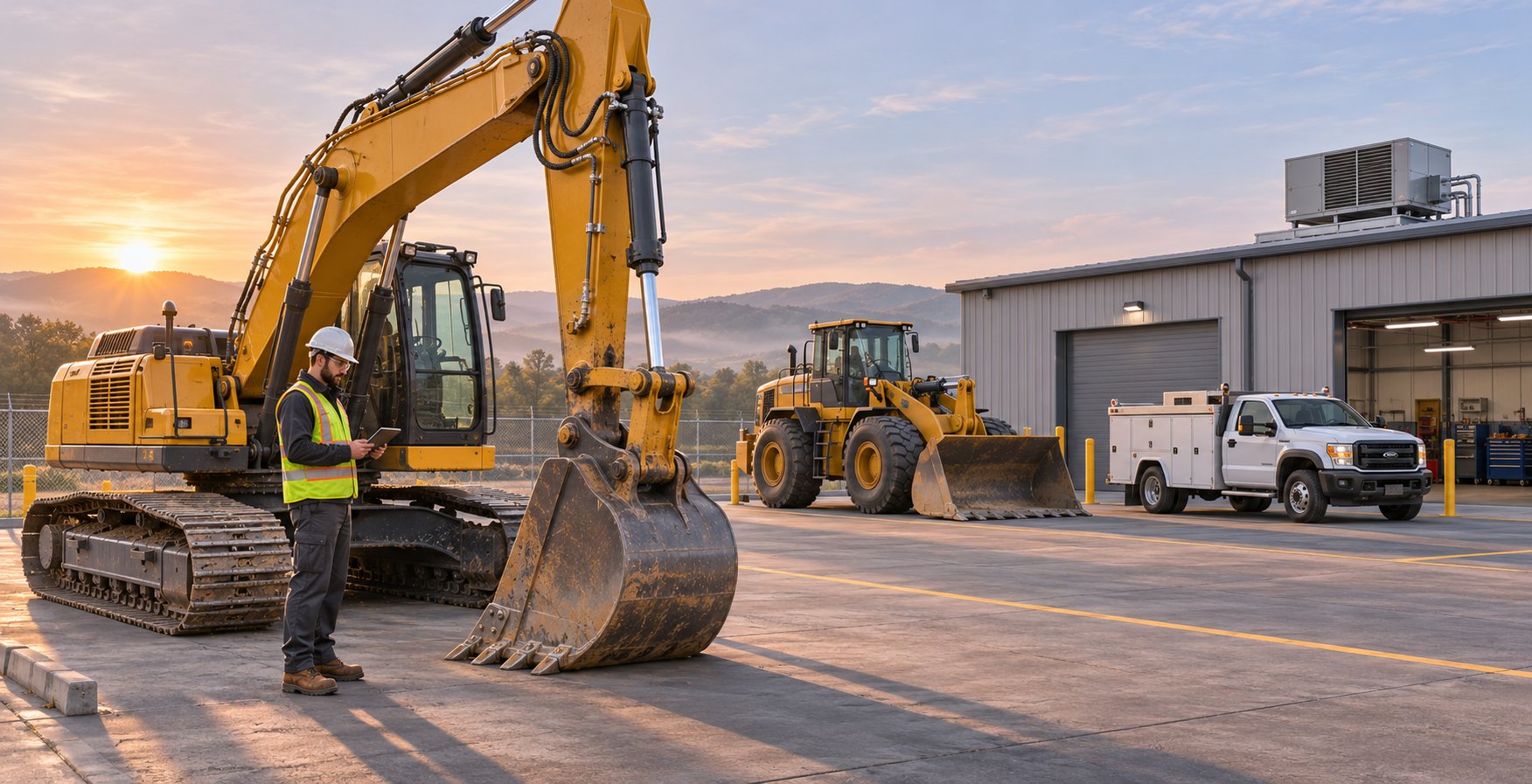
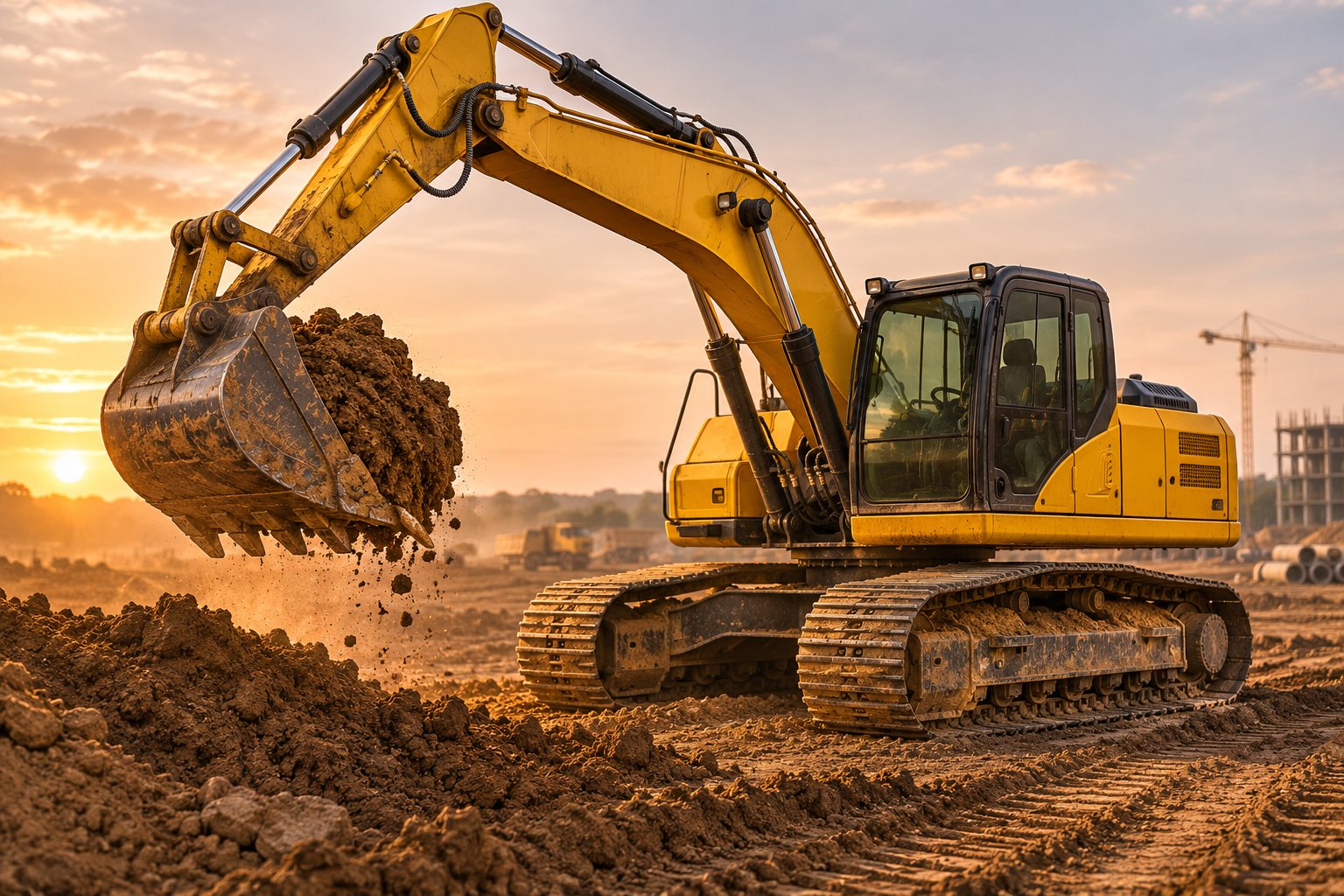
A 16 ton excavator is a mid-size hydraulic excavator with an operating weight of roughly 14 to 18 metric tons, sitting between compact machines and full-size 20+ ton models.
What Defines a 16 Ton Excavator
Excavators are grouped mainly by operating weight. Bobcat's sizing guide describes its large excavator category as a step up from compact machines, with operating weights between 14 and 16 metric tons, and places the E145 and E165 there. Dealer guides such as Gregory Poole fold this band into a broad standard class running from 7 to 45 metric tons. That is why a 145 excavator and a 160-series model often end up in the same shopping conversation.
Metric Tonnes vs US Short Tons
Here is the catch. A metric tonne is 1,000 kg. A US short ton is 2,000 lb, or about 907 kg. Do the math and the difference is real:
- 16 metric tonnes = 16,000 kg (about 35,270 lb)
- 16 short tons = 32,000 lb (about 14,515 kg)
That is a gap of roughly 1,500 kg under the same "16 ton" label. You will even notice that Bobcat pairs 14-16 metric tons with 28,000-32,000 pounds, figures that line up more neatly with short tons than with metric ones.
Why OEMs Label Different Weights as 16 Ton Class
Class labels are marketing approximations, not scale readings. CASE positions its WX140E wheeled excavator, at 15,860 kg, as a 16 ton machine. Hyundai lists the HX160A L at 17,695 kg operating weight. Both wear the same class badge, yet they sit nearly two tonnes apart.
The type of weight matters too. Machine weight usually describes the base unit. Operating weight, as Excavator Zone explains, adds the operator, a full fuel tank, lubricants, hydraulic fluid, and the fitted attachment. Imagine comparing one listing's machine weight against another's operating weight. You could misjudge a machine's size before it ever reaches your site.
This guide stays brand-neutral and walks through specs, crawler and wheeled configurations, applications, transport, maintenance, and buying. Still, a weight figure tells you little in isolation. Its real meaning shows up when you line it against the machines just above and below it.
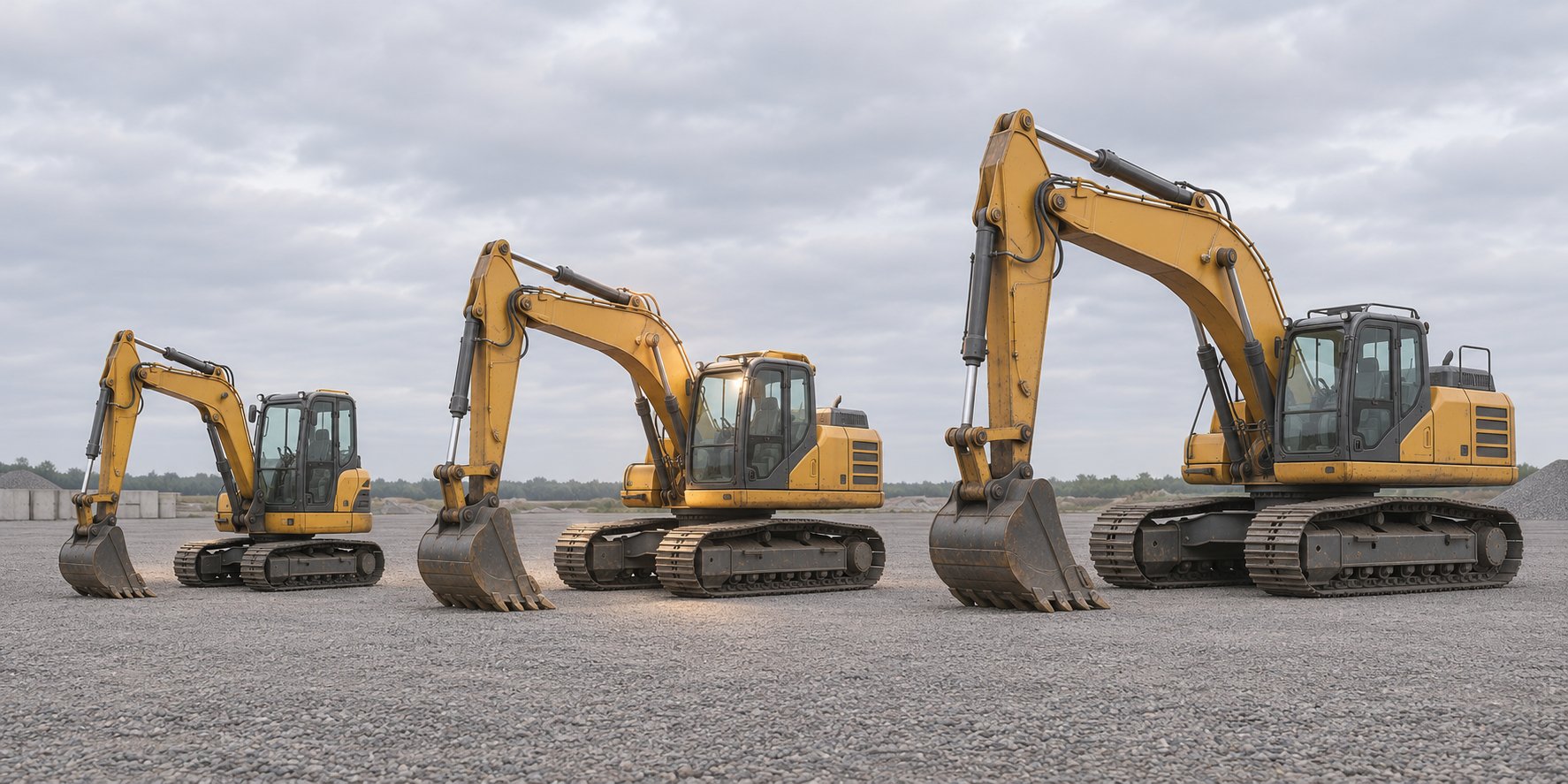
Where 16 Ton Machines Sit in the Excavator Size Range
Picture the excavator market as a ladder. On the bottom rung are machines light enough to haul behind a work truck. On the top rung are mining shovels that weigh more than a small office building. The 16 ton class sits near the middle, and that position explains most of its appeal.
From the Biggest Mini Excavator to Midi Machines
SANY's excavator size guide caps the mini category at under 6 tons. These machines can travel on standard Class 1 or Class 2 trucks, and in some regions you can tow them without a commercial driver's license. So even the biggest mini excavator weighs well under half of a 16 ton model. Next come small or "midi" machines in the 6-10 ton band. They stay agile, but they run short on power and working range once a job turns into real earthwork.
Where the 16 Ton Class Fits
Many manufacturers group everything from 10 to 45 tons into one medium category. The 16 ton class sits at the lighter, more mobile end of that band. Bobcat excavators sizes show the pattern well. The brand stepped beyond its compact lineup with the E145 and E165, which Equipment World described as its largest models yet, at about 15 and 17 tons.
| Size Class | Typical Operating Weight | Typical Jobs | Transport Considerations |
|---|---|---|---|
| Mini/compact | Under 6 t | Landscaping, indoor work, small trenching, pipe repairs in tight spaces | Standard trucks or light trailers |
| Midi/small | About 6-10 t | Small commercial projects, urban sites, minor municipal work | Light equipment trailers; easy to relocate |
| Mid-size (16 ton class) | About 14-18 t | Utility trenching, site prep, roadwork, medium earthwork | Dedicated equipment trailer; check local rules for wider setups |
| Standard | 20 t and up (to about 45 t) | Larger earthwork, foundations, heavy truck loading | Heavy-haul trailers; permits more likely |
| Large/mining | Over 45 t | Quarrying, mining, mass excavation, heavy demolition | Oversize trailers, ample site space, careful planning |
What Is the Largest Excavator Compared With a 16 Ton Model
So, whats the biggest excavator out there? Construction Sales names the Caterpillar 6090 FS, at 1,000 tonnes operating weight, as the heaviest production excavator in the world. Its standard shovel bucket holds 52 cubic meters. That one machine weighs more than 60 of the 16 ton models. If you're asking what is the largest excavator out of curiosity, the answer lives in open-pit mines, not on a typical job site.
Signs You Should Size Up or Down
Size up if:
- You regularly load large haul trucks or move big volumes of earth
- Hard soil or rock keeps slowing your digging
- Lift work routinely pushes past your machine's rated limits
Size down if:
- Your sites are tight, residential, or indoors
- You move between jobs several times a week
- Most of your work is light trenching or landscaping
A size class narrows the field, but it doesn't settle the decision. Two machines on the same rung can dig, reach, and lift very differently, and only the spec sheet reveals how.
How to Read 16 Ton Excavator Specs
Ever stared at a spec sheet and wondered which numbers actually matter? You're not alone. Several terms mean something narrower than they sound, and some of the most useful lines sit quietly near the bottom of the page.
Operating Weight and Ground Pressure
Operating weight is the machine ready to work: base unit, standard boom, arm and bucket, full fuel and oils, plus an operator. The DesiMachines spec sheet guide notes that this figure shapes stability, lifting ability, and what it costs to move the machine. Ground bearing pressure, in kPa, shows how hard that weight presses on the soil. Lower is better on soft or wet ground. That's why track shoe width is usually quoted right next to it.
Net Power, Hydraulic Flow and Breakout Force
Horsepower tracks machine size closely, so it barely separates two models in the same class. The Bobcat E145, for example, lists 109 hp net (115 hp gross). Helpful, but the hydraulics tell you more. Pump flow decides how quickly the cylinders fill, which you feel from the seat as cycle speed. Bucket and arm digging forces, measured in kN, reveal how the machine copes with hard, compacted ground.
Working Range Specs That Competitors Skip
Max dig depth and reach are measured from the ground the machine stands on, at full stretch. Treat them as limits, not everyday working figures. Dump height and vertical wall cut depth are the more honest numbers for loading trucks and cutting straight-sided trenches. Arm length changes all of them. The E145's arm, for instance, measures nearly 3 meters.
| Spec | What It Measures | Why It Matters on the Job |
|---|---|---|
| Operating weight | Machine ready to work, with fluids, operator and standard bucket | Sets stability, lift potential, and trailer needs |
| Net power | Usable engine output after accessories | Indicates class, but rarely separates rivals |
| Hydraulic flow | Pump output, usually in liters or gallons per minute | Drives cycle speed and attachment performance |
| Bucket breakout force | Curling force of the bucket | Shows how well it bites into hard ground |
| Arm tearout force | Pulling force of the arm | Matters for deep, dense digging |
| Bucket capacity | Volume, usually heaped | Affects output per pass and load weight |
| Max dig depth | Depth below ground level at full extension | Confirms trench and foundation limits |
| Reach at ground level | Horizontal reach at full stretch | Reduces how often you reposition |
| Dump height | Highest point the bucket can unload | Tells you if it clears your truck sides |
| Lift capacity | Safe load at set heights and radii | Governs pipe, trench box, and material handling |
| Ground pressure | Load on the soil, in kPa or psi | Decides performance on soft or wet sites |
| Swing speed | Rotation speed of the upper structure | Shortens cycles when loading trucks |
| Travel speed | Low and high ground speeds | Affects moves across long sites |
Bucket Capacity and Lift Capacity in Practice
Bucket capacity is a volume, not a weight. Hyundai offers buckets from 0.73 to 0.96 cubic meters on the HX160A L, a fair picture of sizing in this class. The weight you actually carry depends on material. Loose earth runs about 1.4 to 1.6 tonnes per cubic meter, so heavy, wet clay often calls for a smaller bucket.
Lift capacity is trickier, and you should never read it as one number. Manufacturer lift charts list capacity by lift point height, lift radius, and over-front versus over-side position. They also assume a set configuration of counterweight, undercarriage, boom and stick. Reach farther out and capacity falls. Swing over the side and it falls again. Add a thumb or grapple, and its weight comes straight off the limit.
Read a lift chart as a map of safe zones, not a single headline figure, and always match it to your exact machine setup.
Weighing a Bobcat 145 excavator against a rival? Pull numbers from the official bobcat e145 specs page and each competitor's own sheet, for the same configuration. Even then, you'll notice that ground pressure, travel speed, and stability all hinge on one deeper choice: what sits underneath the machine.
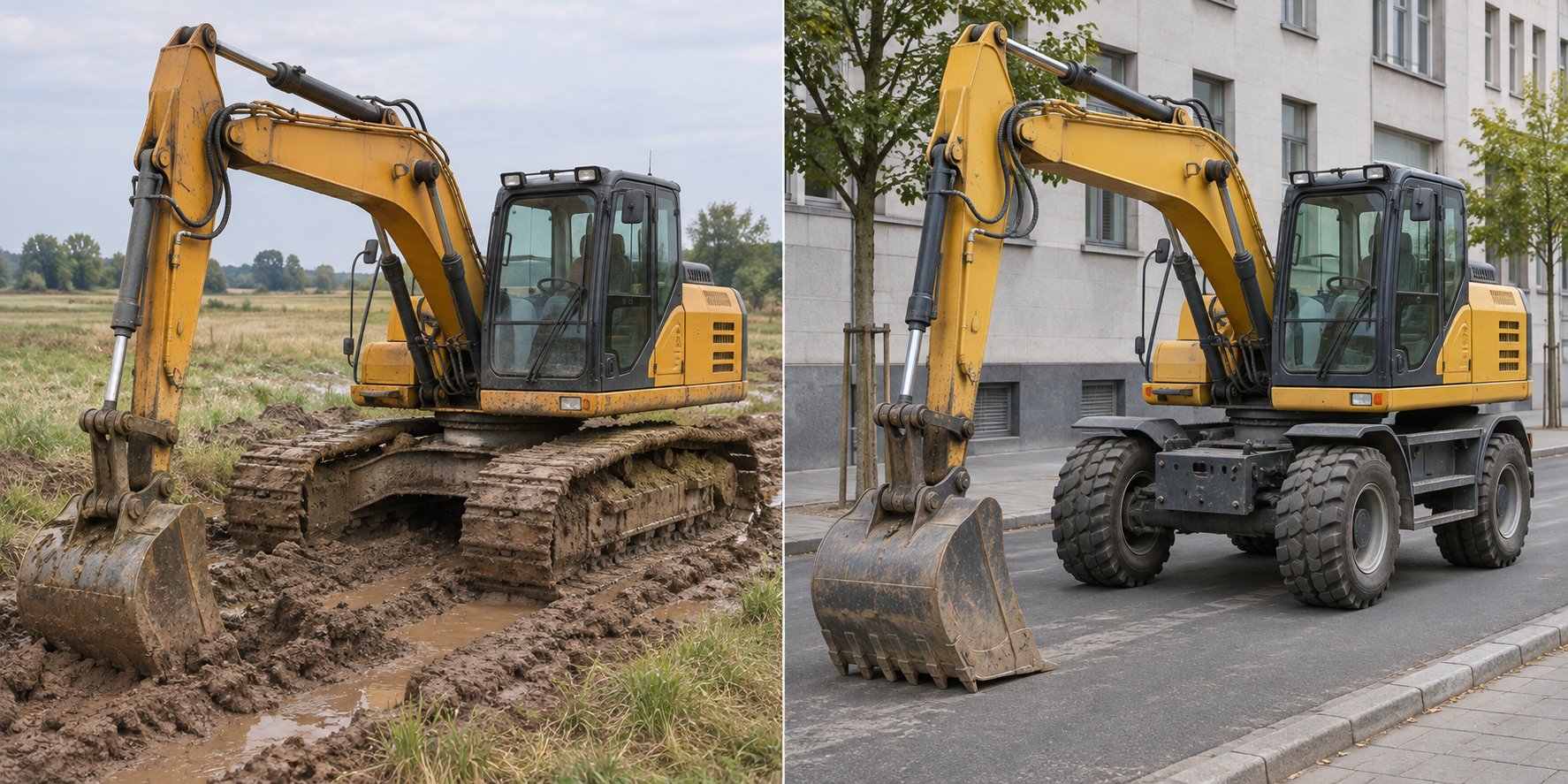
Crawler vs Wheeled 16 Ton Excavators
Will your machine spend its days in mud, or rolling between paved jobs across town? That single question shapes the undercarriage choice more than almost any spec line. Both formats exist in the 16 ton class, and each pays off in a very different setting.
Crawler Excavators in the 16 Ton Class
Crawlers run on steel or rubber tracks and are built for rough, uneven, or muddy ground. As Kellands Plant Sales points out, their low ground pressure and strong traction keep them working where tires would bog down. They also stay steady with larger attachments and heavy loads. The tradeoff? You need a low loader to change sites, and the undercarriage adds maintenance.
Wheeled Excavators and Roading Mobility
Wheeled machines drive themselves between jobs, with some models reaching up to 37 km/h. The CASE WX140E shows what this case 140 excavator format looks like in practice. CASE aims it at road builders, municipalities, utilities, and demolition crews. It runs on eight 10.00-20 tires, makes 170 hp net, and offers an optional dozer blade. Its spec table lists 15,830 kg operating weight, while the headline figure reads 16,790 kg, a fresh reminder that configuration moves the number. Volvo and other brands also build wheeled models, so check any volvo wheeled excavator against its own spec sheet rather than assuming parity.
| Factor | Crawler | Wheeled |
|---|---|---|
| Mobility between sites | Needs a low loader | Can travel on its own |
| Stability | Excellent for lifting and digging | Good, best with outriggers or blade down |
| Ground pressure | Low, spread over the tracks | Higher, concentrated at the tires |
| Surface protection | Steel tracks can mark paving | Gentle on hard, finished surfaces |
| Travel speed | Slower | Faster, up to 37 km/h on some models |
| Outriggers or dozer blade | Optional blade, mainly for grading | Usually needed for stable lifting |
| Typical applications | Earthmoving, demolition, soft or remote sites | Roadwork, utilities, urban and landscaping jobs |
Crawler Pros
- Strong traction on soft or muddy ground
- High stability for heavy lifts and big attachments
Crawler Cons
- Requires trailer transport
- Higher undercarriage upkeep
Wheeled Pros
- Fast repositioning and self-transport
- Less surface damage on paved sites
Wheeled Cons
- Relies on outriggers or a blade for full stability
- Struggles in deep mud and steep, loose terrain
Steel Tracks vs Rubber Tracks
Working near pavement, lawns, or finished surfaces? Rubber gives a smoother ride and protects the ground, but TVH notes it can wear faster in extreme conditions. Steel excels in rough terrain, at the cost of surface-friendliness and operator comfort. If you're hunting for the largest rubber track excavator, you'll find full rubber tracks mostly on compact machines. A common middle ground is rubber pads fitted to steel tracks:
- Bolt-on: mounted directly on the steel track; durable and cost-effective
- Chain-on: steel plates are removed, and the rubber surrounds the steel to limit surface damage
- Clip-on: slid on and secured with clips; more rubber, heavier, and harder-wearing
Settling on tracks or tires narrows your shortlist fast. Yet each brand answers that choice with its own mix of weight, bucket size, and features, and those differences only surface when real models sit side by side.
Comparing Popular Models in the 16 Ton Class
OEM pages show you one machine at a time. Broad 10-20 ton roundups cover a lot but say little about each model. When you're actually shopping, you want the machines buyers really cross-shop, side by side, with the fine print left in.
Popular Models in the 16 Ton Class
The table below mixes new and used, crawler and wheeled. Where a figure isn't confirmed in published material, it points you to the official source instead of guessing.
| Model | Type | Condition | Listed Weight | Bucket Size | Notes |
|---|---|---|---|---|---|
| Komatsu PC160-7 | Crawler | Used | 16,500 kg (machine weight) | 0.65 m3 | Near the 16 metric ton class. Confirm the actual operating configuration with the seller. Not a verified exact 16,000 kg or 16 US short ton specification. |
| Hyundai HX160A L | Crawler | New | 17,695 kg (operating weight) | 0.73-0.96 m3 | Cummins B4.5 Stage V engine. Manufacturer claims up to 11% fuel savings. |
| CASE WX140E | Wheeled | New | 15,860 kg | See OEM spec sheet | Positioned as a 16 ton wheeled machine. Listed weights vary by configuration. |
| Bobcat E165 | Crawler | New | 38,376 lb (about 17,400 kg) | See OEM spec sheet | Conventional tail swing, 131 hp, 20 ft dig depth, 28.8 ft reach at ground level. |
The Hyundai HX160A L is the most clearly labeled "16 tonne" machine of the group. Hyundai pitches this hyundai 160 excavator at construction, infrastructure, and rental work, and says its Stage V engine delivers up to 11% fuel savings. Treat that as a manufacturer claim, not a field-tested result.
The bobcat e165 excavator is the brand's largest model to date. One Bobcat dealer places it in the 16-18 ton size class and suggests it for road and bridge building, underground utilities, and building sites. If you're weighing a Bobcat 165 excavator, note that it's a conventional tail swing design. That matters when you work beside traffic or walls.
New Models vs Proven Used Machines
New machines bring current emissions engines, telematics, and longer service intervals. Hyundai, for example, says intervals on several engine items doubled from 500 to 1,000 hours when using CK-4 oil. You also get a warranty and a known history.
Used machines trade some of that for a lower upfront cost. The used Komatsu PC160-7 listed by JIUHONG gives building, agricultural, and excavation contractors an option near the 16 metric ton class. Before committing, request a current quote and confirm:
- The actual operating configuration and weight
- Hours and service records
- Emissions compliance for your market
How to Compare Models Fairly
Look closely at the table and you'll notice a trap. The Komatsu figure is a machine weight. The Hyundai figure is an operating weight. The Bobcat E165 figure is quoted in pounds. These numbers are not directly comparable, because operating weight adds fluids, an operator, and a bucket.
- Convert every figure to the same unit first
- Match weight types before judging size
- Compare bucket ranges against the material you dig
- Treat fuel and performance claims as starting points, then ask for proof
A fair comparison lines up the same weight type, the same units, and the same configuration before any model looks heavier or lighter.
Still, a spec table can't tell you whether a machine earns its keep. That answer depends on the work you'll hand it every day, from trenching to demolition to farm jobs.
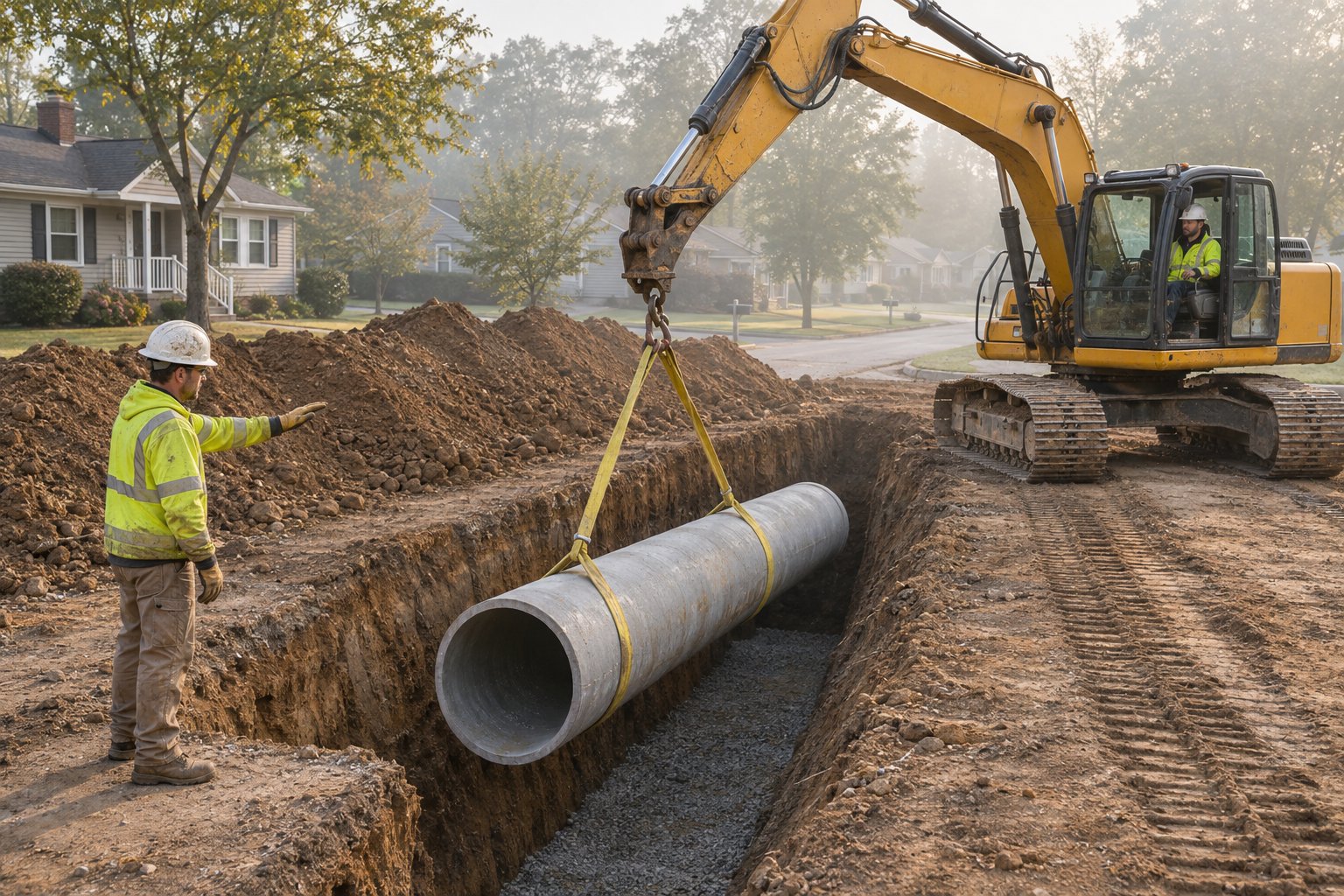
Jobs Where a 16 Ton Excavator Excels
Imagine a week that starts with a sewer lateral, moves to a parking lot pad, and ends with a farm drainage ditch. Few machines handle that mix without feeling too small or too heavy. Volvo CE describes midsize excavators as striking a balance between power and agility, able to take on both small tasks and larger, more complex projects. That balance is exactly where the 16 ton class lives.
Utility Trenching and Site Preparation
Utility work rewards reach and lift more than raw size. A machine in this class can dig foundation trenches, install sewer and water laterals, and set pipe or trench boxes without crowding the site. Volvo notes that its EC140E, ECR145E and EC160E are especially popular with smaller contractors for residential construction. On site prep, the same machine strips, digs, and loads trucks for housing or commercial pads.
Roadwork, Demolition and Landscaping
Road crews lean on this size for ditching, culvert installation, and widening work. A reduced-tail-swing design helps in a single lane, since the upper structure stays closer to the tracks. Fit a hydraulic breaker, and it can break concrete, asphalt, rock, or frozen ground. For landscaping, ponds, irrigation trenches, and finish grading are all within easy reach.
| Job Type | Why the 16 Ton Class Fits | Helpful Attachment or Setup |
|---|---|---|
| Utility trenching | Enough depth and lift for pipe, yet simple to haul | Trenching bucket, hydraulic thumb |
| Site preparation | Moves real volume without heavy-haul logistics | Digging bucket, grading bucket |
| Roadwork | Reach for ditches and culverts in tight corridors | Breaker, reduced tail swing, wheeled option |
| Light demolition | Force for slabs and low-rise cleanup | Breaker, thumb or grapple |
| Landscaping | Precise shaping without oversized footprint | Tiltrotator, grading bucket |
| Agricultural work | Ditches, ponds, and small land clearing | Digging bucket, hydraulic thumb |
Agricultural Work and Rental Fleet Use
On farms, a thumb turns the machine into a tool for moving rocks, stumps, and logs. A tiltrotator adds 360-degree rotation and tilt, which cuts repositioning during grading. Just check hydraulic flow first, because each attachment needs a different amount.
Why do rental fleets stock this size? It is the versatile middle option. One unit can serve a landscaper this week and a utility crew the next, and Volvo points out that its midsize models often work in rental fleets.
When a Big Excavator Is Overkill
Some jobs genuinely need a big excavator: mass excavation, all-day truck loading, or heavy rock. Bobcat's lineup shows that step clearly. Its largest Bobcat excavator models, the 23-ton E220 and 25-ton E245, joined the E145 and E165 for heavier commercial and infrastructure work. Large Cat excavators and other large excavators follow the same logic. They pay off on volume, not versatility.
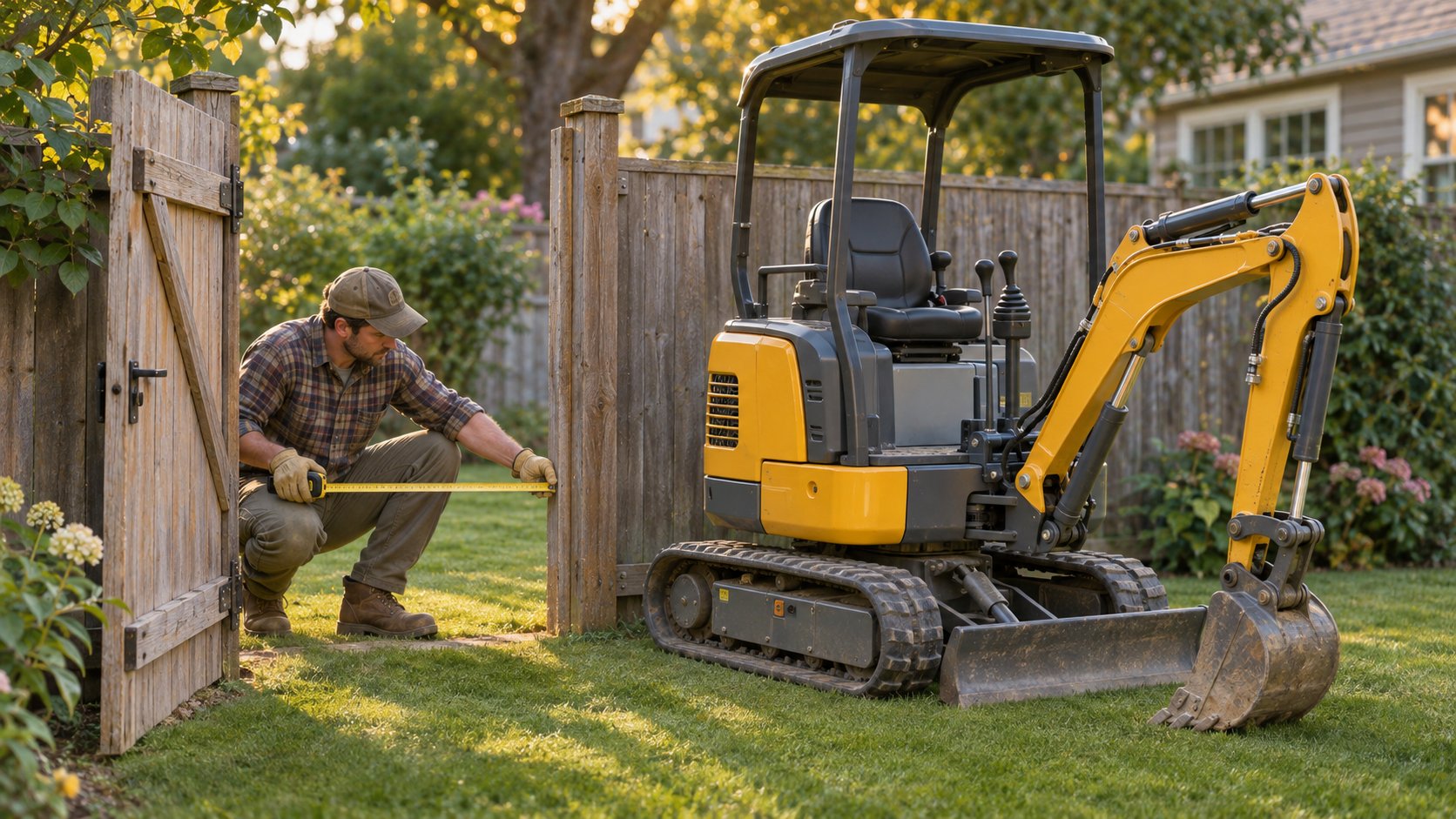
Going the other way, a compact model handles tight backyards, interior jobs, and light trenching more cheaply. If your work rarely leaves those settings, sizing down makes sense.
Choose the class that fits your most frequent jobs, not your rarest ones.
Every breaker, thumb, or blade you add for these jobs has a cost beyond its price tag. It adds weight, and that weight follows the machine onto the trailer.
Transport, Configuration and Emissions Planning
You've picked the machine. Now it has to reach the job. Sounds easy, until the trailer scale reads heavier than the brochure did. Moving a mid-size excavator is where small spec details turn into real costs.
Transport Weight vs Operating Weight
Operating weight describes a ready-to-work machine, with an operator in the seat and a standard bucket fitted. Transport weight is what actually rides on the trailer. The operator is gone, but a coupler, a thumb, or a spare bucket strapped to the deck may not be. The two figures rarely match. When you look up a Bobcat excavator weight, or any brand's figure, treat it as a starting point for one specific build, not a shipping number.
How Blades, Counterweights and Booms Change the Numbers
Every option adds mass, and some change the shape of the load too:
- Dozer blade: adds weight up front and can widen the transport footprint
- Extra counterweight: raises lift capacity along with total weight
- Two-piece or offset boom: adds hardware and can change folded length and height
- Outriggers on wheeled models: add both weight and width
- Attachments: breakers, tiltrotators, and couplers all count, mounted or not
So the Bobcat E145 weight you read online may not match a unit carrying a blade and a heavy attachment. Always check the weight Bobcat, or any other OEM, lists for your exact configuration.
Trailer and Permit Considerations
In the US, the FHWA sets federal maximums on the Interstate system of 80,000 pounds gross vehicle weight, 20,000 pounds on a single axle, and 34,000 pounds on a tandem axle, plus a 102 inch width limit. A tractor, a lowboy, and a 16 ton machine together can approach those figures fast. The federal government does not issue oversize or overweight permits. States do, and their rules vary. Before any move, run through this list:
- Confirm the actual shipping weight from a scale ticket or the seller's build sheet
- Measure transport height and width with the boom folded and blade fitted
- Check the trailer's rated capacity and axle ratings
- Use the machine's designated tie-down points with rated chains and binders
- Contact every state or province on the route about permit requirements
Watch your units, too. A listing in kilograms and a trailer rated in pounds is a classic recipe for mistakes. A machine listed at 16,500 kg weighs about 36,400 lb, not 16,500.
Emissions Standards Across Regions
Emissions rules decide where a machine can legally work. In North America, the EPA Tier 4 standards cover nonroad diesel engines, excavators included. These engines rely on advanced emission controls, and because sulfur can damage those devices, they run on Ultra Low Sulfur Diesel with no more than 15 parts per million of sulfur. In the EU, Stage V plays the parallel role for non-road mobile machinery, with its own limits and certification process.
The two frameworks share goals, but they are not interchangeable. Imported or used machines need extra care, since an older unit may predate current standards entirely. Ask for the engine's emissions label and certification papers, then confirm acceptance with local authorities before you buy.
A machine that is legal to work in one country is not automatically legal in the next, so verify emissions certification before the money moves.
Paperwork can prove a machine is fit to haul and legal to run. It can't tell you whether that machine will keep running, and that story is written one daily check at a time.
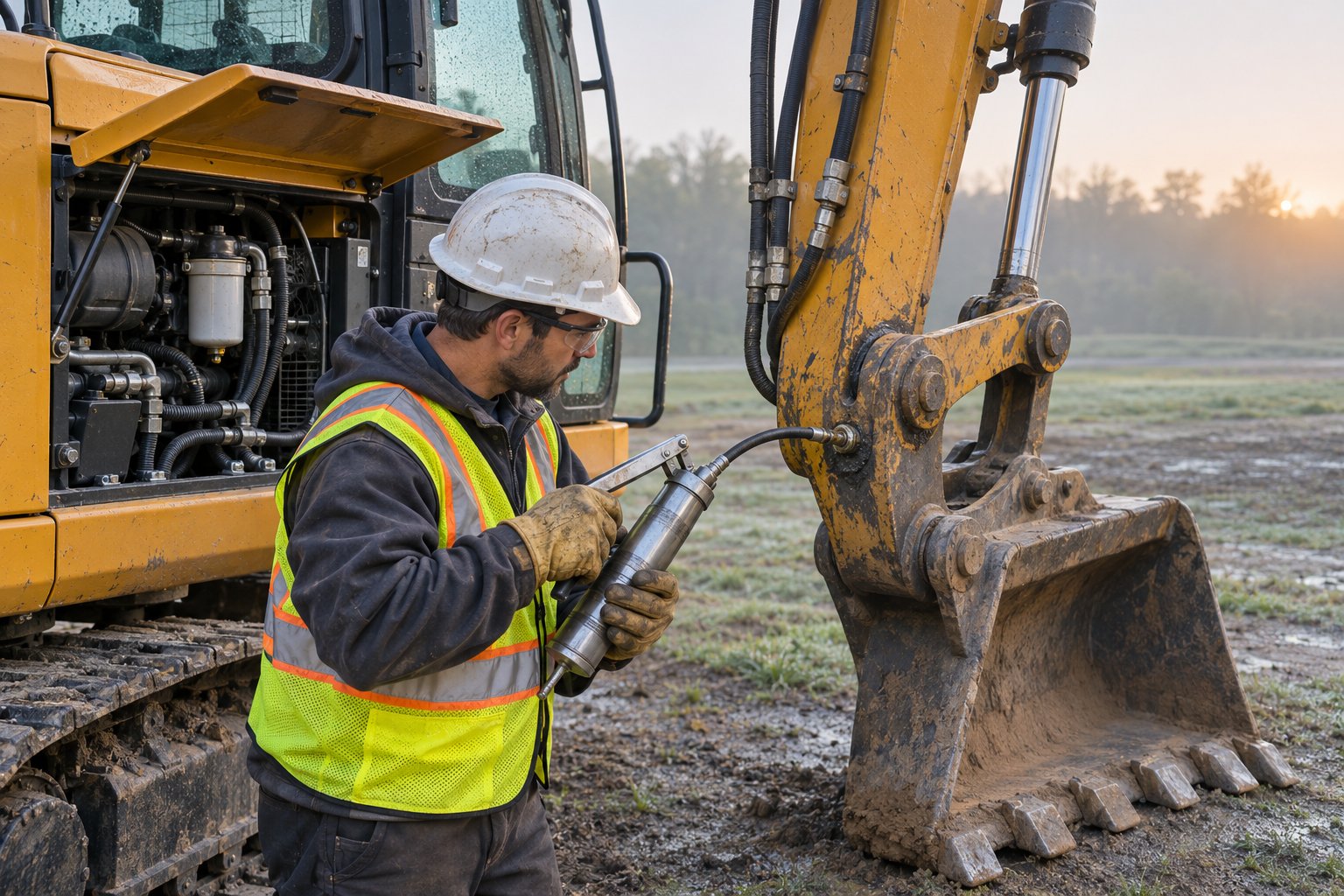
Maintenance and Serviceability Essentials for a 16 Ton Excavator
Ten minutes before the first start can save a week of downtime. When you circle a mid-size excavator each morning, you catch the seeping fitting before it becomes a burst hose. On US job sites it isn't optional either. OSHA requires a pre-shift inspection every time equipment is used.
Daily Walkaround Checks
Work the machine the same way every time. Start at the ground, circle the body, then climb into the cab.
- Undercarriage and track tension: look for damaged rollers, idlers, and shoes, and sag outside spec
- Pins and bushings: grease every point the manual lists, especially on the boom, arm, and bucket linkage
- Hydraulic hoses and fittings: check for leaks, rubbing, and wet spots under the machine
- Engine oil and coolant: confirm levels with the machine parked on level ground
- Air filter indicator: service the element when it signals restriction
- Bucket teeth and cutting edges: replace worn or missing teeth before they damage the adapters
- Lights and safety devices: test the horn, travel alarm, mirrors, cameras, and seatbelt
Service Access and Ground-Level Maintenance
Serviceability simply means how easy those checks are to do. OEM pages often promise convenient access, but you should test it yourself. Open the panels. Can you reach dipsticks, filters, and grease points from the ground? If a check is awkward, you'll notice it gets skipped on busy days.
Fluid and Filter Intervals by Category
Exact intervals depend on the model, engine, and duty. Think in categories instead:
- Engine oil and oil filter
- Hydraulic fluid and hydraulic filters
- Fuel filters and water separator
- Air filters
- Coolant
Dusty sites or heavy breaker work can call for closer attention. Whether you run an E145 Bobcat, an E165, or any rival, the OEM manual sets the hours. Follow it, not a forum post.
Using Telematics to Track Machine Health
Telematics moves the logbook from a clipboard to a screen. Bobcat's Machine IQ system, for example, lets owners of Bobcat excavators check machine health and remotely track maintenance, security, and performance data from a phone or laptop. Most systems log engine hours, fuel use, fault codes, and location. Hours drive service reminders. Fault codes flag problems early. Location data helps with fleet planning and theft recovery.
Maintenance records shape a used machine's value and reliability, and one resale study found excavators with complete records sold for about 15% more.
That paper trail matters most when you sit on the other side of the deal, judging someone else's machine and deciding whether it deserves your money.
Buying a 16 Ton Excavator With Confidence
You know the specs, the rivals, and the transport rules. So why does signing still feel risky? Because the right machine depends on your work, your budget, and the support behind it, not on the brochure.
Matching Machine Size to Your Typical Jobs
Start with the work you do most often, then let the machine follow. Run through this checklist before you talk price:
- Define your typical job types and how often you change sites
- Confirm the dig depth and lift capacity those jobs actually need
- Decide between crawler and wheeled
- Verify the actual operating configuration and weight, in the same units
- Inspect hours and service records
- Check dealer and parts support near your work area
- Compare total ownership cost, not just purchase price
New vs Used 16 Ton Excavators
The tradeoff is simple on paper. Gregory Poole notes that new machines come with warranties and fewer repairs, while used equipment may be more affordable upfront. If upfront cost leads your decision, used options include:
- The used Komatsu PC160-7 from JIUHONG, listed at 16,500 kg machine weight with a 0.65 m3 bucket. It sits near the 16 metric ton class, though it is not a verified exact 16,000 kg or 16 US short ton spec. Request a current quote and confirm the configuration, inspection details, and emissions compliance for your market.
- Ex-rental units from dealers, which often come with service histories kept by the dealer's own technicians
- Private-party and auction machines, which call for the most careful inspection
Whatever the source, inspect before you commit. The Custom Truck One Source checklist flags fresh paint that may hide rust or repairs, exhaust smoke color (blue for burning oil, white for coolant, black for fuel problems), and hydraulic drift, where a raised implement slowly lowers on its own. Look hard at the undercarriage too, since replacing it is a major expense.
Evaluating Dealer Support and Parts Availability
A great machine with no local parts is a parked machine. Ask how quickly filters, hoses, and undercarriage parts arrive, and whether technicians will come to your site. This matters even more for imported used units, where parts may travel through different channels.
Financing Offers vs Total Cost of Ownership
OEM promotions are tempting. Bobcat's current special offers on large excavators run 0% for up to 36 months or up to a $16,000 USD rebate, ending December 31, 2026. If you're eyeing a large Bobcat excavator such as the E165 Bobcat, that deal can be real value. But the Bobcat E165 price varies by dealer, configuration, and region, so request a current quote rather than trusting figures online.
Then look past the monthly payment. Whether you shop Bobcat full size models or a rival, a simple ownership math keeps you honest:
- Add purchase price, fuel, maintenance, insurance, and other operating costs
- Subtract the projected resale value
- Divide by expected hours to get your cost per hour
A cash rebate on a thirstier machine, or 0% financing on one with weak local support, can cost more over its working life.
The smartest buy is the machine that fits your most common jobs at the lowest cost per hour, backed by records you can verify and a dealer you can reach.
Get those three things right, and the 16 ton label stops being a puzzle. It becomes a practical tool sized to the work you actually do.
16 Ton Excavator FAQs
1. How much does a 16 ton excavator actually weigh?
It depends on which ton the label uses and which weight is quoted. Most machines sold as 16 ton class have an operating weight somewhere between about 14 and 18 metric tons. 16 metric tonnes equals 16,000 kg (about 35,270 lb), while 16 US short tons equals 32,000 lb (about 14,515 kg), so the same badge can hide a gap of roughly 1,500 kg. Real models show the spread. The CASE WX140E wheeled machine is listed at 15,860 kg, and the Hyundai HX160A L at 17,695 kg operating weight. Also check whether a listing shows machine weight (the base unit) or operating weight (which adds fuel, fluids, operator and the fitted bucket). Always compare the same weight type in the same unit.
2. What jobs is a 16 ton excavator best suited for?
This size class works best as an all-rounder. It has enough dig depth, breakout force and lift capacity for utility trenching, sewer and water laterals, foundation work, site preparation and truck loading, yet it stays light enough to haul without heavy-haul logistics. Road crews use it for ditching and culverts, often with a reduced tail swing or wheeled undercarriage for tight corridors. With a breaker it handles light demolition, and with a hydraulic thumb, tiltrotator or grading bucket it suits landscaping and farm work such as ponds, drainage ditches and clearing rocks or stumps. If your work is mostly mass excavation or all-day heavy truck loading, a 20+ ton machine may pay off better. For tight backyards or indoor jobs, a compact model is usually cheaper to run.
3. Should I choose a crawler or a wheeled 16 ton excavator?
Decide based on where the machine spends most of its time. A crawler spreads its weight over tracks, giving low ground pressure, strong traction and excellent stability in mud, soft soil and rough terrain, which makes it the default for earthmoving and demolition. The downside is that it needs a low loader to change sites. A wheeled excavator can drive itself between jobs at road speed and is gentler on paved or finished surfaces, so it suits roadwork, utilities and urban crews who move often. It usually relies on outriggers or a dozer blade for stable lifting and struggles in deep mud. If you work near pavement with a crawler, rubber pads on steel tracks offer a practical compromise.
4. What do I need to transport a 16 ton excavator?
Plan around the real shipping weight, not the brochure figure. Transport weight changes with blades, extra counterweight, two-piece or offset booms, outriggers, couplers and any attachments left on the deck, so get a scale ticket or the seller's build sheet. Measure transport height and width with the boom folded and blade fitted, confirm the trailer and axle ratings, and secure the machine only at its designated tie-down points with rated chains and binders. In the US, federal Interstate limits cap gross vehicle weight at 80,000 lb, and a tractor, lowboy and mid-size excavator can approach that quickly. Oversize or overweight permits come from each state or province, so check every jurisdiction on your route. Watch units carefully: a machine listed at 16,500 kg is about 36,400 lb.
5. Is a used 16 ton excavator a good buy?
A used machine can be a smart choice when upfront cost matters most, as long as you verify its condition and history. New machines bring warranties, current emissions engines and telematics, while used units trade some of that for a lower purchase price. One example is the used Komatsu PC160-7 listed by JIUHONG, with a 16,500 kg machine weight and a 0.65 cubic meter bucket, which gives building, agricultural and excavation contractors an option near the 16 metric ton class. It is not a verified exact 16,000 kg or 16 US short ton specification, so request a current quote and confirm the actual operating configuration. For any used machine, review hours and service records, inspect the undercarriage, watch exhaust smoke and hydraulic drift, confirm emissions compliance for your market, and check local parts and dealer support.