

What a Bull Dozer Is and Why the Name Stuck
Ever watched a machine shove a mound of dirt across a job site as if it weighed nothing? That's a dozer at work. Before you compare blades, sizes, or prices, it helps to know exactly what you're looking at.
What Is a Bulldozer in Plain Terms
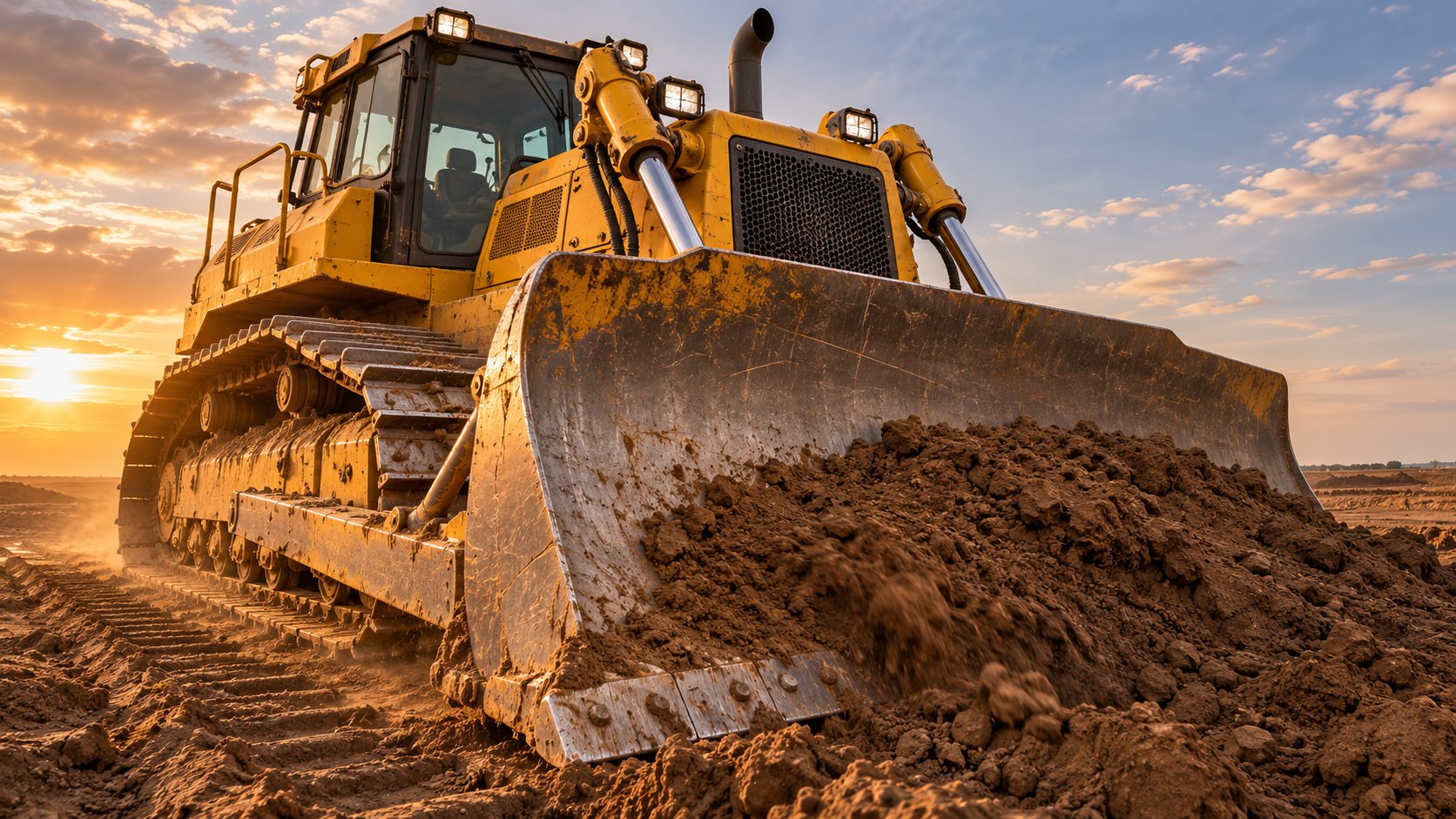
A bulldozer is a powerful tractor, usually running on continuous tracks but sometimes on large rubber tires, fitted with a heavy metal blade at the front for pushing soil, sand, rock, rubble, and debris. Many units also carry a rear ripper, a claw-like shank that loosens hard or compacted ground before the blade moves it.
In short, the definition of bulldozer comes down to one job: pushing. The Wikipedia entry notes that the term properly applies only to a motorized unit with a blade designed for pushing. That's why a front-end loader, which is built to scoop and carry material, isn't technically a bulldozer, even though people often mix the two up.
Bull Dozer or Bulldozer and Where the Word Comes From
You'll see both spellings online, but bulldozer as one word is the standard form. Dozer is the everyday short version you'll hear on site, and you may also see the formal name track-type tractor in spec sheets.
The word's history is far less tidy than the machine. In the 1870s United States, to bulldoze meant to intimidate by violent and unlawful means. The Saturday Evening Post traces the term, originally spelled bulldoser, to violence used to suppress Black voters around the 1876 presidential election. Over time, the meaning broadened to forcing a way through any obstacle. Early tractor attachments were first called bull grader blades, and only later did bulldozer come to describe the whole machine rather than just the blade.
Why the Dozer Still Matters on Job Sites
Imagine a raw piece of land that needs to become a road, a building pad, or a level field. Dozers clear brush, cut and fill grades, and push material in construction, mining, quarrying, farming, and military engineering. Their tracks spread the machine's weight, giving strong traction and stability on soft, steep, or uneven ground.
Still, no single dozer does every job well. A machine that excels at ripping rock in a mine would be clumsy on a tight residential lot. That's why this guide follows one organizing principle: match the machine to the job. And making that match starts with understanding what actually happens between the engine and the blade.
How a Bulldozer Machine Works From Engine to Blade
Sounds complex? A bulldozer machine is really three systems working together. A drivetrain creates pushing force, an undercarriage puts that force into the ground, and hydraulics aim the blade. Once you see how each one works, spec sheets and inspection reports start to make a lot more sense.
Power Flow From Engine to Tracks
Dozing is about torque, not top speed. HBXG's crawler dozer guide points out that low-speed torque, transmission performance, and hydraulic response matter more than horsepower alone. Here's how power travels through a typical crawler bulldozer:
- Diesel engine: Converts fuel into mechanical power and feeds both the drivetrain and the hydraulic pump.
- Torque converter and transmission, or hydrostatic drive: A mechanical setup offers simple service and direct power transfer. A hydrostatic drive uses hydraulic pumps and motors for smoother speed control and easier maneuvering.
- Steering system: Changes the speed or direction of each track so the machine can turn, pivot, or hold a straight line under load.
- Final drives: Planetary gears turn high-speed input into low-speed, high-torque output, which H&R Parts credits as the source of a dozer's pushing power.
- Sprockets and tracks: The toothed sprocket engages the track pins and bushings, much like a bicycle chain, and drives the track around the rollers and idlers.
Inside the Crawler Undercarriage
Put a track next to a tire and you'll notice how much more ground the track touches. That bigger footprint spreads the machine's weight, which lowers ground pressure and boosts traction when the blade is loaded. Here are the key parts:
- Track chains: Links, pins, and bushings joined into a continuous loop.
- Track shoes: Plates bolted to the chain, with raised grousers that bite into mud, snow, and loose soil.
- Sprocket: The drive cogwheel that pulls the chain forward or backward.
- Idlers: Wheels at the track ends that guide the chain and, with the track adjuster and recoil spring, set track tension.
- Track rollers: Bottom rollers that carry the machine's weight and keep the track aligned.
- Carrier rollers: Top rollers that support the upper run of track and stop it from sagging.
These parts grind against each other under constant impact and abrasion. That's why undercarriage upkeep ranks among the highest maintenance and operating costs on any dozer machine. Tension matters too. A loose track saps power, while a track that's too tight, or packed with mud, overloads every component.
Hydraulic Blade Control and the Four Axes
A hydraulic pump sends pressurized oil to the blade cylinders, and the operator's controls decide where that oil goes. Depending on the blade, it can move on up to four axes:
- Lift: Raises or lowers the blade to set cut depth, carry a load, or release material at the dump point.
- Tilt: Drops one end of the blade lower than the other, handy for cutting ditches, shaping crowns, or forcing a corner into hard ground.
- Angle: Swings the blade left or right so material rolls off one side, ideal for side-casting and backfilling trenches.
- Pitch: Rocks the top of the blade forward or back to change how aggressively the cutting edge attacks. Operators pitch forward to dig and back to carry or finish.
Not every blade offers every axis. Large straight and universal blades typically lift and tilt, while full angle and pitch control comes on angle and variable pitch, angle, tilt designs that Caterpillar describes as built for finish grading. Wrong settings cost real money, since poor blade adjustment raises fuel use, cuts production, and stresses the frame and cylinders. Many dozers also run a rear ripper off the same hydraulic system, using cylinders to drive shanks into compacted soil or soft rock.
All of this assumes the power ends up on steel tracks. Swap those for big rubber tires, and the same engine and blade start behaving like a very different machine.
Bulldozer Types Compared Crawler Versus Wheel Dozer
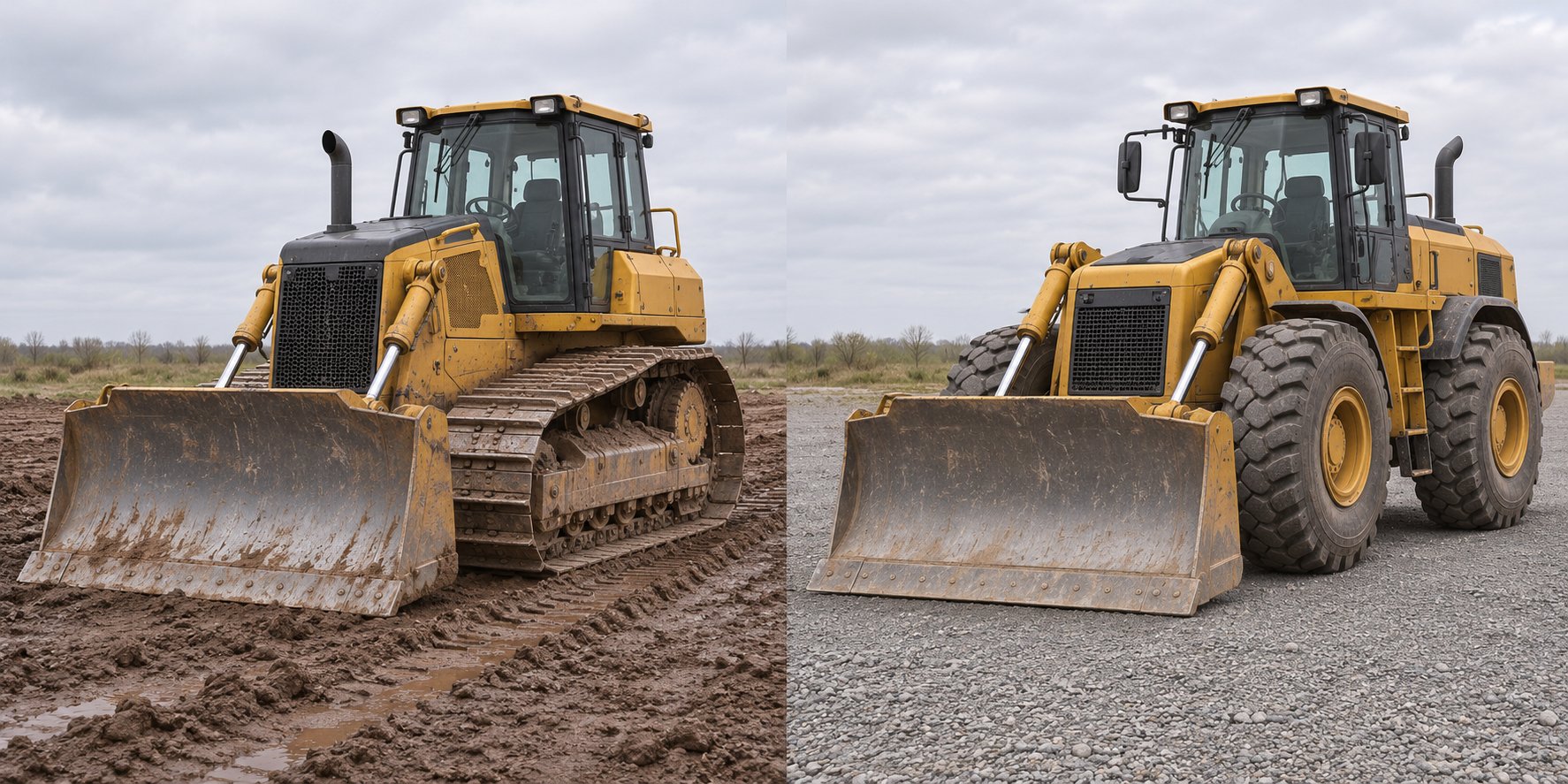
When you picture a dozer, you probably see tracks. Yet two main bulldozer types roll onto job sites: the crawler dozer on tracks and the wheel dozer on large rubber tires. Both push, spread, level, and backfill. The difference shows up when the ground turns soft, the slope gets steep, or the next work zone is miles away.
Crawler Dozers for Traction and Soft Ground
A crawler spreads its weight over a long track footprint. That keeps ground pressure low and traction high in mud, clay, sand, and rubble. Tracks also won't puncture on sharp debris, and they hold the machine steady on steep grades, as Cleveland Brothers explains. That's why crawlers dominate mining benches, forestry roads, landfill slopes, embankments, and rough grading.
Two variants are worth knowing. Low ground pressure (LGP) crawlers use wider tracks and wider blades so they can float over swampy, saturated, or sandy terrain, which makes them common on pipeline and energy work. There's a tradeoff, though. DOZR notes that wide tracks resist turning, which drives up undercarriage wear and fuel use, so a standard crawler is usually the better pick on firm ground. At the other end of the scale, mini and compact crawler dozers trade raw pushing force for maneuverability, easy transport, and fine grading on tight sites.
Wheel Dozers for Speed and Mobility
Imagine a road crew maintaining shoulders spread across several miles. Bulldozer wheels let the machine drive between sections far faster than a crawler, often without waiting on a trailer. Most wheel dozers use an articulated frame for efficient turning, and their tires are gentler on asphalt, compacted dirt, and turf. They shine in highway maintenance, stockpile management, aggregate yards, and large sites with firm travel lanes. The catch? On wet clay they can spin and leave ruts, and sharp rock or demolition debris chews through tires quickly.
Crawler vs Wheel Dozer Side by Side
| Factor | Crawler Dozer | Wheel Dozer |
|---|---|---|
| Travel speed | Lower; usually trailered for longer moves | Higher; can often self-propel between zones, subject to local rules |
| Traction | Better on loose, wet, or steep ground | Good on firm surfaces; drops in mud and unprepared fill |
| Ground pressure | Lower, spread across tracks (lowest on LGP models) | Higher, concentrated through the tires |
| Terrain suitability | Soft ground, slopes, rough rock, ripping work | Paved, compacted, and sensitive surfaces |
| Wear considerations | Track chains, rollers, idlers, sprockets, shoes | Tires, rims, articulation joints, final drives |
| Relative cost drivers | Undercarriage replacement and transport hauling | Tire replacement, offset by fewer trailer moves |
Neither machine wins everywhere. As HBXG's comparison points out, a crawler may move more material per hour of pushing, while a wheel dozer can still come out ahead if it saves hours of relocation each shift. Large contractors sometimes run one of each for that very reason.
Choosing tracks or tires only narrows the field, though. Within each type, machines range from compact units that fit through a residential gate to giants that need special permits just to reach the site, and that spread shapes your choice as much as the drive system does.
Dozer Size Classes From Small Bulldozer to Mining Giant
Would you send a mining dozer to grade a backyard? Probably not. Yet sizing errors are among the most expensive mistakes buyers make. Size class decides how hard a machine can push, where it can fit, and what it costs to haul. As you move up the scale, horsepower, operating weight, and blade capacity climb together. On standard tracks, ground pressure usually rises too.
A practical rule of thumb from DOZR's size chart puts anything under 30,000 pounds in the small class. Machines from 30,000 to 100,000 pounds count as medium, and anything heavier is large.
Small Bulldozer and Compact Classes
A small bulldozer is built for finesse, not brute force. Caterpillar's small lineup includes the D1, D2, and D3. The D3 bulldozer is listed at a maximum operating weight of 21,810 pounds and 104 horsepower. Machines this size handle residential grading, landscaping, driveways, trench backfill, and final trim work. Their light weight protects finished ground. The tradeoff is that they lack the mass to move large stumps or boulders.
The D4 dozer sits right on the boundary. It is listed at 30,882 pounds and 130 horsepower, which places it at the entry point of the medium class. Buyers often step up to it when a D3 bulldozer runs short on pushing power.
Medium Dozers for General Earthmoving
Medium machines, roughly the Cat D4 through D8 range, are the workhorses of construction. They cover road building, commercial site prep, land clearing, and slope work. You'll notice they offer the best balance of push power and transportability. Weight matters here as much as horsepower. Weight is what keeps the tracks biting, so a powerful engine on a light frame simply spins in place.
Large Dozers and the Biggest Cat Bulldozer Models
The D9, D10, and D11 make up Caterpillar's large class, and all of them sit above 100,000 pounds. The D11 is the biggest Cat bulldozer, weighing 229,800 pounds with 850 horsepower from a C32 engine. These machines rip rock, push-load scrapers, and move overburden in mines and quarries. In exchange for that raw force, they give up agility.
| Size Class | Typical Job Types | Relative Weight/Power | Transport Considerations |
|---|---|---|---|
| Small (e.g., Cat D1-D3) | Residential grading, landscaping, backfilling | Lowest | Often fits a tag trailer; easiest site access |
| Medium (e.g., Cat D4-D8) | Road building, site prep, land clearing | Moderate to high | Lowboy trailer; wider blades may need oversize permits |
| Large (e.g., Cat D9-D11) | Mining, quarrying, heavy ripping | Highest | Heavy-haul planning; escorts or route approval are common |
Bigger is never a shortcut on tight sites. JumboBee's sizing guide warns that oversized machines can crush buried utilities and damage soil structure. They also can't finish grade around obstacles like a manhole cover. On many roads, loads under 8.5 feet wide move without permits, while wider loads trigger oversize rules. If your access road can't take a lowboy, the right dozer is the one that fits through the gate.
Size sets how much force you bring to the job. What that force actually does to the material depends on the steel bolted to the front of the machine.
Bulldozer Blade Types and the Jobs Each One Handles
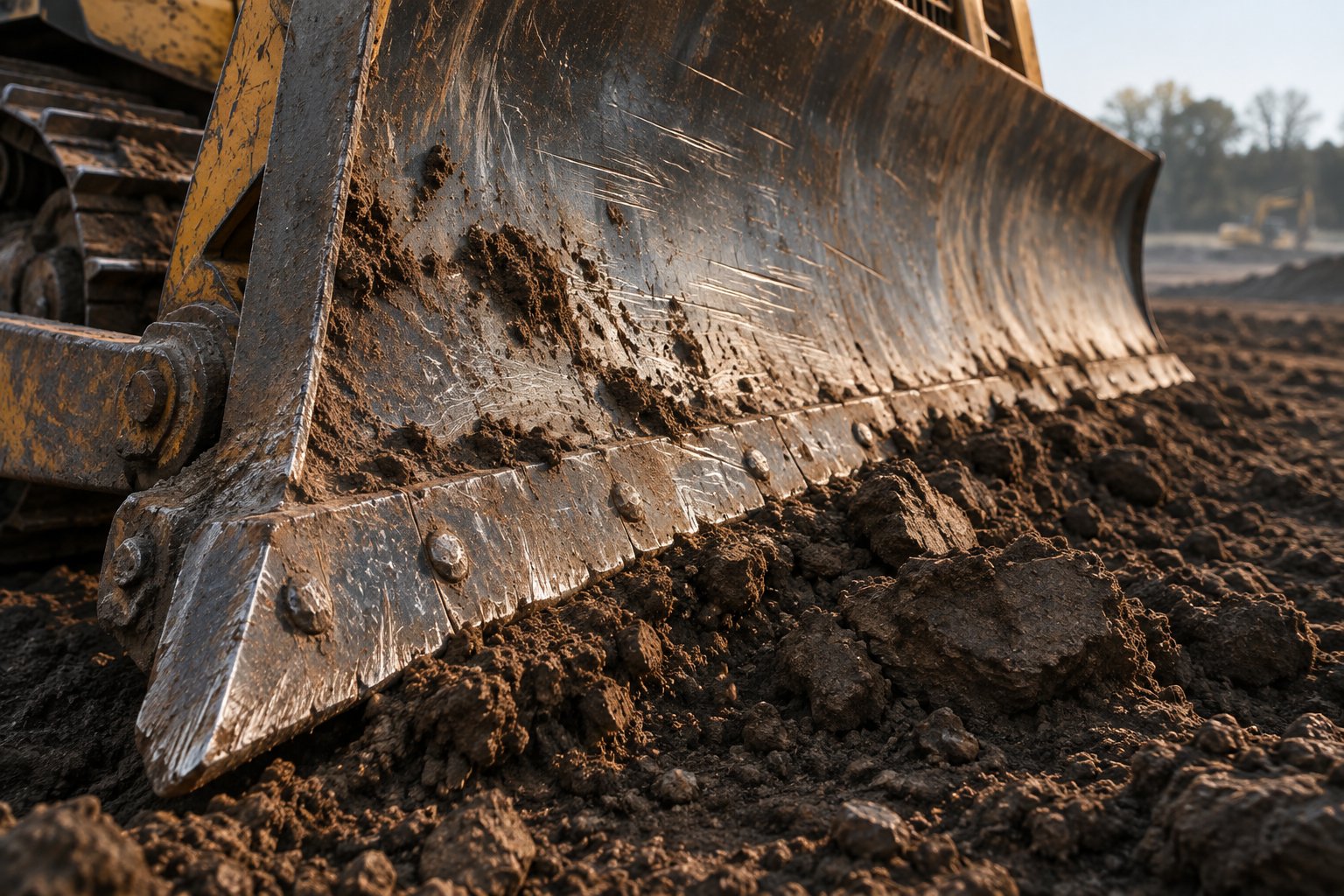
Two identical dozers can turn in very different results on the same site, and the blade is often the reason. As Preferred Equipment's blade guide puts it, a dozer is only as effective as the blade it wields. Every blade shares the same basic parts: a steel moldboard, replaceable cutting edges and end bits, push arms, and hydraulic cylinders. What changes is the shape, and the shape decides which work the blade does best.
Straight, Universal, and Semi-U Blades
These three blades are the standard choices on most mid-size and large bulldozers.
- Straight blade (S-blade): A flat, compact blade with no side wings. Its sturdy profile cuts well into dense clay, sticky soil, and rocky ground. It also levels well, so it suits short pushes, pioneering cuts, and fine grading by a skilled operator.
- Universal blade (U-blade): A tall, deeply curved blade with large side wings that keep material from spilling. It carries big volumes of loose sand, gravel, and topsoil over longer distances, which makes it common for stockpiling and mining. The catch? It digs in less easily, and it needs a machine with enough weight and power to push a full load.
- Semi-U blade (SU-blade): A hybrid with a moderate curve and shorter wings. It digs better than a U-blade and carries more than an S-blade. That balance makes it the all-around pick for many construction dozer fleets doing site prep, road subgrades, and cut-and-fill work.
Angle, PAT, and Cushion Blades
Some jobs call for moving material sideways or working alongside other machines. Specialized blades handle those tasks.
- Angle blade: Swings horizontally to either side, roughly 25 to 30 degrees depending on the design, as described by Enstruc. Material rolls off one end, which suits side-casting, ditching, and backfilling long pipeline trenches. Because it has no fixed wings, it carries less than a U or SU-blade.
- Power-angle-tilt (PAT) or 6-way blade: The operator controls lift, angle, and tilt hydraulically from the cab. This blade is common on smaller dozers and is the top choice for finish grading, crowning roads, shaping slopes, and landscape contours.
- Cushion blade: A narrower straight blade with rubber cushions mounted between the blade and the push arms. Its main job is push-loading scrapers, and the cushions absorb the impact to protect both machines. If you don't run scrapers, you probably don't need one.
Matching the Blade to the Material
Imagine pushing wet clay with a U-blade. The wide face struggles to bite into it. Swap to an S-blade, and the cutting edge goes straight in. The table below gives a quick match between each blade and the material it handles best.
| Blade Type | Design Feature | Best Material | Typical Job |
|---|---|---|---|
| S-blade | Flat, compact, no side wings | Dense clay, sticky soil, rocky ground | Pioneering, short pushes, grading |
| U-blade | Tall curve with large side wings | Loose sand, gravel, topsoil | Long pushes, stockpiling, mining |
| SU-blade | Moderate curve, short wings | Mixed soils and general fill | Site prep, road building, cut and fill |
| Angle blade | Pivots left or right | Loose fill and spoil | Side-casting, ditching, trench backfill |
| PAT blade | Hydraulic lift, angle, and tilt | Topsoil and finish material | Finish grading, slopes, landscaping |
| Cushion blade | Rubber shock cushions | Scraper loads | Push-loading scrapers |
Blades rarely work alone. A rear ripper breaks up compacted soil or soft rock so the blade can move it. Land clearing jobs may call for root rakes, grid blades, or stump splitters. Landfills and coal yards use taller, purpose-built blades for bulky, loose material.
Still, the blade is only half of the equation. A skilled operator can make a plain S-blade carry like a winged one just by cutting the right kind of path. Technique like that is how a good blade match turns into real production on site.
Core Bulldozing Techniques Every Beginner Should Understand
What does it really mean to bulldoze? On a job site, the bulldozing meaning is practical rather than historical. It means using a blade to cut, carry, and place material exactly where the plan calls for it. The machine supplies the force. Technique decides whether that force builds a level pad or just a messy pile.
Pushing, Spreading, and Grading
These three tasks often use the same blade, but each has a different goal. When pushing, the blade drops low to load material and then rides near the surface to carry it to a dump point. When spreading, the blade sits higher so the load feeds out underneath in even layers. Grading is the most delicate task. The blade barely skims the surface, and small adjustments bring the ground to a target elevation.
One tip from SITECH Southwest applies to all three: make short cuts instead of long drags. An overloaded blade spills material off its ends, so a long pass often wastes more effort than it saves.
Slot Dozing and Ripping Hard Ground
You'll notice that some material slips off the blade ends on almost every pass. Slot dozing turns that spillage into an advantage. The operator pushes along the same path again and again, and the spilled soil builds side walls that act like extra blade wings. SITECH notes this method can increase the amount the blade holds by up to 30%.
What if the ground is too hard for the blade to bite? Then the ripper goes first. Ripper shanks loosen compacted soil or soft rock so the blade can move it afterward. Caterpillar's ripping guide describes ripping as a straight-line procedure. It recommends working with the grain of the rock, ripping downhill when possible, and avoiding sideslopes. The guide also says the shank should be up and clear of the ground before the machine reverses.
Backfilling and Finishing Work
Backfilling returns excavated spoil to trenches, pipe runs, and foundation edges. Finishing is the final pass that gives the surface its correct slope and a smooth, drainable surface. The quick reference below links each technique to the blade guide above.
- Pushing: Moving material from cut to fill or to a stockpile. It's used for bulk earthmoving, and U- or SU-blades suit it best.
- Spreading: Laying dumped piles out in uniform lifts. It's common on fill sites, and SU- or S-blades handle it well.
- Grading: Shaping ground to a set elevation. It's used for pads and roadbeds, and an S-blade or PAT blade is the usual choice.
- Slot dozing: Using spillage walls to carry bigger loads. It fits long, repeated pushes, and a U- or SU-blade works best.
- Ripping: Breaking compacted soil or soft rock with shanks. It comes before dozing hard ground, and an S- or SU-blade then clears the loosened material.
- Backfilling: Rolling spoil back into trenches. It's used on utility and pipeline work, and an angle blade is ideal.
- Finishing: Making the final precision passes. It's the last step on any graded surface, and a PAT blade, often paired with grade control, suits it best.
These techniques are explained for understanding only, and anyone operating a bulldozer needs proper training and must follow the manufacturer's operating and safety guidance.
The mix of techniques changes from one industry to the next. A mining crew may slot doze overburden for an entire shift, while a landscaper spends most of the day on finish passes. Those patterns explain why each industry tends to choose its own type of dozer.
Where Bulldozers Work Across Industries
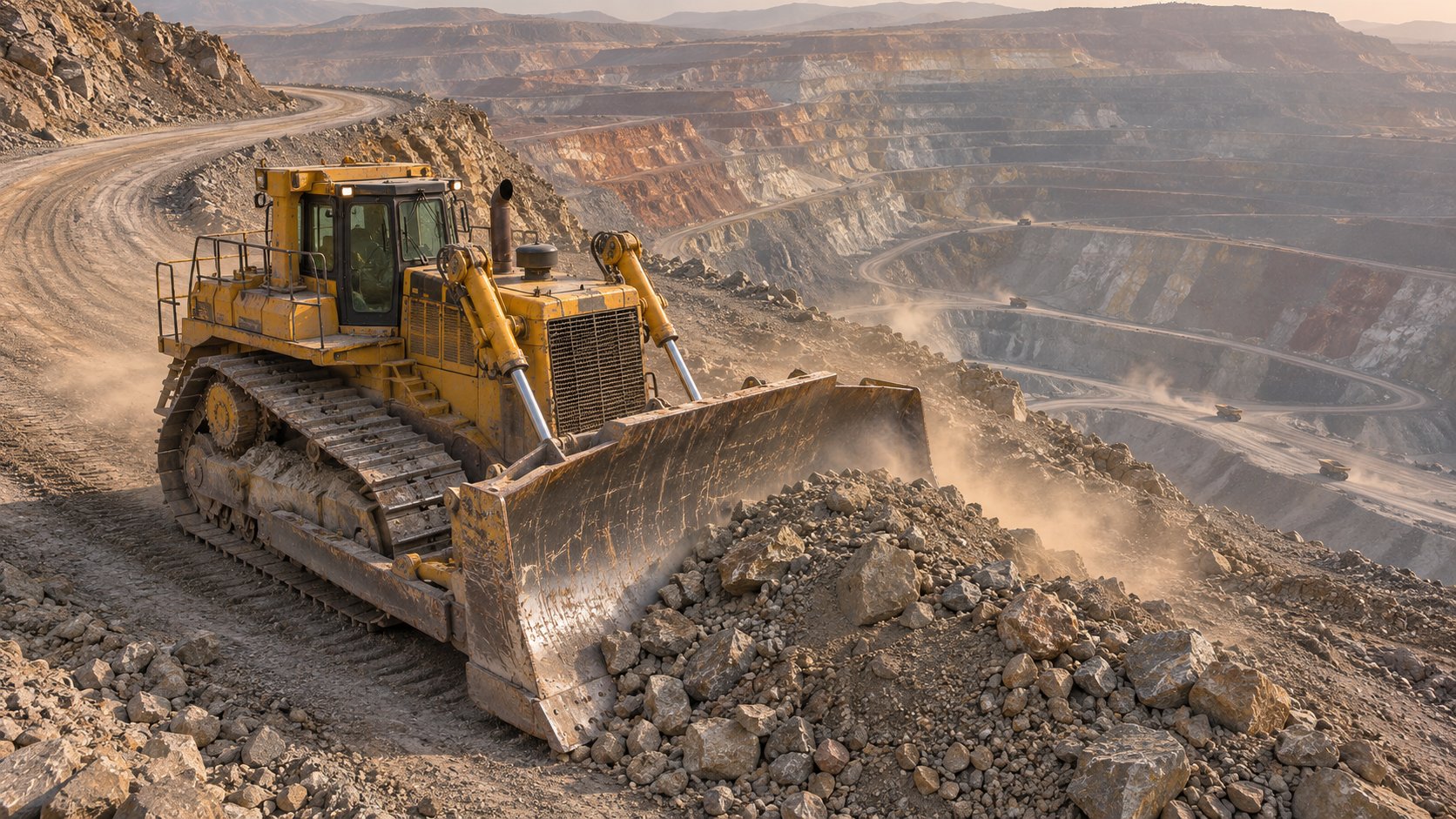
Drive past a highway project, an open-pit mine, and a freshly cleared farm field in the same week. You'll likely spot a dozer at each one, doing very different work. Mustang Cat names construction, agriculture, and mining as the three fields that use bulldozers most often. Each field tends to favor its own pairing of machine, blade, and attachment.
Construction, Road Building, and Site Prep
A construction bulldozer clears vegetation and rocks before building starts. It also levels building pads, backfills trenches, and shapes slopes so water drains properly. On road projects, dozers cut through hills, build embankments, and level the roadbed, as DOZR explains. Medium crawlers with SU-blades usually handle the bulk cut and fill. Small crawlers with PAT blades then take over for residential grading and finish work.
Mining, Agriculture, and Land Clearing
Mines put dozers to work removing overburden, developing pits, building haul roads, shaping stockpiles, and reclaiming land after extraction. That's where large crawlers with U-blades and rear rippers earn their keep. On farms, the jobs look different. Dozers remove trees and stumps, level fields for even irrigation, dig drainage ditches, and build terraces on hillsides to limit erosion.
Military and Demolition Uses
A military bulldozer is usually a heavy crawler fitted with added armor. One well-known example is the armored version of the Caterpillar D9R operated by the Israel Defense Forces' Combat Engineering Corps. The IDF describes it as powered by an 18-liter, 474-horsepower diesel engine, with a rear ripper for breaking concrete obstacles. Beyond neutralizing explosive hazards, it clears rubble, supports disaster relief, and helps repair damaged roads and infrastructure. A remote-controlled version handles the most dangerous tasks. On civilian sites, dozers also knock down structures and clear demolition debris.
| Industry | Common Tasks | Typical Dozer Type and Size | Blade | Attachments |
|---|---|---|---|---|
| Commercial construction | Site clearing, pad leveling, trench backfill | Medium crawler | SU-blade or S-blade | Ripper, grade control |
| Residential grading and landscaping | Finish grading, drainage shaping | Small crawler | PAT blade | Grade control |
| Road building | Hill cuts, embankments, roadbed leveling | Medium crawler or wheel dozer | SU-blade or S-blade | Ripper |
| Mining and quarrying | Overburden removal, haul roads, stockpiles | Large crawler | U-blade | Rear ripper |
| Agriculture and land clearing | Stump removal, field leveling, terracing | Small to medium crawler | S-blade or angle blade | Root rake, winch |
| Military and demolition | Obstacle removal, rubble and debris clearing | Large crawler, often armored | Heavy-duty front blade | Rear ripper, armor package |
Bulldozer vs Excavator vs Front Loader
Still unsure whether a dozer is the right machine? The front loader vs bulldozer question comes up often because both carry a big tool up front. Their core jobs are quite different, though:
- Bulldozer: Pushes and grades. It clears land, levels terrain, and moves earth across the ground. Its blade has minimal lifting ability, so it can't load a dump truck.
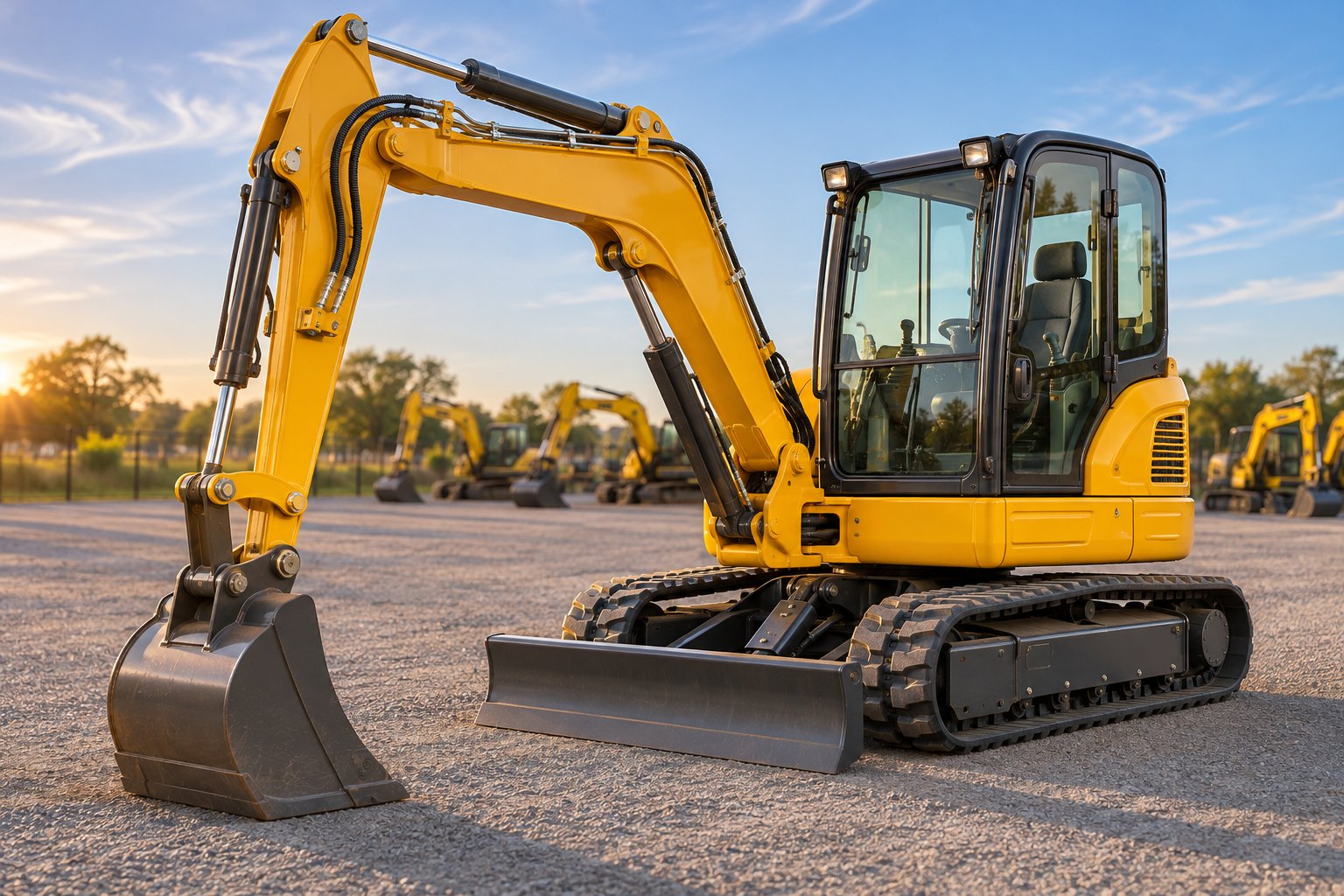
- Excavator: Digs and lifts. Its boom, arm, and bucket reach below grade for trenches, foundations, and deep cuts, then swing the material into trucks.
- Front loader: Scoops and carries. Its bucket picks up gravel, soil, or debris and places it into trucks or onto stockpiles, often on tighter sites.
Big projects often run all three side by side. When the main job is reshaping ground, however, the dozer is usually the machine that belongs there. Even within dozers, the large mining crawler and the small grading machine in the table above differ just as sharply in what they cost to buy, run, and maintain.
Bulldozer Price and Ownership Costs Beyond the Sticker
When you start shopping, the first number you see is the asking price. It's also the least complete one. A bulldozer price depends on size class, hours, condition, configuration, and local market demand. Two machines with the same model name can carry very different asks once the blade type, ripper, cab, and grade control are counted. One dealer listing reviewed by Paramount Financial even warned that attachments shown in photos may not be included. Treat any online figure as a starting point, and ask dealers for current written quotes that spell out exactly what's included.
New vs Used Bulldozer Purchase Considerations
A new machine costs more upfront. In return, you get full factory warranty coverage, current emissions and grade-control technology, and a known history from day one. The catch is depreciation, which JumboBee's TCO guide notes is steepest in the first two years.
A used dozer lowers the entry cost and skips that early drop. Warranty coverage, though, is often limited or absent. Condition is harder to verify, and financing may come with higher rates and shorter terms. Put simply, new buys certainty. Used trades some of that certainty for capital you can spend elsewhere.
Rent or Buy a Dozer
Renting suits short or seasonal work, and rental firms often handle maintenance and repairs. Buying pays off when the machine stays busy. Before you commit, run through questions like these, adapted from a rent-vs-buy checklist:
- Can I keep the dozer working 10 to 12 months a year?
- How long does this project run, and is more work lined up behind it?
- Can I haul it myself, or does every move need a hired lowboy?
- Do I have secure storage when it sits idle?
- Do I have the mechanics and tools to maintain it in-house?
- What happens to my schedule if it breaks down mid-project?
Total Cost of Ownership Drivers
The dozer machine price is only the first line in the ledger. Undercarriage care alone typically accounts for about 50 percent of a machine's lifetime maintenance costs, a manufacturer estimate reported by Heavy Equipment Guide.
| Cost Driver | Why It Matters | How to Control It |
|---|---|---|
| Fuel consumption | Often the largest daily operating expense | Cut idle time and match machine size to the job |
| Routine maintenance | Skipped service can lead to major component failures | Follow manufacturer intervals and keep records |
| Undercarriage wear | Tracks, rollers, and sprockets wear constantly | Set correct track tension, clean out packed mud, and limit high-speed reverse |
| Wear parts | Cutting edges, end bits, and ripper tips wear away | Rotate or flip edges and replace tips before the base metal wears |
| Insurance | Premiums scale with machine value and site risk | Compare policies and secure machines against theft |
| Transport | Heavy hauls add permits, trailers, and lost time | Plan moves ahead and keep equipment close to the work |
Many of these costs trace back to how a machine was treated before you owned it. On a used dozer, that history shows up in the tracks, hoses, and service records, so a careful inspection tells you a great deal.
Used Bulldozer Inspection Checklist Before You Buy
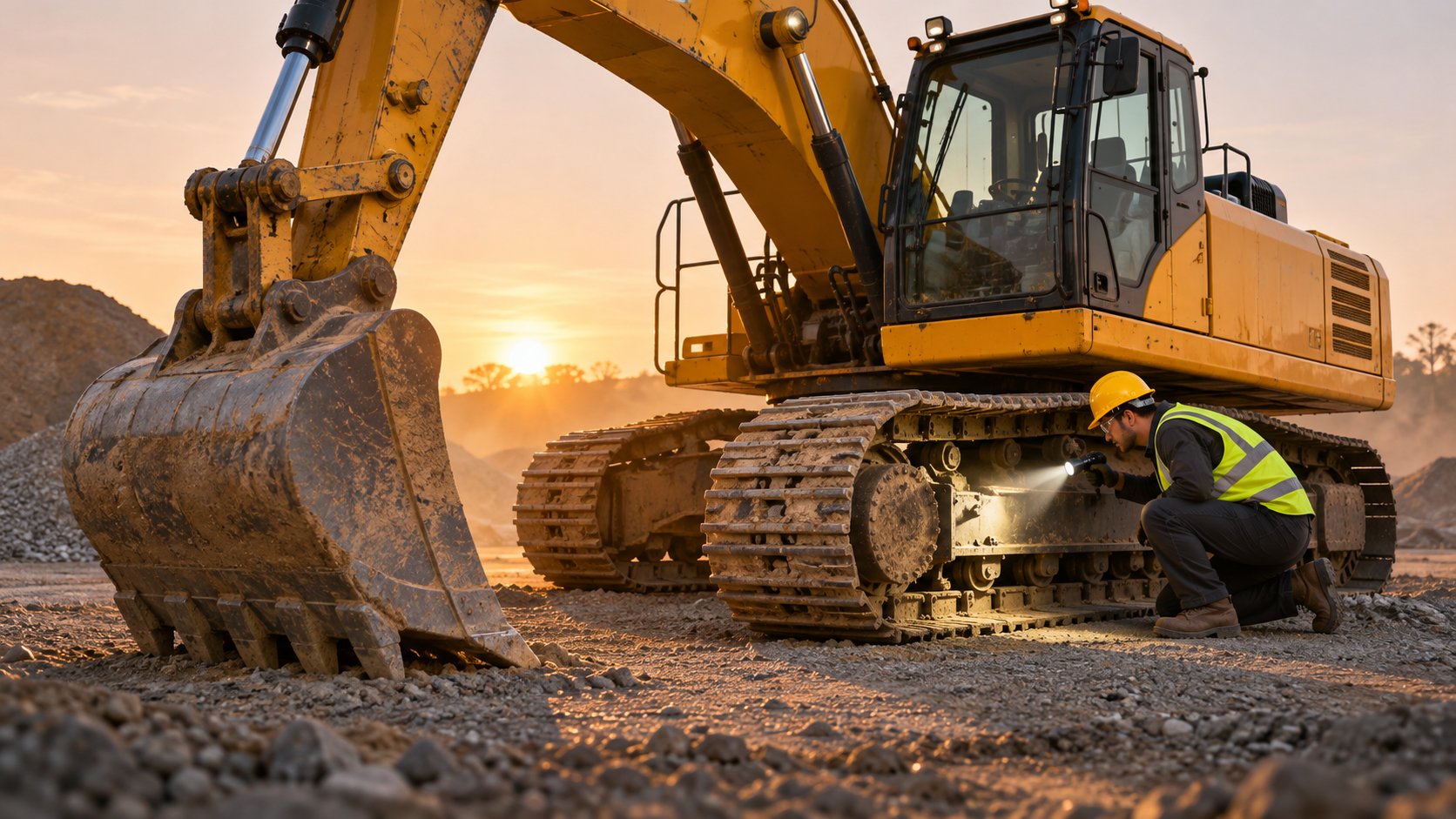
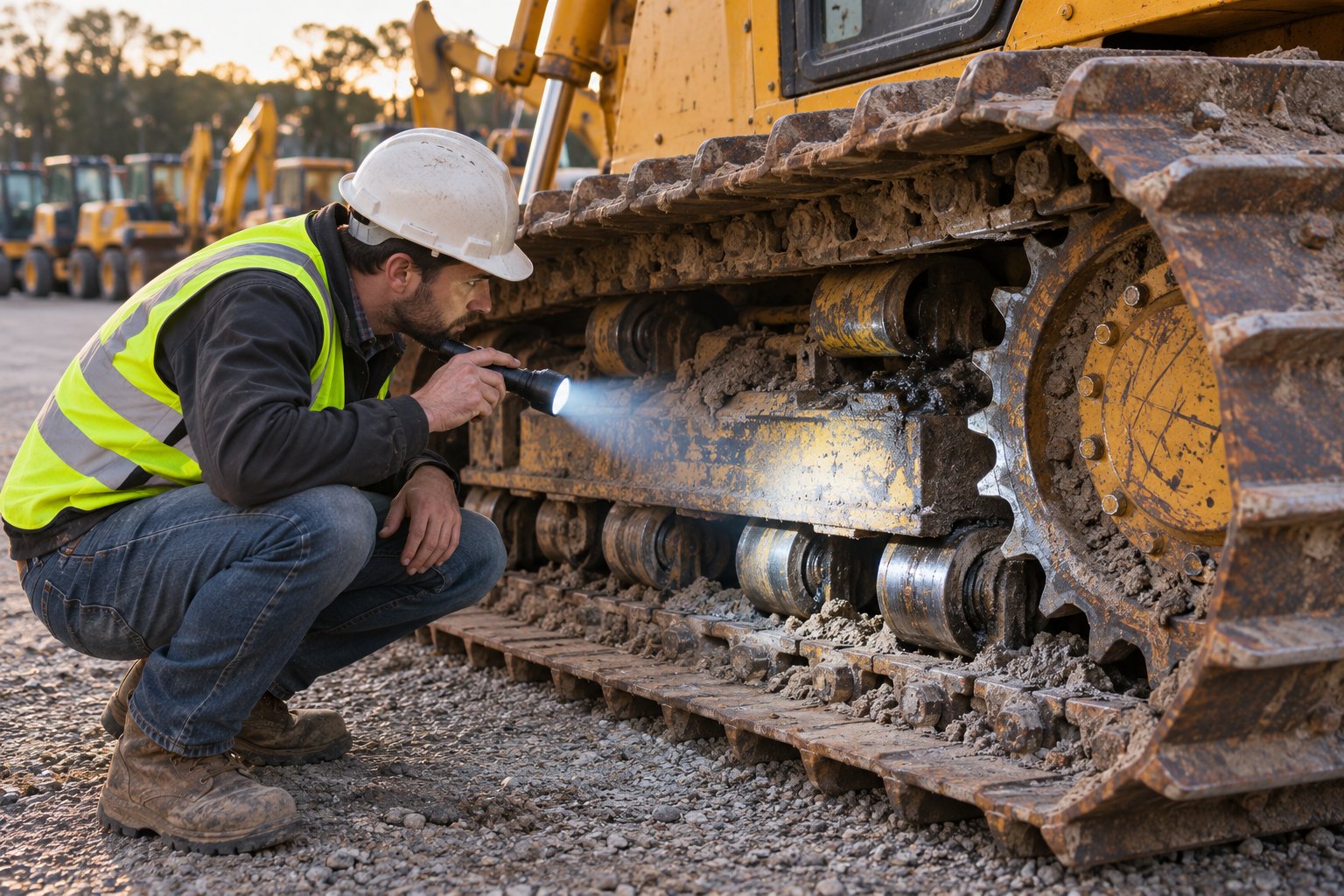
Picture a Caterpillar dozer for sale with fresh yellow paint and a tempting asking price. Looks like a great deal, right? Not so fast. Lihang's inspection guide warns that a new coat of paint can hide deep structural and hydraulic problems. The checklist below helps you look past the shine. Print it, bring a flashlight, and work through it in order on site.
Undercarriage Wear Checks
Start low. Ritchie Bros. calls the undercarriage the most important part of a crawler and the most expensive to repair. Inspect both sides. An operator who favored one steering direction or worked side hills will often wear one track faster than the other.
- Track chain stretch: Reach under the rail and feel the bushings. A round shape is good, while a compressed oval means wear. If you feel wear on the top of a bushing, the pins and bushings have already been turned, leaving less than half their wear life. Also note how far the slack adjuster has been extended, since a long extension signals internal wear.
- Sprocket teeth: Teeth that look sharp, pointed, or thin point to worn bushings and a stretched track.
- Rollers: Look for cupping on the top and bottom rollers, excessive flange wear, and oil leaking around the seals.
- Idlers: Check surface wear and outer edge thickness, and confirm the idlers sit in proper alignment.
- Track shoe grousers: Check plate thickness and grouser height. If the grouser bar is level with the pad bolts, budget for rebuilding or replacing the shoes.
Hydraulic, Engine, and Hour Meter Checks
Once the tracks pass, move up to the systems that make the blade and engine work.
- Cylinders and hoses: Look for leaking seals, wet hoses, and dents or scratches on chrome rods. A damaged rod will chew through its seals.
- Blade drift: Raise the blade fully, set the controls to neutral, and watch it. If the blade sinks, oil is bypassing a seal in the cylinder or the control valve.
- Engine blow-by: With the engine running, check the crankcase breather. Heavy pressure or fumes signal internal engine wear.
- Exhaust smoke: A brief puff of white smoke on a cold start is normal. Sustained black smoke suggests fuel system or air intake trouble. Blue smoke means the engine is burning oil.
- Final drives: Look for oil leaks and cracks around the final drives, including the elevated high drive on a Cat bulldozer. Listen for grinding, and ask whether you can check the magnetic drain plugs for metal shavings.
- Hour meter vs records: Compare the reading with service records and confirm that the serial numbers match the paperwork. Low hours paired with worn grousers, pedals, or seats deserve hard questions.
Exploring Used Cat and Shantui Dozer Listings
With this list in hand, browsing Cat dozers for sale becomes a side-by-side comparison instead of guesswork. JIUHONG's collection of used Caterpillar and Shantui bulldozers is one place to put it to work. You can request condition details, configuration information, and a current quote for each listed machine, then check it against every item above. If you need a specific model such as a CAT D5, or a genuinely small or mini dozer, ask first to confirm availability, because a larger machine is no substitute for a compact one.
A seller's condition report only helps if you can read it, though. Words like idler, final drive, and LGP show up on nearly every sheet. Knowing exactly what each one means is what turns a stack of listings into a confident choice.
Dozer Glossary and Choosing the Right Machine
Ever opened a spec sheet and felt like it was written in code? You're not alone. The basic dozer meaning is simple: a tracked or wheeled tractor that pushes material with a front blade. The vocabulary around it is what trips up new buyers. Keep this list handy when you read listings or talk with dealers.
Bulldozer Terms Glossary
- LGP (low ground pressure): A crawler variant with wider tracks that spread the machine's weight so it can float over swampy or soft ground.
- PAT blade: A power-angle-tilt, or 6-way, blade that the operator lifts, angles, and tilts hydraulically for finish grading.
- SU blade: A semi-universal blade with short side wings that balances digging ability and carrying capacity.
- Ripper shank: The claw-like tooth on a rear ripper that breaks up compacted soil or soft rock before the blade moves it.
- Idler: A wheel at the end of the track frame that guides the chain and helps set track tension.
- Sprocket: The toothed drive wheel that engages the track bushings and pulls the chain around.
- Final drive: The gear set that turns high-speed input into the low-speed, high-torque output that drives the sprocket.
- Operating weight: The machine's total working weight with fluids, operator, and standard equipment, and the usual way dozers are sorted into size classes.
- Ground pressure: The amount of weight the machine places on each unit of contact area, which affects both sinking and traction.
- Undercarriage: The complete track system of chains, shoes, rollers, idlers, and sprockets, and the largest maintenance cost on most crawlers.
Matching the Dozer to Your Job
Every dozer definition comes back to one idea: the machine exists to do a specific job. Caterpillar sorts its Cat dozers into small, medium, and large lines, and it still points buyers to a dealer for advice on matching the right machine to their needs. Use this path to narrow your own choice:
- Define the task and material: Decide whether you're grading, pushing, ripping, or backfilling, and whether you're working in clay, sand, rock, or loose fill.
- Choose crawler or wheel: Pick tracks for traction on soft or steep ground, or tires for speed and firm surfaces.
- Pick a size class: Match pushing power to the work, then confirm the machine fits both the site and the trailer.
- Select the blade and attachments: Choose an S, SU, U, angle, PAT, or cushion blade, and add a ripper or rake if the job calls for one.
- Weigh rent, new, or used: Let utilization, budget, and your tolerance for condition risk guide the decision.
Next Steps for Contractors and Fleet Buyers
Resource note: If you're ready to compare used Cat and Shantui dozers and request quotes, JIUHONG's used bulldozer collection lets you ask for condition details, configuration information, and current pricing on listed machines. Do you need a compact or mini dozer, or a particular Cat model such as the D5? Send an inquiry to confirm availability first, because a larger listed machine is not a replacement for a compact one.
The right bull dozer isn't the biggest or the cheapest one. It's the one matched to the job.
Bull Dozer FAQs for First-Time Buyers and Contractors
1. Is it spelled bull dozer or bulldozer, and what does the machine actually do?
The accepted spelling is bulldozer, written as one word. Bull dozer is a common search variant, and dozer is the short form you will hear on job sites. Spec sheets may also call it a track-type tractor. Whatever the name, the machine's core purpose is pushing. It uses a front blade to cut, move, and spread soil, rock, and debris, and many units add a rear ripper to loosen hard ground first. If a machine scoops and lifts material into trucks, it is a loader or excavator, not a dozer.
2. Should I choose a crawler dozer or a wheel dozer?
Start with the ground and the distance between work areas. Pick a crawler if your site has mud, loose fill, steep slopes, sharp rock, or ripping work, because tracks spread the weight and hold traction where tires slip. Choose an LGP crawler for swampy or saturated terrain, but keep in mind it wears faster on firm ground. Pick a wheel dozer if the machine must travel often between spread-out zones on firm or paved surfaces, since it moves quickly and is gentler on finished surfaces. If your work mixes both conditions, compare the hours a crawler saves in pushing against the hours a wheel dozer saves in relocation.
3. What size bulldozer do I need for my project?
Size the dozer to the job, the site access, and the trailer, not to the biggest machine available. Small dozers such as the Cat D3 suit residential grading, landscaping, driveways, and trench backfill where light weight protects finished ground. Medium machines handle road building, commercial site prep, and land clearing with a good balance of power and transportability. Large dozers belong in mines, quarries, and heavy ripping. Before you decide, check gate widths, buried utilities, access roads, and whether the hauled width will trigger oversize permits, because a dozer that cannot reach or work the site safely is the wrong size.
4. Which bulldozer blade is best for general construction work?
For mixed site prep and cut-and-fill work, the semi-U (SU) blade is a common all-around choice because it digs reasonably well and still carries a solid load. Switch to a straight (S) blade for dense clay, rocky ground, and precise leveling. Use a universal (U) blade for moving large volumes of loose material over longer pushes. Choose an angle blade for side-casting and trench backfill, and a PAT or 6-way blade on smaller dozers for finish grading and slopes. Cushion blades only make sense if you push-load scrapers. Pair the blade with a ripper when the ground is too compacted for the cutting edge to bite.
5. What should I check before buying a used Cat or Shantui bulldozer?
Begin with the undercarriage, since it is the costliest system to restore. Feel bushing shape, look at sprocket tooth profile, check rollers and idlers for cupping or leaks, and measure grouser height on both tracks. Then test the hydraulics by raising the blade and watching for drift, inspect cylinder rods and hoses, and look for final drive leaks. Run the engine to judge blow-by and exhaust smoke, and confirm the hour meter and serial numbers against service records. When comparing listings such as JIUHONG's used Caterpillar and Shantui bulldozers, request condition details, configuration information, and a current quote for each machine. If you need a specific model like a CAT D5 or a true compact or mini dozer, confirm availability first, since a larger machine cannot replace a compact one.