

What a Motor Grader Is and Why Buyers Need a Plan
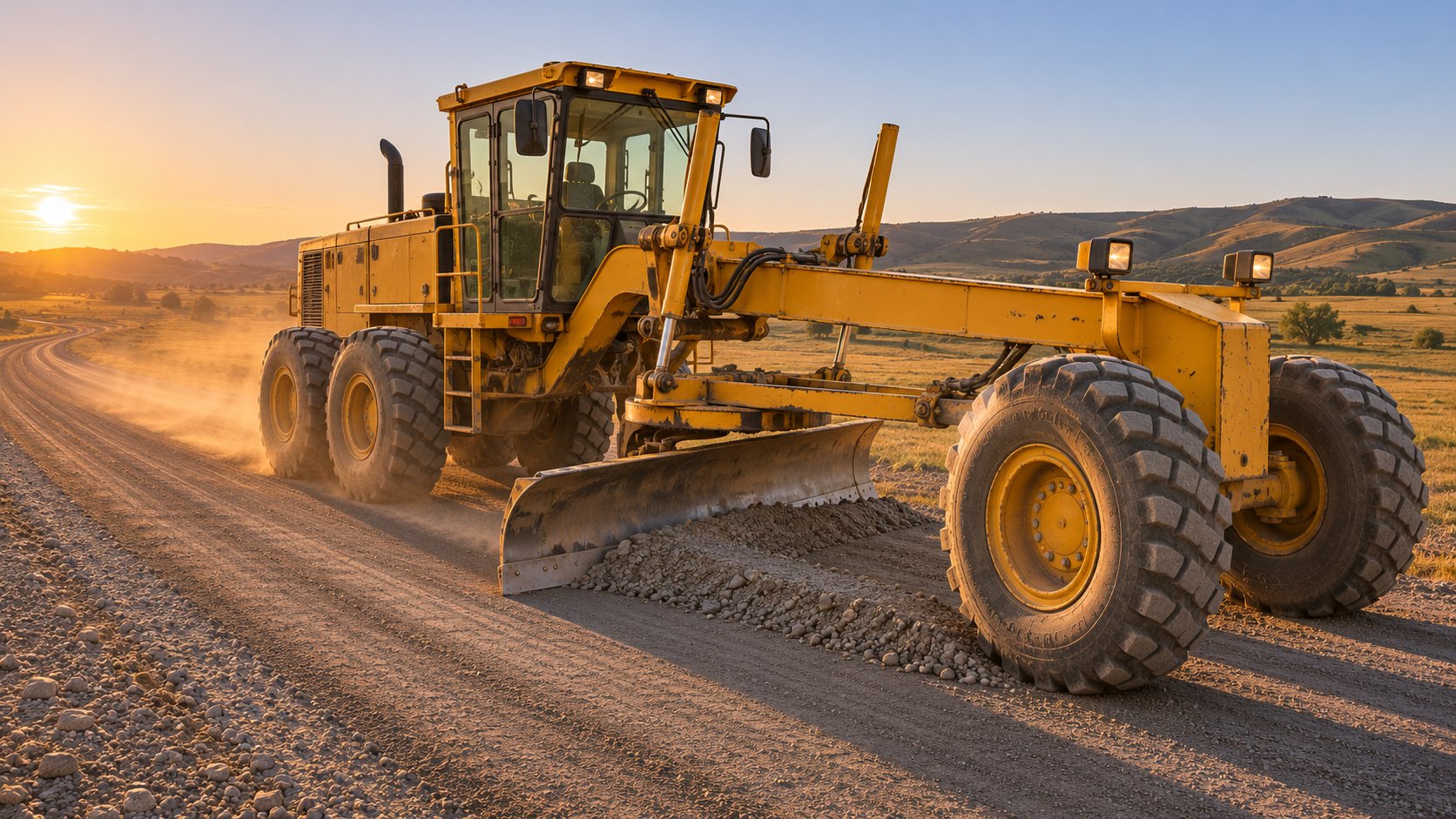
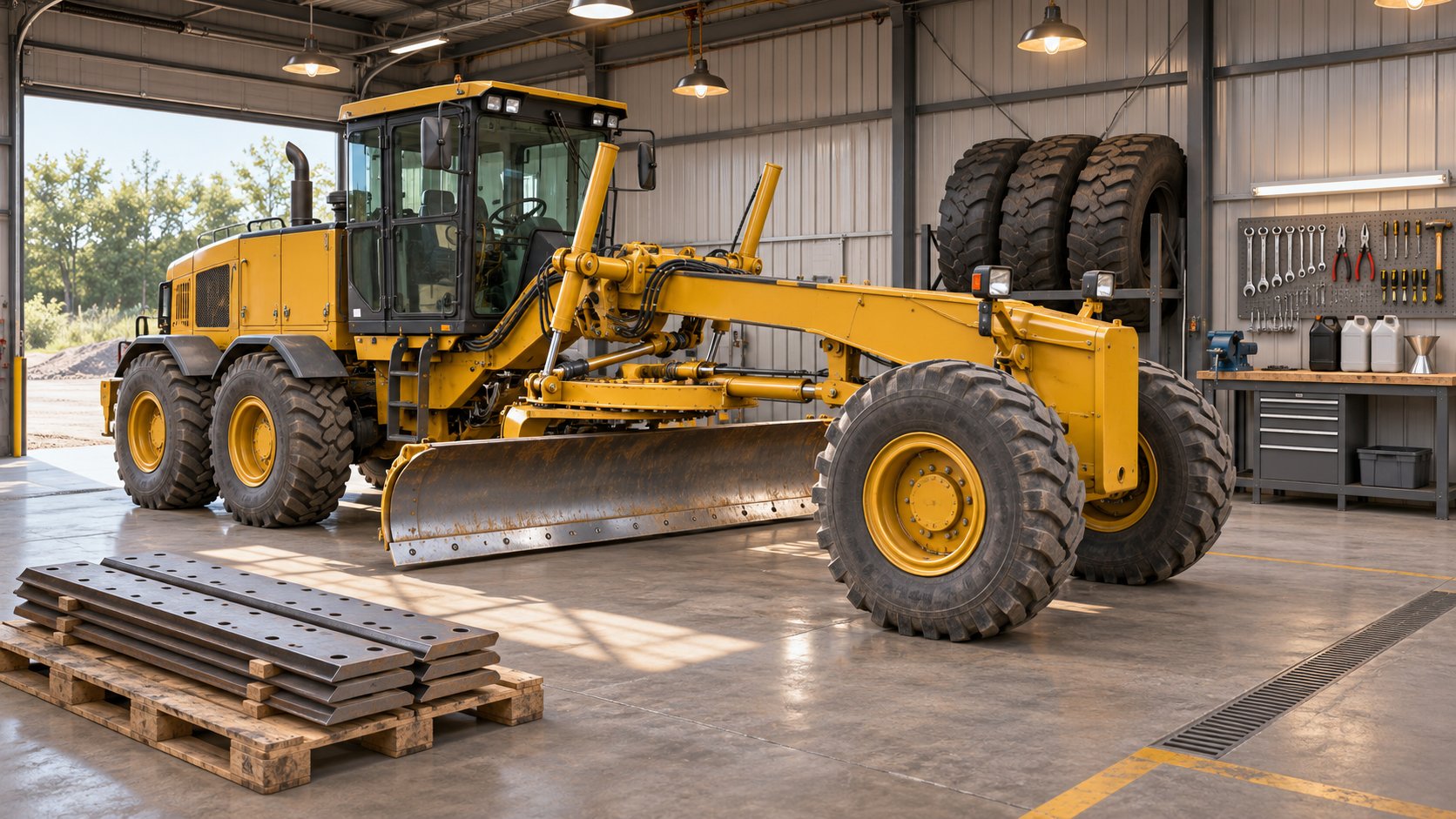
A motor grader is a self-propelled machine with a long, adjustable moldboard mounted between its front and rear axles, used to create flat surfaces, set crowns and slopes, and shape road bases.
Ever scrolled through grader listings and wondered why two machines that look almost identical carry very different prices? The answer starts with understanding what the machine actually does and which parts make it valuable.
What a Motor Grader Does on a Job Site
Think of a motor grader as a finishing tool. A bulldozer moves large volumes of material, while a grader specializes in precise elevation and slope. As this Astra equipment guide notes, it usually works after excavators, dozers, or loaders have handled the bulk earthmoving. In practice, a grader spreads and levels soil, gravel, and road base. It fine grades surfaces before asphalt or concrete goes down. It cuts ditches and shapes shoulders so water drains away, restores the crown on gravel roads, and pushes snow when fitted with a plow or wing.
You'll see the same machine described in several ways. "Road grader" reflects its main job. "Road maintainer" is common among counties and townships that keep gravel roads in shape. "Grader machine" is simply a generic label. All three usually point to the same type of equipment.
Key Parts Every Buyer Should Recognize
- Moldboard and cutting edges: The long, curved blade and the replaceable edge along its bottom that takes direct wear.
- Circle and drawbar: The drawbar carries the working assembly, and the circle rotates the blade to set its angle.
- Articulated frame: A center hinge that lets the front and rear frames angle for tighter turns and offset work.
- Tandem drive: The rear wheel groups that transfer power while following changes in the ground.
- Front-mounted attachments: Push blades, snow plows, or scarifiers that loosen compacted surfaces.
- Rear ripper: Heavier shanks for breaking hard material. It is related to a scarifier but not the same tool.
Why Research Comes Before the Listing Page
Search for "motor grader for sale" and you'll notice most results are inventory grids or auction pages: a photo, an hour reading, a price, and an inquiry button. Very few explain whether a machine suits your work. This guide is the step before that click. It gives you a framework for comparing listings across dealers, auctions, and online collections on equal terms. The first filter isn't brand or price. It's the size class your grading work actually demands.
Matching Grader Class to Your Grading Application
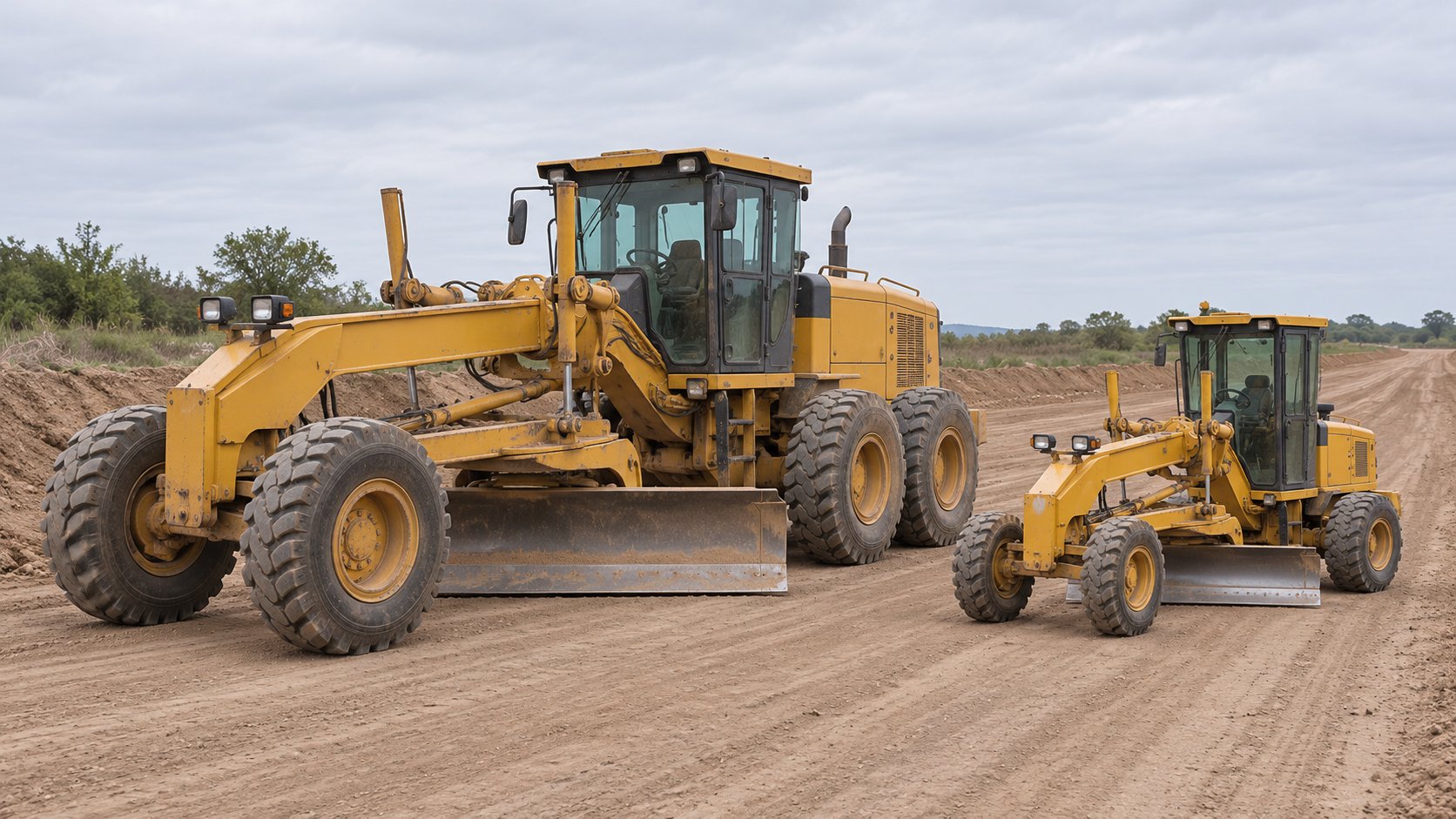
Imagine hauling a large grader to a residential cul-de-sac, only to find it can't make the turn. Or picture a small machine skating over frozen gravel on a long rural road. Both mistakes come from the same habit: choosing by budget or brand instead of size class. Buyers usually see four broad groups, which Five Star Equipment describes as compact, small, medium, and large. A SupplyPost size-class guide attaches rough figures to the larger groups. Small-frame machines run about 125-175 hp with a 12-foot moldboard. Mid-size units run 175-250 hp with a 14-foot blade, and large graders run 250-plus hp with blades of 16 feet and up.
Road Building and Heavy Construction Grading
Base preparation, cut-and-fill work, and subgrade shaping all depend on blade downforce, so mid-size and larger road graders dominate this work. Extra horsepower lets the blade cut cleanly through hard or frost-heaved material instead of riding over the top. A wider moldboard also covers more ground per pass. All-wheel drive pays off in wet, soft, or spring-thaw conditions where the tandems alone lose traction. A rear ripper adds value when you regularly have to break up compacted material before shaping it.
Road Maintenance, Ditching, and Snow Removal
Gravel road upkeep is mostly about drainage. Construction Equipment notes that a straight road surface should rise toward the centerline at about a 3 percent slope. A grader restores that crown once washboard and potholes appear. Ditch cleaning and winter work with snow wings or front plows round out the list. Small-frame machines suit urban streets and tight snow routes. Mid-size units often handle combined summer and winter duty on rural roads. Municipal and county fleets usually put visibility, maneuverability, and attachment compatibility ahead of raw power.
Fine Grading, Mining, and Compact Grader Use
Finish grading on commercial pads rewards precision, so buyers often look for machines that are ready for GPS or laser grade control. Mining haul roads are the opposite case. Long shifts, abrasive surfaces, and heavy truck traffic call for the largest classes, and SupplyPost notes that true mining-class graders can reach 426 hp with 18-foot moldboards. At the other end of the range, a mini grader or compact motor grader fits driveways, landscaping, tight urban sites, and small private roads. A small motor grader steps up to residential construction and light rural road work. Neither is built for efficient heavy cutting in clay or frozen ground.
| Application | Typical Grader Class | Useful Features or Attachments | Buyer Notes |
|---|---|---|---|
| Road building and subgrade prep | Mid-size to large | All-wheel drive, rear ripper, grade-control readiness | Prioritize downforce and traction. Larger units may need transport permits. |
| Gravel road maintenance | Small to mid-size | Scarifier, front push blade | Long rural runs favor mid-size machines because each pass covers more ground. |
| Ditching | Small to mid-size | Circle side-shift and offset reach | Hard material calls for more horsepower. |
| Snow removal | Small to mid-size | Snow wing, front plow | Confirm that hydraulics and mounts match the attachments. |
| Commercial finish grading | Mid-size | GPS or laser grade-control readiness | Check for existing mounts and wiring. |
| Mining haul roads | Large or mining-class | Heavy-duty moldboard, rear ripper | Expect higher operating and transport costs. |
| Driveways, landscaping, private roads | Mini, compact, or small | Compact blades and light attachments | Easy to maneuver and haul, but limited for heavy cutting. |
Size class narrows the field, but listings rarely say "mid-size." They show model numbers and series codes instead, and learning to read those codes is the next step in comparing machines.
Brands and Model Series Decoded for Used Grader Shoppers
Ever seen "140M3," "672G," and "G940" on the same results page and wondered whether they're even comparable? They are, once you know how each brand builds its model codes. A model code won't tell you a machine's condition. It does tell you its size family, its generation, and sometimes its drive layout, and that is enough to compare listings across brands.
Caterpillar Grader Models and Naming Conventions
Caterpillar motor graders follow two related number families. The three-digit 120, 140, and 160 line covers the core construction and road-maintenance range, and a bigger number means a bigger machine. The two-digit 12, 14, and 16 models run alongside that line, and the 14 and 16 sit in heavier territory. The letter after the number marks the generation, which moved from G to H, then K, then M. Within the M generation, a numeric suffix marks a later update. A 12M3 or a Cat 140M3 is a refreshed version of the original M model, not a different size class.
Why does generation matter so much? Controls are the clearest example. This Makana 140K comparison explains that the 140K keeps a more familiar lever-style feel, while the 140M moves to joystick controls and newer electronic systems. Some operators prefer one layout over the other, and that preference can affect what a fleet will pay. Parts availability and resale value also follow generation. You'll still see older Cat 12, 140, and 160 units listed because many remain in service on county roads and private jobs. These older cat grader models can be good value, but confirm parts support before you commit. A Cat 140M3 and a 140G share a number, yet they are very different machines to own.
John Deere, Komatsu, Volvo, and Case Series
John Deere's G-series uses 670G, 770G, and 870G for standard machines. If the last digit changes to 2, as in the 672G, 772G, or 872G, the machine adds front-wheel drive. On the current 672 G-Tier, Deere describes this as a six-wheel-drive system with hydrostatic front-wheel motors. It also includes a precision mode that propels the machine with the front wheels only. Listings may call this layout 6WD or AWD, and newer units may say "G-Tier" or "P-Tier" instead of a G suffix.
Three other series show up often in used inventories. Komatsu machines carry a GD prefix. Volvo graders fall under the G900 series. Case graders belong to the 800 series. Within each family, a higher number generally points to a larger machine, but check the specifications instead of assuming.
Sany, XCMG, Mitsubishi, Huber, Lee, and Noram in the Used Market
Beyond the major Western brands, you'll find a mix of newer entrants and legacy names. Sany and XCMG appear as newer-generation alternatives in some markets. Huber maintainers and older Mitsubishi units usually surface as vintage machines. A Lee or Noram motor grader is a niche or specialty find. Model codes for these brands vary by region, so confirm the exact code with the seller.
| Brand | Series Names Buyers See | Where It Typically Appears in Used Listings |
|---|---|---|
| Caterpillar | 120, 140, 160; 12, 14, 16; G, H, K, M generations; M3 updates | Dealer used programs, auctions, and marketplaces across most regions |
| John Deere | 670G, 770G, 870G; 672G, 772G, 872G; G-Tier and P-Tier | Dealer inventories, auctions, and municipal fleet sales |
| Komatsu | GD series | Dealer and auction listings |
| Volvo | G900 series | Dealer and auction listings |
| Case | 800 series | Dealer and auction listings |
| Sany and XCMG | Model codes vary by market | Newer-generation alternatives in some markets |
| Huber and Mitsubishi | Older maintainer and legacy models | Vintage or legacy listings and private sales |
| Lee and Noram | Specialty models | Niche listings and specialty dealers |
Decoding the model number is the easy part. The real story sits in the fields around it, such as the hours, the serial number, the drive configuration, and the badges that sellers attach to their listings.
How to Read a Motor Grader Listing Like a Pro
When you open a used motor grader for sale, the price usually catches your eye first. The fields around it tell you much more. Each one is a claim you can check, and a blank field often says as much as a filled one.
Core Listing Fields and What They Really Tell You
- Make and model: Confirm the full code, including the generation letter and any suffix such as M3. A vague title like "Cat grader" can mean the seller hasn't looked closely at the machine.
- Year: Check the year against the serial number. If the year is missing, parts lookups and value comparisons get harder.
- Hours: Ask whether the hour meter is original. A blank hours field may point to a replaced or broken meter.
- Serial number: You need it for title, lien, and service history checks. Be cautious with any seller who won't share it.
- Location: This tells you whether you can inspect in person and what hauling will involve.
- Drive configuration: A 6WD or AWD label means the front wheels are powered. Sellers sometimes apply these labels loosely, so confirm that the front drive actually engages.
- Attachments: Rippers, scarifiers, snow wings, and grade-control mounts should appear in both the text and the photos. If an attachment isn't pictured, don't assume it comes with the machine.
- Buying format: Fixed price, auction, or make-offer determines how long you have to inspect, which fees apply, and how much room you have to negotiate.
Certification Badges and Inspection Labels
A badge can save you research time, but each program means something specific. On Cat Used, a Cat Certified Used machine can be paired with a Customer Value Agreement, or CVA. Caterpillar's CVA brochure describes 1- or 2-year terms that can bundle genuine parts, fluids, annual inspections, and fluid health monitoring. The same brochure states that details are subject to restrictions and that additional terms may apply. On GovPlanet, IronClad Assurance is an equipment condition certification backed by an inspection report from an industry expert. Before you rely on any badge, read the program's own terms and confirm:
- What the inspection covered and when it was performed
- Which components or conditions are excluded
- Whether a dispute window applies and how long it lasts
- What remedy is offered if the machine doesn't match the report
Location, Near-Me Searches, and Transport Reality
Searching for graders near me makes practical sense. You can walk around the machine, run the blade functions yourself, and keep hauling costs down. A nearby road grader for sale may still miss your size class or attachment needs, though. A wider search often turns up a better-matched machine, as long as you budget for a lowboy trailer, oversize permits, and possibly escort vehicles for larger units. Get a transport quote before you bid or sign.
Even the most complete listing is still the seller's account of the machine. Photos won't show play in a worn circle or a slow leak at a tandem seal. Those problems only show up when you inspect the machine in person.

The Used Motor Grader Inspection Checklist
Picture a grader with fresh paint, decent tires, and an engine that fires right up. Is it a good machine? Not necessarily. Motor graders earn their money through precision. As HoltUsed points out, a grader with a strong engine can still struggle to hold grade if key wear areas have been overlooked. Use this checklist on any used motor grader you are considering, and print the table to carry on site. Start with the blade down and the engine off, and walk the machine from front to back. Then start it and run every function.
Moldboard, Circle, and Drawbar Checks
This assembly is where a grader's precision comes from. Check the following:
- Moldboard and cutting edges: Look for cracks, a bent moldboard, and edges worn back toward the moldboard face. HVI's inspection guide recommends replacing edges once they wear to within about 1/4 inch of the moldboard.
- End bits: Missing or cracked end bits leave the moldboard corners exposed to rocks and curb strikes.
- Slide rails: The moldboard should side-shift smoothly, without clunking or binding.
- Circle drive and teeth: Turn the circle both ways. Watch for jumping, chatter, worn teeth, and fresh shiny metal at the guides.
- Drawbar ball joint: Look for visible play, cracks, and weld repairs.
- Lift cylinders: Raise and lower the blade through its full travel. It should hold its position with the controls released.
Why does a little looseness matter? Play lets the blade move on its own. The wearpoint checklist notes that a loose blade can chatter, wander off the line you set, or leave a washboard pattern behind the machine. Also watch for heavy shimming, which can make a worn circle feel tight for a while.
Frame, Articulation, and Tandem Drive Inspection
Articulation and tandem repairs are among the most expensive surprises buyers find on used motor graders for sale. Articulate the frame both ways and look for loose movement, elongated pin bores, and missing retainers. Inspect the frame for cracks, fish plates, and rewelded sections. A professional repair isn't automatically a dealbreaker, but rough welds near the articulation joint deserve a close look.
At the tandems, check the housings, seals, plugs, and oscillation joint for weeping oil. During the test drive, listen for grinding or whining, which can point to chain or bearing wear. Then check the front axle. Steering should feel firm from lock to lock, wheel lean pins and tie rods should be tight, and the wheels should lean and return to straight.
Engine, Transmission, Hydraulics, and Tires
Ask to see a cold start if you can. Hard starting, heavy smoke, or excessive blow-by from the crankcase breather all point to engine wear. Shift through every forward and reverse range, and watch for slipping or delayed engagement. Test the hydraulics both cold and fully warmed up, because some systems turn sluggish once the oil heats. Inspect hoses for chafing and cylinders for wet seals, and check the ripper and scarifier shanks, tips, and pins.
Unlike a dozer, a wheeled grader has no tracked undercarriage. On a grader, the tandems, axles, and tires carry the wear that tracks would on a dozer. Check all six tires for tread depth, cuts, and sidewall damage, and confirm that the sizes match. HoltUsed notes that mismatched tandem tire diameters can put extra stress on chains and drivetrain parts.
| Component | What to Look For | Red Flags |
|---|---|---|
| Moldboard and cutting edges | Straight moldboard, tight edge bolts, usable edge material | Cracks, or edges worn into the moldboard face |
| End bits and slide rails | Bits present, smooth side-shift | Missing bits, clunking or binding travel |
| Circle and drawbar | Smooth rotation both ways, intact teeth | Chatter, jumping, heavy shimming, drawbar welds |
| Lift cylinders | Full, even travel | Blade drift with controls released |
| Articulation and frame | Tight pins, clean welds | Elongated bores, fish plates, cracks |
| Tandem drives | Dry housings, quiet operation | Oil leaks, grinding or whining |
| Front axle and steering | Firm steering, tight lean pins and tie rods | Constant correction, bent links |
| Engine | Clean start, steady idle | Heavy smoke, blow-by, fresh leaks |
| Transmission | Clean shifts in every range | Slipping, hesitation when hot |
| Hydraulics | Consistent response cold and warm | Fade, uneven cylinder speed, chafed hoses |
| Ripper and scarifier | Shanks, tips, and pins retained | Cracked frame, missing pins |
| Tires | Even tread, matching sizes | Sidewall cuts, mismatched diameters |
Can't get to the machine yourself? Hire a qualified third-party inspector who knows graders. Ask for photos, videos of the start-up and blade functions, and a written report. Use the operator's manual for model-specific items. Even a clean inspection only shows the machine on one day, though. To learn what it went through over the thousands of hours before that, you'll need to check the hour meter and the service records.
Hours, Lifespan, and Documentation to Verify on Used Motor Graders
Imagine two used motor graders with the same reading on the hour meter. One spent its life on county snow routes and has a full shop file. The other cut hardpan on a quarry road and comes with no records at all. The number is the same, but the machines are not. Treat the hour meter as a starting point, not a final answer.
What Counts as Low or High Hours on a Grader
As a rough benchmark, MechLink estimates the average motor grader lifespan at about 12,000 to 15,000 hours, or roughly 12 to 15 years. It also stresses that maintenance, operating conditions, and how often the machine runs all shift that range. Use the estimate for context, not as a cutoff. Read the hours alongside three things: the maintenance history, how hard the work was, and which major components have already been replaced. A well-maintained high-hour machine with a recent transmission rebuild can outwork a neglected low-hour unit that missed oil changes. Old road graders show this often. Many stay productive long after their hours look high because their owners kept them serviced.
When Major Overhauls Typically Come Due
Over a long service life, a few systems usually need rebuilding: the engine, the transmission, the tandem drives, the circle, and the hydraulic pumps. When each one comes due depends on the work and the care the machine received. A documented rebuild can add real value because it resets the wear on an expensive system. Look for invoices that show the date, the hours at the time of the work, and the parts used. If a seller says a component was rebuilt but has no paperwork, treat it as if no rebuild was done.
Service Records, Fluid Analysis, and Title Checks
Before you commit to any used grader for sale, work through this list:
- Request service and repair records, including dated invoices for major work.
- Check the hour meter against service records, telematics data, or a note documenting a replaced meter. Equipment Reporters also suggests comparing the hours with wear on the pedals, seat, and pins.
- Ask for fluid analysis results for the engine, transmission, and hydraulics. Several samples taken over time tell you more than a single report.
- Match the serial plate, digit for digit, to the bill of sale, any loan payoff letter, and the service records.
- Confirm who owns the machine. Construction Equipment Guide reported that only a couple of US states recognize titles for heavy equipment, so the bill of sale usually serves as the ownership document.
- Before you pay, run a lien search of UCC filings and a theft check through the National Equipment Register. A seller's letter saying there are no liens is not a legal document.
Documentation turns an unknown machine into a measurable risk.
A price should reflect that risk. Verified hours, a documented rebuild, and a clean lien search all support a higher price, while every missing record gives you a reason to offer less. That raises the question of what graders actually sell for.
What Drives Grader Price and Total Ownership Cost
So, how much is a grader? The honest answer is that prices cover a wide range, and the number on the listing is only the first part of what you'll pay. The prices you see make more sense once you know what pushes them up or down.
What the Market Snapshot Shows
One recent look at Equipment Trader found an average asking price of $89,500 across 228 listings. Prices ran from $14,968 to $409,500. Only 6 of those machines were new, and the other 222 were used. Treat this as a snapshot of one marketplace at one point in time, not as a price guide. Inventory changes every day, and a single site's mix of vintage maintainers and late-model machines can pull the average sharply in either direction.
Broader data shows how much the source matters. Fusable's EquipmentWatch data put the average used motor grader at $221,312 in September 2025, down from $230,146 that January. Those figures cover more than 58,000 resale listings with an average age of about 9.5 years. Why the big gap? Grader prices depend heavily on which machines a source counts, so always compare like with like.
Factors That Move Used Grader Value
- Hours: Lower verified hours raise value. Unverified or replaced-meter hours pull it down.
- Year: Newer machines generally sell for more because they have less cumulative wear.
- Model series and generation: Current-generation units with strong parts support usually hold value better than legacy models.
- Component condition: A tight circle, dry tandems, and documented rebuilds push the price up. Worn wear points push it down.
- Drive configuration: A 6WD or AWD machine usually lists above a comparable tandem-only unit.
- Attachments: Rippers, scarifiers, snow wings, and plows add value, but only if your work actually uses them.
- Certification status: Certified or professionally inspected machines usually cost more because the buyer takes on less risk.
- Buying format: Dealer prices tend to run higher than auction or private sales, but they often include reconditioning or support. EquipmentWatch notes that fair market value tracks private resale more closely than public auctions.
Total Cost of Ownership and the New Versus Used Decision
The real grader cost keeps adding up after the sale. Cutting edges and end bits are consumables. HVI notes that rocky base course can wear through a set of edges in 40 to 80 hours. It also warns that running worn edges into the moldboard can turn a roughly $2,000 edge replacement into a moldboard repair of $15,000 or more. On top of that, budget for tires, tandem oil service, fluids and filters, transport between jobs, and buyer's fees if you buy at auction.
So when does new make sense? It fits high-utilization fleets, buyers who need warranty coverage, and crews that want factory grade-control integration. Certified used or used machines often suit seasonal, backup, or lower-hour work and tighter budgets. InfraTrench advises looking for a documented inspection history, verifiable hours, and a seller who will stand behind the machine rather than offering it only as-is.
| Option | Best For | Trade-offs |
|---|---|---|
| New | High utilization, warranty needs, grade-control integration | Highest upfront cost and the steepest early depreciation |
| Certified used | Buyers who want a lower price with an inspection and some support | Costs more than uncertified used, and coverage depends on the program's terms |
| Used (dealer, auction, or private) | Seasonal, backup, or budget-limited work | Lowest entry price, but inspection and documentation are up to you |
Look at the trade-offs column again. Most of the risk in it depends less on the machine itself and more on who is selling it and under what terms. The same grader can be a safe buy on a dealer lot and a gamble at an auction where you never get to start the engine.
Where to Buy a Grader for Sale
Every buying channel involves a trade-off. Some give you more time to inspect, some give you a lower entry price, and some give you a wider choice of machines. Once you understand what each channel offers and what it leaves out, it is easier to decide where to look for a grader for sale.
Dealers, Online Equipment Collections, and Marketplaces
- JIUHONG's used motor grader collection: The JIUHONG motor grader collection features SDLG G9220, SANY, and LiuGong 4180D listings. It is aimed at road-building contractors and fleet buyers who are comparing alternative brands for grading and road-maintenance work. You can request machine-specific specifications, condition information, and a current quote. Pros: a focused place to compare road-building and maintenance graders side by side. Cons: the details arrive through an inquiry, so check every answer against the inspection and documentation checklists from earlier sections.
- OEM dealer used programs: Pros: reconditioning, parts support, and certification options. Cons: higher prices, and inventory that leans heavily toward the dealer's own brand.
- Online marketplaces: Pros: the widest selection across brands and regions. Cons: listing quality varies a lot, and the seller could be anyone from a large dealer to a one-machine owner.
- Private sellers: Pros: room to negotiate and direct access to the person who ran the machine. Cons: sales are usually as-is, with fewer records and little recourse after the sale.
How to Bid Smart at Equipment Auctions
What if you can't run the grader before you bid? TAC Auction notes that auction equipment is typically sold "as is, where is," and that an in-person inspection isn't always practical for every lot. You can close part of that gap with a few steps:
- Request the inspection report, along with photos and videos of a cold start, blade lift, circle rotation, and articulation.
- Read the auction's terms and any assurance program carefully, including what is excluded.
- Budget for buyer's premiums, online bidding fees, taxes, loading, and transport. The winning bid is rarely the final amount you pay.
- Set an all-in maximum, then subtract fees, hauling, and likely repairs to find your walk-away bid. TAC gives a simple example: if $25,000 is your total budget, $25,000 shouldn't be your top bid.
- Confirm payment deadlines and final removal dates, because storage fees may apply after pickup windows close.
Searching for Brand-Specific or Nearby Graders
Set on a Cat road grader for sale? Start with Caterpillar dealers and their used programs, then check regional listings and auctions near you. The same approach works for a John Deere motor grader for sale, where dealer inventories and municipal fleet sales are good places to start. If Caterpillar motor graders for sale near you are scarce or above budget, widen the search to alternative brands in the same size class. JIUHONG's collection can serve as one alternative-equipment route. You can also send a model-specific inquiry to ask about Cat or Deere availability, rather than assuming the listed SDLG, SANY, or LiuGong machines match those brands. Whichever channel a quote comes from, verify it the same way.
By this point, you may have three or four candidates from different channels, each quoted in a different format and with different gaps in its information. To choose between them, you'll need to compare them on the same terms.

Building Your Shortlist of Motor Graders for Sale and Taking the Next Step
Do you have a dozen tabs open, quotes in different formats, and photos that all start to look the same? A simple sequence keeps the search under control. It can turn a long list of motor graders for sale into two or three real contenders.
Build a Shortlist That Fits the Job
- Define the application and grader class: Match your work to a size class before you open a single listing.
- Set a total-cost budget: Include cutting edges, tires, transport, and fees, not just the asking price.
- Shortlist model series across brands: Compare series in the same size class instead of locking onto one badge.
- Decode the listings: Check every field and note what is missing.
- Run the inspection checklist: Do it in person or hire a qualified third-party inspector.
- Verify documentation: Confirm the hours, service records, fluid analysis, serial number, and lien status.
- Compare channels and quotes: Weigh price against support, terms, and risk.
Requesting Quotes and Checking Availability
Quotes are only comparable when every seller answers the same questions. Send each seller this list:
- How were the hours verified, and is the meter original?
- Can you share the service and repair records?
- Which attachments are included in the quoted price?
- Is a recent inspection report available?
- What delivery options do you offer? Equipment Radar notes that sellers sometimes include transportation to close a deal.
- How long is the quote valid?
For road-building contractors and fleet buyers, a practical first stop is JIUHONG's used motor grader collection. There you can compare SDLG G9220, SANY, and LiuGong 4180D listings and request machine-specific specifications, condition information, and current quotes. If you're searching for a mini grader for sale, a small motor grader, or a Cat motor grader for sale, treat JIUHONG as an alternative-equipment collection. You can also send a model-specific inquiry to ask about availability, but don't assume the listed machines match the brand or size you want. Check every answer against the same checklists you'd use for any other seller. It also helps to follow MechLink's advice: write down your walk-away faults before you visit a machine, and stick to them when a seller pushes for a quick decision.
The right grader matches the work, the budget, and verifiable condition, not just the lowest price.
Motor Grader for Sale: Frequently Asked Questions
1. How much does a used motor grader cost?
Used grader prices vary widely, and the source of the data matters as much as the machine. One point-in-time Equipment Trader snapshot averaged $89,500, with listings from about $15,000 to over $400,000. EquipmentWatch resale data, which covers a much larger pool of late-model machines, averaged above $220,000 in 2025. Your actual price depends on verified hours, year, model generation, component condition, drive layout, attachments, certification, and whether you buy from a dealer, an auction, or a private seller. Plan for ownership costs beyond the purchase price as well. These include cutting edges and end bits, tires, tandem service, fluids, transport, and auction buyer's premiums.
2. How many hours is too many on a used motor grader?
There is no fixed cutoff. MechLink estimates an average grader lifespan of roughly 12,000 to 15,000 hours, but that range shifts with maintenance quality, job severity, and utilization. A higher-hour grader with dated service invoices, fluid analysis history, and a documented transmission or engine rebuild is often a safer buy than a lower-hour machine with no records. Always confirm that the hour meter is original, or that a replaced meter is documented. Then compare the reading with wear on the pedals, seat, and pins.
3. What should I inspect before buying a used motor grader?
Focus on the systems that control grading precision and the costliest repairs. Check the moldboard, cutting edges, end bits, and slide rails. Rotate the circle both ways to check for chatter or worn teeth, and look for play or welds at the drawbar ball joint. Articulate the frame to find loose pins or cracks, and inspect the tandem housings for leaks and noise. Test the steering and front axle, engine start-up and smoke, transmission shifts in every range, and hydraulic response both cold and warm. Finally, confirm that all six tires match in size. If you cannot attend in person, hire a third-party inspector who knows graders and ask for start-up and blade-function videos.
4. What size motor grader do I need for my project?
Start with the work, not the brand. Mid-size to large graders suit road building, subgrade prep, and cut-and-fill work, where downforce and traction matter, and AWD or a rear ripper adds value in soft or compacted ground. Small to mid-size machines handle gravel road maintenance, ditching, and snow routes with wings or plows. Mining haul roads call for the largest classes. A mini or compact motor grader fits driveways, landscaping, and small private roads, but it is not built for heavy cutting in clay or frozen ground.
5. Where can I find a motor grader for sale, including Cat or mini graders?
Check OEM dealer used programs for reconditioned and certified machines, and online marketplaces for the widest cross-brand selection. Auctions can offer lower entry prices with as-is terms, and private sellers offer room to negotiate with fewer protections. For road-building and maintenance work, JIUHONG's used motor grader collection lists SDLG G9220, SANY, and LiuGong 4180D machines, and you can request specifications, condition details, and current quotes. If you specifically need a Caterpillar, John Deere, or mini grader, treat JIUHONG as an alternative-equipment option and send a model-specific availability inquiry rather than assuming its listings match that brand or size.