

What a Mini Dozer Really Is and Why Definitions Matter
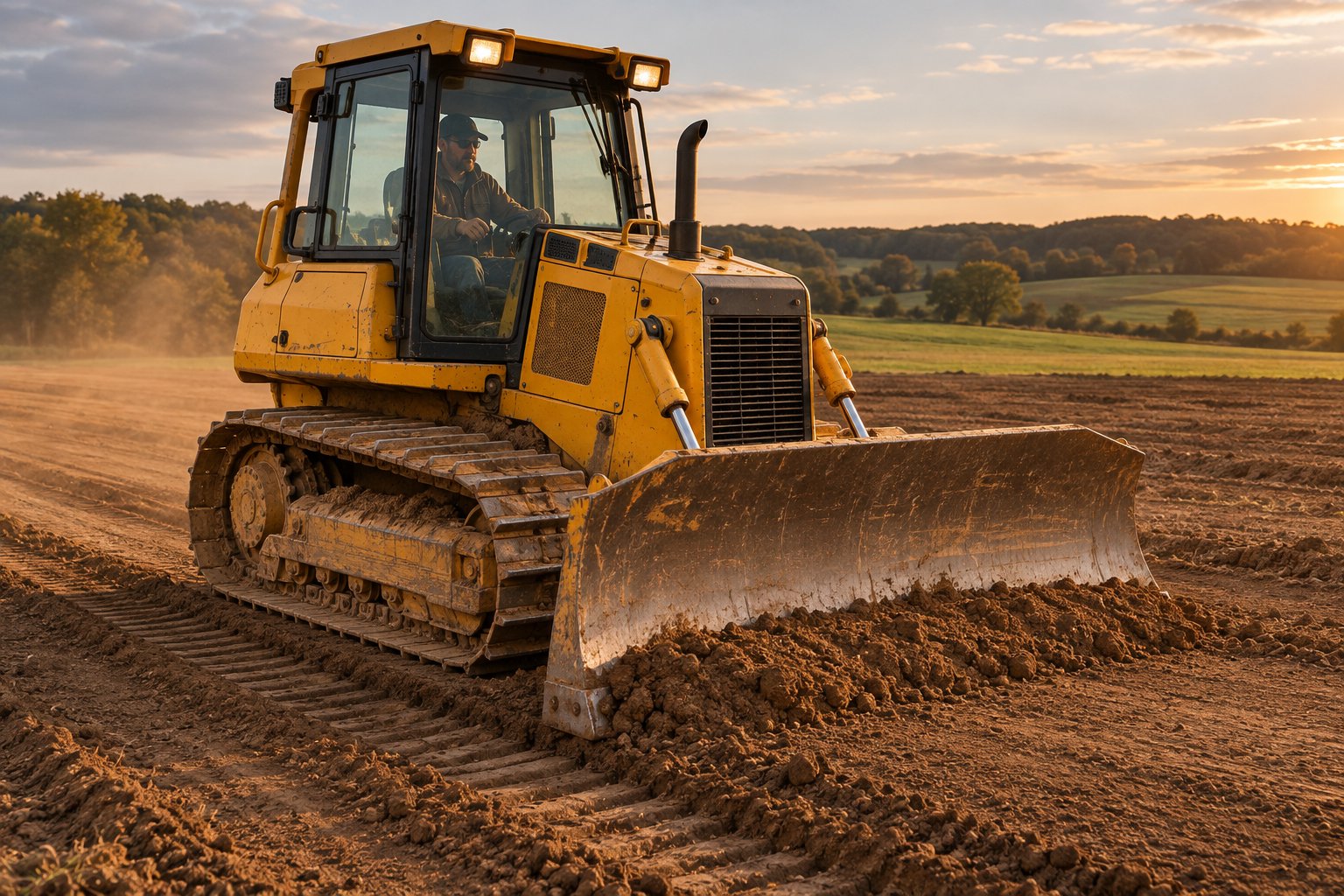
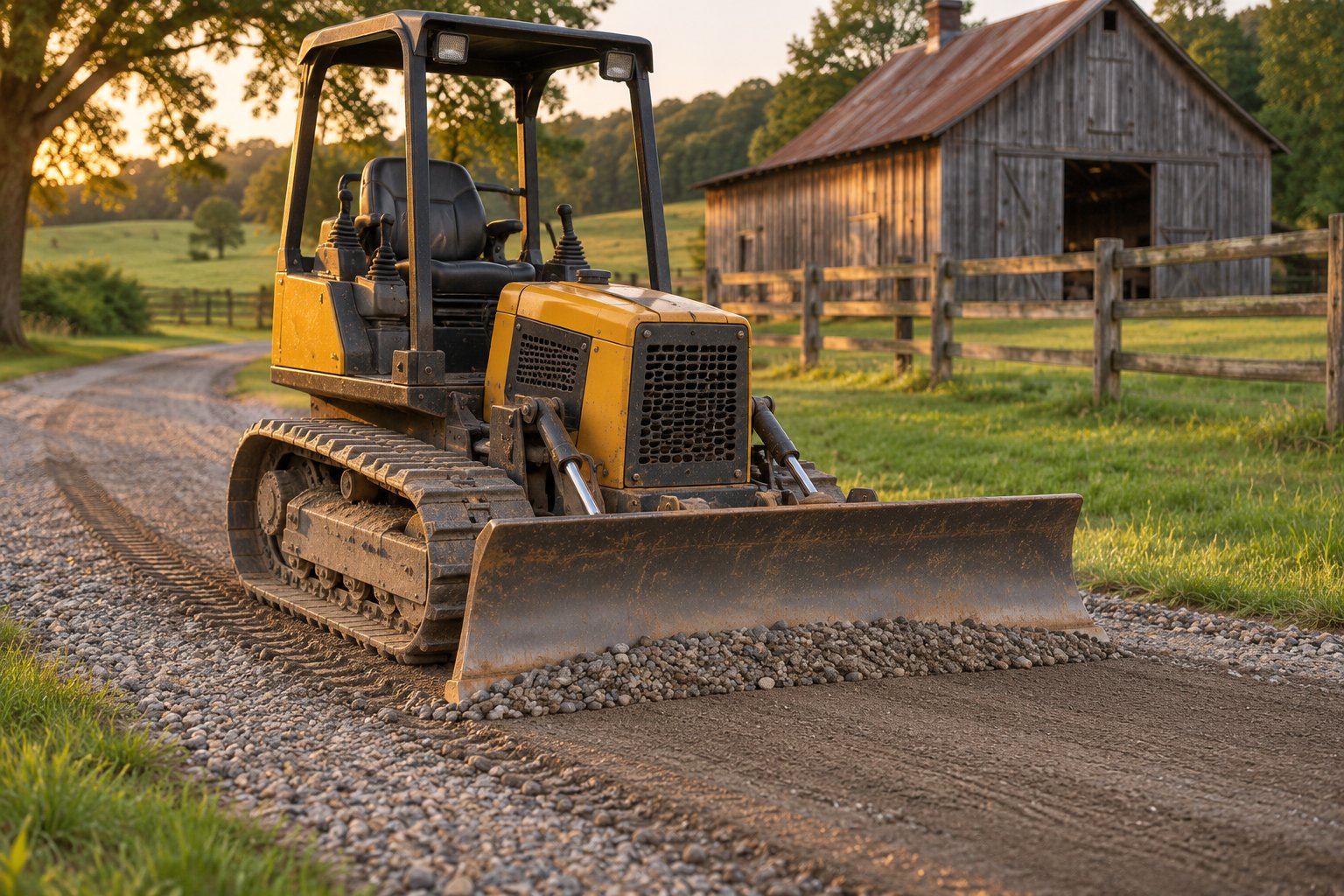
A mini dozer, also called a minidozer or mini bulldozer, is the smallest class of ride-on crawler dozer. It uses tracks and a front blade for light pushing, clearing, and grading on small properties, farms, trails, and landscaping jobs.
What Is a Mini Dozer
Picture a bulldozer shrunk to a size you could park in your garage. That's the basic idea. Struck, one of the best-known names in this niche, describes its machines as roughly the size of a riding lawn mower or ATV. Its current owner adds that they can fit in the back of a half-ton pickup. Owners use them to grade driveways, push snow, clear brush, pull stumps, and prep garden plots. In short, it's a true tracked dozer built for jobs that don't justify a contractor-grade crawler.
Why Mini Bulldozer Listings Confuse Buyers
Here's the catch. When you search for a mini dozer for sale, you'll notice that "mini" means very different things to different sellers. Some dealer and marketplace pages file machines like the CAT D6N LGP, Deere 700H LT, and Case 850 under "mini dozers." Those are mid-size crawlers, not backyard machines. The label is loose, but the price tag follows the machine, not the label. Without a clear yardstick, you could end up weighing a hobby-scale crawler against a machine many times its size and cost.
Who Actually Needs the Smallest Bulldozer
The core buyers are homeowners with a few acres, hobby farmers, homesteaders, trail builders, and small landscaping crews. If your work means shaping a driveway, clearing a fence line, or leveling a garden site, a true mini machine may be all you need. This guide helps you confirm that. You'll learn:
- How dozer size classes differ and how to spot mislabeled listings
- Which brands shaped the sub-compact segment
- Whether a kit or an assembled machine suits you
- The specs and features that matter most
- Realistic prices and total ownership costs
- Alternatives such as compact track loaders and mini excavators
- How to inspect a used machine
- Where to buy and how each channel compares
Every one of those decisions rests on a deceptively simple question: just how small is "small"? Answering it means drawing firm lines between machine classes that sellers often blur.
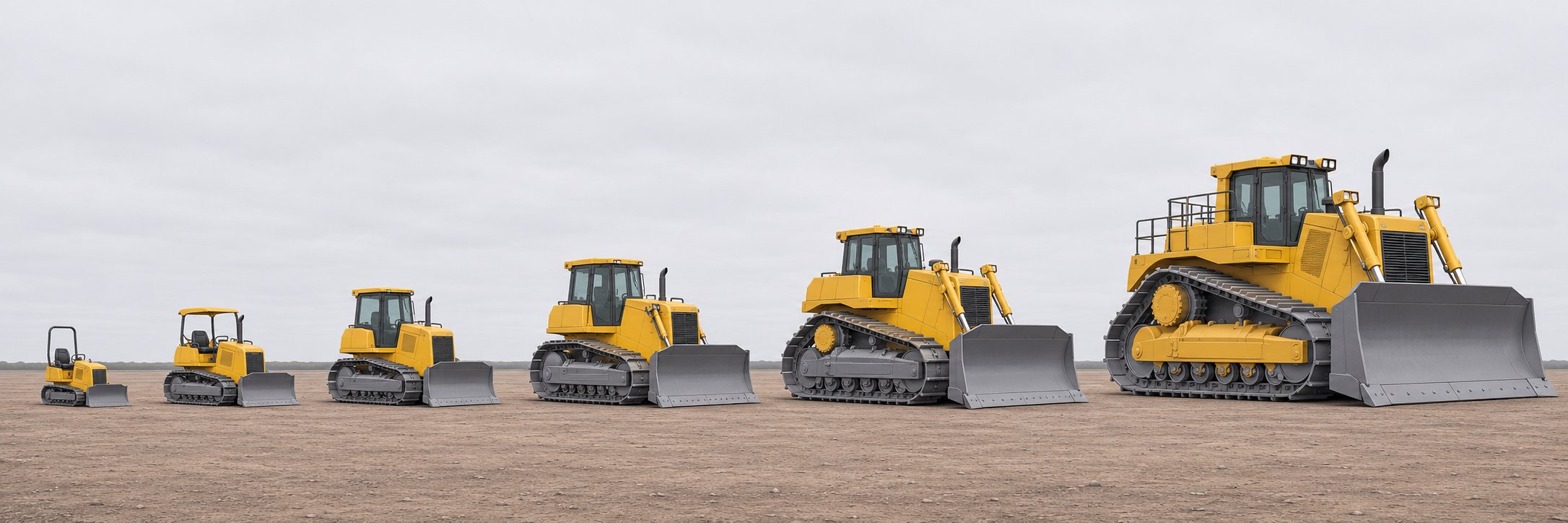
Dozer Size Classes and How to Filter Mislabeled Listings
When you scroll through dozer listings, how can you tell whether "mini" means a machine that fits in a pickup bed or one that needs a lowboy trailer? The fix is simple. Sort every listing into a size class before you even look at the price.
Sub-Compact Mini Dozers vs Compact Bulldozers
At the bottom of the ladder sit sub-compact ride-on and kit dozers, such as Struck's S-Series and B-Series and Magnatrac machines. These are the true minis. One step up, you'll find machines like the Case Minotaur DL550, which Case calls a compact dozer loader. It weighs more than 18,000 lbs and runs 114 hp. That's a huge leap in scale. A compact bulldozer in this sense is a contractor tool, not a weekend machine for a few acres.
Where Small Crawler Track Dozers Fit
Conventional small crawlers come next. A common rule of thumb from DOZR's size guide treats anything under 30,000 pounds as a small bulldozer, 30,000 to 100,000 pounds as medium, and anything heavier as large. The CAT D3 lists at 21,810 pounds and 104 hp. Even the Case 650M, which DOZR names as the smallest bulldozer in its brand chart, weighs 16,839 pounds. Put plainly, the smallest bulldozer from a major brand is still far larger than a sub-compact mini.
Mid-size crawlers sit well above that. The CAT D6N, for example, carries an operating weight of 36,800 lbs. Compact track loaders are a different machine type entirely. They use loader arms and a bucket and can take a blade attachment, but they aren't purpose-built track dozers.
| Size Class | Typical Use | Representative Models | Typical Buyer |
|---|---|---|---|
| Sub-compact ride-on and kit dozers | Driveways, garden plots, trails, light brush | Struck S-Series, Struck B-Series, Magnatrac | Homeowners, hobby farmers, homesteaders |
| Compact dozers | Fine grading and site prep in tight spaces | Case Minotaur DL550 | Landscapers, small contractors |
| Small crawler dozers | Residential construction, land clearing, roadwork | CAT D3 | Contractors, larger farms |
| Mid-size and larger crawlers often mislabeled "mini" | Commercial earthmoving, heavy clearing | CAT D6N LGP, Deere 700H LT, Case 850 | Earthmoving contractors, fleets |
| Compact track loaders (separate type) | Loading, material handling, attachment work | Many brands; not a true dozer | Contractors who value versatility |
Sub-compact makers don't all publish figures the same way, so check the manufacturer spec sheet for operating weight, horsepower, and blade width before you compare.
How to Spot a Mislabeled Small Dozer Listing
Imagine a listing titled "mini dozer" with photos of a D6N LGP. The headline says one thing, and the model number says another. None of the machines in that last dozer row is a mini. The current Case 850M lists at 23,250 pounds, and Deere's 700L at 32,088 pounds. Watch for these red flags:
- A model number from a mid-size series, such as D6, 700, or 850
- No operating weight listed anywhere
- A "mini" label on a full-size crawler that needs a heavy trailer
- Photos showing an enclosed cab and wide blade on a machine priced like a hobby unit
- A compact track loader with a blade sold as a dozer
A size chart tells you where a machine sits. Within the true mini tier, though, the name on the hood carries its own history, and that history shapes what you can expect from parts, support, and resale.
Struck Mini Dozer Heritage and the Brands That Defined the Segment
Ever wonder why the same few names keep showing up when you search for a true mini machine? It comes down to history. The big earthmoving brands largely left this tiny class behind, and a handful of specialists filled the gap.
Struck Mini Dozers and the MD196K Legacy
Charlie Struck founded his company in 1959. Its mail-order dozer kits became famous through ads in Popular Mechanics. For decades, the MD196K kit was the classic way to bolt together your own crawler in a home garage. The company nearly closed for good. Then Greg Linsmeyer, owner of Niagara Fabrication, bought it. As Equipment World reported in Struck Mini Dozers Make a Comeback, he moved production from Cedarburg to Niagara, Wisconsin, and redesigned the lineup. Today the struck mini dozer range starts with the S-Series, which replaces the original MD196K kit as the company's smallest and lowest-priced model.
Magnatrac and Terratrac Dozer Lines
Magnatrac is the name on Struck's larger machines. The Magnatrac RS1000 is a homeowner-focused tracked machine that Struck compares in size to a riding lawn mower or ATV. The newer Magnatrac B-Series is the company's lowest-cost assembled machine, and it weighs about 1,500 pounds. A larger D-Series, announced with operating weights of 3,000 to 4,000 pounds, is a revamp of the older MH4900 and MH8500. You'll also see the Terratrac name in sub-compact listings. With any of these, confirm the exact model and whether the unit was kit-built or factory-built.
John Deere and CAT Mini Bulldozer Options at the Compact End
Type "john deere mini dozer" or "CAT mini dozer" into a search bar, and you'll usually land on each brand's smallest crawler dozer. Those are capable machines, but they aren't ride-on sub-compacts. Linsmeyer points out that major manufacturers left the compact dozer market years ago. He adds that the smallest dozers from those makers weigh about 12,000 pounds. That's several times heavier than a B-Series.
- Struck S-Series: successor to the MD196K kit, sub-compact
- Magnatrac RS1000: homeowner-scale, sub-compact
- Magnatrac B-Series: factory-assembled, sub-compact
- Magnatrac D-Series: assembled, top of the sub-compact tier
- Terratrac: sub-compact name, verify build type for each unit
- CAT and John Deere: factory-assembled, small crawler class, not sub-compact
That split between kit heritage and factory-built machines isn't just history. It shapes your budget, your weekends, and how easily you can sell the machine later.
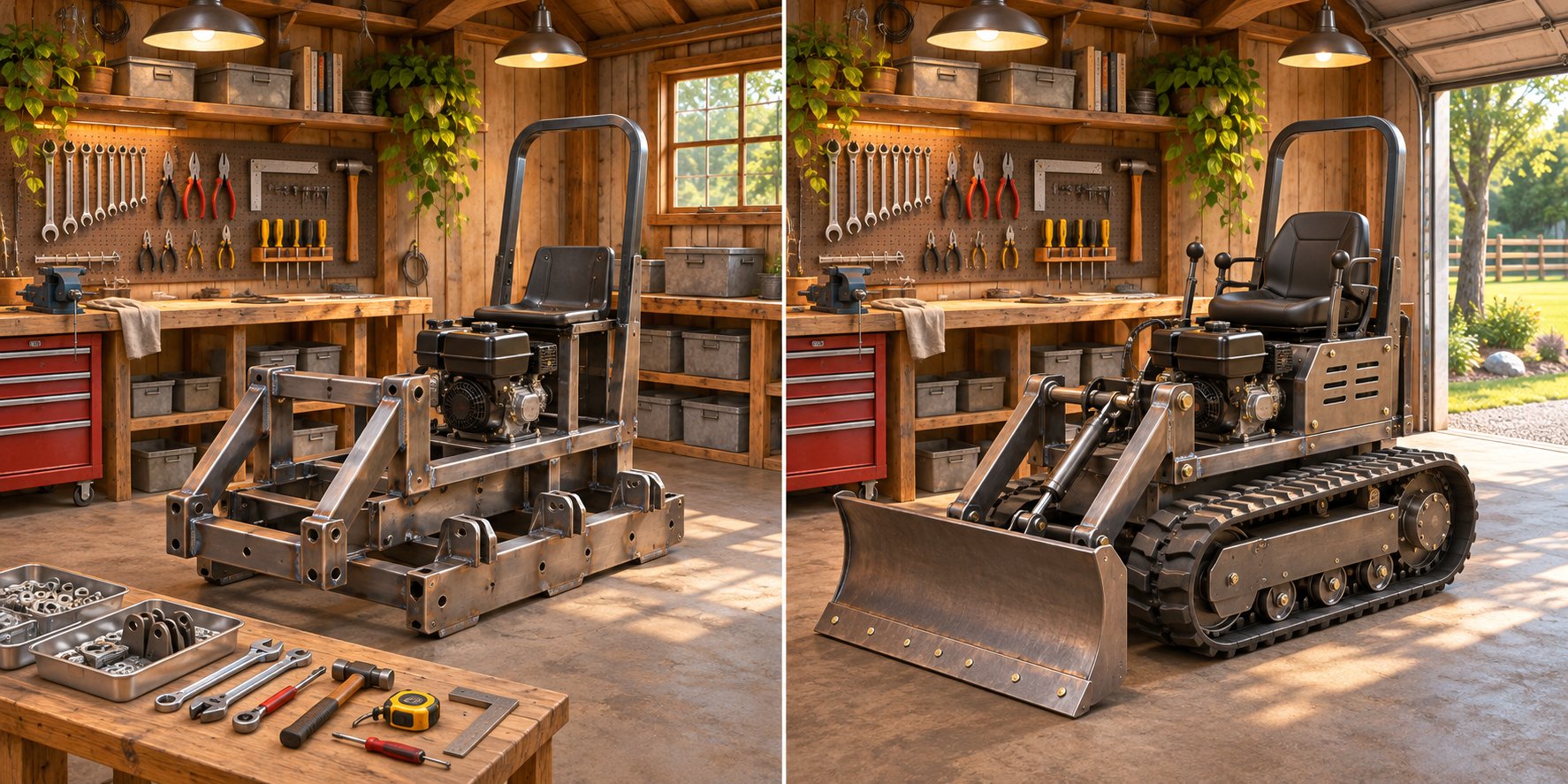
Mini Dozer Kits vs Assembled Machines
Is a crate of parts a fun winter project for you? Or is it a chore standing between you and a graded driveway? Your honest answer matters more than any spec. Struck still sells both paths, but few listings explain how to choose between them.
How Mini Dozer Kits Work
Mini dozer kits ship as components that you assemble yourself. Struck says its kits come with step-by-step manuals and that a basic tool kit covers the job. Its staff will also talk you through problems by phone. Many owners pick their own paint color or modify the engine, which is why Struck calls it the "hobbyist" dozer. You supply the labor, and that keeps the price down. The S-Series, successor to the MD196K, was reported at $4,500 at launch. Struck's current pricing starts around $4,900.
Kit Pros
- Lowest entry price in the true mini class
- The satisfaction of a build, which many owners turn into a family project
- Freedom to customize the paint, engine, and setup
- You learn every bolt, which helps with future repairs
Kit Cons
- Requires mechanical aptitude, and modifications may call for welding or fabrication
- Needs garage or shop space for the build
- Assembly time comes out of your evenings and weekends
- Build quality depends on the builder, which can reduce resale appeal
Skills, Tools, and Time a Mini Bulldozer Kit Demands
Build time depends on your experience, your tools, and how much you customize. Struck doesn't publish fixed hours. Ask the manufacturer how long a typical first-time build takes and which skills it assumes. Also ask about parts lead times. Struck has noted that orders may take 1 to 2 weeks.
When a Factory-Assembled Machine Makes More Sense
Do you need the machine working right away, or do you plan to resell it later? Then assembled is usually the safer bet. Suppose you're browsing for a struck mini bulldozer for sale that's ready to run. The Magnatrac B-Series starts around $12,695, and Equipment World reported $12,655 at launch. That price includes hydrostatic drive, rubber tracks, and a quick-attach system that swaps attachments in about 10 minutes.
Assembled Pros
- Arrives ready to work
- Consistent factory build quality
- Easier to resell to buyers who are wary of home builds
Assembled Cons
- Much higher upfront price
- Less room for personal customization
The build method only tells you how a machine reaches your yard. What it can do once it's there depends on its blade, tracks, drive system, and the dimensions printed on its spec sheet.
Specs and Features That Separate Good Small Dozers from Bad Fits
Two machines can look almost identical in listing photos and still behave very differently on your land. Why? The answer hides in the spec sheet. Horsepower gets most of the attention, but Caterpillar points out that the blade matters just as much to how much you carry, how cleanly you cut, and how hard the machine works. Here's how to read the features that decide whether a small dozer fits your jobs.
Blade Types for Compact Crawler Dozers
Most compact crawler dozer buyers choose between a straight blade and a 6-way power-angle-tilt (PAT) blade. A straight blade has no curve or wings. Cat describes it as built for precision and penetration, not capacity. It bites well into hard-packed ground but moves loose material more slowly. A blade with adjustable pitch, angle, and tilt is built for control. You can angle it to windrow gravel or tilt it to cut a drainage ditch without leaving the seat. That makes it ideal when you're crowning a driveway or finish grading a garden site. The tradeoff is that it isn't designed for heavy bulk production.
Track Gauge, Ground Pressure, and Low Profile Dozer Designs
Ground pressure, listed in psi, tells you how hard the machine presses on the soil. Lower is better for soft or wet ground. Wide-track LGP or XL undercarriages spread the weight over more area. DOZR's comparison shows the effect: a standard CAT D8 exerts 13.3 psi, while its LGP version exerts just 8.4 psi. That's a large crawler, but the principle holds at any size. The catch? Wide tracks are harder to turn, wear the undercarriage faster, and burn more fuel. On firm ground, standard tracks give better traction and maneuverability. A low profile dozer design, with the seat and canopy kept close to the ground, adds stability on slopes and helps you slip under low branches while clearing brush.
Transmission, Operator Station, and Transport Dimensions
Hydrostatic drives use a pump and hydraulic motors. Writing about wheel loaders, Komatsu credits them with fast response, fuel savings, agility in tight spaces, and lower maintenance thanks to simpler construction. Powershift transmissions use gear packs and favor durability in severe, high-production work. For a compact dozer working around a homestead, hydrostatic is usually the natural fit. Next, decide between an open ROPS canopy and an enclosed cab. Finally, check the transport numbers. You'll find them in the dimensions section of the spec sheet. Compare them with your trailer's rating and your tow vehicle's capacity, and remember to add the trailer's own weight.
| Feature | Options | Best For | Tradeoff |
|---|---|---|---|
| Blade | 6-way PAT vs straight | PAT: finish grading, ditches, driveways. Straight: hard-packed ground, cutting | PAT has less bulk capacity. Straight is slower on loose material |
| Track gauge | XL/LGP vs standard | XL/LGP: soft, wet, or sloped ground. Standard: firm soil, tight turns | Wide tracks raise undercarriage wear and fuel use |
| Transmission | Hydrostatic vs powershift | Hydrostatic: tight spaces, frequent direction changes. Powershift: severe, heavy-duty work | Powershift needs more robust maintenance |
| Operator station | ROPS canopy vs enclosed cab | Canopy: seasonal property work. Cab: dust, cold, long hours | A cab adds height, weight, and cost |
| Ground pressure | Lower vs higher psi | Lower: lawns, wet fields, soft fill. Higher: compacting and firm ground | Lower psi often means wider, costlier tracks |
| Transport size | Width, length, weight | Matching your trailer and tow vehicle | Bigger machines may need a heavier trailer or truck |
Every upgrade on that list nudges the sticker price, and some keep billing you long after delivery through fuel, wear parts, and the trailer needed to haul it.
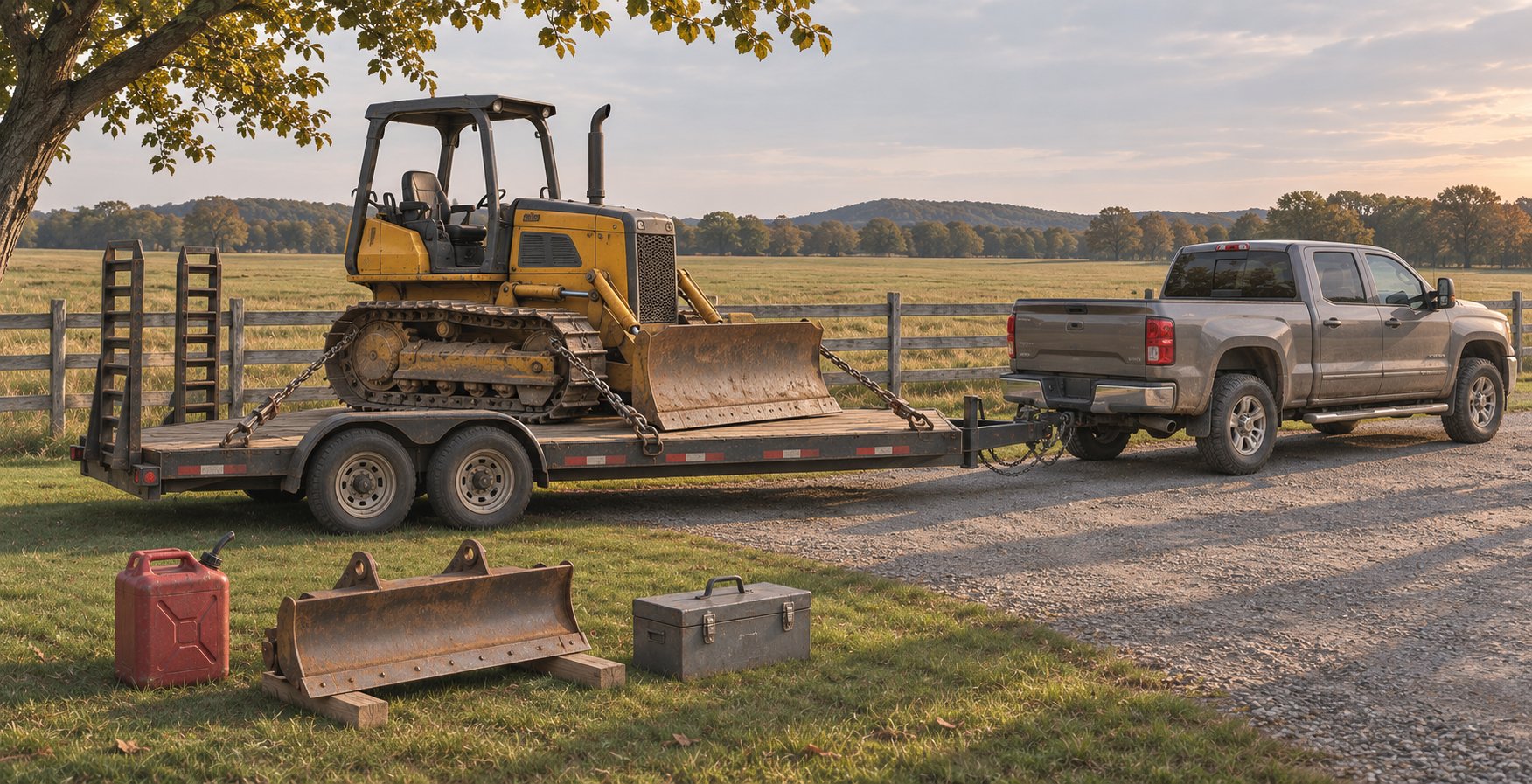
Mini Dozer Prices and the True Cost of Ownership
How much is a bulldozer, really? Ask three sellers and you may hear three answers that differ by a factor of ten or more. That spread isn't random. It follows the size classes covered earlier, plus a handful of costs that never show up on the listing itself.
How Much Is a Bulldozer at Each Size Tier
The table below pulls published starting prices and listing ranges into one view. Treat them as reference points, not quotes. Prices change, and options add up quickly.
| Tier | Price Point | What You Get |
|---|---|---|
| Struck S-Series kit/ride-on | From $4,900 | The smallest true mini, a 6.5 or 10 hp gas engine, rubber tracks, and manual attachments for light grading and snow |
| Magnatrac B-Series (assembled) | From $12,695 | A factory-built sub-compact with hydrostatic drive, about 1,500 pounds, and hydraulic front and rear attachment capability |
| Magnatrac MH4900 and MH8500 | $24,800 and $32,200 | Larger sub-compacts, now being revamped into the D-Series |
| Used crawler listings (Mideast Equipment) | $48,900 to $82,500 | Contractor-class used machines, priced by hours, age, and condition, and well beyond the mini tier |
| Smallest new dozers from major brands | About $100,000 | Machines of roughly 12,000 pounds built for professional earthmoving |
Why Dozer Prices Span Such a Wide Range
Size drives most of the gap. A dozer machine price climbs with operating weight, horsepower, hydraulics, and build complexity. Kit versus assembled adds another layer, since you trade your own labor for a lower sticker. Brand matters too. Gregory Poole notes that well-known brands often cost more but may reduce future repair bills. So when a used dozer price looks like a bargain next to a new sub-compact, first confirm that you're comparing machines of the same class.
Total Bulldozer Cost Beyond the Sticker
Total cost of ownership is the complete financial picture, from the day you buy to the day you sell. Gregory Poole's formula is simple: add the purchase price, fuel, maintenance, insurance, and other operating costs, then subtract the projected resale value. For a small machine, the true bulldozer cost usually includes:
- Attachments: Struck machines ship as a bare crawler tractor, so blades, loaders, and rippers are added separately.
- Shipping and freight: Factory-direct sales mean you pay delivery or haul the machine yourself.
- Kit assembly time: Your hours have value, even if they never appear on an invoice.
- Routine maintenance: Oil changes, filters, fluid checks, and track inspections.
- Fuel: Use varies with engine size, operating conditions, and operator habits.
- Financing interest: It is often the largest hidden line item.
- Resale value: Hours, condition, service records, and market demand decide what you recover.
Financing Basics Behind Monthly Dozer Price Estimates
That friendly monthly figure on a dealer page is an estimate built on assumptions. Provide Capital notes that bulldozer financing typically runs 24 to 72 months, with rates that vary by credit, equipment age, and term. Here's how each factor moves the number:
- Term length: A longer term lowers the monthly payment but raises the total cost of borrowing.
- Down payment: Typically zero to 20 percent. More down means lower payments and less total interest.
- Credit: Scores above 680 generally unlock the widest range of terms and the lowest rates.
- Equipment age: Machines past 10 years or 8,000 hours often face shorter terms, larger down payments, and a required inspection.
Those guidelines describe business equipment lending. If you're buying for personal property work, ask how a lender treats that kind of purchase before you trust any estimate.
Run those numbers honestly, and a sharper question tends to surface: does your work truly call for a dozer, or would a machine that trades some pushing power for versatility stretch the same budget further?
Mini Dozer Alternatives Worth Considering Before You Buy
Do you need a machine that pushes dirt all day, or one that does a little of everything? Your answer to that question can save you thousands. Dozers excel at sustained pushing and finish grading. Loaders and excavators give up some of that pushing ability in exchange for versatility.
Mini Dozer vs Compact Track Loader
A compact track loader is built for loading and material handling. SANY notes that track loaders accept a wide range of attachments, such as buckets, sweepers, snow removers, and augers. Most can also take a dozer blade. However, a track loader has less blade capacity and traction than a true dozer, so it suits light, auxiliary pushing rather than heavy earthmoving.
Skid Steer with Blade or Compact Dozer Loader
A skid steer with a blade can stand in for a dozer on light leveling jobs at small sites, but it has much less power, traction, and blade capacity. A 6-way blade attachment adds both tilt and angle. McLaren explains that angling lets you push dirt to one side, which reduces the number of passes on jobs like filling a ditch. Hybrid compact dozer loaders, such as the Case Minotaur DL550, combine both roles. Keep in mind that they belong to a far heavier class than a true mini.
When a Mini Excavator or Dozer Tractor Is the Better Tool
Imagine a wooded lot full of stumps. An excavator can remove trees and their root systems with a precision that a blade can't match. 2M Machinery describes a common approach: use an excavator first for stumps and roots, then bring in a dozer to push, pile, and grade. Open ground with scattered brush is a different story. There, a dozer tractor is the better choice. That's the classic tracked tractor with a front blade, and some sellers list it as a tractor bulldozer.
| Machine Type | Primary Strength | Grading Ability | Versatility with Attachments | Typical Job Fit | Key Limitation |
|---|---|---|---|---|---|
| Mini dozer | Sustained pushing and finish grading | Excellent | Limited, mostly blade-focused | Driveways, brush clearing, leveling open ground | Little or no digging or lifting |
| Compact track loader | Loading and material handling | Good for light work with a blade | Very high | Mixed tasks, tight sites, moving material | Less blade capacity and traction than a dozer |
| Skid steer with blade | Maneuverability and quick attachment swaps | Fair for light leveling | Very high | Small sites, snow, spreading loose material | Far less power, traction, and blade capacity than a dozer |
| Mini excavator | Digging and precise, selective removal | Limited | High, with buckets, thumbs, and grapples | Stumps, trenches, dense wooded lots | Slow for broad pushing and grading |
Buy for the task that fills most of your hours: pushing and grading point to a dozer, loading points to a loader, and digging points to an excavator.
If pushing and grading win out, you face another fork right away. You can choose a fresh machine with a clean slate, or a used one whose history you'll need to learn to read.
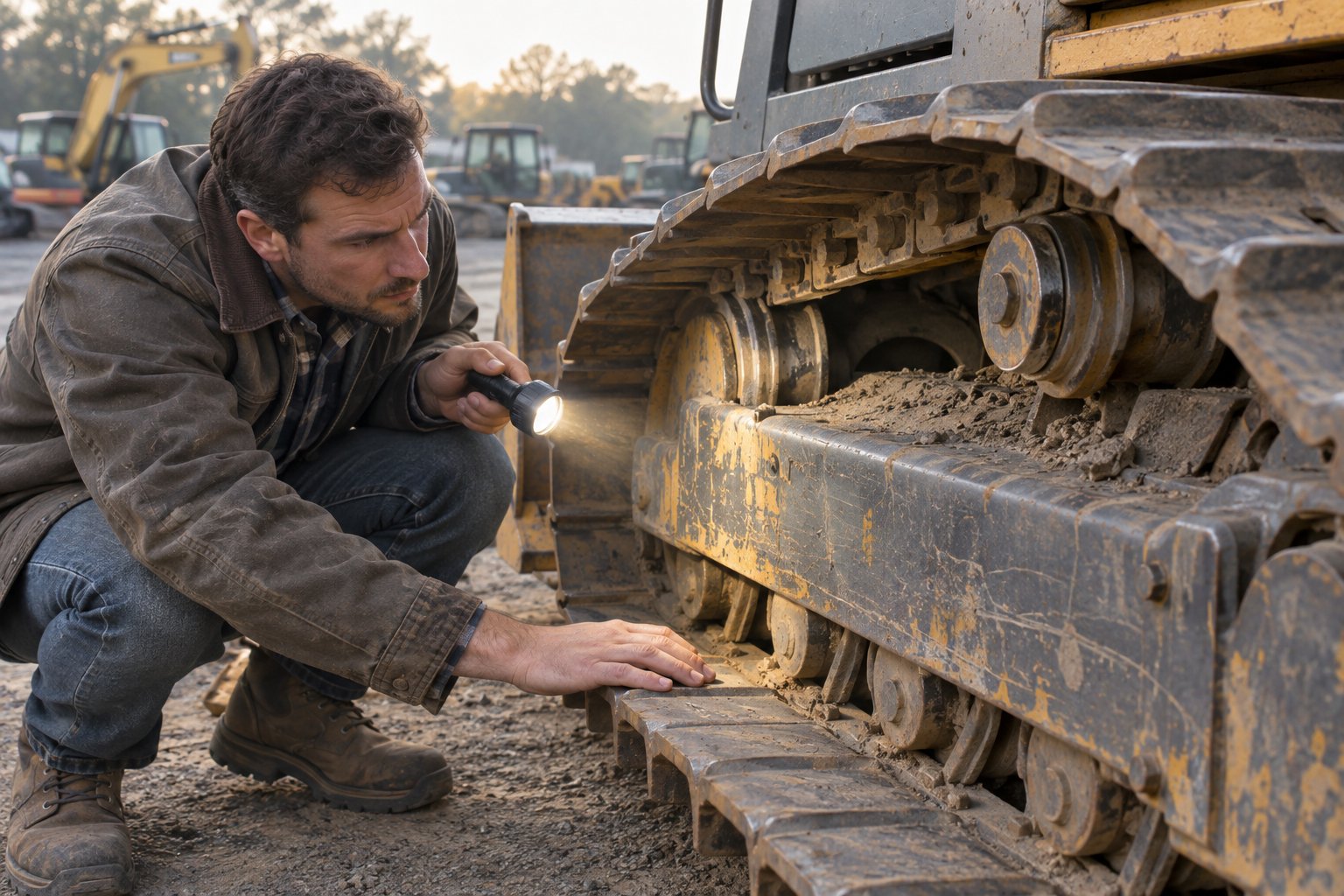
Buying Used and How to Inspect a Mini Dozer
A used machine can stretch your budget a long way. It can also hide problems that cost more than the discount you negotiated. Gregory Poole warns that unchecked wear and inconsistent maintenance can lead to unexpected downtime and costly repairs. The good news? Most of those problems leave clues, if you know where to look.
New vs Used Mini Dozers for Sale
Buy new if you want a warranty, current features, and a history that starts with you. Buy used if price matters most and you're willing to inspect carefully. When you browse used mini dozers for sale, fair value comes from four factors working together: hours, model year, maintenance records, and actual condition.
Hours alone can mislead. What matters is how the machine logged those hours and whether anyone serviced it on schedule. RDO Equipment makes the point with full-size dozers. A high-hour machine with a recent undercarriage replacement and healthy engine and hydraulics can be a better buy than a lower-hour unit. Past work matters too. Sand speeds up undercarriage wear, while rock stresses frames and attachments. So ask the seller where and how the machine worked.
How to Read a Used Mini Bulldozer Listing
When you open a used mini bulldozer for sale listing, treat each field as a question rather than an answer:
- Hours: Missing hours, or very low hours on a visibly worn machine, deserve a follow-up.
- Year: Confirm it matches the model. A current series name paired with an older year can signal a mislabel.
- Location: Distance affects freight cost and whether you can inspect the machine in person.
- Stock number: Quote it when you request service records, extra photos, and video.
- Price: Compare it only against machines in the same size class. A price far below similar units needs an explanation.
- Condition notes: Vague phrases like "runs great" tell you little. Ask about specific repairs and replaced parts.
Used Mini Dozer Inspection Checklist
- Undercarriage wear: Check the rollers, idlers, sprockets, and track chains or rubber tracks. Wear on one part speeds wear on the others.
- Track tension: Sagging or overly tight tracks can point to worn parts or neglect.
- Final drives: Look for leaks, and listen for grinding while the machine travels.
- Hydraulic leaks and hose condition: Watch for wet fittings, cracked hoses, and slow or jerky blade movement.
- Blade pivot pins and bushings: Excess play shows up as a blade that wobbles or won't hold its angle.
- Engine start-up and smoke: Start it cold if you can. Note hard starting, knocking, or heavy smoke.
- Frame cracks or weld repairs: Inspect around the blade mounts and other high-stress points.
- Hour meter versus visible wear: Compare the reading with the pedals, controls, seat, and steps. Loose or polished controls suggest harder use than the meter shows.
Shopping for a used struck mini dozer for sale, or any kit-built machine? Then the builder's skill matters as much as the hours. Check weld quality, track alignment, bolt tightness, and wiring routes. Ask who built it and what they modified. Struck's active owner groups trade repair advice and parts sources, so they're a good place to learn a model's known quirks.
Wear limits differ by machine, so don't eyeball them. Ask for a third-party or dealer inspection report and compare its findings with the manufacturer's service specs. Of course, a clean report is only as trustworthy as the person handing it to you, and that depends heavily on where you found the machine in the first place.
Where to Find Small Dozers for Sale and How Each Channel Compares
Who will actually let you run through that inspection checklist before you pay? The answer depends on where you shop. Small dozers for sale turn up at dealers, factory websites, marketplaces, auctions, and in classified ads. Each channel shapes the price you pay, the history you can verify, and the help you get if something goes wrong.
Buying Channels for a Mini Dozer for Sale
Every channel trades price against protection. Here's how the most common options compare.
| Channel | Pros | Cons | Best-Fit Buyer |
|---|---|---|---|
| Dealer inventory inquiry (e.g., JIUHONG) | You can request condition details, configuration, and current quotes. Dealers usually offer documentation and recourse | Listed machines may be larger crawlers. Mini or compact availability must be confirmed | Buyers who want documented machines, or whose work may justify a larger used crawler |
| Manufacturer direct (e.g., Struck build-and-price) | New machine, factory support, and a choice of kit or assembled | Higher price than used, plus freight and possible lead times | Buyers set on a true sub-compact |
| Online marketplaces (Machinio, CloudStore) | Wide selection and easy filtering by price and location | Loose "mini" labels, and listing quality varies | Shoppers comparing many units quickly |
| Quote-comparison services | Several offers from one request | Less control over who responds, and you still need an inspection | Busy buyers who already know their specs |
| Auctions | Transparent price discovery and possible bargains | Buyer's premium, limited inspection time, no post-sale recourse | Experienced buyers with strong inspection skills |
| Private sellers and classifieds (Craigslist) | Often the lowest prices, plus direct talk with the owner | No warranty, no recourse, and higher scam risk | Mechanically confident buyers |
Dealer Inventories and When a Larger Small Bulldozer Is the Right Call
Dealers usually cost more. For full-size dozers, one used-versus-new analysis puts the dealer premium at 10 to 18 percent over a comparable private sale. That premium buys inspection paperwork, financing access, and recourse if the machine was misrepresented.
JIUHONG is one example of this channel. JIUHONG's used bulldozer collection features Caterpillar and Shantui models for pushing, clearing, and grading work. Be clear about what it offers, though. The listed machines are not equivalent to mini or compact dozers. Treat the collection as an alternatives option if your land clearing or site work has outgrown a sub-compact. You can also ask whether a compact unit is available, but confirm that by request. Either way, ask for condition details, configuration, and a current quote. Then check the answers against the undercarriage, hydraulics, and hour-meter items on your inspection checklist.
Marketplaces, Auctions, and Private Sellers
Marketplaces cast the widest net for anyone hunting a small bulldozer for sale. They also host the most mislabeled listings, so apply the size-class red flags to every mini bulldozer for sale you find there.
Auctions bring scale. RB Global runs more than 400 auctions a year across North America, with a buyer base of over 333,000. Before you bid, Ritchie Bros. advises that you set a maximum budget that covers the buyer fee and transportation. Then stick to it when the bidding heats up.
Private sellers are common for a struck mini dozer for sale, since many owners are hobbyists. See the machine run in person, ask who built it, and never send money before you inspect it.
Each channel solves a different part of the puzzle. Which one suits you depends on the decisions you've already made about size, build type, and budget. Lining those decisions up in the right order is what turns a long search into a confident purchase.
Choosing the Right Mini Dozer with Confidence
Sounds like a lot to juggle? It gets simpler when you take the decisions in order. Each choice narrows the next one, so by the time you browse mini bulldozers for sale, you'll already know what fits your land and what doesn't.
Your Mini Bulldozer Buying Checklist
- Confirm the true size class you need. Match the machine to your acreage and jobs, not to the word "mini" in a listing headline.
- Choose kit vs assembled. Weigh your skills, shop space, and free time against the higher price of a ready-to-work machine.
- Set must-have specs. Decide on blade type, track gauge, transmission, operator station, and the transport limits of your trailer and tow vehicle.
- Budget for total cost of ownership and financing. Add attachments, freight, maintenance, fuel, and interest, then subtract expected resale value.
- Decide new vs used and plan an inspection. Line up a third-party or dealer inspection report before any money changes hands.
- Pick a buying channel. Choose the balance of price, protection, and recourse you're comfortable with.
Before you trust any "mini" label, verify the operating weight and model class on the manufacturer spec sheet.
Next Steps Before You Request a Quote
Write down your size class, must-have specs, and budget ceiling. Send that same list to every seller, so each small dozer for sale or compact dozer for sale gets judged on equal terms. Ask for the operating weight, hours, service records, and recent photos or video of the machine running.
What if your checklist shows that your work has outgrown a sub-compact? A larger used crawler may be the better tool. JIUHONG's used bulldozer collection is one alternative to browse for that case. It features Caterpillar and Shantui bulldozers rather than mini dozers, so confirm any compact availability by request and ask for condition details and a current quote. Whichever seller you choose, a clear checklist keeps every conversation on your terms.
Mini Dozer for Sale: Frequently Asked Questions
1. How much does a mini dozer cost?
It depends on the size class. At the entry level, Struck's S-Series kit starts at about $4,900. The factory-assembled Magnatrac B-Series starts at about $12,695. Larger Magnatrac models such as the MH4900 and MH8500 were priced at $24,800 and $32,200. Used contractor-class crawlers, like those listed at Mideast Equipment, run from $48,900 to $82,500, and the smallest new dozers from major brands cost about $100,000. The sticker is only part of the bill. Budget for attachments, since Struck machines ship as a bare crawler tractor. Also plan for freight, maintenance, fuel, financing interest, and expected resale value.
2. What size is a true mini dozer, and how can I tell if a listing is mislabeled?
A true mini dozer is a sub-compact ride-on crawler, roughly the size of a riding lawn mower or ATV. Struck's assembled B-Series, for example, weighs about 1,500 pounds. By contrast, the smallest crawlers from major brands weigh about 12,000 pounds or more. To catch a mislabeled listing, start with the model number. Series like D6, 700, or 850 belong to mid-size machines. Be wary of listings with no operating weight, an enclosed cab and wide blade on a 'hobby' unit, or a compact track loader with a blade sold as a dozer. Always confirm the operating weight on the manufacturer spec sheet.
3. Should I buy a mini dozer kit or an assembled machine?
Choose a kit if you enjoy mechanical projects, have garage space, and want the lowest entry price. Kits come with step-by-step manuals and let you customize paint, engine, and setup. They also teach you the machine inside out, which helps with later repairs. Choose an assembled machine if you need it working right away, want consistent factory build quality, or plan to resell. Buyers are often wary of home builds. Since build time varies with your experience and tools, ask the manufacturer how long a first-time build usually takes, which skills it assumes, and what the current parts lead times are.
4. What should I inspect on a used mini dozer before buying?
Start with the undercarriage, because worn rollers, idlers, sprockets, or tracks speed wear on each other. Check track tension and final drives for leaks or grinding. Look for hydraulic leaks, cracked hoses, and a blade that drifts or wobbles. Do a cold start and note smoke or knocking, then scan high-stress areas for frame cracks or weld repairs. Compare the hour meter with wear on the seat, pedals, and controls. Don't judge on hours alone. Maintenance records and past working conditions matter just as much. For kit-built units, ask who built the machine, what was modified, and check weld quality and alignment. A third-party or dealer inspection report is worth the cost.
5. Where is the best place to find a mini dozer for sale?
For a new sub-compact, buying direct from the manufacturer, such as through Struck's build-and-price tool, gives you factory support and a kit or assembled choice. Marketplaces like Machinio offer wide selection but many loosely labeled 'mini' listings. Auctions can yield bargains, but they add buyer fees and offer little recourse. Private sellers are often cheapest but carry the most risk. Dealers usually cost more in exchange for documentation and recourse. If your work has outgrown a sub-compact, JIUHONG's used bulldozer collection of Caterpillar and Shantui models is one inquiry option. Those machines are larger crawlers, not mini dozers, so confirm any compact availability by request. Ask for condition details, configuration, and a current quote.