

What the Cat 315 Is and Why Buyers Research It First
Have you ever scrolled through equipment listings and found a decades-old machine sitting right next to a nearly new one, both labeled "Cat 315"? That is your first clue that this search needs a little homework before you start comparing prices.
What Is the Cat 315 Excavator
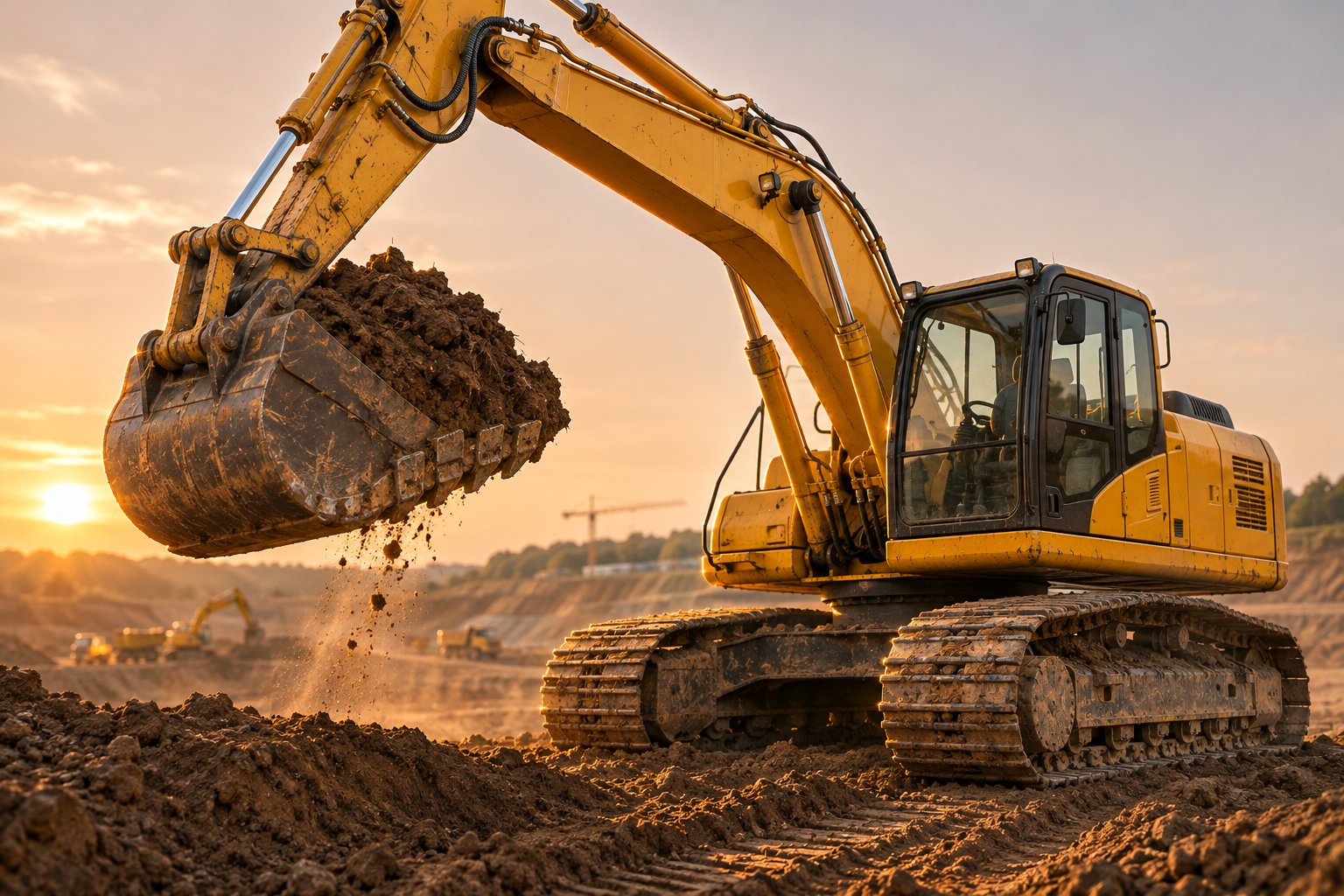
The Cat 315 is a hydraulic crawler excavator in Caterpillar's 15-ton class, built across several generations to dig, trench, lift and load on sites where a larger machine would be too much.
Caterpillar currently files the model under its small excavators range, while Ritchie Bros. groups it with medium excavators. Either way, it sits between compact machines and the heavy earthmovers. For the current production model, Caterpillar lists a C3.6 engine rated at 108 hp net, an operating weight of 34,000 lb and a maximum digging depth of 19.7 ft. Keep in mind that this Cat 315 weight and power figure belongs to the latest version only. Older units can be quite different.
Why the Caterpillar 315 Excavator Is a Popular Used Buy
You'll notice contractors keep coming back to this size. Ritchie Bros. points out that the 315 offers enough power for heavy lifting while staying compact enough for tighter jobsites, and medium machines like it rarely turn transport into a major logistical headache. Add Caterpillar's reputation for durability, resale value and a broad service network, and it is easy to see why a used Cat 315 trackhoe draws steady demand.
How to Use This Research Before You Browse Listings
Imagine bidding on a unit using specs you found for a different generation. It happens more often than you'd think. Before you open a single listing, aim to understand:
- Which generation the machine belongs to
- What its model suffix tells you about undercarriage and tail swing
- Which engine and emissions tier it carries
- How its weight affects hauling and permits
- What condition checks matter most
Each of those answers starts with the same question: which Cat 315 are you actually looking at? The name has stayed the same for decades, but the machine underneath it has changed many times.
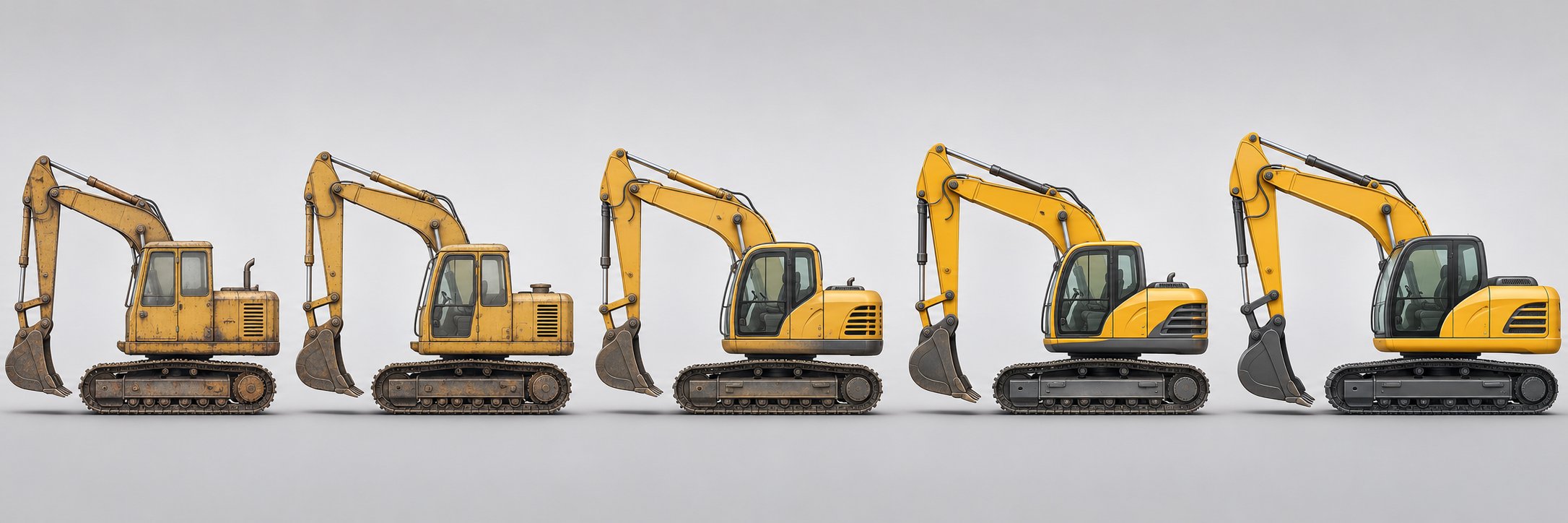
The Cat 315 Model Lineage From Early Units to Next Gen
Sounds simple, right? A 315 is a 315. Not quite. Each letter after the number marks a new generation, and each one changed the engine, the hydraulics or the cab. Think of the lineage as a family tree. Once you can place a unit on it, every listing becomes easier to judge.
Early Cat 315 and 315B Models
The original 315 and 315L, followed by the 315B, sit at the oldest end of the used market. They predate the emissions rules and much of the operator technology found on later models. Published data for them is harder to track down, so treat any figures in a listing as claims to verify against the serial number and an original spec sheet.
The Cat 315C and 315CL Era
The 315C L brought a notable control change. Manual work and power mode switches gave way to an automated boom and swing priority function that picks the right mode based on joystick movement. You'll notice this makes the machine friendlier for less experienced operators.
Cat 315D and 315F Generations
The 315D L replaced the 315C L with a Cat C4.2 ACERT engine rated at 115 hp (86 kW) and meeting U.S. EPA Tier 3. Caterpillar cited 5 percent more horsepower, up to 8 percent more lift capacity, higher hydraulic pressures and a Tool Control System that stores settings for up to 10 work tools. Its listed operating weight was 38,095 lb.
The 315F moved to a Cat C4.4 engine meeting Tier 4 Final and EU Stage IV, complete with a DEF tank. It added a negative flow control hydraulic system, eco and high power modes, a standard rear view camera and a compact radius design. Caterpillar 315 specifications for this generation list an operating weight of 33,296 to 37,794 lb, a reminder that Caterpillar 315 weight shifts from one generation to the next.
Cat 315 Next Gen and Cat 315GC
In 2020 and 2021, Caterpillar replaced the 315F with two models, as Toromont Cat explains. The Next Gen 315 carries the full suite of Cat technologies, including Grade Assist, while the 315 GC delivers performance similar to the 315F. Both offer rear and right-side cameras and up to 15 percent lower fuel consumption, with later updates adding Auto Warm-Up and Lift Assist.
| Generation | Variants | Engine Family | Emissions Era | Notable Changes |
|---|---|---|---|---|
| Early 315 / 315B | 315, 315L, 315B | Confirm on unit | Pre-emissions era | Simplest systems, least published data |
| 315C | 315C, 315C L | Confirm on unit | Confirm on unit | Automated boom and swing priority |
| 315D | 315D, 315D L | Cat C4.2 ACERT | U.S. EPA Tier 3 | More power, lift capacity, Tool Control System |
| 315F | 315F, 315F L, 315F LCR | Cat C4.4 ACERT | Tier 4 Final / Stage IV | Negative flow control, DEF, rear camera |
| Next Gen | 315, 315 GC | Cat C3.6 (315) | Current production | Grade Assist, dual cameras, Lift Assist |
Specs from one 315 Cat generation never transfer to another, so confirm the exact model on the serial plate before trusting any number in a listing.
You may also spot labels like 315D2 on listing cards. Treat those as their own configuration and request the matching spec sheet. And look closely at those cards: the generation letter is often followed by another code, such as L, LCR or GC, that quietly changes how the Cat 315 excavator behaves on a jobsite.
Decoding Suffixes Like L, LCR, GC and Next Gen
When you scan a listing card, the letters after the model number can tell you almost as much as the photos. Two machines from the same generation can behave very differently on a jobsite because of one short code. Here is a quick decoder.
- L (as in 315C L or 315F L): A long undercarriage. The longer track footprint adds stability when lifting or working on uneven ground.
- LCR: A long undercarriage paired with a compact, reduced tail swing radius, so the rear of the machine stays closer to the tracks as it rotates.
- GC: Caterpillar's value-focused tier, built around basic features, simple technology and low operating costs.
- Next Gen: The current platform that replaced the 315F, sold without a series letter.
What the L and CL Suffix Means on a Cat 315
On older generations, the L marks the long-track version. That extra length improves balance over the side, which helps when setting pipe or handling heavy loads. Undercarriage length can also shift Cat 315 excavator weight, so check the spec sheet for that exact configuration rather than a generic figure.
LCR and Reduced Tail Swing for Tight Job Sites
Imagine digging beside a lane of traffic or a building wall. A reduced tail swing machine lets you rotate without the counterweight sweeping far past the tracks. Caterpillar describes the 315 GC Next Gen as a compact radius excavator suited to space-restricted rental and municipal work, so newer units carry that trait without an LCR label.
Cat 315 GC Versus the Standard Next Gen 315
Caterpillar compares its GC and XE letters to automotive trim levels. The 315 GC still runs a Cat C3.6 engine meeting Tier 4 Final/Stage V, rated at 98 hp with a 34,000 lb operating weight. The standard Cat 315 Next Gen adds the fuller technology suite, such as Grade Assist, which typically places it in a higher price tier. Because Caterpillar dropped series letters, newer units are listed simply as "315," and a three-character build number on the PIN plate identifies the generation.
So which fits your work? For urban or roadside jobs, prioritize reduced tail swing. For open earthmoving and frequent lifting, a long undercarriage pays off. If your site is very tight and loads are light, browsing Cat 313 for sale listings alongside may be worth your time. Either way, Cat 315 excavator specs for one suffix rarely match another, and the biggest hidden difference often sits under the hood.
Engines, Emissions and Specs That Change by Generation
Open the engine compartment on two different Cat 315s and you might find two very different machines. That difference matters more than paint or polish. It shapes your parts budget, your service plan and even where you can legally sell the excavator later.
Cat 315 Engines by Generation
Older listings often reference the Cat 3054, a four-cylinder diesel built on the Perkins 1004.4 platform. The Cat 3054 displaces 4.4L, uses direct injection and is known for a simple, fuel-efficient design with relatively low maintenance costs. The same basic design stayed in production for more than 30 years, so parts remain fairly easy to find through OEM and aftermarket channels. Still, confirm the engine plate on any early unit rather than assuming what is under the hood.
Later generations trade simplicity for efficiency and technology:
- 315D: Cat C4.2 ACERT, U.S. EPA Tier 3
- 315F: Cat C4.4, Tier 4 Final with a DEF system
- Next Gen 315 and 315 GC: Cat C3.6, Tier 4 Final/Stage V
You'll notice the pattern. Newer engines bring cleaner exhaust and lower fuel use, but also more sensors, software and aftertreatment parts to maintain.
How Emissions Tier Affects a Used Cat 315
Here is the catch many buyers miss. Compliance follows the certified engine family, not the badge on the counterweight. A Tier 4 buyer guide stresses that the word "Tier 4" in an ad is not proof. Before paying a deposit, ask for:
- A clear photo of the full emission label
- The engine family number and engine model year
- Photos of the DPF, DOC, SCR or DEF tank when equipped, plus the fault-code screen
- Service records showing filter cleaning or DEF repairs
Destination matters too. U.S. Tier 4 Final is not automatic EU Stage V approval, California fleets face separate CARB rules, and U.S. imports may require EPA Form 3520-21. A well-documented Tier 4 unit often resells better in U.S.-focused channels, while a Tier 3 315D can make more sense in a lower-regulation market with strong repair access.
Tier 4 Final engine service requires specialized diagnostic tools and software, so confirm local repair support before you buy.
Cat 315 Excavator Specs to Verify on Any Listing
Because Cat 315 specs shift from one generation to the next, treat this table as your request list for any specific Caterpillar 315 excavator.
| Spec | Why It Matters | How to Verify |
|---|---|---|
| Engine model and emissions tier | Parts access, compliance, resale | Engine plate and emission label |
| Rated power | Performance and generation match | Spec sheet matched to serial number |
| Operating weight | Transport, stability, lifting | Spec sheet for exact configuration |
| Bucket capacity | Productivity and attachment fit | Bucket stamp and spec sheet |
| Maximum dig depth | Job suitability | Boom and stick configuration |
Of all these numbers, operating weight is the one that follows a 315 Cat excavator off the jobsite and onto the highway, and it is rarely as fixed as a listing makes it look.
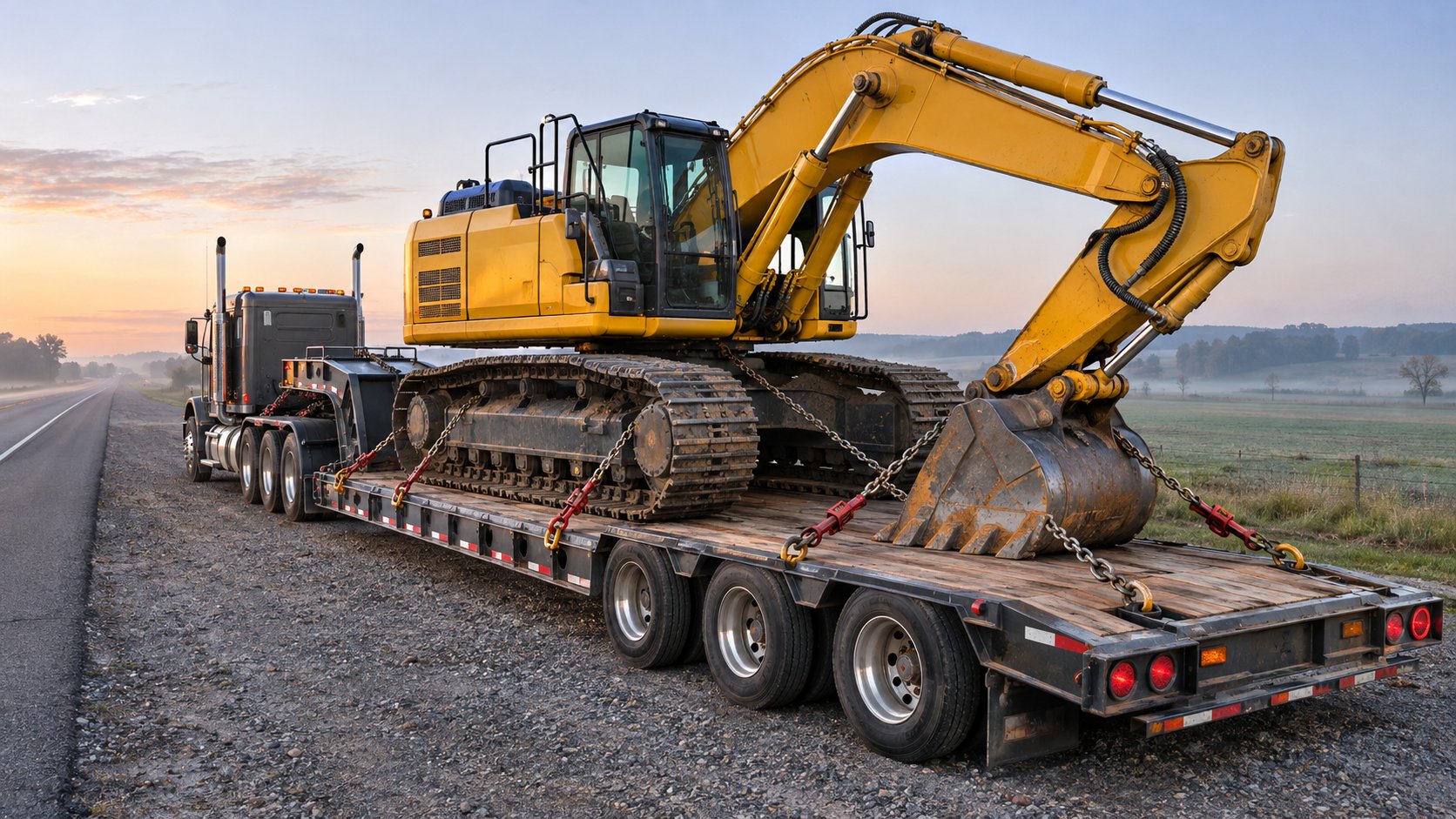
Cat 315 Weight and What It Means for Transport
A Cat 315 excavator typically weighs between about 33,000 and 38,000 lb, depending on its generation and configuration. The Next Gen 315 lists 34,000 lb, the 315F spans 33,296 to 37,794 lb, and the 315D L comes in at 38,095 lb.
How Much Does a Cat 315 Excavator Weigh
For a middle-generation example, Ritchie Specs lists the 315C L at 34,620 lb, running on 24 in shoes with a ground pressure of 5.66 psi. Still, treat any 315 Cat excavator weight printed in an ad as a starting point. The manufacturer spec sheet for the exact model and configuration is the only number worth planning around.
Why Cat 315 Weight Varies Between Units
Ever wondered why two machines that look identical show different weights? Several factors shift the total:
- Generation and engine package
- Undercarriage length, standard or L
- Counterweight size
- Track shoe width
- Boom and stick configuration
- Bucket, coupler, thumb and other attachments
Shoe width also changes how that weight meets the ground. Al Marwan notes that moving from 600 mm to 800 mm shoes can cut nominal ground pressure by roughly 25 percent. That helps on soft soil, but overly wide shoes add undercarriage stress on rocky ground. Weight is not purely a burden, either. A heavier, longer-track setup generally feels more planted when lifting over the side.
Transport and Trailer Planning for a 315 Cat Excavator
Imagine winning a Cat 315 for sale three states away. Before you celebrate, run the haul numbers:
- Trailer capacity: Payload must cover the machine plus attachments, with margin to spare.
- Licensing: Under the federal standard cited by Big Rentals, a Class A CDL is required when the combination is rated at 26,001 lb or more and the trailer is rated above 10,000 lb.
- Width permits: The common legal width limit is 8 ft 6 in. The 315C L measures 8.5 ft outside the tracks, so wider shoes can push a load into oversize permit territory.
State rules vary, so confirm limits with your state DOT before booking a hauler for any 315 Cat excavator for sale. Weight tells you how the machine reaches the site, but not what it should do once it arrives, and every bucket, hammer or thumb you bolt on changes the math again.
Common Applications and Attachment Compatibility
What will your machine actually spend its days doing? Answer that first, and the right Cat 315 becomes much easier to spot. Caterpillar places its 313 to 335 models in a small and medium class built for all-around versatility. These machines are big enough for serious digging and lifting, yet still easy to haul and maneuver on compact sites.
Best Jobs for a Cat 315 Trackhoe
You'll find a 315 excavator earning its keep on jobs like these:
- Utility trenching: Water, sewer and conduit runs. NMC Cat cites a digging depth of 19.6 ft for the 315 GC.
- Site preparation: Clearing, rough grading and stockpiling.
- Foundations: Residential basements and commercial footings.
- Landscaping: Ponds, retaining walls and drainage work.
- Demolition support: The same dealer notes a reach of up to 28.5 ft for the 315 GC, useful for anything from sheds to commercial teardowns.
- Material handling: Loading trucks, moving road salt and even clearing snow, with a cold start rating of minus 13 degrees Fahrenheit on the 315 GC.
Attachments That Pair Well With a Cat 315 Hydraulic Excavator
Caterpillar says most machines in this class have hydraulics that can run trenching buckets, thumbs, hammers and compactors. But "most" is not "every." Older units may lack auxiliary circuits, and coupler styles vary widely. Before you bid, confirm:
- Auxiliary hydraulic lines and flow for hammers or tilt tools
- Coupler type and pin sizes, since a multi-pin coupler can accept attachments with different pin diameters
- Thumb style, ideally one that retracts against the stick when not in use
- Bucket width, wear and whether a grapple is included
Watch the added weight too. Couplers and thumbs hang at the end of the stick, and extra counterweight may be needed for safe operation. Always check Cat 315 excavator specifications for the exact unit before adding heavy tools.
When a 315 Is the Right Size Versus Smaller or Larger Machines
If your sites are cramped and your loads are light, a Cat 313 may cover the work. If you load large off-highway trucks or run mass excavation, Caterpillar points buyers toward its large class, from the 336 up through models like the 345. The Caterpillar 315 sits in the sweet spot between them. That flexibility helps explain why the used excavator 315 market runs so deep, and why a unit already rigged with a thumb, coupler and hammer circuit can command a very different price than a bare machine of the same year.
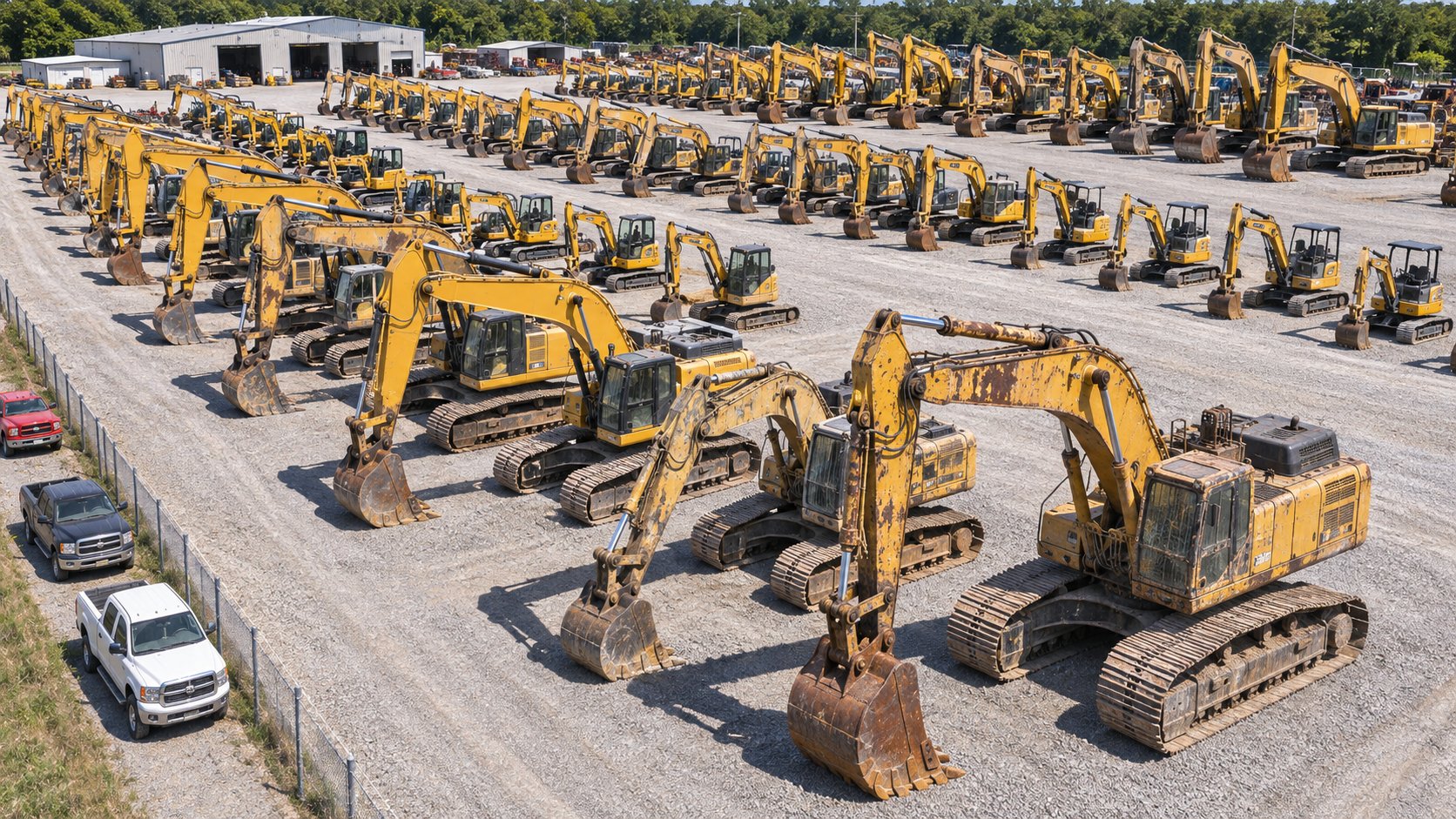
Understanding the Used Cat 315 Market and Price Drivers
Why would two machines from the same model year sit tens of thousands of dollars apart? Spend ten minutes on any marketplace and you'll see it happen. The answer usually lies in what each unit has lived through, not in the model number on its side.
The Used Cat 315 Market at a Glance
Supply is deep. Major aggregator pages have shown anywhere from about 278 to 748 listings at a time, with model years stretching from the mid-1990s to recent production. Auction records tell the same story. One Purple Wave price guide for the model has included a 1995 315L with 18,726 hours and undercarriage issues, two 2021 315GC units with 2,201 and 2,981 hours, and a 2022 315 with just 1,170 hours sold as insurance salvage with missing and cracked glass.
That depth cuts both ways. You get plenty of choice, but search results can also drift into unrelated ads, such as a 3155 John Deere for sale or a much larger Cat 395 for sale. Filter by the exact model, like a Cat 315CL, before comparing anything.
What Drives Cat 315 Price on the Used Market
| Factor | Why It Matters | What to Check |
|---|---|---|
| Generation and variant | Sets the engine, technology and spec baseline | Serial plate and model suffix |
| Hours | Reflects wear on the engine, pins and hydraulics | Hour meter and matching service records |
| Undercarriage condition | One of the costliest wear areas to restore | Rollers, idlers, sprockets, chains and shoes |
| Service history | Separates maintained machines from neglected ones | Dated records and fluid analysis |
| Emissions tier | Shapes compliance, export options and resale | Emission label and engine family |
| Attachments | A thumb, coupler or hammer circuit adds value | Included items, condition and pin fit |
| Damage or title history | Salvage units may hide repair costs | Listing notes, title and lien records |
| Region | Affects demand, local rules and haul cost | Machine location and a transport quote |
| Seller type | Dealers, auctions and private sellers carry different risk | Warranty, inspection access and terms |
A well-maintained older machine often delivers better value than a newer one that has been neglected.
New Versus Used Cat 315 Price Considerations
For a rough reference point, Equipment Trader places mid-size excavators, roughly 10,000 to 45,000 lb, at about $90,000 to $250,000 new and $40,000 to $180,000 used. Treat that as an illustrative band for the whole class, not a valuation of any Caterpillar 315 excavator for sale. New machines bring warranties, the latest technology and lower maintenance in the early years, but they cost more upfront and depreciate faster. A used unit preserves capital, provided the price leaves room for fuel, tracks, hydraulic repairs, insurance and transport.
The smart move? Line up several live listings side by side and request current quotes instead of anchoring on a single number. Of course, a fair comparison also depends on where each listing comes from, who stands behind it, and how far the machine sits from your yard.
Where to Search and How to Read a Cat 315 Listing
The same Cat 315C can show up at a dealer, at an auction and with a private seller. Each source tells you a different amount about the machine and offers a different level of protection. Where you shop shapes what you can learn before money changes hands.
Where to Find a Caterpillar 315 Excavator for Sale
Most buyers start with aggregators. TopMark Funding notes that Equipment Trader carries over 80,000 listings. You can filter them by location, price, year, make and hours. MachineryTrader filters by year, price, horsepower and condition, and authorized Cat dealers such as Foley Equipment and Boyd CAT post inventory there.
Auctions give you another route. IronPlanet sells at fixed prices, takes offers and runs online auctions. Ritchie Bros. holds unreserved auctions, where every item goes to the highest bidder. On any platform, use the exact model filter. Otherwise a search for a Cat 315 CL can get mixed in with results for much larger machines, such as listings showing a Caterpillar 395 price.
| Channel | Role | Strengths | Limitations |
|---|---|---|---|
| Authorized Cat dealers | Sell trade-ins and certified used units | Service records, inspections, possible warranty | Usually higher asking prices |
| Listing aggregators | Collect dealer and private ads in one place | Wide selection, easy filtering | Data quality varies by seller |
| Auctions | Sell through timed, online or on-site bidding | Possible bargains, fast transactions | Limited inspection, sold as-is |
| Private sellers | Owners selling directly | Room to negotiate, firsthand history | Little recourse if problems appear |
| Specialized exporters | Source and ship units internationally | Handle export paperwork and logistics | Remote buying makes inspection harder |
Where Used Cat 315 Inventory Is Concentrated
One snapshot from Machinio showed Florida in the lead with 26 listings. New York followed with 13, Texas and Wisconsin had 10 each, and California and New Jersey had 9 each. The same page showed the 315D leading the model counts with 212 listings.
Why does this matter? Say you work in Oregon, which showed only 2 listings. Your closest match may be several states away, so you pay more for hauling and an in-person inspection gets harder. A cluster of listings in the Northeast or Florida can let you see several units in one trip. These counts change daily, so treat them as rough signals.
How to Read a Cat 315 Listing Card
- Model and suffix: Check that the title, model field and description all agree. One card titled "2008 Caterpillar 315D" actually described a used Cat 315C bucket priced at $1,000.
- Serial number prefix: Ask for the full PIN. Broken Tractor lists 4YM and 6YM for the 315/315L, CFB and CJC for the 315C L, and CJN for the 315D L. On excavators, the plate sits on the right side of the cab, below the window.
- Hours: Ask how many of the hours were spent idling. One 315FL ad listed 7,000 total hours, and 3,000 of them were idle.
- Year: Cat PINs do not encode the model year. A Cat dealer can look up the build date from the serial number.
- Location: Get a transport quote before you make an offer.
- Attachments: Confirm which thumb, coupler, blade and buckets come with the machine.
- Undercarriage notes: Phrases like "good overall UC" are vague. Ask for measurements.
- Photos: Look for clear shots of the serial plate, the tracks, the cylinders and the cab display.
- Seller type: A note like "dealership listing provided via" means the ad was syndicated from another site, so contact the original source.
A clean listing card earns the machine a closer look, but it is not a reason to send payment. Problems like a loose pin or a slow hydraulic leak rarely show up in photos. Someone has to stand next to the machine to find them.

Inspection Checklist and Questions to Ask Sellers
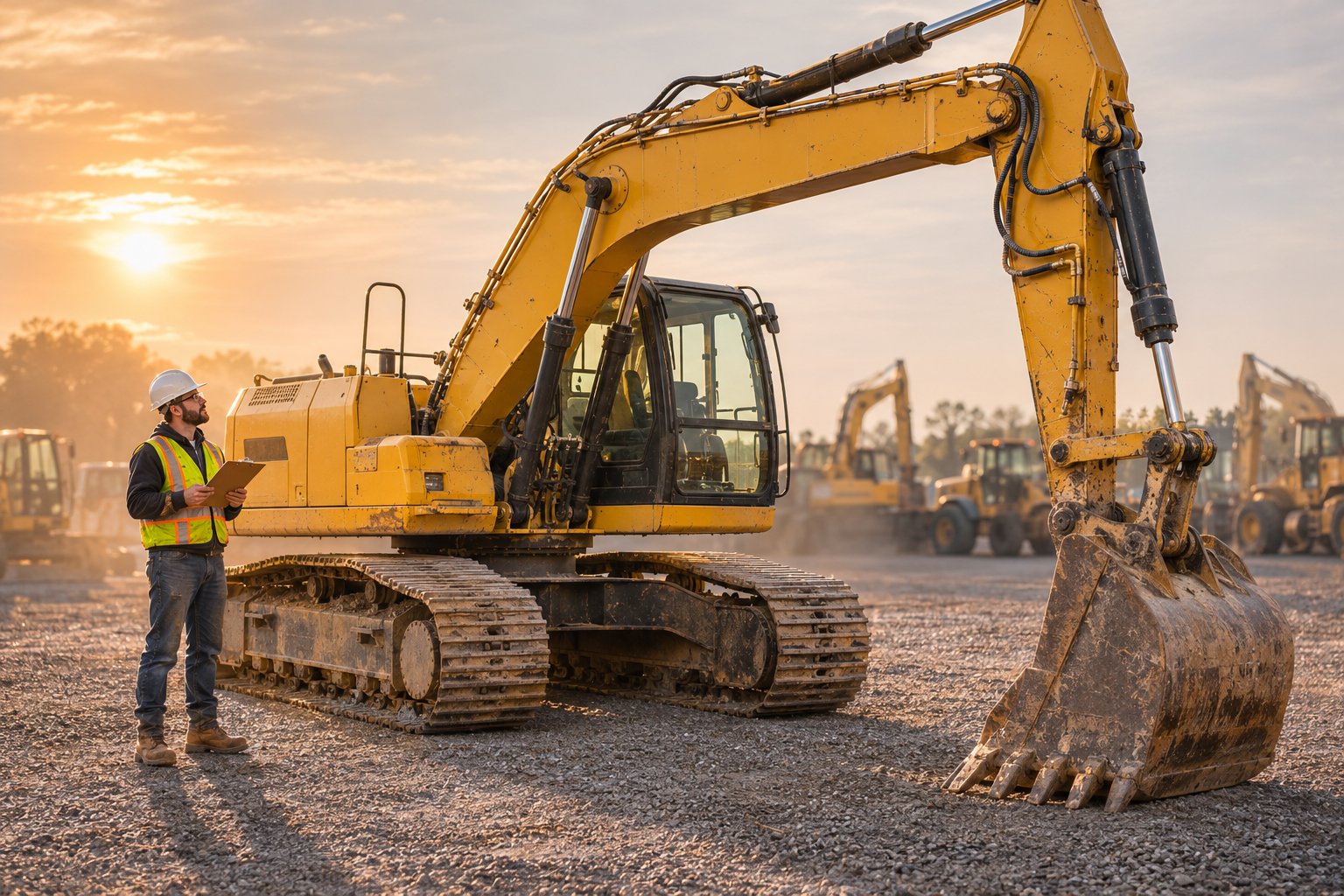
Photos can hide a lot. Fresh paint covers weld repairs, and a hose wiped clean before the photo shoot tells you nothing about next week. When you stand next to a used Cat 315, or send someone who can, a written checklist keeps the walkaround focused. The inspectors at Mevas note that less experienced technicians sometimes miss items such as a leaking swivel, swing bearing play, boom cracks or worn idler guides. A checklist makes those misses far less likely.
Used Cat 315 Excavator Inspection Checklist
- Undercarriage: Sharp, pointed sprocket teeth mean the sprockets are worn. Check idlers for leaks, carrier rollers for leaks or flat spots, and make sure track guides are in place. Look at chains and shoes for stretch, cracks and bent grousers.
- Tracking: Drive forward roughly 10 meters (about 33 ft), then back up. If the machine does not return to the same spot, the tracking needs adjustment.
- Hydraulics: Look for wet cylinder rods, damaged hose covers and corroded fittings. Check the center swivel for leaks too.
- Swing bearing: Listen for clunking during rotation and have the play measured, not just eyeballed.
- Boom and stick: Inspect for cracks and fresh weld repairs, especially around the boom foot and cylinder mounts.
- Pins and bushings: Work each joint gently and watch for slop at the boom, stick and bucket linkage.
- Engine: Start it cold. Watch for heavy smoke at startup and under load, and ask for a blow-by measurement.
- Cab and electronics: Test joysticks, seat functions and displays, and scan for warning codes. Check the ROPS corner posts for welding or drilling, which can weaken the structure.
- Bucket: Flip it over to check both sides for cracks, and note teeth worn into a U-shape.
Questions to Ask Any Caterpillar 315 Seller
A good conversation can save you a wasted trip. This used excavator buying guide points out that demolition work speeds up wear, marine sites invite corrosion and sandy ground wears parts faster. So ask:
- What jobs and site conditions did this machine work in?
- When was the undercarriage last measured or replaced?
- Are there any known leaks, fault codes or pending repairs?
- Can I or my inspector watch a cold start?
- Do the Caterpillar 315 excavator specs in the ad match the serial plate?
- Is any warranty or post-delivery support included?
Documents and Serial Number Checks to Request
- Service history with dates and hour readings
- Hour meter verification, matched against service records
- Full PIN checked against the title and lien records
- Ownership documents proving the seller can legally sell
- A clear photo of the emissions label and engine family
- Any recent fluid analysis reports
Red flags: a seller who will not share the PIN, refuses a cold start or inspection, cannot explain gaps in hours, or pushes for payment before documents arrive.
Buying from several states away? Hire a third-party inspector or ask a local Cat dealer to do the walkaround for you. Pair that with an oil sample. Lab analysis shows the levels of metals such as iron, copper, lead, tin and aluminum, which can point to hidden internal wear. Caterpillar's S.O.S fluid analysis tests oil, coolant and fuel through four ISO 9001-certified corporate labs and more than 90 Cat dealer labs. The same habits apply whether you are checking a Caterpillar 315 for sale or a mini machine like a Cat 301.5 for sale, though the stakes grow with machine size.
Still, a clean inspection report only proves the machine is sound. It does not tell you whether that particular generation and variant fits your budget, your jobsites and your emissions rules.
Choosing the Right Cat 315 and Evaluating a Specific Unit
You can now read a serial plate, decode a suffix and spot a tired undercarriage. That still leaves the real question: which machine belongs on your jobs? Start with how you work, then match a generation to it.
Which Cat 315 Should You Buy
| Buyer Priority | Generations or Variants to Consider | Key Trade-Off |
|---|---|---|
| Lowest upfront cost | Early 315/315B, Caterpillar 315C | Simpler systems, but more age-related wear and harder spec verification |
| Balance of price and proven tech | 315D, 315D L, 315D2 | Tier 3 suits lower-regulation markets but can limit resale where Tier 4 is required |
| Strict emissions rules | 315F, Next Gen 315, 315 GC | Compliance brings DEF and aftertreatment upkeep |
| Tight urban or roadside sites | 315F LCR, Next Gen 315 or 315 GC | Reduced tail swing, so confirm lift capacity for heavy loads |
| Heavy lifting and open earthmoving | L variants such as 315C L, 315D L, 315F L | More stability, but more weight to haul |
| Latest technology | Next Gen 315 | Grade Assist and Lift Assist at the highest price tier |
What about Cat 315 price? UsedMachHub places used machines in the 313 to 323 class at roughly USD 28,000 to 70,000. That band covers several models, so year, hours, condition and attachments decide where a specific unit lands.
Evaluating a Used Caterpillar 315 Excavator for Sale
Theory pays off when you test it on a real machine. The used Caterpillar 315D2 excavator from JIUHONG is a practical place to try it. Remember that the 315D2 is its own configuration, so don't borrow numbers from a 315D L spec sheet. Ask the seller for the unit's own specifications, current condition details, a live quote and export shipping information. If you can't inspect in person, request walk-around videos, a cold start, a full hydraulic motion test and a clear photo of the serial plate.
Next Steps Before You Request a Quote
- Start with a concrete unit: Request the 315D2's PIN, hours, service records and emission label from JIUHONG.
- Compare widely: Line it up against two or three other live listings and at least one authorized Cat dealer.
- Check import rules: Confirm destination age limits and emissions rules. The MechLink customs guide also recommends identical machine descriptions across the invoice, bill of lading and packing list.
- Verify before paying: Book a third-party inspection and an oil sample before any deposit.
Whether a listing reads cat315 or Caterpillar 315D2, the right buy is the one where the serial plate, the paperwork and the machine all tell the same story.
Cat 315 Excavator Buyer FAQs
1. How much does a Cat 315 excavator weigh?
Most Cat 315 units fall roughly in the 33,000 to 38,000 lb range, but the exact figure depends on the generation and how the machine is built. The current Next Gen 315 is listed at about 34,000 lb, the 315F spans a range of several thousand pounds depending on configuration, and the 315D L sits near the top at just over 38,000 lb. Track shoe width, undercarriage length, counterweight, boom and stick setup, and add-ons like a coupler or thumb all change the total. Before you book a trailer or apply for permits, get the spec sheet that matches the unit's serial number, then add the weight of every attachment that ships with it.
2. How can I tell which Cat 315 generation a listing actually is?
Start with the PIN plate, usually found on the right side of the cab below the window. The serial number prefix points to the generation. For example, 4YM and 6YM prefixes belong to the original 315 and 315L, CFB and CJC to the 315C L, and CJN to the 315D L. Newer machines are sold simply as 315 or 315 GC without a series letter, so a build code on the PIN plate identifies the platform. Because Cat PINs do not encode the model year, ask a Cat dealer to look up the build date. If the title, model field, photos and serial number do not agree, treat the listing with caution.
3. What engine does a Cat 315 have, and does it matter for a used purchase?
It depends on the generation. Many early units used the Cat 3054, a 4.4L four-cylinder built on a Perkins platform and known for simple, low-cost upkeep with good parts availability. The 315D moved to a Cat C4.2 ACERT engine at U.S. EPA Tier 3, the 315F used a Cat C4.4 at Tier 4 Final with a DEF system, and the Next Gen 315 and 315 GC run a Cat C3.6. Engine choice affects parts access, service complexity and where you can legally operate or resell the machine. Newer Tier 4 engines burn less fuel and run cleaner, but they need diagnostic software and aftertreatment maintenance, so confirm local repair support before buying.
4. How much does a used Cat 315 excavator cost?
There is no single price, because generation, hours, undercarriage wear, service history, emissions tier, attachments, region and seller type all move the number. As rough reference bands only, one buying guide places used machines in the 313 to 323 class at about USD 28,000 to 70,000, while Equipment Trader estimates used mid-size excavators in general at about $40,000 to $180,000. A well-maintained older 315 can be a better deal than a newer, neglected one, and salvage or damaged units may look cheap but hide repair costs. Compare several live listings, get a transport quote, and request current pricing from each seller instead of relying on any published range.
5. Can I buy a used Cat 315 remotely or for export?
Yes, but verification matters even more when you cannot stand next to the machine. Ask for the full PIN, hour meter photos, service records, the emissions label, walk-around videos, a cold start and a full hydraulic motion test. Book a third-party inspection or a local Cat dealer walkaround, and add an oil sample to reveal hidden internal wear. For a concrete starting point, the used Caterpillar 315D2 excavator from JIUHONG lets contractors and resellers request unit-specific specs, condition details, a current quote and export shipping information, rather than relying on figures from another 315 generation. Check destination age limits and emissions rules, and keep machine descriptions identical across the invoice, bill of lading and packing list.