

What a Chinese Mini Excavator Price Really Means
You find a compact machine online. The number looks almost too good, and you start picturing it on your job site. Sound familiar? A Chinese mini excavator price is usually the seller's quoted unit price for a specific machine at a specific handover point. It is not what you will pay to have that machine sitting on your property, ready to dig. Shipping, import duties, compliance paperwork and after-sale support all sit between those two figures. This guide is built around that gap: the sticker price versus the true delivered price.
What a Chinese Mini Excavator Price Quote Really Includes
A quote only becomes useful when it identifies the exact machine, its configuration and the delivery point, a principle import sourcing guides return to again and again. Imagine two listings for an AGT mini excavator AGT-H12 or a similar H12R mini excavator. They may look identical. Yet one might price the bare machine at the factory gate, while the other includes a thumb, extra buckets and freight to your port. Before comparing totals, check what each quote actually covers:
- Engine: the brand, model and emissions documentation for your market.
- Attachments: which buckets, couplers or thumbs are included, and which are extra.
- Trade term: the Incoterm and the named place where the seller's responsibility ends.
- Validity: the currency and the date the quote expires.
The gap can be significant. In one hypothetical dealer import example covering four 2-ton machines, freight, insurance, port charges, duties and inland trucking added roughly 15% to the ex-factory price. Your real figures will shift with route, season and destination.
Why the Answer to How Much Does a Mini Excavator Cost Depends on Where You Look
Most online listings cluster in roughly the 1 to 6 ton class. Powston-Direct, for example, advertises machines across that range. Within it, prices move with tonnage, engine and hydraulic package, cab or canopy, and the channel you buy through. A factory-direct seller, a US-stocked importer, a marketplace brand such as CFG Industries and a used-equipment dealer can quote the same size class very differently, because each bundles a different set of costs. Even buyers searching with spelling variants like 'mini escabeiro' run into the same problem: the headline number rarely matches the final bill.
Key takeaway: the lowest listed price is rarely the lowest delivered price.
So why can two machines of the same weight carry such different quotes? The answer starts inside the machine itself, with the components and options that shape every quote. From there, the real cost keeps building through freight and landed charges, the buying channel you choose, the certifications your market demands and the red flags that separate a bargain from a trap.
The Cost Drivers Behind Every Chinese Mini Excavator Quote
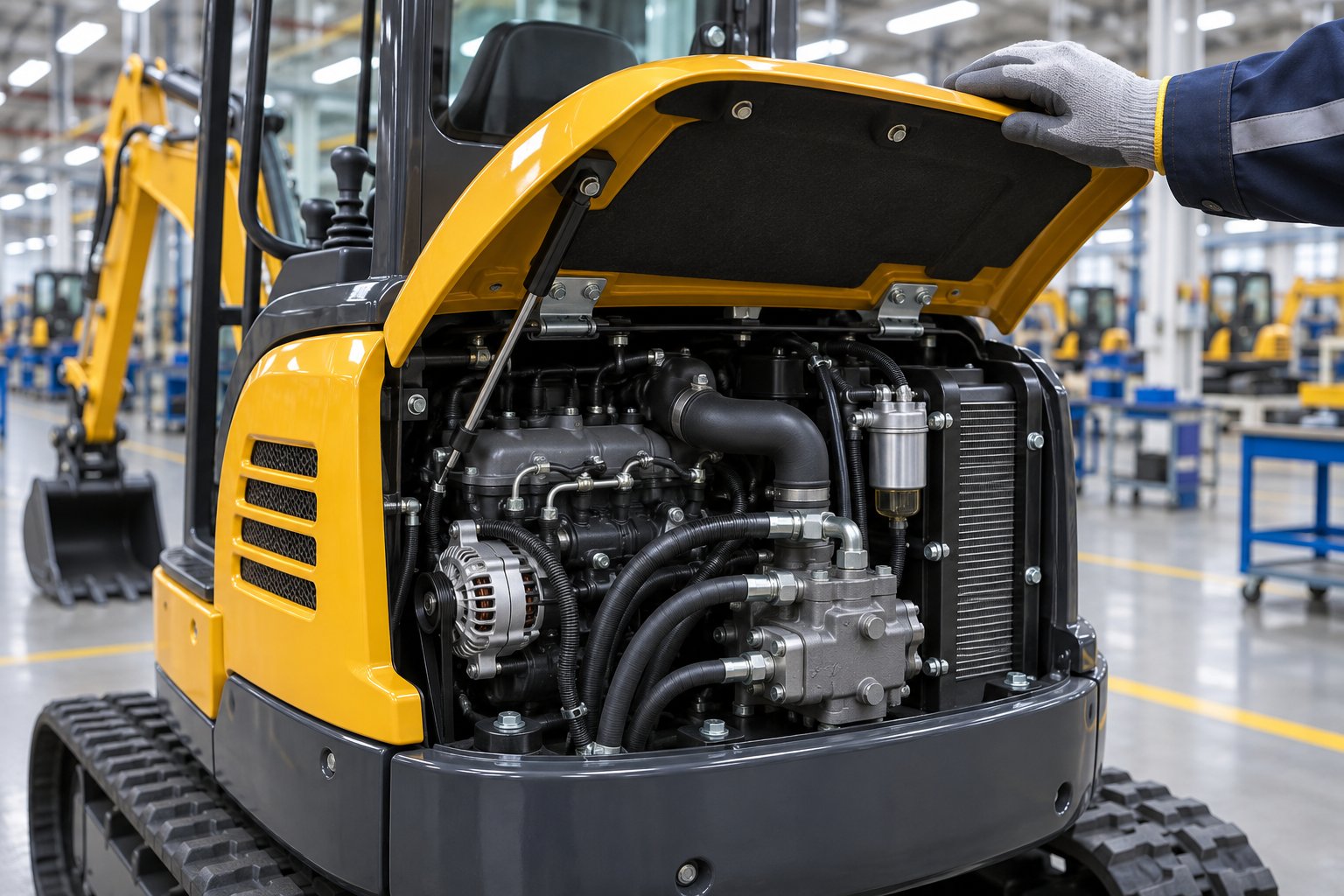
Why would two 2-ton machines from neighboring factories be quoted thousands of dollars apart? A mini excavator is really a bundle of choices: size, engine, hydraulics, operator protection and emissions paperwork. Each one pushes the quote up or down. Each one also stays with you long after the purchase.
Tonnage Class and Mini Excavator Weight
Weight is the first sorting line. Machines around 1 ton sit at the entry point. Units around 2 tons add reach and stability. Models of 4 tons and up need bigger frames, cylinders and undercarriages. By the time you reach a 5 ton excavator, you are paying for more steel and more hydraulic capacity. Heavier usually means a higher quote, but also more useful work per hour.
Engine Brand as the Biggest Hidden Price Lever
This is where quotes split most sharply. Many Chinese builders offer a Japanese or Western engine such as Kubota, Yanmar or Perkins, or a domestic block such as the Laidong 385 or Changchai 390. One detailed engine buying guide estimates that fitting a Kubota or Yanmar costs a Chinese assembler USD 2,000 to 4,000 more than an equivalent Chinese three-cylinder. On a machine sold for USD 5,000 to 8,000 ex works, that option can represent about a third of the price.
The smallest machines go cheaper still, with air-cooled single-cylinder diesels or small gasoline engines. Shoppers searching for an agt mini excavator h15r often end up comparing the AGT H15 with the CFG H15R. Both use a 13.5 HP RATO R420D gasoline engine, as Chupp Industrial's spec comparison shows.
You'll notice the engine choice shapes ownership as much as the sticker. The same guide credits Japanese engines with consistent manufacturing, a worldwide parts network and stronger resale value. Laidong parts are cheap thanks to the Chinese tractor ecosystem, but finish varies and there is no official network in Europe. Be careful with labels, too. No Yanmar engine is called '380F', so a plate photo and serial number are worth requesting, whether you are looking at an AGT Industrial mini excavator or a lesser-known brand.
Hydraulics, Cab Options and Emissions Packages
Engine power is only the first link. The pump decides how smoothly the machine combines movements, and a variable-displacement piston pump is a step up from a simple gear pump. Piston travel motors add torque and climbing ability. A hydraulic oil cooler is often missing on bargain micro machines, which matters in long, hot shifts.
Most mini excavators come as canopy or cab versions. A cab adds glass, seals and often heating or air conditioning, so it raises the quote but extends your working season.
Emissions rules matter too. Stage V and Tier 4 Final rules tighten sharply at 19 kW, so most engines in this segment are set just below it. Be wary of a machine sold as Stage V with 20 to 25 kW listed. A non-certified engine can block registration and hurt resale.
| Factor | Typical Options | Effect on Price | Effect on Long-Term Ownership |
|---|---|---|---|
| Tonnage class | 1 ton, 2 ton, 4 ton and up | Raises with weight | More capacity, higher transport needs |
| Engine brand | Kubota, Yanmar, Perkins vs. Laidong, Changchai, gasoline | Japanese and Western options raise it | Affects parts access, consistency and resale |
| Hydraulic pump and motors | Gear vs. piston pump, piston travel motors | Upgrades raise it | Smoother multitasking, better climbing |
| Oil cooling | Cooler fitted or omitted | Omission lowers it | Missing cooler limits long, hot work |
| Operator station | Canopy or enclosed cab | Cab raises it | Comfort and season length vary |
| Emissions certification | Stage V, EPA, uncertified | Varies | Uncertified units risk registration and resale problems |
Every lever above eventually shows up on a spec sheet as a model number, a kW rating or a single line of options. Those lines can reveal real value, or quietly hide where a seller cut corners.
How Specifications Translate Into Price
Open any product card for a Chinese mini excavator and you get a wall of numbers. Which ones explain the price, and which are just filler? Every line describes a capability. Each capability costs steel, hydraulics or engineering, and that cost shows up in the quote.
Reading a Compact Excavator Spec Sheet Line by Line
- Operating weight: the machine ready to work, with fuel, bucket and operator. As spec sheet guides point out, this is not the same as shipping weight. It sets stability, lifting ability and trailer needs.
- Engine model and kW/HP: power tracks machine size closely, so it rarely separates two units in the same class. The engine brand matters more for parts and resale.
- Bucket capacity: a volume, not a weight. It is usually quoted heaped, so compare like with like.
- Maximum dig depth: measured from ground level at full stretch. Treat it as a limit, not an everyday working figure.
- Zero tail swing: keeps the rear inside the track width while rotating, useful beside walls and fences. The tighter layout typically raises the quote.
- Swing boom: moves the arm left or right without turning the whole machine, handy for trenches along foundations. It adds a cylinder and pivot.
- Hydraulic thumb: lets the bucket grip rocks, logs and debris. Its weight also reduces the lifting capacity left for material.
- Auxiliary hydraulics: powers augers, breakers and grapples. Check flow, pressure, one-way or two-way operation and coupler size.
- Track type: rubber tracks protect lawns and paving, while retractable undercarriages narrow for gates and widen for stability.
Micro Excavator vs Compact Excavator Capabilities
Micro machines typically weigh around 1 ton or less, run about 700 to 800 mm wide and dig to roughly 1.5 meters, JCB's size comparison explains. A mini or compact excavator usually weighs 1.5 to 4 tonnes, digs from 1.5 m to over 4 m and lifts 500 kg to over 1,500 kg. Micros often lift under 300 to 500 kg.
That gap is why the cheapest machine is not always the cheapest per job. A 1 ton mini excavator handles planting and shallow trenching well. Its limits show in firm soil, repeated loading and longer trenches, as one equipment dealer notes. Imagine a long drainage run through clay. A 2 ton digger may finish with fewer repositions, while the lighter unit shifts with every bucket. A lower price can mean more hours on site.
Features Worth Paying For and Features You Can Skip
- Must-check: operating weight against your trailer, dig depth and dump height against the job, overall width against your gates, and auxiliary flow against planned attachments.
- Nice-to-have: hydraulic thumb, swing boom, extra buckets and an enclosed cab. Pay for these only when your regular work demands them.
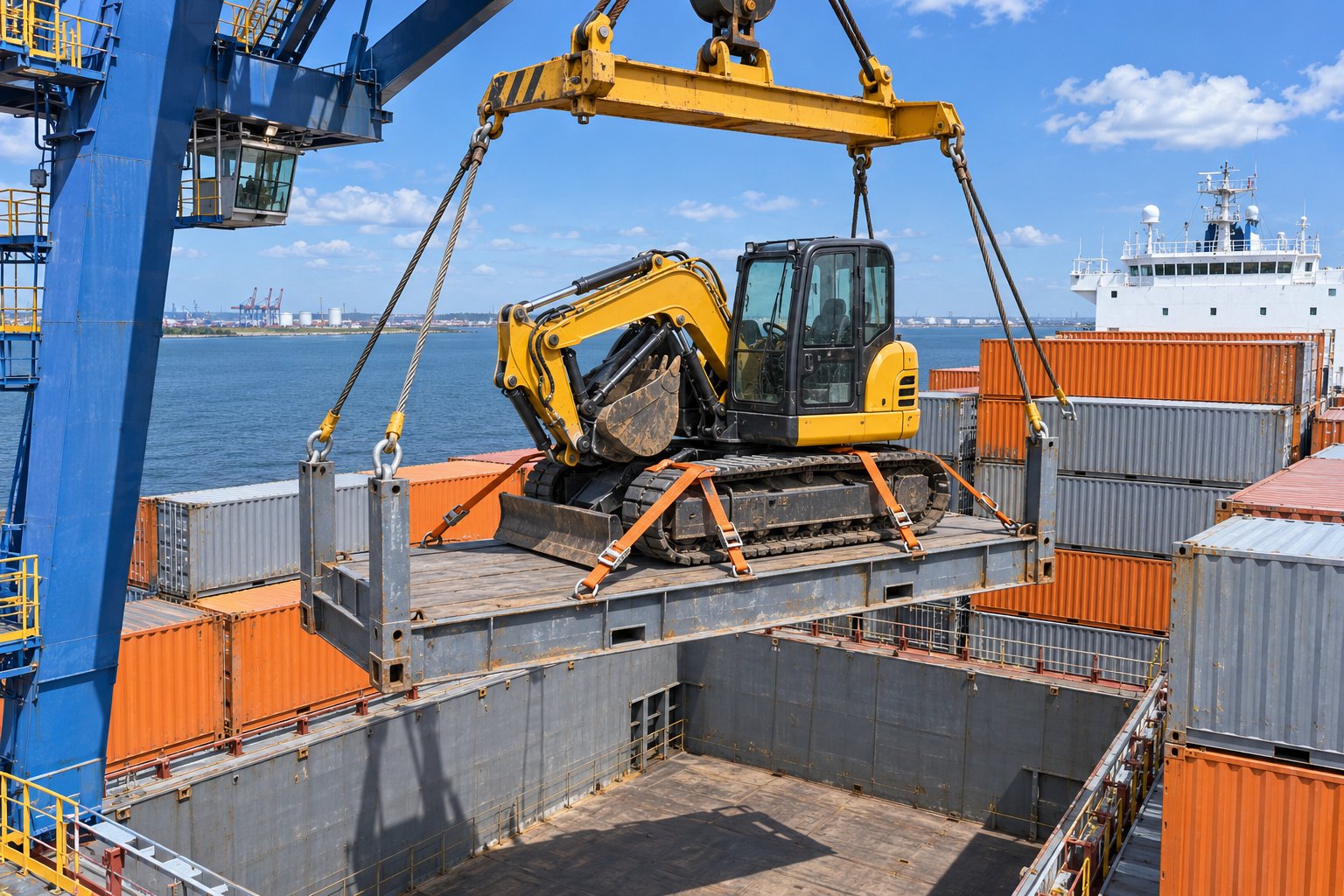
Still, even a perfectly matched spec sheet describes the machine only as it sits in the factory yard. Its weight and dimensions also decide how it crosses an ocean, and that journey is where the quoted figure starts to grow.
From Factory Quote to Delivered Cost
Imagine you accept a quote for a 2-ton machine. Weeks later, invoices arrive from a freight forwarder, a customs broker and a trucking company. Where did they come from? They were always part of the real mini excavator price. The quote simply stopped before they started. Turning that figure into a delivered cost begins with one short code printed on the quote: the Incoterm.
EXW vs FOB vs CIF vs DDP Explained
Incoterms define where the seller's job ends and yours begins. They also set when the risk of loss or damage passes to you, which is not always the point where costs pass.
| Incoterm | Seller Covers | Buyer Covers | When Risk Transfers |
|---|---|---|---|
| EXW (Ex Works) | Makes the machine available at its premises | Loading, export clearance, freight, insurance, import and delivery | When the machine is placed at the buyer's disposal at the factory |
| FOB (Free On Board) | Export clearance and loading aboard the vessel at the named origin port | Ocean freight, insurance, import duties and everything after arrival | Once the machine is on board at the origin port |
| CIF (Cost, Insurance and Freight) | FOB duties plus ocean freight and minimum insurance to the named destination port | Destination charges, duties, brokerage and inland delivery | Once the machine is on board at the origin port |
| DDP (Delivered Duty Paid) | Transport, import clearance and duties to the named destination | Usually unloading at the destination | When the machine arrives at the named place, ready for unloading |
Watch CIF closely. The seller pays freight to your port, yet the risk becomes yours the moment the machine is loaded in China. FOB, as import sourcing guides stress, means delivery aboard the vessel at the named origin port. It is not an ex-factory price. Always record the named place and the Incoterms edition.
Landed Cost Checklist for a Mini Excavator From China
Freight mode depends on size. A single small unit often ships LCL, sharing container space. Several units can fill a 20GP or 40HQ. Machines that will not fit standard containers after partial disassembly need a flat rack, which costs more. Before booking a 4 ton excavator, confirm its packed dimensions with the supplier. For reference, Gerudo Logistics puts indicative 2026 rates at roughly $2,700-$3,400 for a 40HQ from China to the US, with marine insurance typically 1-2% of declared value. Treat these as rough guides, since rates fluctuate. Then build your total in order:
- Start with the quoted goods price and its Incoterm.
- Add origin charges not already included, such as export clearance, loading, documents and ISPM 15 crating.
- Add ocean freight for your mode: LCL, FCL or flat rack.
- Add marine cargo insurance.
- Obtain a broker's duty estimate. In the US, that includes standard duty plus any Section 301 additional duties. Other markets apply VAT or GST.
- Add customs brokerage and entry fees.
- Add port, terminal and release fees.
- Add inland trucking, plus liftgate or unloading fees.
- Keep a separate contingency line.
Tariffs deserve extra care. Section 301 surcharges can reach up to 25% on most Chinese construction machinery, Gerudo notes, but exclusions and effective dates change. Verify your exact classification with a licensed customs broker and the official Harmonized Tariff Schedule before you commit.
Why Free Shipping Rarely Means Free Delivery
Retail marketplaces such as AliExpress often show 'free shipping' on machinery. For a parcel, that phrase is simple. For a machine weighing a ton or more, it can mean delivery to a port, a depot or your curb, with duties and brokerage left to you. Before trusting it, ask:
- Where exactly is the delivery point?
- Who pays duties, taxes and brokerage?
- Is a liftgate truck or unloading included?
- Who files the customs entry?
A machine already stocked in your country, as with some AGT mini excavator listings shipped from US warehouses, has cleared customs, so those costs sit inside the price instead of ahead of you. That shift in who carries the import work is exactly why the same machine can look so different depending on where you buy it.
Comparing Buying Channels and Their Real Price Levels
Ask five sellers how much is a mini excavator in the same size class, and you may get five very different answers. Often the machine is not the real difference. The channel is. Each route decides who handles the import, who answers when a hose fails and how much of the work lands on you.
Where to Buy a Chinese Mini Excavator
Most buyers choose among five routes. These are used-equipment dealers carrying Chinese brands, factory-direct or group-buy sellers such as Powston-Direct, US-stocked importers such as AGT, B2B marketplaces such as Made-in-China, and retail marketplaces such as AliExpress and eBay. You'll notice the same kind of machine, whether a CFG Industrial unit, an XZ20R mini excavator listing or a Mini X style micro machine, can appear in several of these routes at very different prices.
Used Dealer, Factory Direct, Importer or Marketplace
| Channel | Relative Price Level | Who Handles Import | Inspection Options | Support After Sale |
|---|---|---|---|---|
| Used Chinese-brand dealer (e.g., JIUHONG) | Varies by unit; price and condition requested per machine | Dealer can quote shipping; buyer or broker usually clears import | Pro: machine already built, with real listings to compare and photos or video of the actual unit | Depends on dealer. Con: used condition varies, and unit history must be verified |
| Factory direct or group buy (e.g., Powston-Direct) | Often the lowest ex-factory quote | Buyer, unless DDP is agreed | Factory photos, video, third-party pre-shipment inspection | Through the manufacturer; parts often ship from abroad |
| US-stocked importer (e.g., AGT) | Higher sticker, import costs already included | Importer | Varies; machine is already in the country | Domestic contact; confirm local parts stock |
| B2B marketplace (e.g., Made-in-China) | Low to moderate, often geared to wholesale orders | Buyer | Supplier audit reports, third-party inspection | Negotiated with each supplier |
| Retail marketplace (AliExpress, eBay) | Low listed price, extras vary | Varies; read shipping terms closely | Limited; seller feedback percentages and review counts | Individual seller plus the platform's dispute process |
With a used dealer, you can browse used Sunward excavators from JIUHONG, including models such as the SWE40E and SWE60E, and request a current price, condition details and a shipping quote for one specific unit. Sunward is just one documented Chinese brand, and whether a machine suits you depends on that unit and your job.
B2B badges need context too. Made-in-China's Audited Supplier program has used firms such as SGS and Bureau Veritas to verify supplier authenticity on site since 2007, with audit reports free to view online. That checks the company, not the individual machine you are buying.
What Each Channel's Price Leaves Out
A dealer price and a factory quote are not directly comparable. Rippa makes this point in its dealer vs factory-direct comparison. A local dealer's figure absorbs importing, warehousing, parts inventory and service. A factory-direct buyer takes on international freight, customs costs and local transport instead. The number that matters is your total purchasing cost.
Think of each channel's price as a list of jobs already done for you. The cheapest quote usually leaves the most jobs on your desk. Some of those jobs cost far more than freight. A machine without the right certificates may not clear customs or register at all, and a warranty is only as good as whoever stands behind it.
Certifications and Warranties That Change the Price
What happens if your new machine reaches the port and customs will not release it? Suddenly the cheapest quote becomes the most expensive one. Certifications and warranties rarely appear as line items. Yet they decide whether a machine can legally work, and who pays when something breaks.
CE, Euro 5 and EPA Certification Explained
For European buyers, CE marking is the manufacturer's declaration that a product meets EU rules, and machinery is one of the covered categories. There is no central EU body that hands out a CE certificate. Instead, the manufacturer signs an EU declaration of conformity and must keep the technical documentation for at least 10 years, as the EU's CE marking guidance explains. Engine emissions are a separate check. Listings often say 'Euro 5', but for nonroad machinery the standard to ask about is EU Stage V.
US buyers face a stricter gate. The Clean Air Act bars importing nonroad engines and equipment that do not meet EPA emission standards, whether new or used. A nonconforming diesel mini excavator can be seized or exported by customs or EPA, and fines may follow. The legal fix, modification, testing and certification through an Independent Commercial Importer, must be arranged before the machine ships. Add the risk of being unable to register or insure it, and an uncertified bargain can end up costing far more than a compliant machine.
What a Chinese Excavator Warranty Actually Covers
Sellers promote warranties loudly. Powston, for example, advertises a 2-year warranty. But a warranty generally covers eligible defects in materials or workmanship, not every breakdown. Labor, transport and diagnosis may be covered, limited or excluded, and wear items such as tracks and bucket teeth are often left out, as Rippa's warranty guide notes. Some terms also end at a time or operating-hour limit, whichever comes first. Before paying for any Chinese excavator, ask:
- Who honors claims: the manufacturer, the engine supplier or a local dealer?
- Do replacement parts ship from abroad, and how long do they take?
- Is labor covered, or only parts?
- Must failed parts be shipped back before a replacement is sent?
- Which records does a claim require, such as serial number, hours, maintenance logs and photos?
How to Verify Certificates and Supplier Badges
Whether you are eyeing a QK16R mini excavator or a 4-ton unit, 'CE' or 'EPA' in a product title is a supplier claim. Factory audits and audited-supplier badges verify the company, not the certificate behind a specific machine. Check it yourself:
- Request the EU declaration of conformity or the EPA certificate, plus the engine model and serial number.
- Match the engine plate to the certificate details.
- Where a notified body was involved, look up its 4-digit ID, shown next to the CE mark, in the NANDO database.
- Reject 'voluntary certificates', which the EU warns are not legally recognized for CE marking.
- For US imports, confirm compliance with your customs broker or EPA's Imports Hotline before shipping.
Compliance is a cost decision, not a paperwork afterthought.
Still, a valid certificate and a generous warranty are promises on paper. Their real worth rests on the brand behind them: how fast parts arrive, whether a dealer exists near you and how the machine holds its value. On those points, Chinese brands are far from alike.
Chinese Brands Compared on Value and Ownership Cost
Scroll through any mini excavator sale online and the same names keep appearing. Are they all the same kind of company? Not at all. 'Chinese' covers everything from online sellers of micro machines to some of the largest construction equipment makers in the world. The group a brand belongs to tells you a lot about what its price includes, and what it leaves to you.
Budget Online Brands vs Established Chinese OEMs
The first group is the budget micro and mini specialists sold heavily online. Names you'll see include AGT, CFG Industrial, Rippa, LandHero, Kingway, Mivo, LANTY, Rhinoceros, XN and Mower King. Their main pitch is a low upfront price. Rippa describes the model openly in its buyer's guide. It sells directly to buyers online, skipping the dealer showroom, local inventory and local service. The trade-off, it notes, is that owners should be ready for some DIY maintenance and remote contact with the factory. Its standard engine is a Chinese-made Koop, with an imported Kubota offered as a paid upgrade.
The second group is large established OEMs such as Sany and XCMG, which sell through dealer networks. An XCMG dealer's comparison notes that SANY assembles many US-market machines in Peachtree City, Georgia, and that XCMG often lists 10-15% below a comparable SANY. Both brands commonly offer 5-year/5,000-hour warranty programs, and XCMG's XE-series uses Cummins, Isuzu and Yanmar engines. The same source's verdict is worth remembering: the dealer matters more than the logo.
| Brand Group | Typical Sales Channel | Support Model | Questions to Ask |
|---|---|---|---|
| Budget online micro and mini specialists | Brand websites, retail marketplaces, factory-direct orders | Remote factory or importer support; owner handles much of the maintenance | Where do parts ship from? Which engine is fitted as standard? Is there any local service partner? |
| Established Chinese OEMs (e.g., Sany, XCMG) | Authorized dealer networks | Dealer service and parts; coverage varies by region | How close is the nearest dealer? What does the warranty program cover in practice? |
| Japanese and Western brands | Local dealers with showrooms and stock | Established dealer service and standardized warranty programs | How much of the premium buys support you will actually use? |
Chinese vs Japanese and Western Mini Excavators on Total Cost
Dealer-sold brands build showrooms, inventory and service into their price. Chinese machines usually win on acquisition cost and configuration flexibility. Japanese brands tend to win on dealer density, resale value and quality consistency, a balance one Chinese manufacturer lays out in its Chinese vs Japanese comparison. The author's advice is to compare total ownership cost over your holding period: purchase price, freight and duties, maintenance, expected downtime at your usage level and projected resale value.
When the Cheapest Mini Excavator Costs More Later
A cheap machine is expensive if it sits for weeks waiting on a part. Imagine a contractor running a 4 ton mini excavator on billed work every day. If a stoppage costs $1,000 or more per day, service access outweighs the purchase saving, the Hongli guide argues. Now picture a compact mini excavator on a farm, used a few hundred hours a year. There, the lower entry price usually wins. Fuel use, parts lead times and resale also shift with the engine and hydraulics fitted, so compare actual configurations, not brand labels.
How long you keep the machine matters too. Short ownership cycles favor strong resale. Long cycles favor a lower starting price. There is one more catch with well-known names, though. A familiar brand on a web page proves nothing about who is actually selling the machine.
Red Flags and Supplier Vetting Before You Pay
When a deal on a micro excavator looks unbeatable, start with one question. Who is actually taking your money? Logos, product photos and brand names are easy to copy. The seller behind them is the part you need to check.
Red Flags in Cheap Mini Excavator Listings
- Prices far below comparable listings: one heavy equipment broker warns that machines listed 40% or more below market value are almost always fraudulent.
- Wire-only payment to personal or unrelated accounts: especially when the account name does not match the company on the quote.
- New domains borrowing brand names: a slightly altered web address paired with a familiar logo.
- Keyword-stuffed titles: a 'compact excavator for sale' listing that crams an MH12RX mini excavator, other model names and unrelated brands into one product.
- No video inspection: fresh excuses every time you ask to see the actual unit.
- Vague Incoterms: 'shipping included' with no named place or trade term.
- Pressure to pay fast: claims that another buyer is waiting or the price expires tomorrow.
How Impersonator Sites Target Equipment Buyers
Impersonation is a real problem in this market. AGT Equipment publishes a scam alert warning that fake sellers reach buyers through phone calls, social media and unofficial websites. The company says it only processes transactions through its official website or its financing partner. It treats requests to pay by Zelle, Venmo, CashApp or wire transfer as extremely suspicious. It also flags unsolicited 'we have parts' messages and robotic phrasing. The lesson applies to any brand. Confirm the payment route using contact details you find yourself, never ones the seller sends you.
A Supplier Vetting Checklist Before You Pay
- Verify the business license. Note the Unified Social Credit Code and check it on China's official GSXT database, which shows registration date, legal representative and status. A supplier verification guide advises extra scrutiny for companies registered within the last year or two.
- Check domain age and contact details. Compare the website's age with the company's claimed history, and call a number you sourced independently.
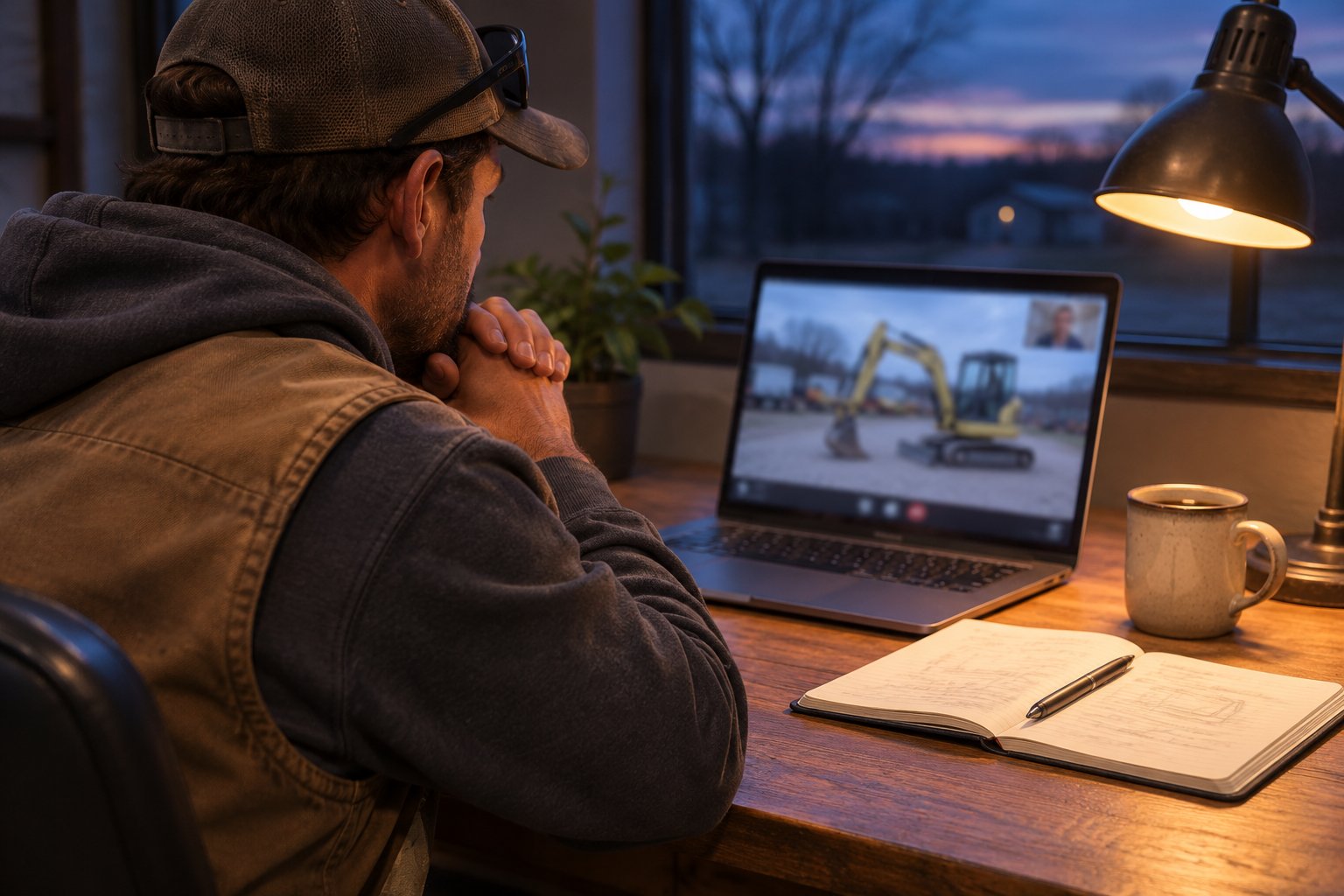
- Request live video of the specific unit. Ask the seller to show the serial number plate and engine plate on camera, then match them to the quote.
- Use third-party inspection. Firms such as SGS, Bureau Veritas and TUV offer audit services in China, and a pre-shipment check confirms the machine before loading.
- Prefer escrow or trade-assurance payments. Verify the escrow service itself, since fake escrow sites exist and legitimate ones use business accounts.
- Confirm bill of lading details. Make sure the shipper, consignee, machine description and ports match your contract before paying the balance.
A seller who passes every step has earned your trust, but trust alone does not tell you whether the machine fits your work. A genuine supplier can still quote the wrong size, the wrong condition or a trade term that hides half the cost.
Choosing the Right Machine and Getting a Comparable Quote
So which machine, and which seller, actually fits you? Start with the work, not the price. Rental experts give simple advice: choose the smallest mini excavator that can handle your job. Mini excavator weight then decides your trailer, your site access and a large share of the quote.
Matching Machine Size and Channel to Your Buyer Type
The size bands below follow United Rentals' size classes. Treat them as starting points, since manufacturers label sizes differently and there is no industry standard.
| Buyer Type | Typical Size Class | Suggested Channel | Key Priority |
|---|---|---|---|
| Homeowner | Micro/compact, about 2,000 to 3,000 lbs | US-stocked importer or local dealer | Simple transport and domestic support |
| Landscaper | Small, about 3,000 to 5,000 lbs | Importer or dealer-backed brand | Track type, auxiliary hydraulics and trailer weight |
| Small contractor | Small to mid-size, about 3,000 to 10,000 lbs | Used Chinese-brand dealer or established OEM dealer | Uptime, parts access and verified condition |
| Equipment importer or dealer | Varies by target market | Factory direct, B2B marketplace or used dealer | Compliance, consistent configurations and landed cost per unit |
New vs Used Chinese Mini Excavators
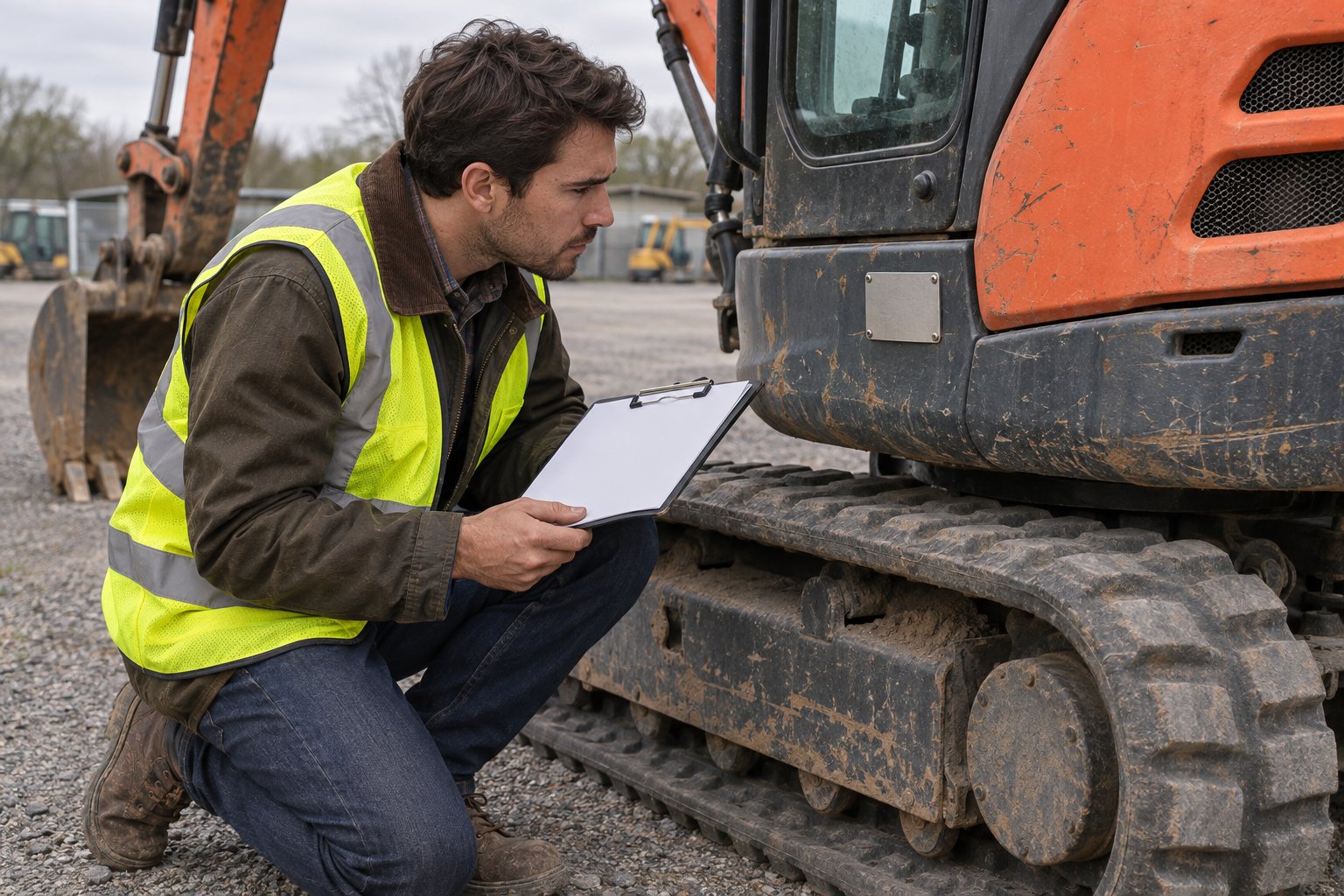
A new mini excavator for sale brings a full warranty and a clean history. That matters most when you have no mechanic nearby. Used machines suit buyers who can inspect carefully. A used equipment inspection checklist names clear walk-away signs: a mismatched serial plate, water in the hydraulic oil, telematics that contradict the hour meter and a cracked frame at the slew post or stick. If the unit sits overseas, hire an independent inspector and ask for a written report.
When shopping used, compare several sources:
- JIUHONG's used Sunward listings, including the SWE40E and SWE60E, where you can request a current price, condition details and a shipping quote for one specific unit.
- Dealers of established Chinese OEMs with trade-in stock.
- Local used-equipment dealers you can visit in person.
Sunward is one documented Chinese brand, not a ranking. Whether a listed unit suits you depends on its actual condition and your job.
Getting a Like-for-Like Quote Before You Buy
Whether you are pricing an MX15RX mini excavator or a larger used machine, send every seller the same request. Import sourcing guides also advise keeping optional equipment on separate lines, so you can see what each change adds. Ask for:
- Incoterm: the trade term and the named place or port.
- Condition or build date: hours and service records for used units, build date for new ones.
- Engine brand: make, model and serial number, especially on diesel mini excavators.
- Certifications: EPA, CE or Stage V documents tied to that engine and machine.
- Warranty terms: who honors claims, what is covered and where parts ship from.
- Shipping quote: freight to your destination port, with what is included and excluded.
Line the replies up side by side. The quote that answers every point clearly, not the one with the smallest headline number, is usually the closest to your true delivered price.
Chinese Mini Excavator Price: Frequently Asked Questions
1. How much does a Chinese mini excavator really cost once it is delivered?
There is no single delivered figure, because a quote only covers the machine up to a named handover point such as the factory gate (EXW), the origin port (FOB) or your destination port (CIF). Everything after that point is yours to pay. That can include ocean freight, marine insurance, import duties, any US Section 301 additional duties, VAT or GST in other markets, customs brokerage, port and terminal fees, inland trucking and unloading. In one hypothetical dealer example for four 2-ton machines, these extras added roughly 15% to the ex-factory price, but route, season, destination and tariff classification all change the result. To get your real number, add each cost line to the quoted price in order, keep a contingency line, and confirm the duty estimate with a licensed customs broker before you commit.
2. Why do Chinese mini excavators of the same size have such different prices?
Two machines with the same operating weight can be built very differently. The engine is usually the biggest lever. One engine buying guide estimates that fitting a Kubota or Yanmar costs a Chinese assembler USD 2,000 to 4,000 more than a comparable domestic three-cylinder, which can be a large share of a budget machine's price. Hydraulics also matter: a variable-displacement piston pump and piston travel motors cost more than a basic gear pump, and some bargain micro machines omit the hydraulic oil cooler. An enclosed cab, valid emissions certification and included attachments all raise the quote too. Finally, the buying channel changes the number, since a US-stocked importer folds import costs into its price while a factory-direct quote leaves them to you.
3. Can I legally import a Chinese mini excavator into the US or Europe?
Yes, but only if the machine meets the rules of your market before it ships. In the US, the Clean Air Act bars importing nonroad engines and equipment that do not meet EPA emission standards, and a nonconforming machine can be seized or sent back, with possible fines. In the EU, the manufacturer must sign a declaration of conformity for CE marking, and the engine should meet EU Stage V, not a vague 'Euro 5' label. Be wary of machines sold as Stage V with an engine rating above the 19 kW threshold where rules tighten. Ask for the actual certificate or declaration, match it to the engine plate and serial number, and confirm compliance with your customs broker or the EPA Imports Hotline before paying.
4. Is it better to buy a new or used Chinese mini excavator?
New machines suit buyers who want a full warranty and a clean history, especially if no mechanic is nearby. Used machines suit small contractors and importers who can inspect carefully, because the unit is already built and can be checked before purchase. Walk away if you see a mismatched serial plate, water in the hydraulic oil, telematics hours that contradict the hour meter or cracks near the slew post or stick. One practical starting point is a used Chinese-brand dealer such as JIUHONG, whose used Sunward listings include models like the SWE40E and SWE60E. There you can request a current price, condition details and a shipping quote for one specific unit. Sunward is just one documented brand example, and whether any listed machine suits you depends on that unit's actual condition and your job.
5. How can I tell if a cheap mini excavator listing is a scam?
Start with price and payment. One heavy equipment broker warns that machines listed 40% or more below market value are almost always fraudulent, and requests to pay by wire, Zelle, Venmo or CashApp to personal or unrelated accounts are major warnings. Other red flags include newly registered websites copying brand names, keyword-stuffed titles mixing unrelated models, refusal to show the actual unit on live video, vague shipping terms with no named Incoterm and pressure to pay quickly. To protect yourself, check the supplier's Unified Social Credit Code on China's official GSXT database, call a contact number you found independently, ask to see the serial and engine plates on camera, book a third-party pre-shipment inspection, use a verified escrow or trade-assurance service and confirm bill of lading details before releasing the balance.