

What Buyers Should Know Before Shopping for a Cat Dozer
Search for a cat dozer for sale and you'll find pages of inventory grids and manufacturer menus. You won't find much help deciding which machine you actually need. This guide is meant to fill that gap.
What Is a Cat Dozer and How Does It Differ From Other Bulldozers
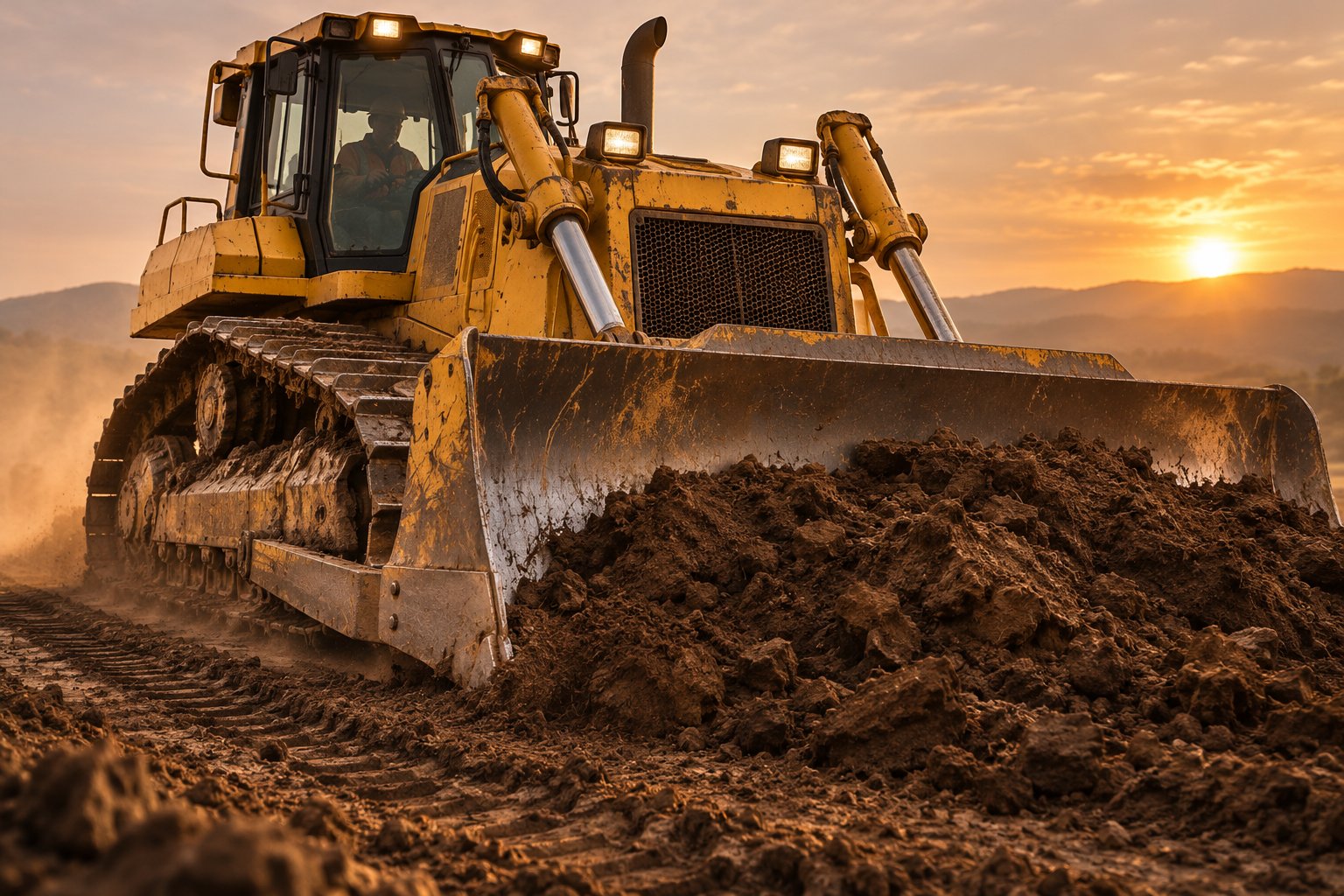
A Cat dozer is a Caterpillar crawler or wheel machine fitted with a front blade for pushing, clearing, and grading material.
Most Cat dozers run on tracks. Tracks spread the machine's weight over a wider area, so the dozer can work in mud, sand, and on steep grades without sinking. Wheel dozers give up some of that traction in exchange for speed and road-friendly mobility, as Cleveland Brothers explains in its wheel vs. track comparison. A Caterpillar bulldozer also stands out in listings because of its naming system. That system tells you a lot about a machine, as long as you can read it.
How Caterpillar D-Series Numbering Works
The "D" designation is Caterpillar's oldest product line. The company's own nomenclature guide dates it to 1937. The rule of thumb is simple: the higher the number, the bigger the machine. A D3 is a small dozer, while a D10 is built for heavy production work.
Letter suffixes, such as the "R" in D9R or the "D" in D6D, mark model generations. Caterpillar has since dropped series letters on newer machines. The generation now appears in a three-character build code on the PIN plate. What does that mean for you? Two listings with the same model number can describe very different machines.
Why Research Comes Before Browsing Listings
Imagine scrolling past hundreds of machines without knowing whether you need a D4 or a D8. Before long, the prices, hours, and photos all start to blur together. If you choose your application and size class first, that endless grid turns into a short list of real candidates.
This guide covers each part of that process:
- The Cat lineup organized by size class
- Matching dozer size to your application
- Blades, attachments, and configurations
- The factors that drive pricing
- Where to buy and how each channel compares
- How to read a used listing
- A pre-purchase inspection checklist
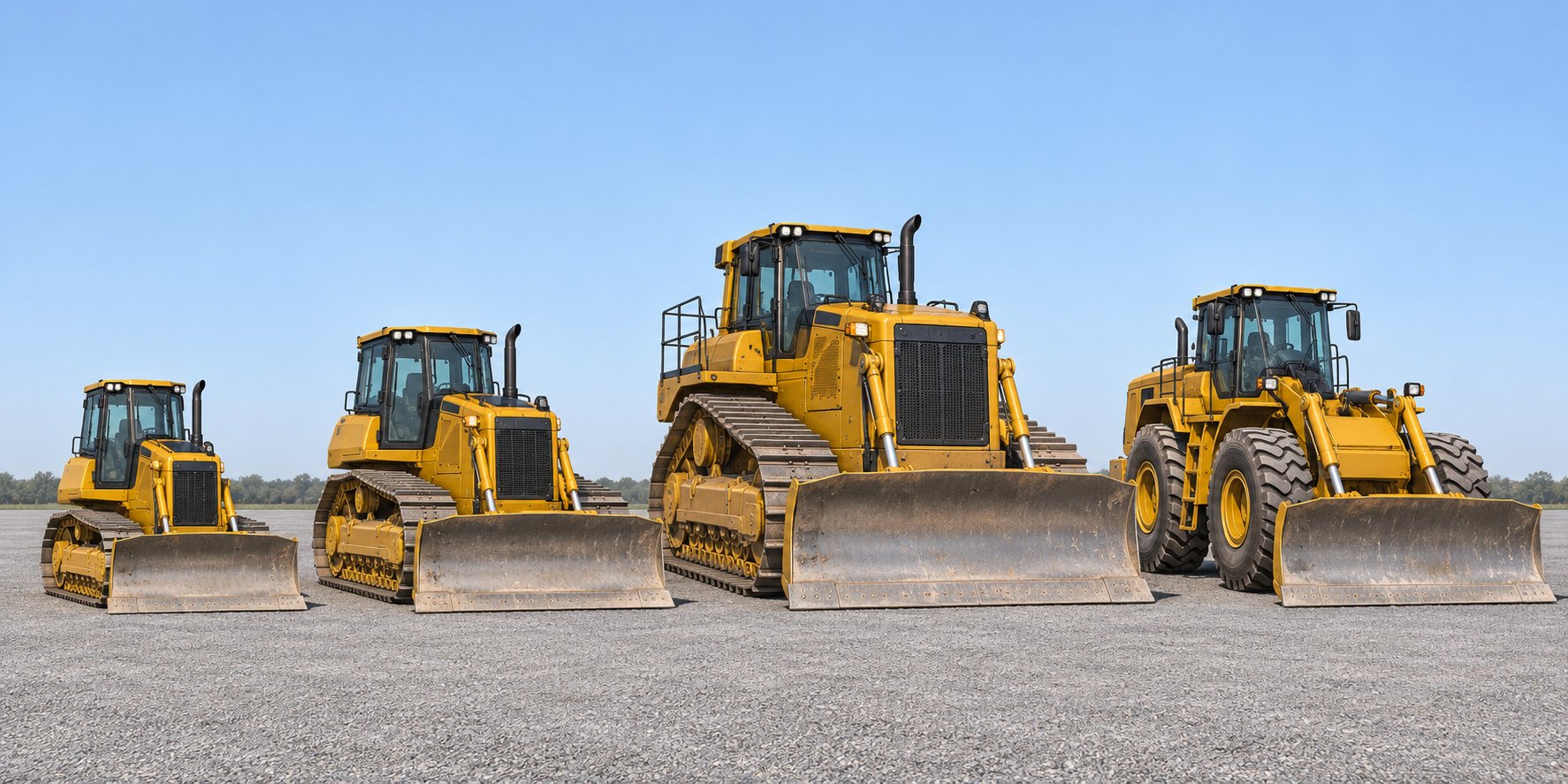
Every one of these steps depends on knowing where each model sits in the family. That family is wider than most buyers expect, ranging from compact finish-grading machines to mining giants. Before you weigh any specific cat bulldozer, it helps to see the full lineup side by side.
The Cat Dozer Lineup Organized by Size Class
Have you ever clicked a "D5" listing and found a machine much smaller than you expected? Caterpillar bulldozer models have been renamed and regrouped over the years, so the number alone doesn't always tell the full story. Caterpillar's current dozer lineup sorts its machines into four families: small, medium, and large track-type dozers, plus wheel dozers.
Small Cat Dozer Models for Tight Sites and Finish Grading
The D1, D2, and D3 make up Cat's small dozer class. Caterpillar's Next Generation launch release says these machines are designed for speed, transportability, maneuverability, versatility, and finish grade accuracy. The same release explains a naming twist that trips up many buyers. The D1, D2, and D3 replaced the D3K2, D4K2, and D5K2, respectively. That means a used D5K2 is a small cat dozer, not a medium one.
Searching for a caterpillar mini dozer? Even the D1, the smallest current D-series model, weighs more than 18,000 lb. That's compact for a dozer, but it isn't "mini" in the way a compact track loader is. If you need a truly compact machine, check the operating weight, blade width, and transport dimensions on every listing. Don't assume that "small" in a listing title means mini.
Medium Caterpillar Bulldozer Models for General Earthwork
Cat currently lists the D4, D5, D6, D6 XE, D7, D8, and D8 XE as medium dozers. Many sellers still group the D4 with small machines and the D8 with large ones, so you'll notice some overlap in marketplace filters. This is the workhorse range for site prep and general earthmoving. Power, weight, and blade size climb steadily with each step up the numbering.
Large Caterpillar Bulldozers for Mining and Heavy Production
The D9, D10, D11, and D11 XE sit at the top of the track-type lineup. These cat dozers are built for mining, quarrying, and bulk earthmoving. At this size, moving the machine between sites becomes a planning task of its own, with heavy-haul trailers and permits to arrange.
Where Cat Wheel Dozers Fit In
Wheel dozers trade tracks for rubber tires. Cat's lineup includes the 824, 834, 844, and 854. Caterpillar positions the 824 wheel dozer for mining, stockpile management, reclamation, and site maintenance. With 405 net hp and a straight-blade operating weight of 74,966 lb, even the smallest current wheel dozer is far larger than any small track machine.
Cat Dozer Specs at a Glance
The table below shows figures only where Caterpillar publishes them in official sources. For the other models, pull the current spec sheet from cat.com or a Cat dealer, and compare the same columns.
| Model | Size Class | Net Horsepower | Operating Weight | Blade Capacity | Ground Pressure |
|---|---|---|---|---|---|
| D1 | Small | 80 hp | 18,240-18,390 lb | 1.99-2.17 cu yd | Varies with standard or LGP track |
| D2 | Small | 92 hp | 18,340-19,019 lb | 2.42-2.59 cu yd | Varies with standard or LGP track |
| D3 | Small | 104 hp | 20,321-21,150 lb | 2.86-3.06 cu yd | Varies with standard or LGP track |
| D4, D5, D6, D7 | Medium | Figures rise steadily with each model; confirm current specs on each cat.com product page | |||
| D8 | Medium (heavy end) | Bridges medium and large classes; confirm current specs on cat.com | |||
| D9, D10, D11 | Large | Highest power and weight in the track lineup; confirm current specs on cat.com | |||
| 824 | Wheel | 405 hp | 74,966 lb (straight blade) | 6.6-21.2 cu yd | Not listed (rubber tires) |
| 834, 844 | Wheel | Larger than the 824; confirm current specs on cat.com | |||
There's one more catch to keep in mind. Older machines that show up in used listings, such as the D9R or D6D, were built to different specs than today's D9 or D6. Always compare a listing against the spec sheet for that exact model and generation.
The model number tells you the size class, but only the spec sheet for that exact generation tells you what the machine can really do.
Even a perfect spec sheet only describes the machine, though. It can't tell you whether 80 hp is plenty or whether 400 hp is overkill. That answer depends on the ground you're working and the material you need to move.
Matching Dozer Size to Your Application
Start with the job, and the right size class usually becomes clear. What will you push, how far, and on what kind of ground? Answer those three questions, and most of the lineup drops off your list.
Small Dozers for Residential Grading and Landscaping
Driveways, house pads, and yard grading reward precision and easy hauling more than raw power. That's why many buyers looking at a cat d3 dozer for sale are contractors who do finish work. DOZR's size guide treats anything under 30,000 lb as a small dozer. Machines in that range are much easier to move between residential jobs. Low ground pressure also matters on finished landscapes and soft soil, where a heavy machine can leave ruts.
Mid-Size Dozers Like the D5 and D6 for Site Prep and Land Clearing
Commercial site prep, road building, and land clearing call for more pushing power. The D5 is smaller and lighter, while the D6 brings more power and operating weight for demanding work, as Boom & Bucket points out. Comparing a d6 cat dozer for sale with a D5? Weigh project size, material, terrain, and transport needs against that extra muscle.
Large Dozers Like the D9 and D10 for Mining and Bulk Earthmoving
At the top of the lineup, the work itself changes. The Cat D10 is used for stripping overburden, building haul roads, clearing large forestry tracts, and shaping dam sites. Buyers who search for a cat d9 dozer for sale usually have quarry work or bulk earthmoving in mind, not a backyard project.
| Application | Typical Size Class | Key Considerations |
|---|---|---|
| Residential grading and landscaping | Small (D1-D3) | Light transport, tight access, finish-grade control, soft or finished ground |
| Site prep and general earthwork | Medium (D4-D6) | Balance of pushing power and transport size, soil type, haul distances |
| Land clearing | Medium (D5-D7) | Vegetation density, uneven terrain, rear attachment needs |
| Forestry | Medium to large | Slopes, soft ground, tract size, maneuverability between trees |
| Mining and bulk earthmoving | Large (D9-D11) | Heavy-haul transport and permits, rocky ground, fuel costs |
The Cost of Choosing the Wrong Size
Going too big is a common mistake. A larger dozer costs more to buy and needs bigger trailers and permits to move. DOZR also notes that heavier machines generally burn more fuel. Going too small causes the opposite problem. The machine needs more passes, production slows, and the drivetrain works near its limit day after day.
Buy for the work you do most often, not for the biggest job you might take on someday.
Settling on a size class narrows the field, but it doesn't finish the job. Two dozers with the same model number can still leave the factory set up very differently. The blade, track frame, and rear attachment each change what a machine does best, and listings assume you already know what those abbreviations mean.
Cat Dozer Blades, Attachments, and Configurations Explained
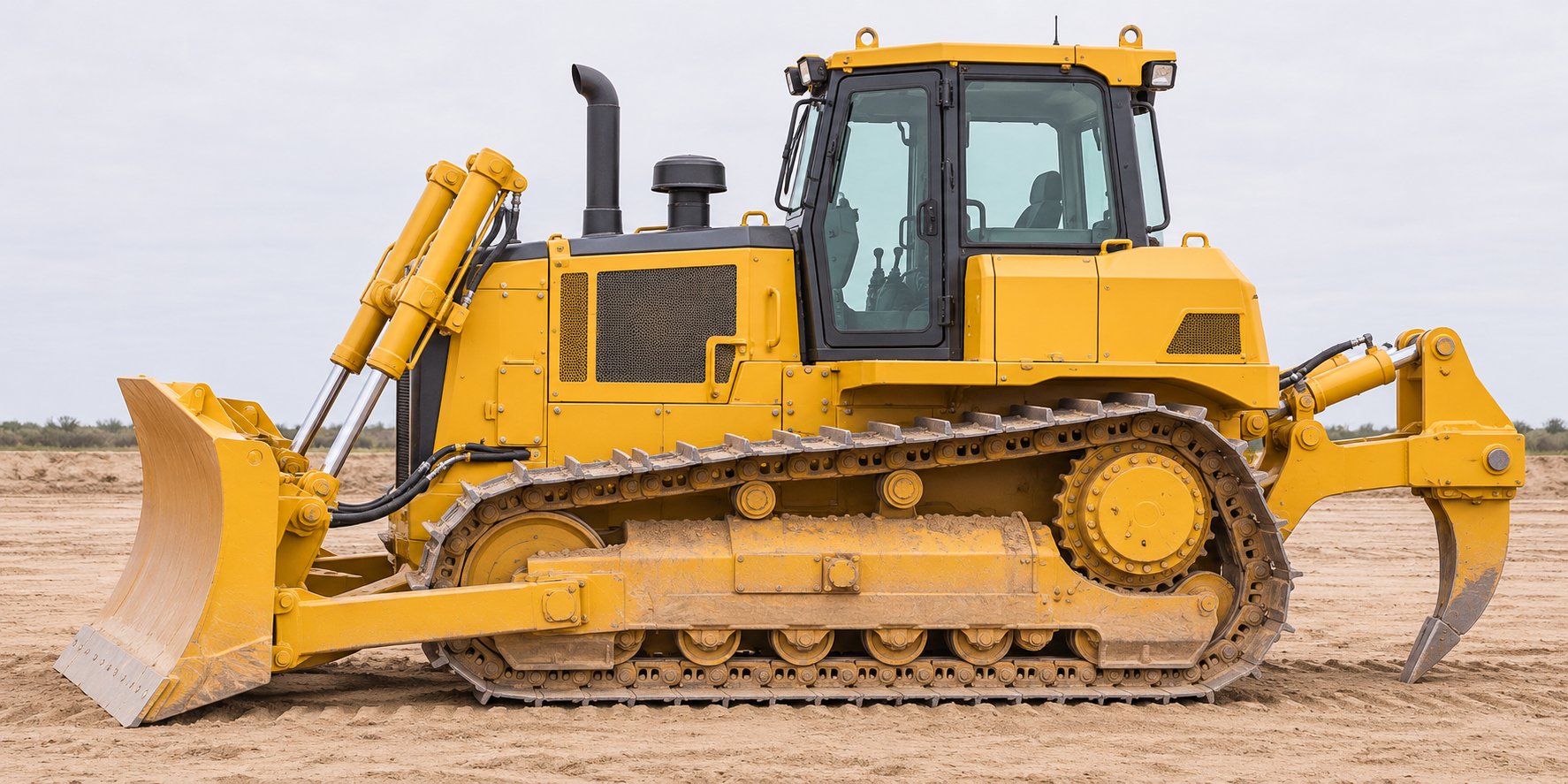
Ever opened a listing titled "D6R XL SU w/ ripper" and wondered what you were looking at? Those letters work as search filters on almost every marketplace, yet few sites explain them. Each one changes what a cat dozer does best.
Straight, Semi-U, and Universal Blades Explained
Caterpillar's own blade guide argues that the blade drives performance just as much as horsepower does. Match it to your material and push distance:
- Straight (S) blade: No curve and no wings. It offers strong penetration and precision for hard-packed ground, shaping, and slot dozing, but it carries less material.
- Semi-U (SU) blade: The all-rounder. It carries more than a straight blade and cuts better than a U blade, which makes it a solid choice for mixed material and changing sites.
- Universal (U) blade: A deep curve and wide wings give the most carry on long pushes of loose material, such as stockpile work. It's less precise on rocky or uneven ground.
- VPAT blade: Variable pitch, angle, and tilt. It's built for finish grading, slopes, and ditches, not heavy production.
Rippers, Winches, and Other Rear Attachments
A ripper's shanks break up compacted ground and weathered rock before the blade pushes it. Makana lists single-shank rippers on equipped D8T machines, for example. Winches show up mostly on forestry and land-clearing units, where they help pull logs and recover stuck equipment. Listings usually mention the ripper type and sometimes the condition of the blade. Both get a closer look in the inspection checklist later in this guide.
LGP, XL, and Standard Undercarriage Variants
On a Caterpillar crawler dozer, the letters after the model number describe the undercarriage. LGP means Low Ground Pressure. Wider track shoes spread the machine's weight over a larger footprint, so the dozer sinks less in sand and soft fill. Makana's D6R2 LGP example runs 900 mm shoes, compared with 560 mm on a D6R XL. XL means Extra Long. The longer track frame puts more track on the ground, which adds stability and blade control on firmer soil. Standard-track machines handle general work. Keep in mind that wide LGP shoes take extra stress when turning on hard, rocky ground.
Powershift vs Hydrostatic Transmissions
A powershift transmission works like a gearbox with gear packs, shifting through set speed ranges. It has a reputation for durability in demanding, high-load work. A hydrostatic drive uses a pump and hydraulic motors instead. That gives you smooth, variable speed and quick response in tight spaces. Some newer machines, such as the electric drive D6 XE, deliver continuous power without cycling through gears at all. Always confirm the drive type on any Caterpillar dozer you're considering, because it affects how the machine feels to operate and what repairs will involve.
You'll notice that the same model can show up with very different asking prices once you factor in blades, rippers, and track options. Configuration is only one part of that spread, though. Year, hours, and undercarriage life often move the number even more.
What Drives Cat Dozer Prices
Why can two listings for the same model sit hundreds of thousands of dollars apart? A dozer price reflects far more than the model number on the side of the machine.
How Much Is a Bulldozer and Why Prices Vary So Widely
Ask "how much is a bulldozer?" and the honest answer is that it depends on which one. MachineryTrader's Caterpillar dozer listings span roughly $585 to $2,395,000. The low end can include parts machines or decades-old small dozers. The high end is mostly late-model production machines.
The large class shows how steep that climb gets. In its D10 cost breakdown, Rubbl reports that a new D10 can cost over $2.0 million, while low-hour used units still bring around $1 million. Even a used d10 bulldozer price is a major capital decision.
Key Factors That Drive Used Cat Dozer Prices
Here's a rough ranking of what moves a cat bulldozer price, from the biggest lever to the smallest:
- Model and size class: A D3 and a D10 sit in completely different price ranges before condition even comes into play.
- Year: Newer machines carry more current technology, and buyers pay for it.
- Hours: More hours usually means less remaining life in major components.
- Remaining undercarriage life: Ironmart calls undercarriage wear the single biggest cost driver on a used dozer. Buyers discount worn tracks accordingly.
- Certification status: Programs such as Cat Certified Used add dealer inspection and backing, which tends to show up in the asking price.
- Attachments: Rippers, winches, and grade control add value only when the buyer actually needs them.
- Location and shipping: A bargain three states away can lose its edge once you add heavy-haul freight.
What Hours of Use Really Mean for Value
"Low hours" sounds great, but low compared to what? Thompson Machinery compares a 5-year-old Cat dozer with 4,000 hours to a 10-year-old model with 9,000 hours. The younger machine generally holds more value. Still, hours are relative. A reading that looks high on one machine may be ordinary on another, depending on its size class and how it was maintained.
A well-documented high-hour dozer can be a better buy than a poorly maintained low-hour one.
Comparing Prices the Smart Way
Pull several current listings for the same model, generation, and configuration. Keep in mind that asking prices and actual sale prices often differ. Request written quotes that spell out what's included, such as freight. The market also moves. Himes Equipment reported a 2.0% month-over-month rise in used crawler dozer auction values in 2026, so old comparisons can mislead you. The same discipline applies whether you're pricing a D3 or checking a d10 bulldozer price.
The seller shapes the price as well. Identical machines can carry different numbers, and very different levels of risk, depending on whether they come from a dealer lot, an online marketplace, or an auction.
Where to Buy a Cat Dozer and How Each Channel Compares
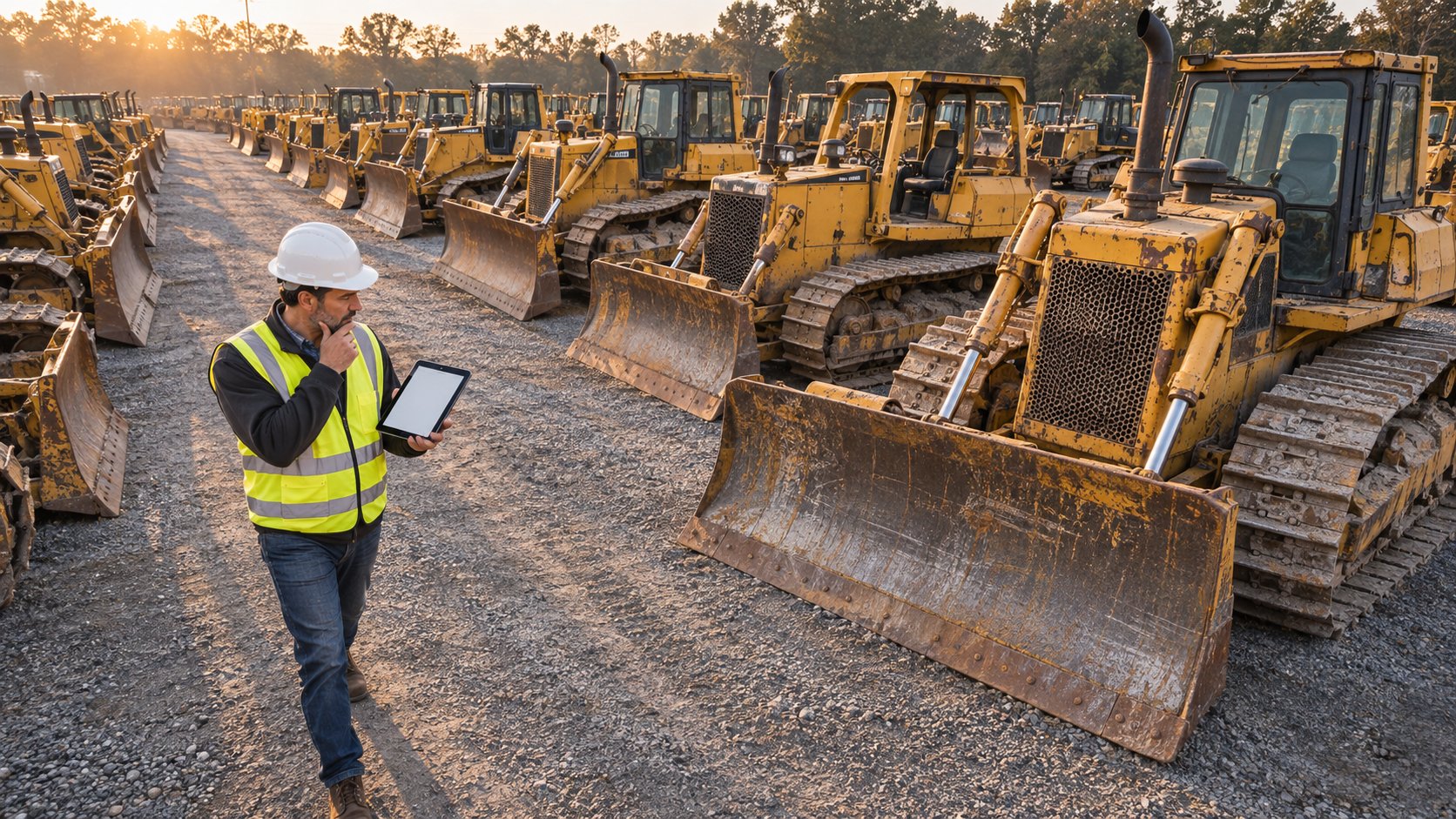
Type "used dozers for sale near me" into a search bar and you'll get dealer lots, online marketplaces, and auction houses all mixed together. Each channel offers a different balance of price, protection, and risk. Choosing where to buy is part of choosing the machine.
New From a Cat Dealer vs Cat Certified Used
Buying new from a Cat dealer gets you current specs, a factory warranty, and full dealer support. It also costs the most. Cat Certified Used sits one step down. Caterpillar describes these as late-model machines that pass an inspection of up to 140 points and are serviced with genuine Cat parts. Coverage beyond the standard warranty is available through Equipment Protection Plans. Cat's plain "used" label is different. It means the machine got a general check and service, but not to the certified standard. The tradeoff is selection. Only some machines qualify for certification, so you'll find fewer to choose from.
Independent Used Dozer Dealers and Online Marketplaces
Independent dealers usually stock a wider mix of ages, brands, and price points. JIUHONG's used bulldozer collection is one example. It lists Caterpillar machines alongside Shantui models. Shantui is a separate brand, so treat those units as alternatives, not Cat equivalents. You can compare the listed units and request condition details, configuration information, and current quotes. The listed inventory doesn't confirm a D5 or a true compact or mini dozer, so ask directly if you need one. Don't treat a larger listed machine as a substitute for a compact dozer. With any independent seller, the level of inspection and after-sale support depends on what the seller documents, so get those answers in writing.
Marketplaces such as MachineryTrader and Machinery Pete gather thousands of used dozers for sale in one place. MachineryTrader lets you filter by year, price, horsepower, and condition. The platform itself doesn't inspect the machines, though. You deal with each seller directly.
Auctions and Renting as Alternatives to Buying
Timed and unreserved auctions on IronPlanet and Ritchie Bros. can produce lower prices because bidding sets the final number. Ritchie Bros. checks equipment for liens before the sale and offers a refund if it can't deliver clear title. Even so, auction machines usually sell as-is, often with little time to inspect. Renting through rent.cat.com lets you test a size class on real work before you commit capital.
| Channel | Warranty or Backing | Inspection Level | Price Transparency | Selection | Buyer Risk |
|---|---|---|---|---|---|
| Independent used dealer (e.g., JIUHONG) | Varies by seller; confirm in writing | Seller-reported; request condition details | Quotes on request | Mixed ages; Cat plus Shantui alternatives | Moderate; verify condition yourself |
| New from a Cat dealer | Factory warranty and dealer support | New machine | Dealer quote; online MSRP excludes freight and taxes | Current models, configurable | Lowest |
| Cat Certified Used (catused.cat.com) | Dealer support; protection plans available | Up to 140-point inspection | Dealer-listed | Late-model, limited | Low |
| Dealer-backed used with shipping | Dealer support; terms vary | General check and service | Listed or quoted, plus freight | Broader geography | Low to moderate |
| Marketplaces (MachineryTrader, Machinery Pete) | Depends on the seller | None by the platform | Asking prices visible | Very wide | Moderate to high |
| Timed auctions (IronPlanet / Ritchie Bros.) | Title and lien checks; machines mostly as-is | Photos and reports; buyer-arranged inspection | Set by bidding | Wide, changes weekly | Higher |
| Rentals (rent.cat.com) | Per the rental agreement | Dealer-maintained fleet | Rate quotes | Current rental fleet | Low; no ownership |
A nearby lot is convenient, but don't let a "used dozers for sale near me" search box you in when freight costs less than the price gap. Wherever you shop, every channel hands you the same thing first: a listing. Those few lines of serial numbers, hours, and percentages reveal more than most buyers realize, as long as you know how to read them.
How to Read a Used Cat Dozer Listing
A typical used dozer for sale listing packs a lot into a few short lines. If you read it field by field, you'll quickly see which machines deserve a phone call and which ones you can skip.
Serial Numbers, Model Suffixes, and Year
Start with the serial number. Its three-character prefix identifies the model, the configuration, and the factory. Say you're looking at a caterpillar d6d for sale. Broken Tractor's prefix guide shows that 04X marks a powershift machine, 03X marks a direct-drive unit, and 06X marks an LGP powershift. All three carry the same decal but have different drivetrains.
The year is harder to pin down. Neither the prefix nor the 17-character PIN encodes the model year. Any Cat dealer parts counter can pull the build date from the full serial, though. If a D9R listing states a year with confidence but shows no serial, look more closely before you trust it.
Hours, Undercarriage Percentage, and Attachments
Here's what each common field tells you:
- Serial number: Can be verified with a Cat dealer. It confirms the model, configuration, and build date.
- Transmission type: Powershift, direct drive, or hydrostatic. It should match what the prefix says.
- Hours: Only meaningful alongside the size class, the type of work, and the service history.
- Undercarriage percentage: Lines like "undercarriage is 80-85%" are usually the seller's estimate. Thompson Machinery advises buyers to always request and verify measurements.
- Blade type: S, SU, U, or VPAT. It shows what kind of work the machine was set up for.
- Ripper: Hints that the dozer may have done high-impact work, which speeds up wear across the whole machine.
- Update timestamp: Shows how current the listing is.
Age means little without context. A newer dozer that spent its hours in abrasive sand can be in worse shape than an older one used for light grading. Ask the seller what the machine did, not just how long it ran.
Spotting Red Flags and Stale Listings
- No serial number, or a plate that is missing or painted over
- Vague notes such as "runs good" with no specifics
- No photos of the tracks, rollers, or sprockets
- An old update date, or the same machine reposted for months
A serial number that has been deliberately ground off is a stolen-machine warning sign, so walk away.
Even a clean, detailed listing is still the seller's version of the machine. To confirm those numbers and claims, you have to put your own eyes, hands, and tape measure on the dozer.
Used Cat Dozer Inspection Checklist
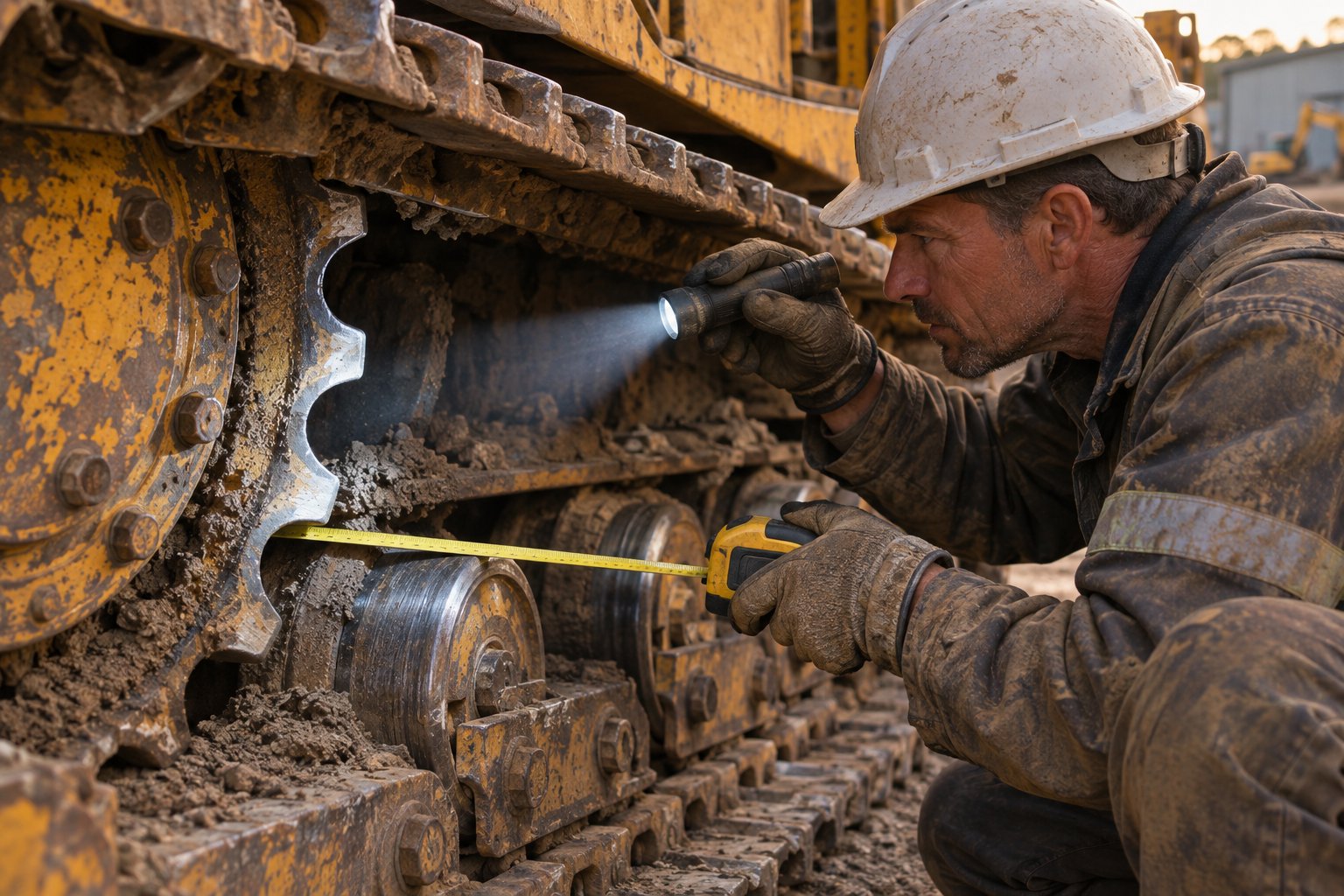
When you walk up to a used cat dozer for sale, where should you look first? Start low and work your way up. Bring a flashlight, a tape measure, a magnet, and a clean paper towel, and set aside a couple of hours. This applies whether the used bulldozer for sale sits on a dealer lot or in an auction yard. Score each item as good, negotiable, or a reason to walk away, and photograph anything that falls short.
Undercarriage Inspection for Track Links, Pins, Bushings, and Sprockets
The undercarriage deserves the most time. Heavy Vehicle Inspection estimates that it can account for up to half of a dozer's lifetime owning and operating cost.
On any second hand dozer, the undercarriage is often where the biggest repair bills hide, so measure it instead of trusting the percentage in the listing.
- Undercarriage wear and measurements: Compare every reading against Cat's wear charts for that exact model, since limits differ from machine to machine.
- Track links: Measure pitch across a four- to five-pin span. A track that snakes side to side points to worn pins and links.
- Pins and bushings: Feel under the chain. Egg-shaped bushings, or clicking and grinding during travel, signal heavy wear.
- Sprockets: Healthy teeth look rounded. Sharp, hooked tips mean the sprocket is worn, and new track on worn sprockets wears out quickly.
- Rollers and idlers: Each should turn freely, with no flat spots or seeping seals.
Final Drives, Clutches, and Hydraulic System Checks
- Final drive leaks or noise: Thick, dark gear oil near the sprocket mount often means a failed face seal, as Final Drive Parts explains. Grinding during travel is a serious warning. If the seller allows it, crack the drain plug and look for metal flakes.
- Clutch behavior: Drive forward and in reverse, then turn both ways. The machine should shift, steer, and stop cleanly, with no slipping or hesitation.
- Hydraulic leaks: Cycle the blade and ripper cylinders, then wipe each rod with a white paper towel. Streaks of dirty oil suggest failing seals. Milky or foamy hydraulic oil means water contamination, which is a walk-away finding.
Engine, Frame, Blade, and Ripper Condition
- Engine blow-by: Insist on a cold start. Heavy vapor from the crankcase breather, smoke that won't clear when warm, or milky residue under the oil fill cap all call for a diesel technician's diagnosis.
- Frame cracks: Run a magnet over high-stress areas such as the push arm mounts and ripper frame, because body filler can hide cracks. A field weld at a load-bearing joint is a red flag.
- Blade and ripper wear: Check the cutting edges, end bits, ripper shanks, and tips. Look for slop at every pin and pivot.
- ECM fault codes: Have a technician pull active and logged codes. A warning light that "doesn't work" may be covering up a fault.
Paperwork and Dealer Support Checks
- Request service records, ideally covering at least the last two years.
- Verify the serial number with a Cat dealer, and confirm the plate has factory rivets. If the machine has Cat Product Link, compare its hour log to the meter.
- Confirm that a local Cat dealer can supply parts and service for that model and generation.
- Arrange an independent or dealer inspection. ReadyDig recommends getting a written estimate on anything flagged, so you can negotiate around a documented flaw or walk away.
Every finding on this list carries a price tag. A worn sprocket or a weeping final drive doesn't have to kill a deal, but it should change the number you offer. The real payoff comes when all of these notes, from size class to serial number, come together into a short list and an offer you can defend.
Next Steps for Buying the Right Cat Dozer
Ready to make an offer? Take one more pass first. Everything in this guide works best when you apply it in order, one listing at a time.
A Step-by-Step Plan Before You Make an Offer
- Define the application: Write down the material, push distance, and ground conditions you face most often.
- Pick a size class and target models: Narrow your search to two or three models and generations.
- Set configuration priorities: Separate the blade, undercarriage, and rear attachments you need from the ones that are just nice to have.
- Compare channels: Weigh warranty, inspection level, and buyer risk against price.
- Shortlist listings: Keep only listings with serial numbers, undercarriage photos, and recent updates. Benchmark them against what similar models sell for on marketplaces, at auctions, and on dealer lots.
- Inspect: Go in person or hire a technician. If neither is possible, ask for a detailed video walkthrough.
- Verify paperwork: Confirm the serial number, service records, and clear title.
- Negotiate using documented condition: Back your offer with market data and repair estimates. Ask dealers about warranty options or delivery, since those can be worth more than a lower sticker price.
Requesting Quotes and Condition Details From Sellers
Before you travel to see any caterpillar dozer for sale, send the seller the same short set of questions:
- What is the full serial number?
- How many hours are on the meter, and what kind of work did the machine do? Gregory Poole notes that sand wears an undercarriage differently than rock does.
- Can you share undercarriage measurements, not just a percentage?
- Do the service records show consistent maintenance intervals?
- Which blade, ripper, and other attachments are included?
- What is the current written quote, and does it include freight?
JIUHONG's used bulldozer collection is one place to put these questions to work. You can compare its listed Caterpillar machines and request condition details, configuration information, and quotes. Its Shantui models come from a different brand, so treat them as alternatives, not Cat equivalents. Looking for a cat d5 dozer for sale or a true compact machine? Confirm availability by inquiry before you plan around it.
Ask every seller the same questions, and the strongest machine will usually stand out on its own.
These questions work across every channel where you'll find cat dozers for sale. Good machines rarely stay listed for long, so get your answers, inspection, and financing lined up early. That way, when the right dozer appears, you can make a confident offer that's backed by facts.
Cat Dozer Buying FAQs
1. How much does a used Cat dozer cost?
There is no single price because the range is very wide. Caterpillar dozers on MachineryTrader run from roughly $585 for parts machines or very old small units to about $2,395,000 for late-model production machines. At the large end, Rubbl reports that a new D10 can top $2.0 million and that low-hour used D10 units still sell for around $1 million. Within any one model, the price depends mostly on year, hours, remaining undercarriage life, certification status, attachments, and freight. To get a realistic number, compare several current listings for the same model, generation, and configuration. Then ask for written quotes that show exactly what is included, because asking prices and final sale prices often differ.
2. What size Cat dozer do I need for my job?
Start with the work and size the machine to fit it. Small models such as the D1 to D3 suit residential grading, driveways, and landscaping, where easy hauling and finish-grade control matter most. Medium models such as the D4 to D7 cover commercial site prep, road building, and land clearing. Large models such as the D9 to D11 are built for mining, quarrying, and bulk earthmoving. Plan around the jobs you do most often. An oversized dozer raises purchase, transport, and fuel costs. An undersized one needs more passes and works near its limits every day. If you are unsure, renting one size class for a real project is a low-risk way to test the fit before you buy.
3. Does Caterpillar make a mini dozer?
Not in the way most people picture a mini machine. The D1 is the smallest current D-series dozer, and it still weighs more than 18,000 lb. That makes it compact for a dozer but much heavier than a compact track loader. Older listings can confuse buyers too, because the D3K2, D4K2, and D5K2 were replaced by the D1, D2, and D3. So a used D5K2 belongs to the small class. If you need a truly compact unit, check the operating weight, blade width, and transport dimensions on every listing. When you shop independent sellers such as JIUHONG's used bulldozer collection, confirm compact or D5 availability by inquiry, and do not treat a larger listed machine as a stand-in for a small dozer.
4. What do LGP, XL, and SU mean in a Cat dozer listing?
These letters describe how the machine is configured. LGP stands for Low Ground Pressure. It uses wider track shoes so the dozer floats better on sand, soft fill, and wet ground, but those wide shoes take more stress when turning on hard, rocky surfaces. XL stands for Extra Long. The longer track frame keeps more track on the ground, which improves stability and blade control on firmer soil. SU refers to a Semi-U blade, a versatile middle option between the precise straight (S) blade and the high-capacity universal (U) blade. Together these codes tell you what kind of work the dozer was set up for, so they should match your ground conditions and material.
5. What should I check before buying a used Cat dozer?
Focus first on the undercarriage, since it is often the costliest area to repair. Measure track pitch, bushings, sprockets, rollers, and idlers against Cat wear charts for that exact model, rather than trusting a seller's percentage. Next, look for final drive leaks or grinding, test steering and clutch response in both directions, and check hydraulic cylinders and oil condition. Do a cold start to watch for blow-by or smoke, scan high-stress frame areas for cracks or field welds, and have a technician read ECM fault codes. On the paperwork side, verify the serial number with a Cat dealer, review service records, confirm clear title, and make sure local parts and service support exist. Use any documented flaws to adjust your offer.