

What the Cat 320 Excavator Is and Why It Matters
Have you noticed how often the same yellow machine shows up on job sites and in used equipment listings? Chances are it was a Cat 320. Before we get into specs, weights, and prices, it helps to know exactly what this machine is and why so many contractors choose it.
What Is a Cat 320 Excavator
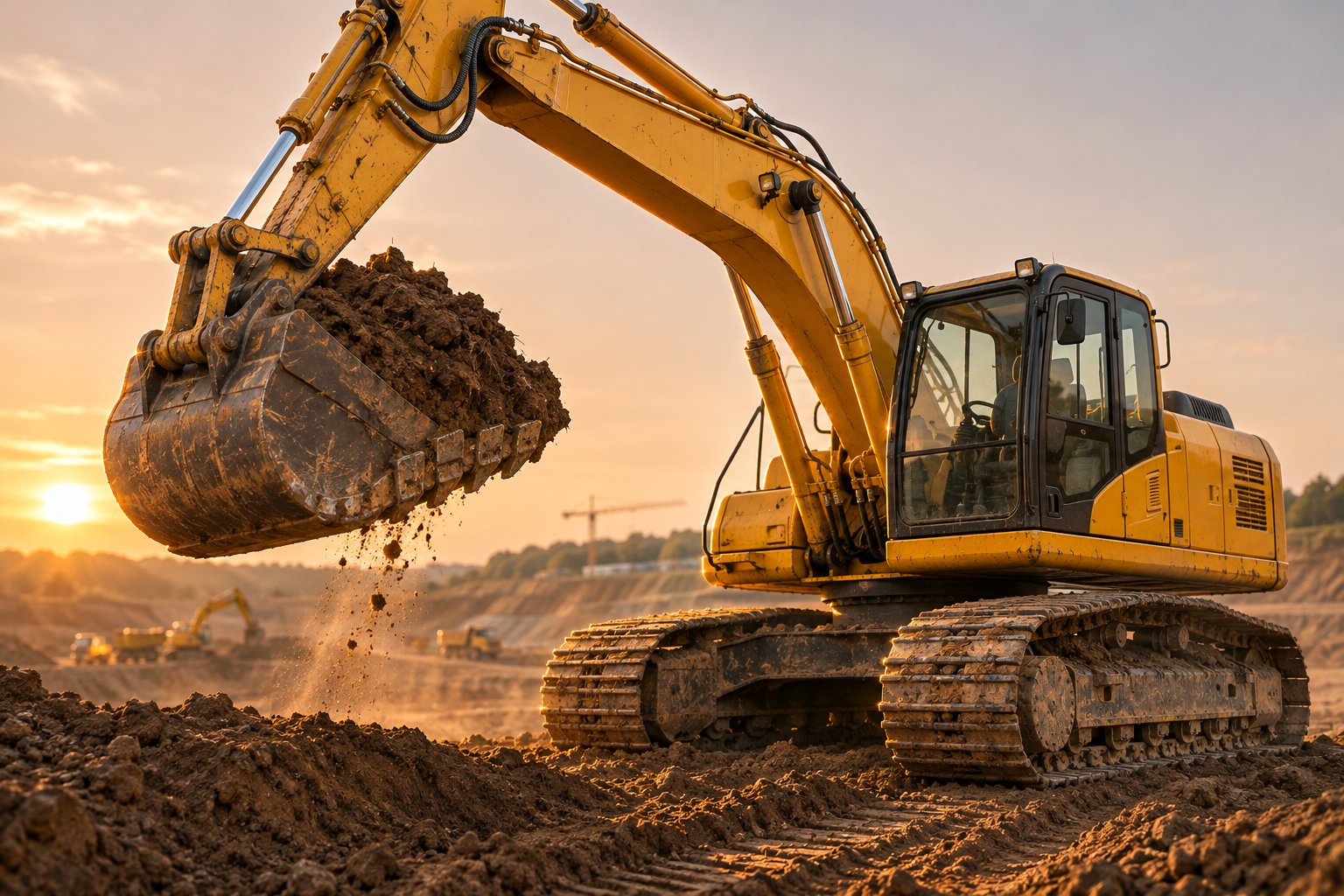
A Cat 320 excavator is a 20-ton-class hydraulic crawler excavator built by Caterpillar. It sits in Cat's medium excavator range and is one of the most widely used mid-size machines in the lineup, valued for balancing digging power, stability, and transportability for trenching, earthmoving, utility work, and truck loading.
You'll also hear it called a cat 320 trackhoe, or a 'track hoe.' It's the same machine. The term combines 'track,' for the crawler undercarriage, with 'hoe,' borrowed from backhoe equipment and its digging motion. As SANY's trackhoe explainer notes, it's operator slang. Manufacturers still officially call these machines excavators.
Typical jobs for this class include:
- Trenching for water, sewer, and power lines
- Site preparation and foundation digging
- Utility work around cables and pipes
- Grading and shaping building pads
- Loading haul trucks
Where the 320 Fits Among Caterpillar Excavator Sizes
Cat excavator sizes roughly follow the model number. A higher number usually means a heavier machine. In Mico Equipment's size breakdown, small models run from 313 to 319, medium from 320 to 335, and large from 336 to 395. That places the 320 at the entry point of the medium class. It sits above smaller machines like the 316 and below bigger siblings such as the 323 and 340. For scale, the current Cat 320 is listed at 22,600 kg (49,800 lb) in standard configuration, while the 315 comes in at 15,400 kg.
Why the 320 Class Became a Contractor Standard
The short answer is balance. BAS World describes the 320 as big enough for serious earthmoving, trenching, and truck loading, yet versatile enough for general infrastructure and construction work. Imagine a contractor who can only justify one machine. A 320 handles the daily digging without the transport headaches of a much larger excavator. Its long production history also means a deep used market and a familiar parts supply.
This guide is independent and written for buyers. It isn't a manufacturer page. There's a catch, though. 'Cat 320' on a listing could mean a two-decade-old 320C or a recent 320 GC, and those are very different machines.
Untangling the Cat 320 Lineup From 320C to Next Gen GC
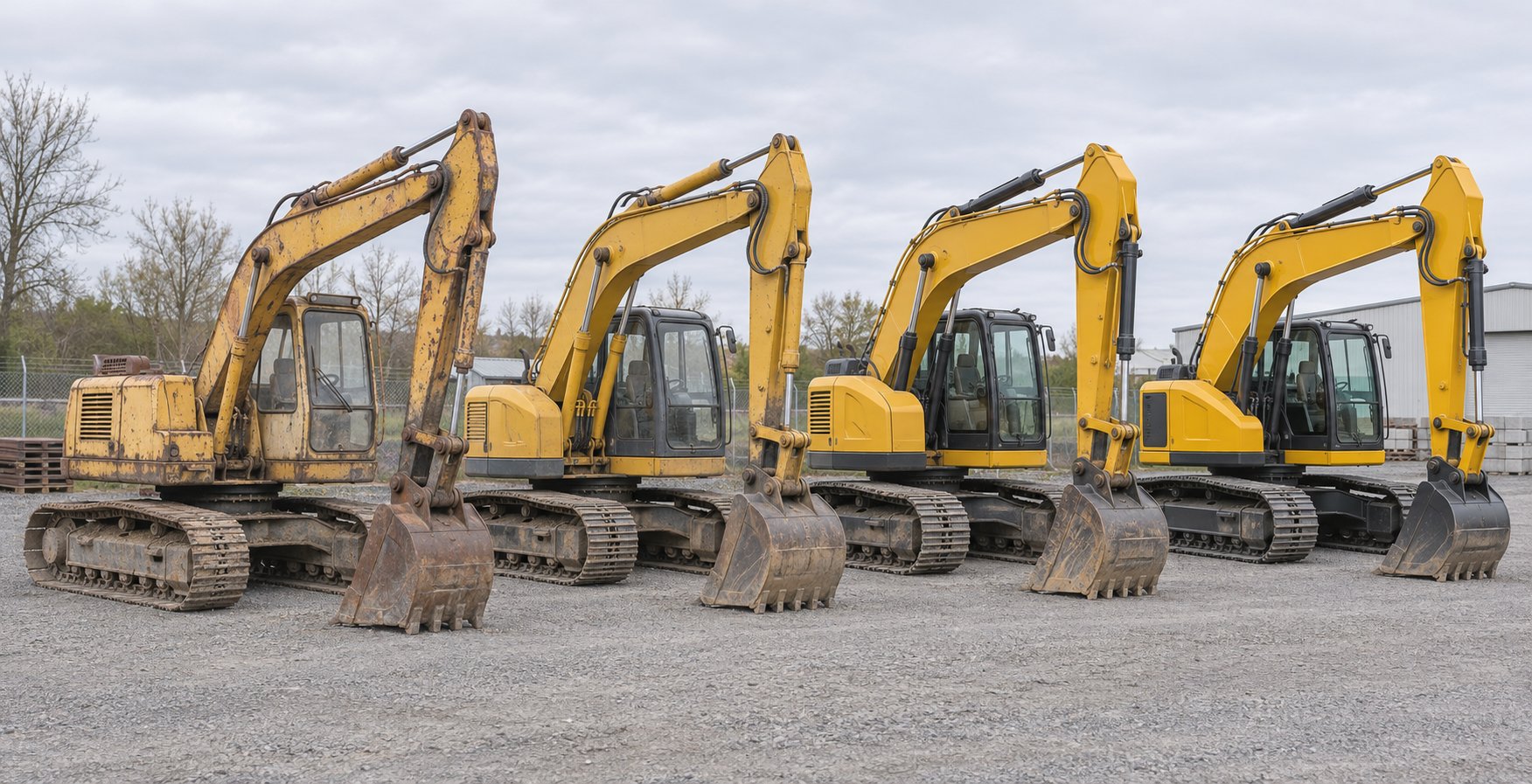
Have you ever scrolled through equipment listings and seen a 320C, a 320DL, and a 320 GC sitting side by side at similar prices? Mico Equipment describes exactly this problem. Buyers see listings with the same model number but different weights and capabilities. The number tells you the size class. The letters after it tell you almost everything else.
Older Generations From the 320C to the 320F
Before the Next Gen platform arrived, Caterpillar used letter suffixes to mark generations: C, D, E, and F. Each step brought updated engines, hydraulics, cabs, and emissions hardware. A 320C caterpillar excavator is the oldest version you'll commonly find on the used market. Published spec charts put it at around 48,000 lb.
The 320D followed in 2007. Caterpillar's excavator history notes that it added technology to optimize engine performance and reduce exhaust emissions to meet global regulations. The Cat 320E and 320F came next, and each generation responded to tighter emissions rules in many markets. Some regions also received variants such as the 320D3, listed at 46,300 lb and 123 hp. That shows how much the figures can shift within a single family.
Next Gen 320 vs 320 GC vs 320 GX
The Next Generation 320 reached customers in 2017, and the generation letter disappeared. Instead of one machine per generation, Cat split the 20-ton class by type of user. Construction Equipment's launch coverage explains that each of the three 20-ton models targets different productivity and cost goals:
- Cat 320 GC: Value-priced and built for low- to medium-duty work. Cat says it balances productivity features with reduced fuel consumption and maintenance costs to deliver a low cost per hour.
- Cat 320: Aimed at medium- to heavy-duty applications. It comes with more factory technology, including Cat Grade with 2D, Grade Assist, and integrated Cat Payload.
- Cat 323: The premium sibling, with the most power and lift capacity of the three.
The 320 GX is a different case. It's a value-oriented model offered only in certain regions. Depending on where you buy, you may never see one listed.
Decoding Model Suffixes and Naming
It helps to read a Cat model name as a set of clues. The number gives the size class. On older machines, the letter gives the generation. An added 'L' generally means a long undercarriage. A cat excavator 320L configuration, such as the 320CL or 320DL, has longer tracks and a steadier base, and it usually weighs more than the standard version. On Next Gen machines, the 'GC' and 'GX' tags show market positioning, not age.
| Model/Generation | Positioning | Typical Buyer | Key Notes |
|---|---|---|---|
| 320C / 320CL | Early letter generation | Budget-focused owner-operators | Around 48,000 lb in published charts; the L version adds a long undercarriage |
| 320D / 320DL | Introduced in 2007 with emissions-focused engine technology | Used buyers who want a proven older platform | Cat cites up to 30% lower CO2 emissions for the Next Gen 320 compared with the 320D |
| 320E / 320F | Later letter generations | Buyers who want newer systems on a used-machine budget | Check the emissions tier and regional configuration |
| 320 (Next Gen) | Technology-equipped, medium- to heavy-duty | Grading and truck-loading contractors | Grade and Payload technology installed at the factory |
| 320 GC | Value-priced, low- to medium-duty | Cost-focused fleets doing general earthmoving | Lower fuel and maintenance costs, as Cat describes it |
| 320 GX | Regional value model | Buyers in markets where it is offered | Availability varies by region |
Configurations and model availability vary by market, so confirm details with your local Cat dealer. On used machines, check the serial number on the frame plate. These names hint at real differences, though. A 320 GC and a standard 320 share the same Cat C4.4 engine family, yet Cat rates them at 121 hp and 162 hp respectively. The spec sheet explains why.
Cat 320 Specs Interpreted for Real Work
Have you ever stared at a spec sheet full of kilowatts, kilonewtons, and liters per minute and wondered what any of it means in the dirt? A number only matters when you know what it does on the job. Here's how to read the key cat 320 specs like an operator instead of a brochure.
Cat 320 Engine and Emissions in Plain Terms
Next Gen 320 models run the Cat C4.4 engine. Across dealer and listing pages, output for the 20-ton models is usually quoted somewhere between roughly 158 and 172 hp. One used-equipment spec audit lists the C4.4 at 129 kW (172 hp) at 2,200 RPM. Why the spread? Ratings change with region, emissions package, and whether the figure is net or gross. When you line up cat 320gc specs against the standard 320, make sure both numbers use the same rating method.
In tightly regulated markets, Next Gen machines are built to Tier 4 Final or EU Stage V. Makana's emissions guide explains that Tier 4 Final relies on aftertreatment such as Selective Catalytic Reduction with Diesel Exhaust Fluid (DEF, sold as AdBlue in Europe), and that Stage V is roughly equal in strictness. What does that mean for you?
- DEF becomes a recurring purchase and refill task.
- Aftertreatment components need care, and particulate filters on equipped engines need periodic regeneration.
- Compliant machines tend to hold their value better where emissions rules are enforced.
- Import rules vary by country, so confirm requirements with the destination customs authority before shipping a machine across borders.
Older machines are a different story. The cat 320c engine model is the Cat 3066T, a six-cylinder turbocharged diesel with 6.6 liters of displacement and about 138 hp (103 kW) gross. It meets EPA Tier 2 and was built by Mitsubishi in Japan. So Caterpillar 320C specs describe a simpler era with no DEF system at all. The 320D, by contrast, used a Cat C6.4.
| Spec | Value | Why It Matters on the Job |
|---|---|---|
| Engine power (Next Gen C4.4) | 129 kW (172 hp) at 2,200 RPM | Keeps hydraulics working under heavy load in dense soil |
| Main pump max flow | 429 L/min (113 gal/min) | Drives faster swing, dump, and return cycles |
| System pressure | 35,000 kPa (5,075 psi) | Determines how much force cylinders can apply |
| Bucket digging force | About 150 kN | Helps the bucket tear through clay and rocky ground |
| Max dig depth | About 6,700 mm (22 ft) | Covers most utility trenches and foundation digs |
| 320C engine | Cat 3066T, 6.6 L, Tier 2 | Simpler emissions setup, but older technology |
Dig Depth Reach and Breakout Force Explained
Maximum dig depth tells you how far below track level the bucket can go. A figure near 22 feet handles typical sewer trenches and basements, but stick length changes it. Reach is the horizontal distance from the swing center to the bucket teeth. More reach means fewer machine moves and easier spoil placement. Breakout force is the tearing power at the bucket edge. You'll feel it most in compacted clay, where a weaker machine just scrapes.
Hydraulic Flow and What It Means for Attachments
The 320 uses two variable-displacement piston pumps. Total flow matters for cycle speed, but attachments like hammers, compactors, and tiltrotators depend on the auxiliary circuit's flow and pressure. Match the attachment maker's requirements to the circuit actually installed on the machine. Imagine renting a hammer that needs more flow than your auxiliary line delivers. It will hit weakly and wear quickly.
Every figure above shares a hidden variable: configuration. The boom, stick, and undercarriage that change dig depth also change something many buyers ignore until the trailer shows up, and that is weight.
How Much a Cat 320 Excavator Weighs and Why It Varies
A Cat 320 excavator typically weighs about 21 to 23 metric tons, or roughly 47,000 to 50,000 lb, depending on its generation and configuration. That range surprises some buyers. Shouldn't one model number mean one weight? Not quite, and the difference can decide which trailer you book.
How Much Does a Cat 320 Excavator Weigh
Look at a few real data points. Spec records from RitchieSpecs list the older 320C at 47,972.6 lb. LECTURA Specs puts the Next Gen 320 at 22.5 tons with a long undercarriage. One listed 320GC unit shows an operating weight of 21,300 kg. Treat each figure as a reference point for that specific setup, not a fixed rule for every cat 320 weight.
| Model/Generation | Operating Weight | Width | Configuration Notes |
|---|---|---|---|
| 320C | 47,972.6 lb | 9.19 ft to outside of tracks | 23.63 in shoes |
| 320 (Next Gen) | 22.5 t | 3.17 m transport width | Long undercarriage, 790 mm track shoes |
| 320 GC (one listed unit) | 21,300 kg | Check the unit's spec sheet | Configuration-dependent |
| 320E | Confirm by serial number | Confirm by serial number | Varies by region and undercarriage |
Why Weight Varies by Configuration and Generation
Imagine two 320s parked side by side. One has a long undercarriage, wide shoes, and a heavy counterweight. The other has a standard undercarriage and narrow shoes. The cat 320 excavator weight can differ by hundreds of kilograms or more between them. The main factors are:
- Undercarriage length (the 'L' versions carry more steel)
- Track shoe width
- Counterweight size
- Boom and stick combination
- Bucket, quick coupler, and attachments
Generation matters too. Engines, aftertreatment hardware, and structures changed from the 320C through the 320E to Next Gen models.
Width Dimensions and Transport Planning
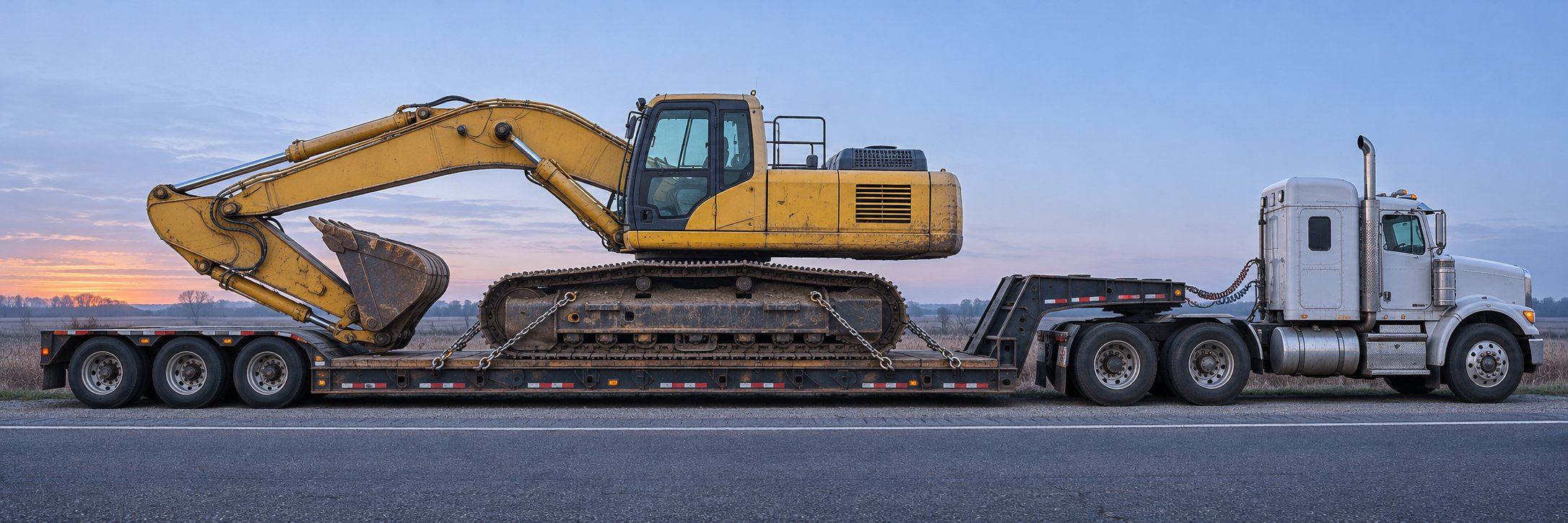
Width often causes more hauling trouble than weight. A 3.17 m transport width is well over the 8.5-foot (102-inch) legal width common on U.S. highways. As Ascendum Machinery points out, permit rules vary by state and sometimes by county, and heavy excavators usually ride on lowboy or removable gooseneck (RGN) trailers. Your quick transport checklist:
- Confirm the actual operating weight, including bucket and attachments
- Measure overall width at the tracks instead of trusting the listing
- Choose a lowboy or RGN trailer rated for the combined load
- Check oversize permits for every jurisdiction on the route
- Decide whether the bucket or attachments travel separately
- Secure the machine with properly rated chains and binders
Here's the twist. The counterweight and long tracks that complicate hauling are the same parts that keep the machine planted during a lift. How much they add shows up in one often misread document: the lift chart.
Reading Cat 320 Lift Capacity Charts the Right Way
When you need to set a concrete pipe into a trench, dig depth no longer matters much. What matters is how much the machine can safely hold at a given distance and height. You'll find that answer in the lift capacity pages of the cat 320 excavator specs, and they're easier to read than they look.
The Anatomy of a Cat 320 Lift Capacity Chart
Each chart is a grid. The rows show load point height, which is the distance from the ground to the bucket lift point. Negative rows cover lifts below grade. The columns show load radius, measured from the swing centerline to the vertical load line. The cell where a row and a column meet gives the rated capacity. Each cell usually holds two figures, one for lifting over the front (over-end) and one for lifting over the side. Construction Business Owner notes that over-side ratings are often lower, because the machine is less stable across its tracks.
Some values carry an asterisk. In the Cat 320 spec sheet, the asterisk means hydraulic capacity limits the load, not tipping. A value without an asterisk is tipping-limited, which means the machine would start to tip before the hydraulics ran out of force. In Caterpillar's lift capacity guide, rated loads never exceed 75% of the tipping load or 87% of hydraulic capacity. The spec sheet states that these figures comply with ISO 10567:2007.
How Configuration Changes Lift Ratings
One edition of the Cat 320 specifications contains separate charts for a 3.7 mt and a 4.2 mt counterweight, each paired with two HD Reach stick lengths. It also includes a Super Long Reach boom chart with a 4.7 mt counterweight. Track shoe width matters less. Cat says capacity stays within plus or minus 5% across the available shoes, while counterweight, boom, and stick choices change the numbers far more. Here's a reliable reading method:
- Record your exact boom, stick, counterweight, undercarriage, shoe width, and Heavy Lift setting.
- Open the chart that matches that configuration.
- Work out the lift point height. Include the height of the load, the sling length, and the height of the placement point.
- Measure the radius from the swing centerline to the load line.
- Read the cell where the two values meet. If the cell is blank, do not lift at that position.
- Subtract the weight of slings, hooks, and any coupler that the chart does not account for.
Lift chart values assume a firm, uniform supporting surface and a well-maintained machine, so treat them as limits, not targets, and always follow local lifting regulations and your Operation and Maintenance Manual.
Common Lift Chart Mistakes to Avoid
- Using a brochure chart for a different configuration than your machine actually has
- Forgetting that these caterpillar 320 specs list capacities without a bucket
- Reading the over-front value when the load will swing over the side
- Measuring to the top of the load instead of to the lift point
Every major manufacturer publishes lift charts under the same ISO method. That makes these charts one of the fairest tools for comparing the 320 against other machines in its weight class.
Cat 320 Compared With Rival 20-Ton Excavators
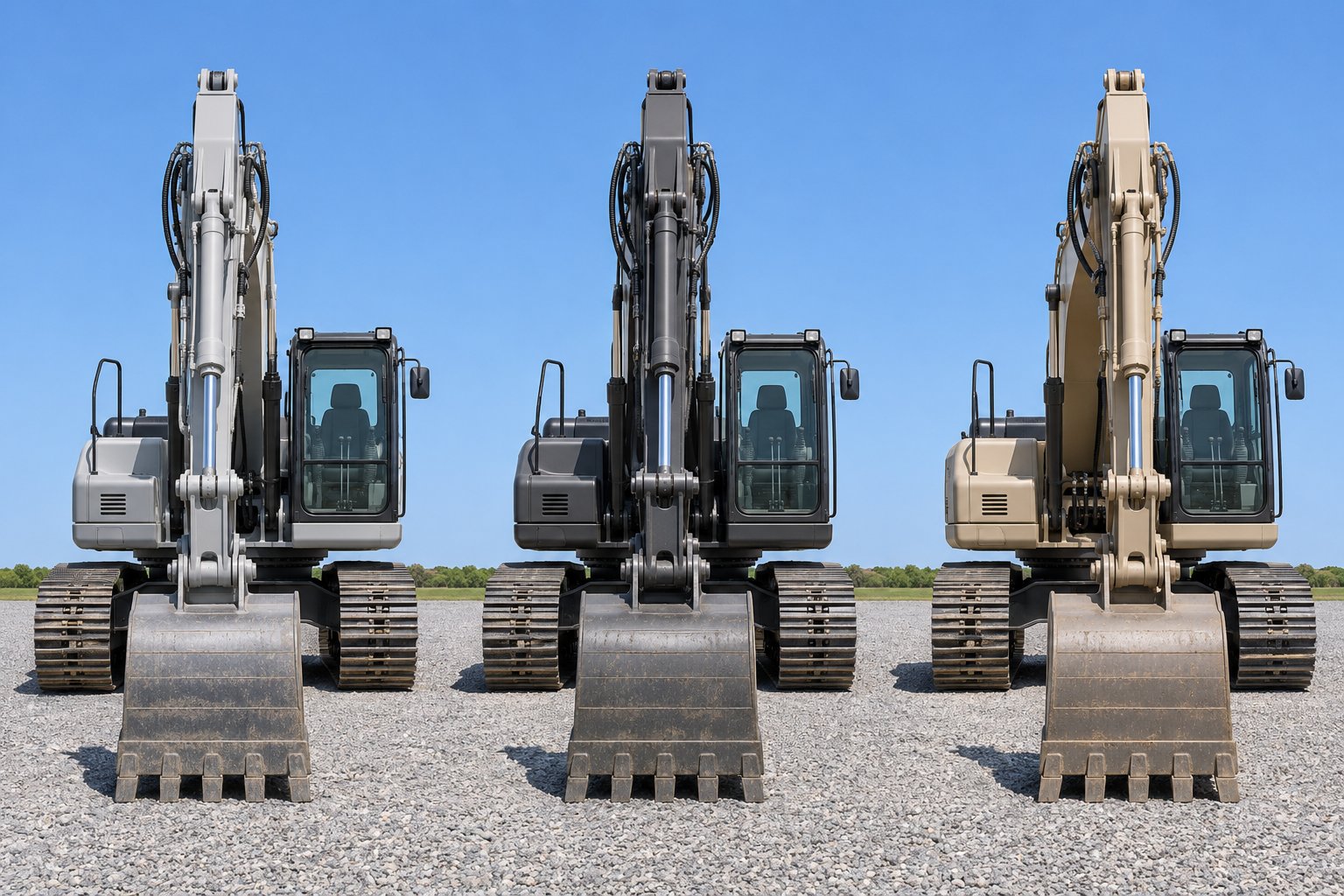
Shopping the 20-ton class is a bit like shopping for a pickup truck. Every major brand builds one, and they look alike on paper. So what really separates a cat 320 from its rivals? It's rarely a few horsepower. The bigger differences are support, technology, and how well the machine suits your crew.
Cat 320 vs Komatsu PC210 and Other 20-Ton Rivals
Sales numbers are a good place to start. Fusable's EDA finance data ranks the Cat 320 fourth among new financed excavators in the U.S. The John Deere 210 P-Tier is third and the Komatsu PC210LC-11 is ninth. Caterpillar holds the highest U.S. market share overall, which helps explain why Cat dealers and parts are easy to find in most areas.
The power gap is small. A ConEquip comparison lists the 320 at up to 172 hp and the PC210 at around 165 hp. The real split is design philosophy. The 320 relies on factory technology such as Cat Grade with 2D and Payload. The PC210 uses fewer electronics, and many fleet managers find that easier to repair in the field.
| Model | Class Positioning | Notable Strengths | Considerations |
|---|---|---|---|
| Cat 320 | Technology-equipped 20-ton machine | Factory grade and payload systems, broad dealer network | More electronics, and its higher output can use more fuel under heavy load |
| Komatsu PC210LC-11 | 165 hp, 23.2-23.4 t | Known for fuel efficiency, selectable power modes, KOMTRAX telematics | Less built-in automation than the 320 |
| John Deere 210 P-Tier | 159 hp, 23.6 t | Deere's best-selling excavator over 10 tons, backed by the second most popular U.S. excavator brand | A newer in-house design since Deere split from Hitachi, so check how deep the used market is where you work |
| Volvo EC210/EC220 class | Redesigned midsize platform | Volvo cites a 15% fuel-efficiency gain, obstacle detection, and 3,000-hour hydraulic oil intervals | Model names and specs vary by region |
| Hitachi ZX210 | Midsize crawler | TRIAS III hydraulics for fuel savings, auto-idle with auto shutdown, 270-degree camera view | Its dealer network changed after the Deere split, so confirm local parts support |
| Kobelco SK210 | Conventional 20-ton crawler | A brand known for its exclusive iNDr noise-reduction system and multiple work modes | The number of dealers varies widely by region |
When a Cat 316 or 323 Fits Better
Sometimes the best alternative to a 320 is another Cat. On a cat excavator size chart, the 320 sits between the 316 and the 323. The smaller 316 is lighter and easier to haul. It suits tight residential sites where a 20-ton machine is more than the job needs. The 323 goes the other way. A CAT 320 vs 323 comparison describes the 323 as heavier, at about 25,000 kg versus 22,500 kg. It also has stronger hydraulics and can handle larger buckets. The 320, in contrast, tends to use less fuel.
Honest Strengths and Trade-Offs of the 320
Pros
- Broad dealer and parts support in most markets
- Grade and payload technology installed at the factory on the standard 320
- Strong demand and a deep used market
- The GC, 320, and 323 options let you match cost to how hard the machine will work
Cons
- More electronics to diagnose than simpler rivals
- Technology packages add little value on basic trenching work
- At around 50,000 lb, it is heavier than the PC210's roughly 46,000-48,000 lb
You'll notice that most of these trade-offs, such as fuel burn, electronics, and repair access, only show their real cost after hundreds of operating hours. That is where a 320 cat excavator proves its value or loses it.
Cat 320 Maintenance, Fuel Use, and Total Cost of Ownership
Two machines can carry the same sticker price and still cost very different amounts by the day you sell them. The difference comes from fuel, filters, labor, and downtime. So how does the cat 320 hydraulic excavator hold up once the hour meter starts climbing?
What Extended Service Intervals Mean for Owners
The current-generation 320 is known for long service intervals, but those intervals come with conditions. This Cat 320 maintenance schedule, drawn from Cat's Operation and Maintenance Manual, lists the main hour-based items for C4.4-powered machines:
- Engine oil and filter, both fuel filters, and swing drive oil: every 1,000 hours, after an initial 500-hour oil change
- Final drive oil: every 2,000 hours
- Hydraulic return filter: every 3,000 hours
- Cat HYDO Advanced 10 hydraulic oil: every 6,000 hours or 3 years
There's a catch. The 1,000-hour oil interval only applies if you use Cat fluids, Cat filters, and S.O.S oil sampling. Without them, it drops to 500 hours, or 250 hours in severe service. Hammer work also shortens the hydraulic schedule. The return filter interval falls to 500 hours at 50% hammer use and 250 hours if you run a hammer all the time.
What does this mean for you? Fewer filter changes, fewer parts orders, and more days on the job instead of in the shop. Daily greasing still matters, though. Cat's 320 and 320 GC service page lists options such as Cat Extreme Application Grease 2, which is rated for ambient temperatures from -30 to +50 C (-22 to +122 F).
Cat 320 Service Refill Capacities at a Glance
| System | Capacity | Owner Tip |
|---|---|---|
| Fuel tank | 345 L (91 US gal) | Plan fuel deliveries around shift length |
| DEF tank | 39 L (10.3 US gal) | Keep sealed, clean DEF on site |
| Cooling system | 25 L (6.6 gal) | Check the coolant level during daily walkarounds |
| Engine crankcase with filter | 15 L (4.0 gal) | Stock enough oil for each scheduled change |
| Hydraulic system refill | 115 L (30 gal) | Sample the oil every 500 hours to protect the long change interval |
| Final drive (each) and swing drive | 5 L (1.3 US gal) | Cat lists TDTO, with SAE 30 as the factory fill |
These figures apply to current C4.4 machines. Earlier generations differ, so always follow the manual for your serial number.
Fuel Efficiency and Total Cost of Ownership
Cat markets the cat 320gc around reduced fuel consumption and maintenance costs. Your actual savings, however, depend on how the machine works. A cat 320 motor idling through half a shift burns fuel without moving any dirt. Gregory Poole notes that fuel efficiency depends on engine size, operating conditions, and operator habits. It also describes total cost of ownership as the full financial picture, from the day you buy a machine to the day you sell it. Here are the main pieces:
- Purchase price
- Fuel and DEF
- Wear parts such as bucket teeth, filters, and hoses
- Undercarriage wear and replacement
- Service labor
- Downtime and lost production
- Resale value
To estimate TCO, add up your ownership and operating costs and subtract the projected resale value. Divide the result by the hours worked to get a cost per hour. That last line, resale value, depends heavily on something a buyer can check: a complete service history. That's why maintenance records count for so much when you set or negotiate the price of a 320.
Cat 320 Excavator Price Factors and Buying a Used Machine
Why can two listings with the same model number sit so far apart in price? The cat 320 excavator price reflects much more than the badge on the boom. It reflects the machine's generation, its history, and what it will cost to get it to your yard and keep it working.
What Drives Cat 320 Excavator Price
Shunxin's buying guide lists the main price drivers as model version, year, working hours, condition, configuration, origin, stock availability, and export destination. In practice, these are the factors that move the number:
- Variant: A technology-equipped Next Gen 320, a cost-focused 320 GC, and an older 320C, 320D, or 320E fall into very different price brackets.
- Year and hours: Lower hours usually mean less wear. Roadsky notes, however, that condition, maintenance history, and working environment often matter more than hours alone.
- Technology packages: Cat Grade and Payload add real value for grading and truck loading. They add very little for basic trenching.
- Component condition: The undercarriage is the most expensive single system to rebuild, and a worn swing bearing can wipe out a large part of resale value.
- Emissions tier: A Tier 4 Final or Stage V machine may be required in regulated markets, while older Tier 2 machines face import limits in some countries.
- Region and import costs: Inland transport, loading, documents, freight, duties, and port charges all add to the landed cost.
New, Used, or Rental: Choosing the Right Path
| Path | Best For | Watch Out For |
|---|---|---|
| New | Fleets that want a warranty, the latest technology, and full dealer support | The highest upfront cost and early depreciation |
| Used | Buyers who want strong resale value at a lower purchase price | Most used excavators are sold as-is, so inspection is essential |
| Rental (trackhoe rental) | Short projects, or testing a configuration before you buy | Costs add up fast if the machine stays busy all year |
Searching abroad for a used cat 320 excavator for sale? Ask for both a machine price and an FOB or CIF quote. Confirm the loading method, such as flat rack, bulk cargo, or RO-RO, before you accept the final quotation. Roadsky estimates that ocean freight typically takes two to eight weeks. Example sourcing options include:
- JIUHONG's used Caterpillar 320GC excavator, listed with a 21,300 kg operating weight and a Cat C4.4 engine, with support for purchase inquiries and ocean or land freight arrangements
- Used inventory at your local Cat dealer
- Auctions and online equipment marketplaces
Whether you find a caterpillar 320 excavator for sale through an exporter or a nearby yard, confirm the unit's condition, configuration, and current price before you pay.
Used Cat 320 Inspection Checklist
- Service records: Ask for maintenance logs. Machines from rental fleets often have better documentation.
- Hours verification: Compare the hour meter with the visible wear on pedals, the seat, and pins, and match the serial plate to the paperwork.
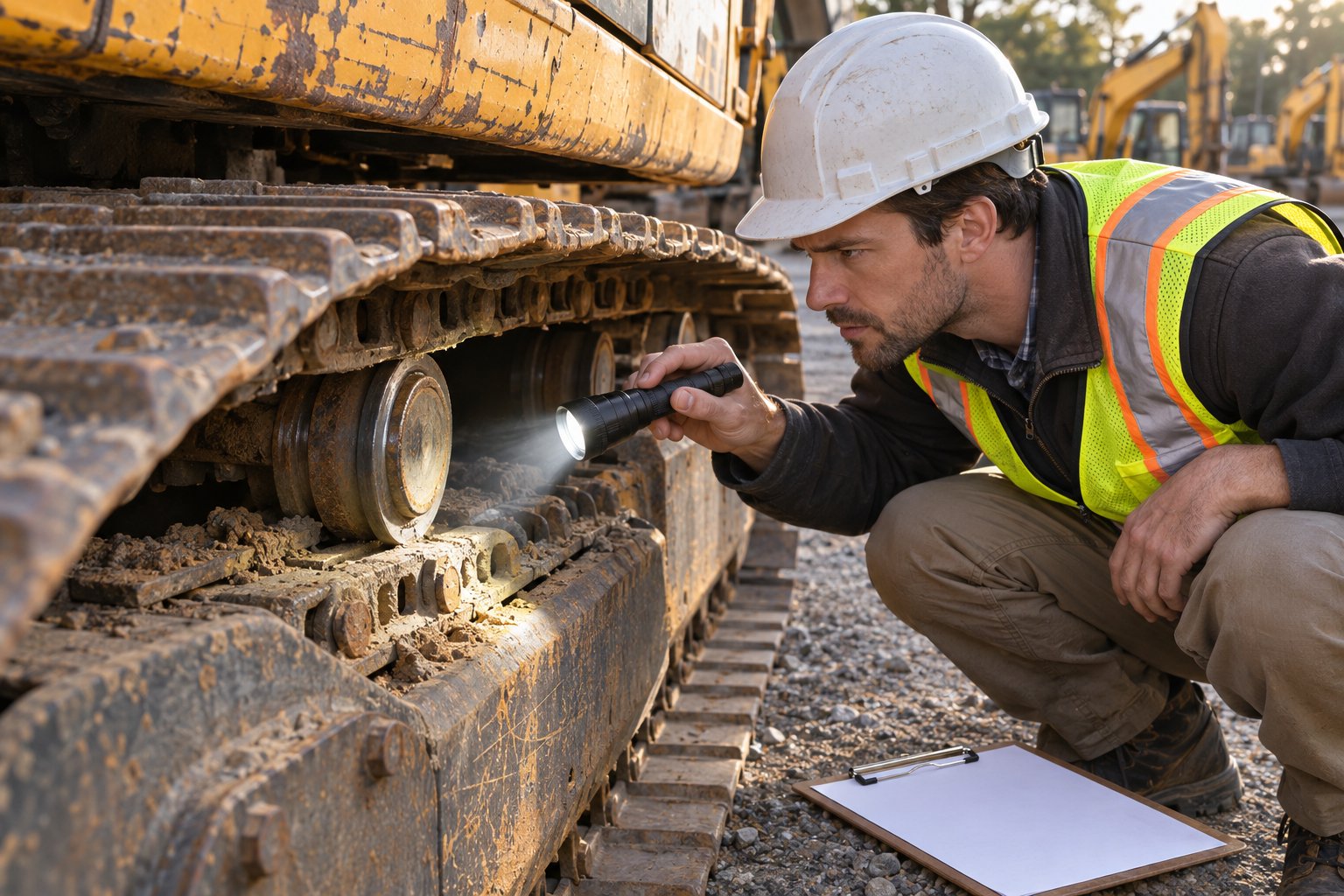
- Undercarriage wear: Check shoes, rollers, sprockets, and idlers. JMT's inspection guide warns that track sag beyond 25-40 mm usually means tensioning or replacement is coming soon.
- Pins and bushings: Look for bent pins, elongated holes, and fresh welds near the boom root.
- Hydraulic leaks: Wipe the cylinders and fittings with a white rag, then cycle every function and watch for wet streaks on the rods.
- Swing bearing play: Swing slowly in both directions while a helper watches for rocking and listens for grinding.
- Engine blow-by: Insist on a cold start. Watch for heavy smoke and fumes from the crankcase breather.
- Cab electronics: Test the monitor, joysticks, pedals, and air conditioning, and note any stored warnings.
- Emissions system health: On Tier 4 Final or Stage V units, check for aftertreatment fault codes and confirm that the DEF system works properly.
A clean inspection proves that a machine is sound. It doesn't prove that it's the right 320 for the work on your schedule, and that question comes down to the jobs you plan to run.
Choosing the Right Cat 320 for Your Work
Think about the work you expect over the next twelve months. Will it be mostly trenching, or will you be cutting finished grade to tight tolerances? Your answer points to the right caterpillar 320 excavator faster than any brochure. The best choice is the 320 that fits your jobs, not the one with the longest feature list.
Matching Cat 320 Variants to Your Job Types
| Job Type | Recommended Variant/Configuration | Why |
|---|---|---|
| Trenching and utility work | 320 GC, or a used 320D/320E with a standard undercarriage | Basic digging doesn't need factory grade technology, and a standard undercarriage is easier to maneuver in tight spaces |
| Site prep and general earthmoving | 320 GC | Cat positions it for low- to medium-duty work at a low cost per hour |
| Precision grading | Standard Next Gen 320 with Cat Grade | Factory grade control cuts rework and over-excavation |
| Truck loading | Standard 320 with Cat Payload | On-board weighing helps the operator avoid overloading or underloading trucks |
| Demolition with attachments | Standard 320 or a used 320E, L undercarriage, auxiliary hydraulics installed | Needs strong hydraulics and stability, plus a circuit matched to the attachment |
| Soft ground or frequent lifting | Any variant with a long (L) undercarriage | A longer track footprint adds stability when the machine is loaded |
Grading is where the extra technology pays off most clearly. Western States Cat describes a highway project that used Cat Grade with 3D and finished the grading phase ahead of schedule and under budget.
Who Should Choose the 320 GC
The cat 320 gc excavator suits general earthmoving contractors and budget-conscious fleets that care more about cost per hour than automation. One 320E vs 320GC comparison notes that the GC favors efficiency over maximum hydraulic performance, which fits everyday digging and loading. If your crew rarely uses grade control, you avoid paying for it. For buyers who want a used unit with freight support, JIUHONG's used 320GC listing is a practical next step, but confirm the unit's condition, configuration, and current price through the product page inquiry.
What about older machines? A used cat 320 excavator from the 320C, 320D, or 320E generations still makes sense when budgets are tight, local emissions rules allow it, and nearby mechanics know the platform. The same comparison notes that buyers with limited budgets often choose the 320E for its durability and lower purchase price.
Final Buying Recommendations
Match the variant to your daily work: choose the 320 GC for cost-focused earthmoving, the standard 320 for grading and truck loading, an older 320D or 320E when budget comes first, and always confirm the configuration and run a full inspection before you buy.
Choose the duty level first, then the configuration, and only then the individual machine. Buyers who follow that order usually end up with a 320 that earns its keep for years.
Cat 320 Excavator FAQs
1. How much does a Cat 320 excavator weigh?
Most Cat 320 machines fall in the 21 to 23 metric ton range, roughly 47,000 to 50,000 lb. The exact figure depends on generation and setup. Spec records put an older 320C near 47,973 lb, a Next Gen 320 with a long undercarriage at about 22.5 t, and one listed 320GC unit at 21,300 kg. Long tracks, wide shoes, a heavier counterweight, the boom and stick combination, and a bucket or quick coupler all add weight. Width matters as much as weight for hauling. A Next Gen 320 with a 3.17 m transport width is wider than the 8.5 ft limit common on U.S. highways, so plan for a lowboy or RGN trailer and oversize permits for each jurisdiction on the route.
2. What is the difference between the Cat 320 and the Cat 320 GC?
Both are Next Gen 20-ton machines that use the Cat C4.4 engine family, but they are aimed at different buyers. The 320 GC is the value model for low- to medium-duty work. Cat positions it around reduced fuel use and maintenance costs to keep cost per hour low, and it carries a lower power rating. The standard 320 targets medium- to heavy-duty jobs and comes with more factory technology, including Cat Grade with 2D, Grade Assist, and integrated Cat Payload. If your work is mostly general digging and loading, the GC avoids paying for features your crew may not use. If you do precision grading or high-volume truck loading, the standard 320's technology is more likely to pay for itself.
3. What engine is in the Cat 320, and does it need DEF?
Next Gen 320 models use the Cat C4.4. Published output is usually quoted between about 158 and 172 hp, and the figure varies with region, emissions package, and net or gross rating. In regulated markets these machines meet Tier 4 Final or EU Stage V, which uses aftertreatment and Diesel Exhaust Fluid (AdBlue in Europe). DEF becomes a routine refill, and the aftertreatment system needs care. Older machines are simpler. The 320C uses the Cat 3066T, a 6.6 L six-cylinder turbo diesel rated around 138 hp gross and certified to Tier 2, with no DEF system. The 320D moved to the Cat C6.4. Check import rules before shipping an older engine across borders.
4. How often does a Cat 320 excavator need servicing?
Current C4.4-powered 320s have long intervals, but they depend on conditions. Engine oil and filter, the fuel filters, and swing drive oil are changed every 1,000 hours after a first 500-hour oil change. That interval applies only with Cat fluids, Cat filters, and S.O.S oil sampling. Without them it falls to 500 hours, or 250 hours in severe service. Final drive oil runs 2,000 hours, the hydraulic return filter 3,000 hours, and Cat HYDO Advanced 10 hydraulic oil 6,000 hours or 3 years. Hammer work cuts the return filter interval to 500 hours at 50% use and 250 hours for constant use. Daily greasing and walkaround checks are still required.
5. What should I check before buying a used Cat 320 excavator?
Start with the paperwork. Ask for service logs, then compare the hour meter with wear on the seat, pedals, and pins, and match the serial plate to the documents. On the machine, inspect shoes, rollers, sprockets, and idlers. Track sag beyond about 25-40 mm usually signals upcoming work. Look for bent pins, oval pin bores, and fresh welds. Cycle every function to spot hydraulic leaks, and swing slowly to check for bearing rock or grinding. Do a cold start to watch for smoke and blow-by, test the monitor and controls, and on Tier 4 Final or Stage V units read aftertreatment fault codes. For cross-border purchases, request FOB or CIF pricing and confirm the loading method. JIUHONG's used Caterpillar 320GC listing, with a 21,300 kg operating weight, a Cat C4.4 engine, and ocean or land freight support, is one example. Confirm the unit's condition, configuration, and current price through the product page inquiry before you pay.