

What the Cat 340 Excavator Is and Who It Suits
Are you scrolling through listings that show a 340D2L, a 340F, and a Next Gen 340 side by side? You're not alone. In photos, every cat 340 excavator for sale looks much the same: yellow paint, a big boom, and a wide undercarriage. The machines behind those photos can still differ a lot in age, technology, and setup. Before you compare prices or hours, it helps to know exactly what you're looking at.
What Is the Cat 340 Excavator
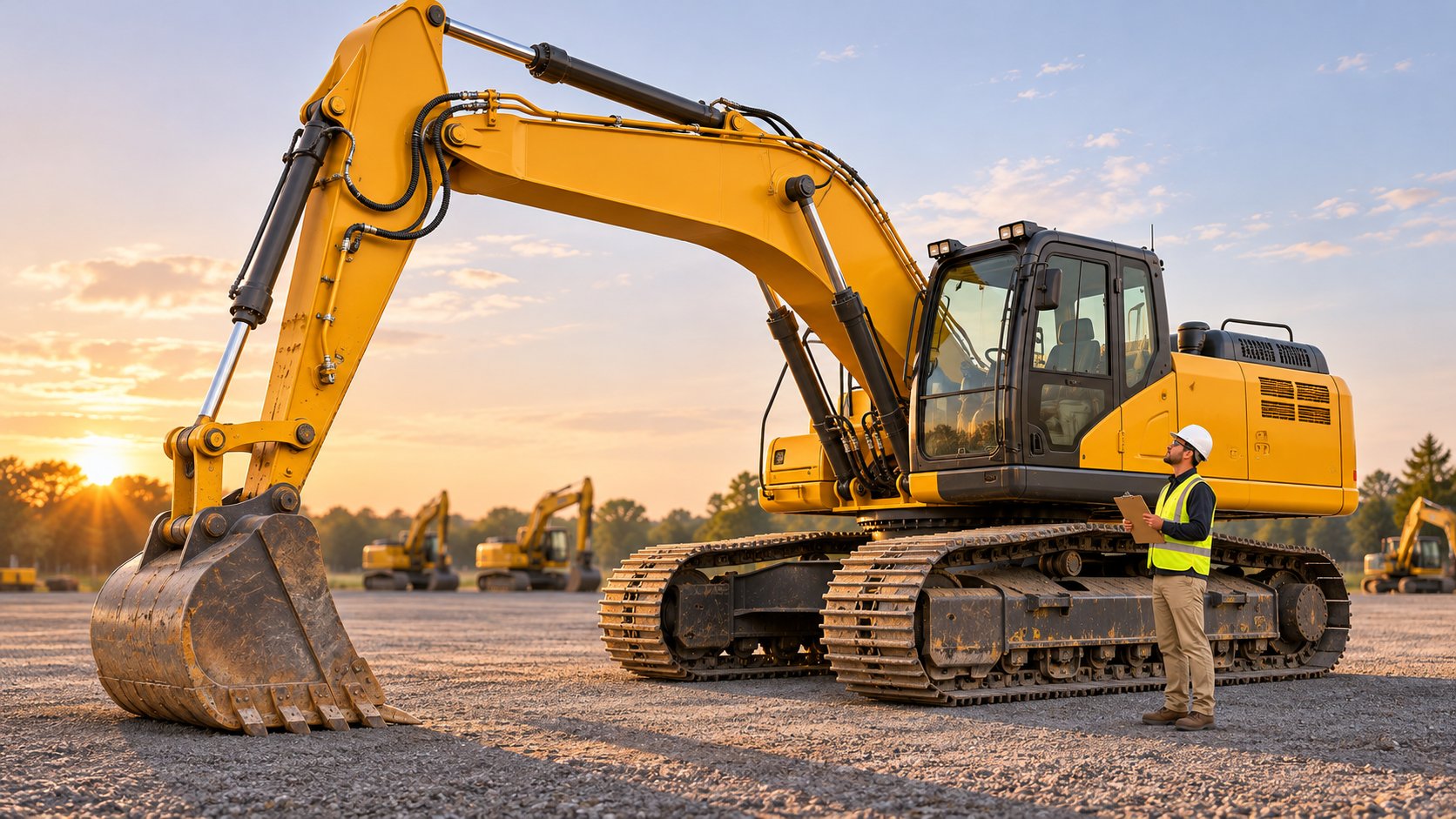
The Cat 340 is a Caterpillar hydraulic crawler excavator in the roughly 40-metric-ton class, built for high-volume digging, truck loading, and heavy site work.
Caterpillar places the current model in the 40-tonne (45-ton) class. That puts it above mid-size excavators and below the largest mass-excavation machines. You'll usually find a Cat 340 excavator on large civil, infrastructure, and site-development projects, where the number of tons moved per hour drives the schedule.
Typical Jobs for a 40-Ton Caterpillar 340 Excavator
Trade coverage from On-Site Magazine describes a wide range of work for this size class. Common jobs include:
- Mass excavation and heavy site prep
- Trenching for utilities and drainage
- Road and infrastructure construction
- Truck loading in quarries and pits
- Demolition support and material handling
Auxiliary hydraulic options let owners run attachments such as hammers. That flexibility can keep one machine busy across several kinds of projects.
How to Use This Guide While Browsing Listings
Think of this article as a companion tab to keep open while you shop. It follows the same order a careful used buyer works through:
- Confirm the 40-ton class fits your work.
- Identify the generation from the model name.
- Understand the configuration, such as boom, stick, and undercarriage.
- Set a realistic budget using real cat excavator price data.
- Inspect the machine and verify its history and technology.
- Choose the purchase channel that matches your risk tolerance.
Picture two listings at similar prices. One is an older long-undercarriage unit. The other is a newer machine with factory grade technology. Without a framework, they look interchangeable. The first real clue to telling them apart sits in the spec sheet, and the weight figures alone hold a surprise many buyers miss.
Cat 340 Specs and Operating Weight at a Glance
Have you ever compared two listings where one says "40 tons" and the other says "88,000 lb"? Both may describe the same machine. Spec figures on used listings are often rounded, converted, or copied from a different configuration. A single reference table helps you spot those gaps quickly.
Cat 340 Specs Table for Quick Comparison
The figures below come mainly from Caterpillar's 340 technical specifications for the current-generation machine, cross-checked against TractorCharts. Treat them as a baseline for the latest models, not a guarantee for any individual unit.
| Spec | Typical Figure | What to Note |
|---|---|---|
| Operating weight | 38,100-39,400 kg (84,000-86,800 lb) in Cat's published builds; recent near-new listings show about 88,000-90,000 lb | Changes with boom, stick, bucket, and counterweight |
| Engine | Cat C9.3B, 9.3 L | Meets U.S. EPA Tier 4 Final and EU Stage V on current machines |
| Net power | About 311-346 hp (232-258 kW) | Rating varies by market and measurement standard |
| Max dig depth | 6.70 m (22'0") Mass boom; 7.48 m (24'6") HD Reach boom | Depends on boom and stick |
| Max reach at ground line | 10.33 m (33'11") Mass boom; 11.02 m (36'2") HD Reach boom | Long-reach front ends differ further |
| Bucket capacity range | About 1.88-3.00 cu m (2.46-3.92 cu yd) | Based on Cat's bucket compatibility chart |
| Bucket breakout force (ISO) | 209-263 kN (46,940-59,210 lbf) | Higher with optional auto dig boost |
| Stick breakout force (ISO) | 165-190 kN (37,200-42,780 lbf) | Higher with optional auto dig boost |
| Lift capacity | Verify on Cat spec sheet for the exact generation and configuration | Charted by boom, stick, load height, and radius |
| Hydraulic flow | 560 L/min (148 gal/min) maximum, two pumps | Current-generation figure |
Understanding Cat 340 Excavator Weight in Metric and U.S. Units
Here's where many buyers slip. A metric ton, or tonne, equals 1,000 kg, which is about 2,204 lb. A U.S. short ton equals 2,000 lb. As HowStuffWorks explains, one tonne is roughly 1.102 short tons.
- 40,000 kg = about 88,000 lb
- 40 U.S. short tons = 80,000 lb
That 8,000 lb gap matters. It affects trailer selection, permits, and freight quotes. So when a listing says "40 ton," ask which ton it means.
Why Cat 340 Excavator Specs Change by Configuration
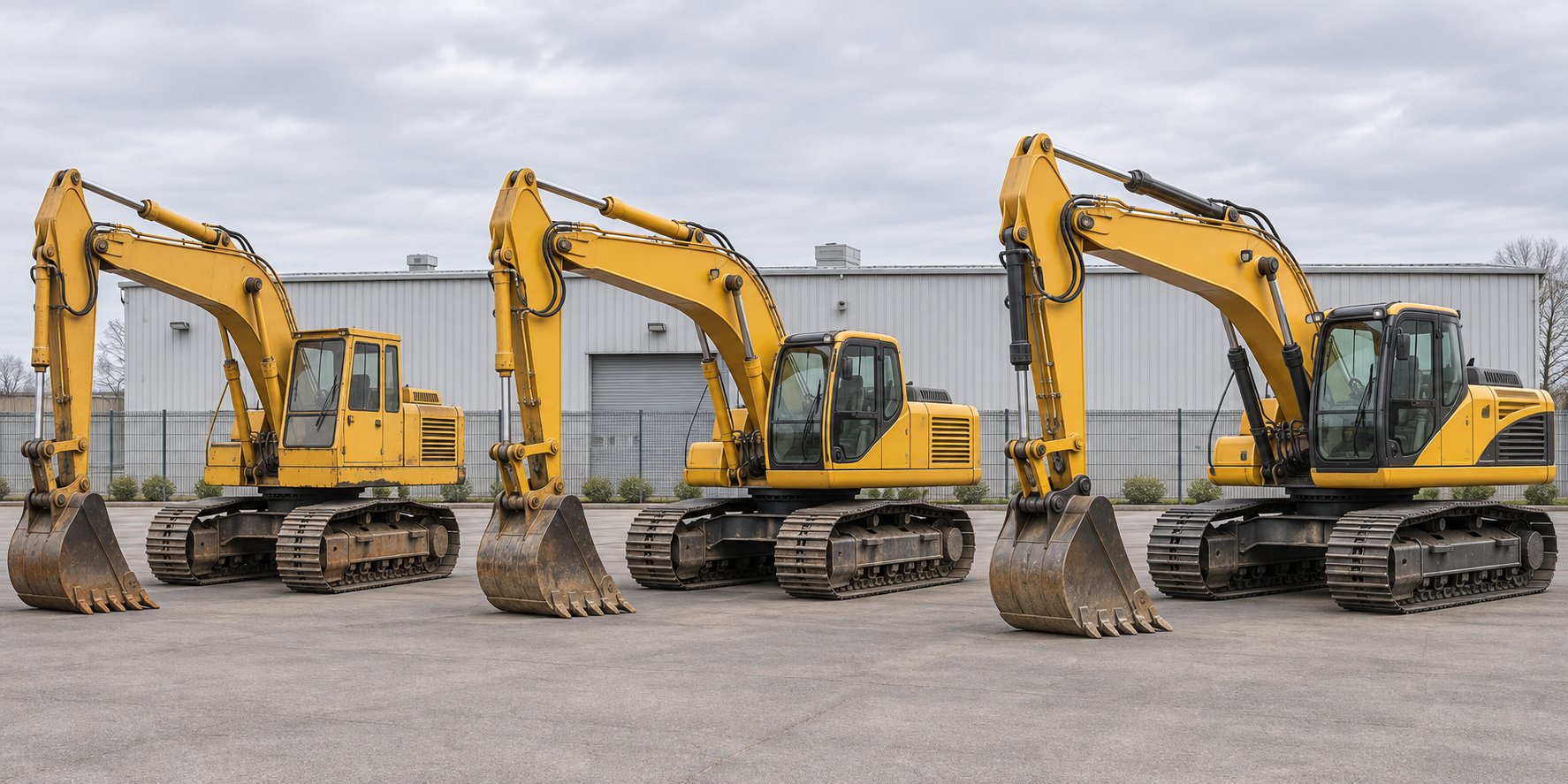
Imagine two Cat 340 machines parked side by side. One has the HD Reach boom with a 3.2 m stick. The other has the Mass boom with a 2.55 m stick. Cat's own data shows the reach setup digs about 0.8 m deeper. The mass setup weighs about 1,300 kg more and delivers stronger breakout force. Same model name, different machine.
You'll notice these variables shift the numbers most:
- Generation and engine platform
- Boom and stick combination
- Undercarriage type and track shoe width
- Counterweight size
- Bucket and coupler choice
Cat also notes that configurations vary by region. That's why the specs above fit current machines best. Older units in your search results were built to different standards, and the clues to which one you're viewing are hidden in the model name itself.
Cat 340 Generations and Model Names Decoded
You see '340D2L' in one listing and a plain '340' in the next. Are they the same machine? Not quite. The letters and numbers in a Caterpillar model name tell you a lot about a machine's age, engine platform, and factory technology. Once you can read them, you can sort a page of results in minutes.
Decoding 340 Cat Model Names and Suffixes
The number tells you the size class. Caterpillar's product nomenclature guide explains that model numbers generally rise as weight and horsepower increase. Every 340 Cat therefore sits above the 336 and below the larger models in the lineup.
The letters after the number carry the rest of the information:
- Series letter (D, F): Caterpillar used series letters to mark generations. A later letter means a newer design.
- Number after the letter (D2): This marks a refreshed version within the same series, not a completely new generation.
- L: This means long undercarriage, which adds stability for digging and lifting. It also affects transport length and weight.
- Other suffixes: Some listings show TH-style or regional codes. These usually point to undercarriage, market, or trim variants. Don't guess what they mean. Ask a dealer to decode them.
Caterpillar has since dropped series letters on many product lines because it was running out of letters. That's why the current machine is simply called the 340. The generation information still exists, though. Every PIN plate carries a three-character build number that identifies it.
From Caterpillar 340D2L to the Next Gen 340
The main generations line up like this, from oldest to newest:
| Designation | Key Identifying Traits | What to Verify on a Listing |
|---|---|---|
| 340D / 340D L | Earlier D-series design, conventional cab and controls, little factory technology | Engine model, emissions tier, undercarriage wear, and whether hours make sense for the machine's age |
| 340D2 / 340D2L | Refreshed D-series, often listed with the L long undercarriage | Emissions tier against your local or import rules, the actual engine model, and the boom and stick setup |
| 340F / 340F L | Later lettered series with an updated engine platform and emissions compliance | Emissions tier, condition of the aftertreatment system, and monitor software status |
| Next Gen 340 | No series letter, Cat C9.3B engine, touchscreen with jog dial, push-button start | Build number, which technology is fitted and active, Product Link status, and counterweight |
Between generations, four areas usually changed: the emissions tier and engine platform, the cab and operator interface, factory technology, and hydraulic efficiency. Caterpillar's Next Gen 340 release lists a C9.3B engine, a 7.5-ton counterweight, a wider track, and a Next Generation electrohydraulic system. It also names Cat Payload, Grade Assist, and 2D Grade as standard, along with Product Link telematics. Older units may not have these features at all, or may have them only as retrofits.
Don't rely on the listing title alone. Check the PIN, and confirm the generation by serial number prefix with a Cat dealer.
Specialty Builds Including UHD and Straight Boom
Not every Caterpillar 340 was built mainly for digging. Two demolition variants often appear in cat 340 listings:
- 340 UHD (Ultra High Demolition): This build has a tall-reach front for taking down structures from height. Its front end differs from a standard digging setup.
- 340 Straight Boom: Caterpillar positions this build for low-level demolition, sorting, and excavation. Its spec page lists an operating weight of 39,800 kg (87,800 lb), a maximum pin height of 12 m (39.4 ft), and a maximum weight at the stick nose of 4,160 kg (9,170 lb). Standard features include 2D E-Fence, Operator Protective Guards, and EN 356 P5A impact-resistant glazing on the windshield and top hatch.
These builds can be good value for the right job, but they are harder to resell to general excavation buyers. Confirm the front end and any conversion history before you assume a demolition unit can dig like a standard 340.
Specialty fronts also raise a broader question. If a different front end can change how a 340 performs this much, is the 40-ton class the right choice for your work, or would a neighboring size suit you better?
Cat 340 vs 336, 349, and PC 490
When you sort listings by size, the Cat 340 rarely shows up alone. The 336, the 349, and the Komatsu PC490 often land on the same results page. Each can look like a reasonable alternative. The right choice depends on how much material you move, how often you haul the machine, and how much reach the job demands.
Cat 336 vs 340 vs 349 Size Class Fit
A Heavy Equipment Guide comparison of current Cat models shows how close the 336 and 340 are, and how big the jump to the 349 is. Its weights differ slightly from Cat's spec sheet because builds vary, so use them for relative sizing only.
| Model | Relative Size Class | Typical Use | Transport Considerations |
|---|---|---|---|
| Cat 336 | Smaller: about 81,200 lb, 300 hp | General excavation, utility trenching, site prep | Slightly lighter haul than a 340 |
| Cat 340 | Baseline: about 83,100 lb, 346 hp | Mass excavation, truck loading, heavy site work | Confirm whether the listed weight is in kg or lb before booking freight |
| Cat 349 | Larger: about 105,200 lb, 424 hp | High-volume production digging and loading | Roughly 22,000 lb heavier, which can change trailer and permit needs |
| Komatsu PC490LC-11 | Heavier class: 105,670-110,220 lb, 359 hp | Large earthmoving and high-production loading | Komatsu offers an optional counterweight removal device |
Stepping up from a 336 to a 340 mainly buys extra power in a similar transport footprint. The 349 is a different conversation. You're hauling a much heavier machine every time it changes sites.
How the 490 Komatsu Excavator Compares in Class
The PC 490 often sits beside the 340 in search results, but it isn't a direct peer. Komatsu lists the PC490LC-11 at 47,930-49,995 kg with buckets from 1.47 to 4.15 cu yd. That places the 490 Komatsu excavator closer to the Cat 349 by weight. Weigh a 490 Komatsu against a 340 only if you're open to moving up a class.
Long Reach vs Standard 340 Excavator Configurations
You may also spot long-reach 340s on sites like Machineryline. All that extra reach can look like a bonus. Is it?
The numbers show the trade. The 340 Long Reach digs to 42'10" and reaches 59'4" along the ground, compared with 27'1" and 38'11" for the standard 340. Its bucket range, however, drops to 0.61-1.96 cu yd from 1.24-3.52 cu yd. Caterpillar's Brian Stellbrink told For Construction Pros that longer fronts also reduce breakout force and cycle time. Lift capacity falls the farther the load sits from the machine.
Where does that trade pay off?
- Dredging and pond cleaning: Work across water from the bank.
- Slope work: Shape embankments with fewer moves.
- Ditching: Clean wide channels from one side.
- Poor fit: Mass excavation and truck loading, where a small bucket slows production.
That niche shapes resale. Industry experts note that long-front work can be "few and far between" for most fleets. Many contractors rent these machines for a month or two instead of owning them. Swapping fronts isn't easy either, so a used long-reach unit usually stays long-reach. The buyer pool is smaller, and that shows up in asking prices. It's one reason two 340s with similar hours can be listed tens of thousands of dollars apart.
What Drives Cat 340 Excavator Prices
How much does a Cat excavator cost once it has a few thousand hours on the meter? For a 340, the answer covers a wider range than many buyers expect. Two machines with similar hours can be listed tens of thousands of dollars apart. If you know why, you can tell a fair asking price from an inflated one.
How Much Does a Cat Excavator Cost on the Used Market
Recent listings give you a useful snapshot. Keep in mind that these are asking prices, not final sale prices. Negotiation, trade-ins, and freight can all change what a buyer actually pays.
| Hours | Listed Price | Channel |
|---|---|---|
| 4,517 | $298,044 | Dealer listing |
| 1,907 | $360,480 | Dealer listing |
| 4,084 | About $379,000 | Dealer listing |
| 1,096 (near-new) | $460,000 | OEM used listing |
Dealer asking prices in this sample run from about $298K to $380K. The near-new OEM unit is listed well above that range. Use these figures as a benchmark when you judge any cat 340 excavator price, but treat them as a starting point, not a rule.
What Moves Cat 340 Excavator Price Up or Down
Look closely at the table. The 4,084-hour machine is listed about $18,000 above the 1,907-hour unit. That wouldn't happen if hours alone set value. The difference could come from generation, fitted technology, undercarriage condition, or remaining warranty. The listing usually won't tell you which one.
These factors shape caterpillar excavators price on the used market:
- Hours: A useful starting point, not a verdict. 2M Machinery calls 3,000 to 6,000 hours the sweet spot, where a machine is broken in but far from worn.
- Generation: A Next Gen 340 usually costs more than an older lettered series such as the 340D2L.
- Configuration: The boom, stick, undercarriage, and counterweight all matter. Long-reach and demolition builds sell to a smaller group of buyers.
- Fitted technology: Grade, payload, and telematics features add value only if they are installed and active.
- Undercarriage condition: Tracks, rollers, sprockets, and idlers are expensive to replace. Worn parts here are among the biggest hidden costs on a used machine.
- Remaining warranty: Factory or extended coverage that transfers to you lowers your risk.
- Location and freight: A cheaper machine far away can cost more once it reaches your site.
- Seller type: Dealers, OEM programs, and private sellers include different levels of inspection and support in their prices.
Service records can matter more than the hour meter. 2M Machinery notes that an 8,000-hour machine with a full binder of maintenance records is often a safer buy than a 4,000-hour machine with no history at all. Houston Heavy Machinery makes the same point. A well-maintained excavator with higher hours can outperform a low-hour machine that was neglected.
Near-New Low-Hour Units vs Mid-Hour Machines
Imagine a 12-hour unit on Surplus Record next to a 4,500-hour machine. The near-new 340 likely has the latest technology and minimal wear. It may also have factory coverage left, though you should confirm that by serial number. You pay a clear premium for that peace of mind.
A mid-hour machine asks less up front. It may need undercarriage or component work sooner, so its condition decides whether it's actually a good deal. Rental fleet units can be a middle ground. Rental companies often retire machines at around 1,500 to 3,000 hours, usually with full service records.
A price gap between two listings raises a question but doesn't answer it. A low price may hide worn rollers, and a high price may or may not buy better condition. The only way to know which is true is to inspect the machine yourself.
Inspecting and Verifying a Used Caterpillar 340 Excavator Before You Buy
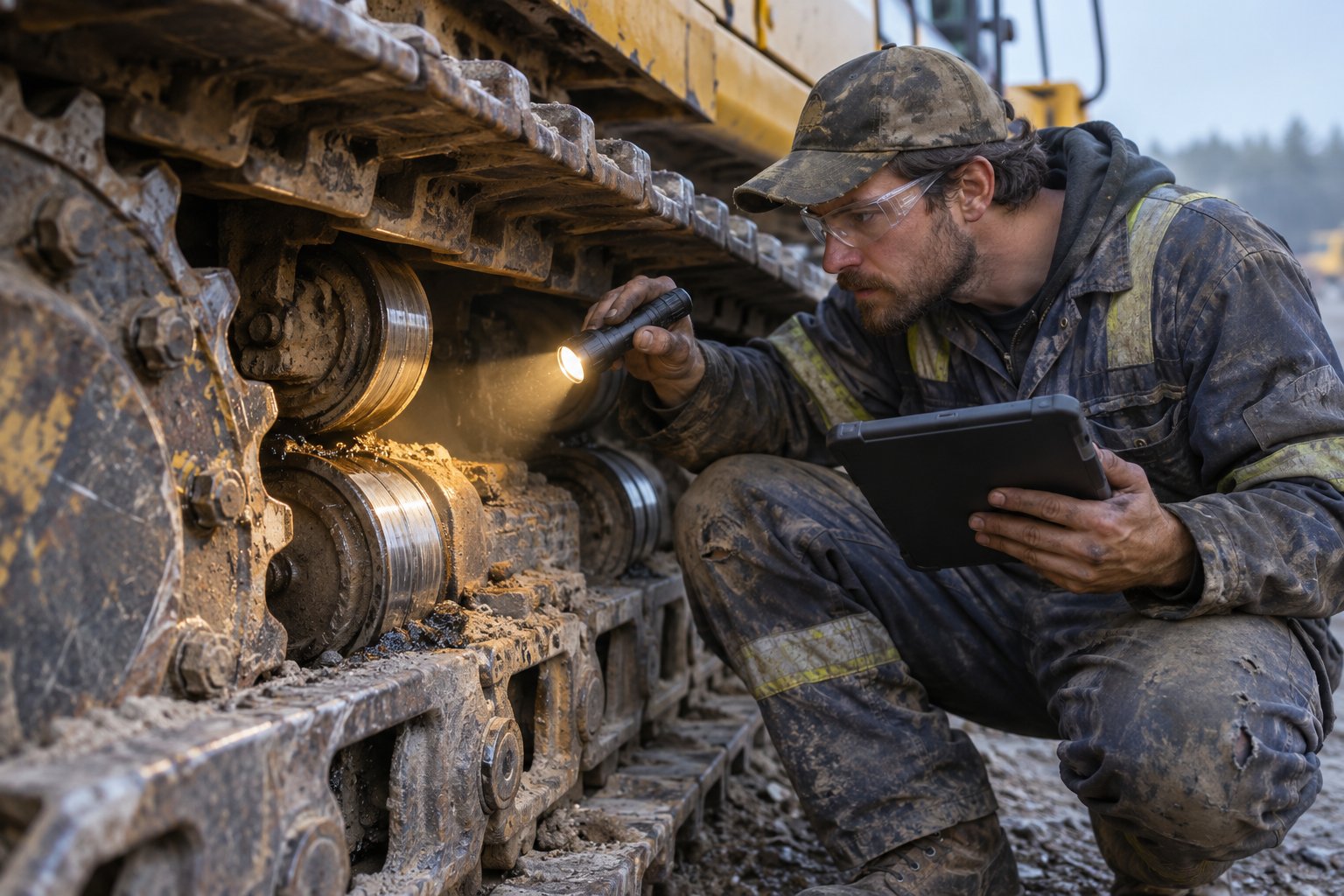
Listing photos show paint and glass. They don't show worn bushings, tired pumps, or a cracked boom hidden under fresh primer. The inspection guide from ASURE Machinery puts it plainly: the badge and year on the plate tell you less than the condition of the steel, oil, and bearings underneath. That's why a careful walk-around is worth more than any spec sheet.
Hands-On Inspection Checklist for a Cat 340 Hydraulic Excavator
Bring a tape measure, a flashlight, and this list. Mark each item Pass, Fail, or Monitor, and write down what you measure.
- Undercarriage wear: The undercarriage can account for 20 to 30 percent of an excavator's lifetime maintenance cost, so start here. Run a hand along the bottom rollers to feel for flat spots, and look for active dripping at the roller seals. Check idlers for cracks and side play. Look for hooked or pointed sprocket teeth, and check how much grouser height is left on the pads.
- Track tension: Park on level ground and measure the sag between the carrier roller and the track. Compare it with the figure in the 340's operation and maintenance manual, since the right sag varies by model.
- Hydraulic pump and cylinders: Inspect every cylinder rod for scoring, pitting, or peeling chrome. A light film of oil is common on older machines. Active dripping is not. Hydraulic oil should look clear amber. Dark, burnt-smelling oil points to overheating, and milky oil points to water contamination. Then run a drift test. Raise the boom, curl the bucket, shut the engine off, and watch for five minutes. Compare any movement against the service manual limits for the 340.
- Final drives: Look behind each sprocket for gear oil leaks. Ask to see the drain plug magnet, because metal particles there suggest internal damage. While you drive the machine, compare the left and right tracks. A weaker side can mean internal leakage in the travel motor.
- Boom and stick: Check weld seams at the boom foot, the boom-to-stick joint, and the stick-to-bucket joint, plus the underside of the boom. Fresh paint over uneven grinding often hides a repair. Pry at each pin to check for bushing play.
- Swing bearing play: A dial indicator gives the most accurate reading. Without one, swing slowly through 360 degrees in both directions and listen for grinding, clicking, or popping. The machine should also stop promptly when you release the swing.
- Engine blow-by and smoke: Insist on a cold start. With the engine idling, open the oil filler cap. Some vapor is normal, but heavy smoke or pressure pushing out suggests worn rings. Watch the exhaust color as the engine warms up.
- Service records: Look for regular oil changes, filter replacements, and undercarriage adjustments. Then compare the hour meter with physical wear. A polished seat and worn-through pads on a low-hour machine are a warning sign.
Fluid analysis shows what you can't see. Cat S.O.S Services tests oil, coolant, and fuel, and Caterpillar backs it with four ISO 9001-certified corporate labs and more than 90 dealer labs. Ask the seller for past reports, and pull fresh samples from the engine, hydraulics, and final drives if you can. For a machine at this price, also get a written inspection report from a dealer or an independent technician before you pay the balance.
Verifying a Caterpillar 340 Excavator by Serial Number
The serial number links the machine to its past. Some listings publish it. The Surplus Record listing mentioned earlier, for example, discloses S/N EFH30260. Give that number to a Cat dealer and ask for any recorded service history and the machine's warranty status. Then confirm that the plate on the machine matches the paperwork.
You may also see machines sold through the Cat certified used channel. In general terms, these are used machines that a dealer has inspected and reconditioned to Caterpillar's standards, sometimes with coverage included. Terms can vary by dealer, region, and machine. Get the details in writing, and don't assume a unit is certified just because a Cat dealer is selling it.
Confirming Cat Grade Payload E-fence and VisionLink Features
A listing that says 'Grade, Payload, E-fence' sounds great. But are those features actually fitted and working? Here's how to check:
- In-cab monitor: Open the Grade, Payload, and E-fence menus. Set a simple E-fence limit and see whether the front end stops where it should.
- Dealer build report: Ask a Cat dealer for the factory configuration by serial number. It shows what left the factory and makes later retrofits easier to spot.
- Product Link and VisionLink status: Confirm that the telematics device is active. Caterpillar offers four VisionLink tiers. They range from Connect, which covers location, hours, and diagnostic codes, to PerformancePro, which adds detailed payload and cycle data. Ask which tier is active and whether the previous owner will release the asset so it can be moved to your account.
Verify, don't assume: treat every claim in a listing as a question to confirm with records, measurements, or a dealer report.
Of course, how much of this checklist you can actually complete depends on who is selling. Walking around a machine at a nearby dealer is easy. Doing the same for a unit in another state or another country takes more planning, and that difference shapes which buying channel makes sense for you.
Where to Buy a Cat 340 and Whether to Buy, Rent, or Finance
Two sellers can list nearly identical machines and still offer very different levels of protection. The channel you buy through decides how much you can verify, what recourse you have if something goes wrong, and how much room you have to negotiate the final cat excavator cost.
Where to Find a Cat 340 for Sale by Channel
Each channel trades transparency against price flexibility in its own way. Use this table to match a channel to your risk tolerance.
| Channel | Transparency | Buyer Protection | Price Flexibility | Best Fit |
|---|---|---|---|---|
| International used-equipment exporters, such as JIUHONG's used Caterpillar 340D2L listed at 40,000 kg (metric, about 88,000 lb) | Varies. Request the serial number, current photos, records, configuration, and transport dimensions directly | Set by your contract, independent inspection, and payment terms | Often negotiable, but freight, duties, and port fees add to the total | Buyers comfortable with cross-border logistics or sourcing for export markets |
| OEM certified used programs | High, with dealer inspection and reconditioning | Strongest. Coverage may be included, but confirm terms in writing | Lower | Risk-averse buyers who want dealer support |
| Dealer marketplaces such as MachineryTrader and equip.com | Moderate to high, with standard listing fields and dealer contacts | Depends on the individual selling dealer | Moderate | Comparing many units and prices quickly |
| Classifieds | Low, since the seller writes the listing | Minimal, usually sold as-is | High | Experienced buyers who can inspect locally |
| Single-unit surplus listings | Varies. Some disclose the serial number | Usually as-is | Moderate to high | Buyers hunting a specific low-hour unit |
Buying across borders adds paperwork to the inspection list. A cross-border buyer guide from MechLink notes that used machinery imports typically require a commercial invoice, packing list, bill of lading, and certificate of origin, plus pre-shipment inspection where the destination requires it. Duty rates and import eligibility vary by country, machine age, and emissions configuration, so confirm them with a licensed customs broker before you commit.
Dealer Marketplaces Like equip.com vs Direct Sellers
Marketplaces make it easy to compare crawler excavator price data across dozens of units in one sitting. Keep in mind that a marketplace listing is only as reliable as the dealer behind it. Direct sellers, including exporters and private owners, may leave more room to negotiate. In return, more of the verification work falls on you.
Buy, Rent, or Finance a Crawler Excavator
Do you need a 340 every week, or for one big job? Accounting firm MBE CPAs points to frequency of use, budget, maintenance and repair costs, and resale value as the deciding factors. In practice, that means weighing utilization, project duration, cash flow, who handles maintenance, and how much resale risk you're willing to carry.
Buying: Pros and Cons
- Pro: Full control over use, maintenance, and modifications.
- Pro: You own an asset you can resell or use as collateral.
- Pro: Steady, high utilization can make it more cost-effective over time.
- Con: It requires significant upfront capital.
- Con: You carry all repair costs and resale exposure.
Renting: Pros and Cons
- Pro: No large upfront cost, which suits short or one-off projects.
- Pro: Maintenance and repair costs are limited or avoided.
- Pro: It's a low-risk way to use niche builds such as long-reach fronts.
- Con: It gets expensive over long periods, especially with added fees.
- Con: Machines may be unavailable when demand is high.
Financing: Pros and Cons
- Pro: It spreads the purchase cost over time and preserves cash.
- Pro: You build equity and keep full control of the machine.
- Con: Interest and fees raise the total cost above the cash price.
- Con: Maintenance and resale exposure still sit with you.
Tax treatment can also tip the balance. MBE CPAs notes that qualifying equipment purchases may be eligible for a Section 179 deduction, so check with your accountant. A table can rank channels and payment options, but it can't tell you what to ask about one specific machine in a yard overseas. That takes a real listing and the checklist in hand.
Putting It Together
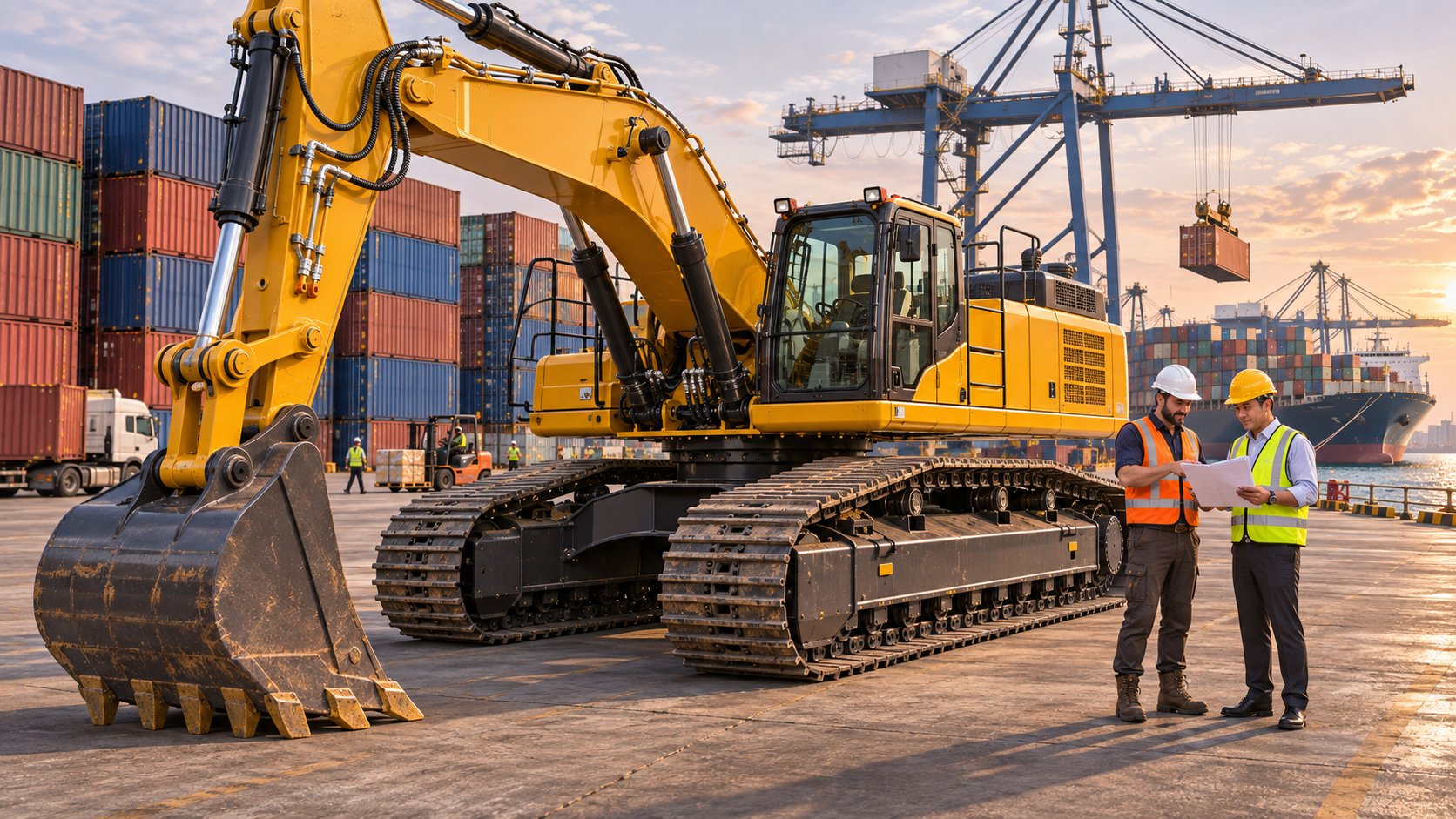
What does this guide look like when you apply it to an actual listing? Take JIUHONG's used Caterpillar 340D2L excavator as an example. The page lists one firm figure: 40,000 kg. Every other detail is something you need to ask about, and the checklist tells you what to ask.
Applying the Checklist to a Used Caterpillar 340D2L
Start with the model name. The 340D2L is an earlier, refreshed D-series machine, and the L means it has a long undercarriage. You should expect fewer factory technology features than on a Next Gen 340. Confirm what is actually fitted instead of assuming the machine has grade or payload systems.
Check emissions next. TractorCharts lists the 340D2 L with a C9 Acert engine certified to U.S. EPA Tier 3 / EU IIIA. Still, confirm the tier on this machine's own engine nameplate. That one detail can decide where the machine is allowed to work. HCQ Machinery's import review notes that, starting January 1, 2024, large and medium California fleets can add only Tier 4 Final or cleaner off-road engines. Used machines entering the EU for the first time must also clear separate engine and CE marking requirements. Check the rules for your job sites and your destination before you go any further.
Then look at the weight. The listed 40,000 kg is in metric units, which is about 88,000 lb. It is not 40 U.S. short tons, which would be 80,000 lb. Use the metric figure when you request trailer and freight quotes.
Questions to Ask Before Requesting a Quote
A Caterpillar excavator price means little until you know exactly what machine it buys. Work through these steps with the seller:
- Request machine details and the serial number so a Cat dealer can check the machine's history and confirm its generation.
- Confirm the boom, stick, and undercarriage configuration and make sure it suits the work you plan to do.
- Request current photos and service records, including close-ups of the undercarriage, cylinders, and engine nameplate.
- Arrange an inspection by a dealer or an independent technician, and include fluid samples if possible.
- Confirm transport dimensions and shipping arrangements, along with the paperwork your destination requires.
- Request a current quote in writing so you can compare the total landed cost with domestic listings.
Final Takeaways for Your Cat 340 Excavator Search
Every 340 Cat excavator listing deserves the same careful review, whether the machine sits at a local dealer or overseas. The model name tells you the generation. The spec sheet tells you what to expect. The inspection and the paperwork tell you whether this particular machine lives up to both.
Pick the size class, decode the generation, confirm the configuration, benchmark the price, inspect and verify every claim, then buy through the channel that fits your work and risk tolerance.
Cat 340 Excavator Buying FAQs
1. How much does a used Cat 340 excavator cost?
In a recent sample of dealer listings, used Cat 340 machines were advertised from roughly $298,000 to about $380,000, and a near-new OEM used unit with just over 1,000 hours was listed at $460,000. These are asking prices, so the amount you actually pay can shift after negotiation, trade-ins, and freight. Hours give you a starting point but do not set value on their own. Generation, boom and stick setup, active technology, undercarriage wear, transferable warranty, location, and seller type can move the number by tens of thousands of dollars. Always compare the total landed cost, including transport, duties if importing, and any repairs your inspection uncovers.
2. How much does a Cat 340 excavator weigh in pounds and tons?
Caterpillar's published builds for the current 340 run about 38,100 to 39,400 kg, or roughly 84,000 to 86,800 lb, and recent near-new listings often show about 88,000 to 90,000 lb once heavier fronts, buckets, or counterweights are fitted. The confusion usually comes from the word ton. A metric ton (tonne) is 1,000 kg, while a U.S. short ton is 2,000 lb. So a machine listed at 40,000 kg, such as JIUHONG's used Caterpillar 340D2L, weighs about 88,000 lb, not 80,000 lb. That 8,000 lb difference affects trailer choice, permits, and freight quotes, so confirm which unit a seller is using before booking transport.
3. What is the difference between a Cat 340D2L and the Next Gen Cat 340?
The 340D2L is a refreshed version of the earlier D-series, and the L stands for long undercarriage, which adds stability but also transport length. Reference specs list the 340D2 L with a C9 Acert engine certified to U.S. EPA Tier 3 / EU Stage IIIA. The Next Gen 340 drops the series letter and uses the Cat C9.3B engine that meets Tier 4 Final and Stage V, along with a touchscreen monitor, an electrohydraulic system, and factory technology such as Cat Payload, Grade Assist, and 2D Grade. An older D2L can cost less up front, but its emissions tier may limit where it can legally work, so check the engine nameplate and confirm the generation by serial number with a Cat dealer.
4. What should I inspect on a used Cat 340 before buying?
Start with the undercarriage, since rollers, idlers, sprockets, and pads are among the most expensive parts to replace. Measure track sag against the manual, check cylinder rods for scoring, and run a drift test with the boom raised and the engine off. Look behind each sprocket for final drive leaks, inspect boom and stick welds for hidden repairs, listen for swing bearing noise, and do a cold start to check for blow-by and smoke. Pull Cat S.O.S fluid samples from the engine, hydraulics, and final drives, and give the serial number to a Cat dealer to request service history, warranty status, and the factory build report that shows which technology was originally fitted.
5. Is it safe to buy a Cat 340 from an international used-equipment exporter?
It can be, as long as you do the verification work yourself. Exporters such as JIUHONG, which lists a used Caterpillar 340D2L at 40,000 kg, let you request machine details, a current quote, and shipping arrangements through the product page. Before committing, ask for the serial number, current photos, service records, and confirmation of the boom, stick, and undercarriage configuration and transport dimensions. Arrange a third-party inspection, agree on clear payment terms, and check import rules with a licensed customs broker, because duties, paperwork, and emissions eligibility vary by country and machine age. Then compare the full landed cost against domestic dealer listings.