

What a Chinese Mini Excavator Really Is
Picture two listings side by side. Both say "mini excavator," both come from China, and one costs a fraction of the other. Are they the same kind of machine? Usually not. Before you compare prices, it helps to know what the label actually covers.
What Counts as a Chinese Mini Excavator
A Chinese mini excavator is a compact, tracked hydraulic digging machine designed or manufactured in China, usually in the smallest tonnage classes. Mini excavators are generally defined as machines under 7 metric tons, and Chinese-built units range from sub-1-ton micro diggers for homeowners to multi-ton compact machines for contractors.
Budget Direct-Import Brands vs Established Chinese OEMs
Here's the catch. The label lumps together two very different groups of products.
- Budget direct-import brands: Names like AGT, MechMaxx, Rippa, Lanty, Miva, Rhino and XN12 appear mostly in online marketplace listings. These are typically small machines shipped straight to the buyer, often with little or no local dealer presence.
- Established Chinese OEMs: SANY, XCMG, LiuGong, Zoomlion, Lonking and Sunward build broad product lines, from compact units to large mining excavators, and sell through dealer and distributor networks. SANY alone reports a presence in more than 150 countries.
The difference often goes deeper than the badge. One buyer's guide notes that white-label budget units often use domestic hydraulic pumps and lesser-known engines, while larger Chinese brands tend to use internationally sourced hydraulics and offer documented EPA certification.
Why Market Tiers Matter Before You Compare Prices
Add a third tier, premium non-Chinese brands such as Kubota, Bobcat and Cat, and the price spread starts to make sense. Each tier bundles different things into its price: warranty handling, parts logistics, emissions paperwork and service access. Comparing a marketplace micro digger with a dealer-supported Japanese unit on sticker price alone is like comparing a flat-pack shed with a contractor-built garage. Both are structures, but you are paying for very different things.
| Tier | Example Brands | Typical Sales Channel | What Buyers Should Verify |
|---|---|---|---|
| Budget direct-import | AGT, MechMaxx, Rippa, Lanty, Miva, Rhino, XN12 | Online marketplaces, direct-ship sellers | Engine model, emissions label, parts support, written warranty |
| Established Chinese OEM | SANY, XCMG, LiuGong, Zoomlion, Lonking, Sunward | Dealers, distributors, used equipment exporters | Local dealer coverage, service records, certification documents |
| Premium non-Chinese | Kubota, Bobcat, Cat | Authorized dealer networks | Hours, maintenance history, remaining warranty |
Tiers are only the first filter, though. Within any one of them, a "mini" can mean a machine you tow behind a pickup or one that needs a dedicated equipment trailer. Size changes everything about what the machine can actually do for you.
Tonnage Classes and the Jobs Each One Fits
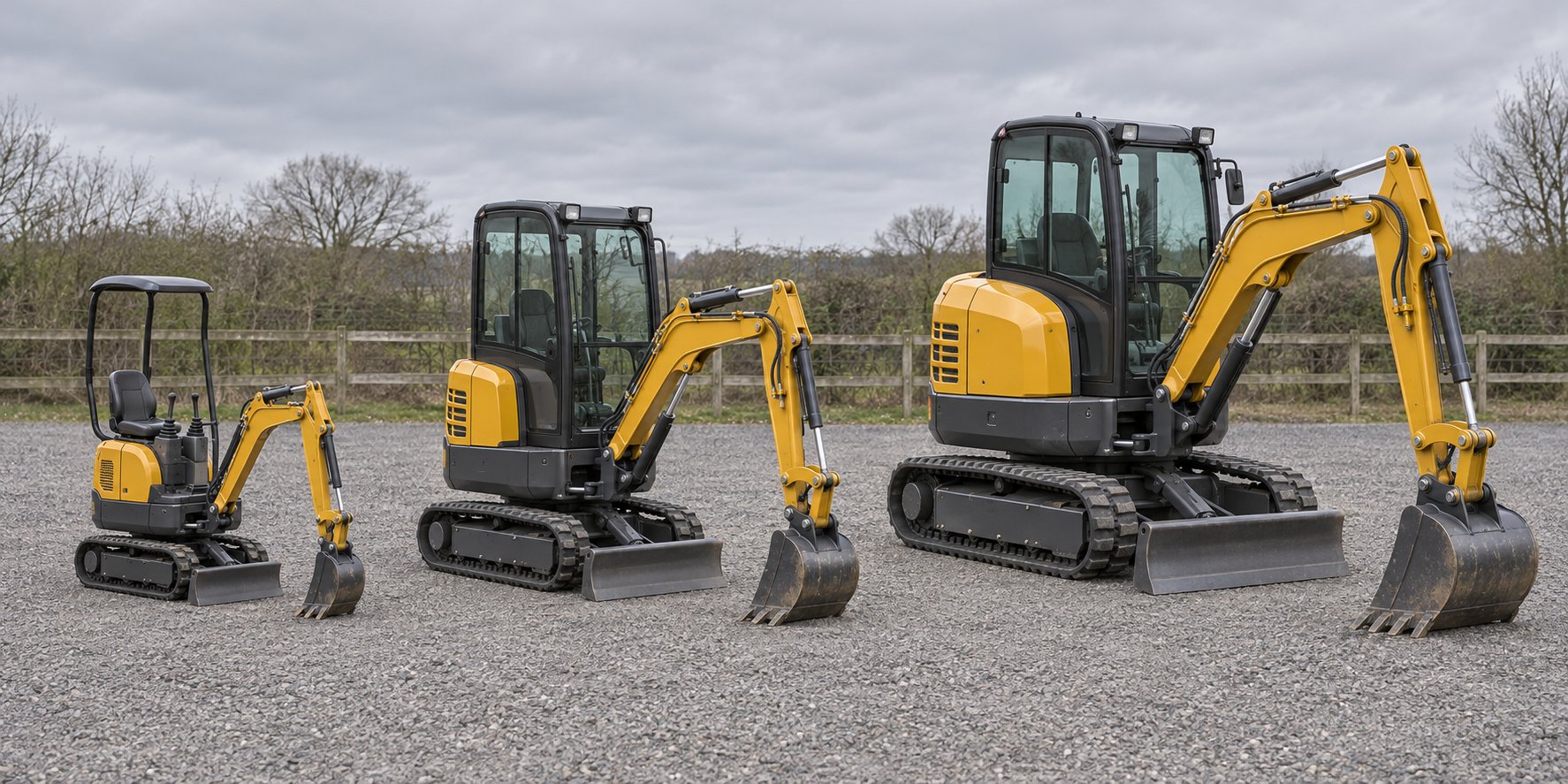
Scroll through a few listings and you'll see the same numbers again and again: 0.6t, 0.8t, 1t, 1.3t, 1.5t, 2t, 3.5t and 4-6t. They refer to operating weight in metric tons. That weight shapes where a machine can go, how hard it can work and what it takes to haul it. But tonnage is only a starting point. One manufacturer size guide points out that two machines in the same class can differ in digging depth, width, tail swing and hydraulics. For exact figures, always go to the manufacturer's spec sheet for the specific model.
Micro and 1 Ton Mini Excavator Classes for Homeowners
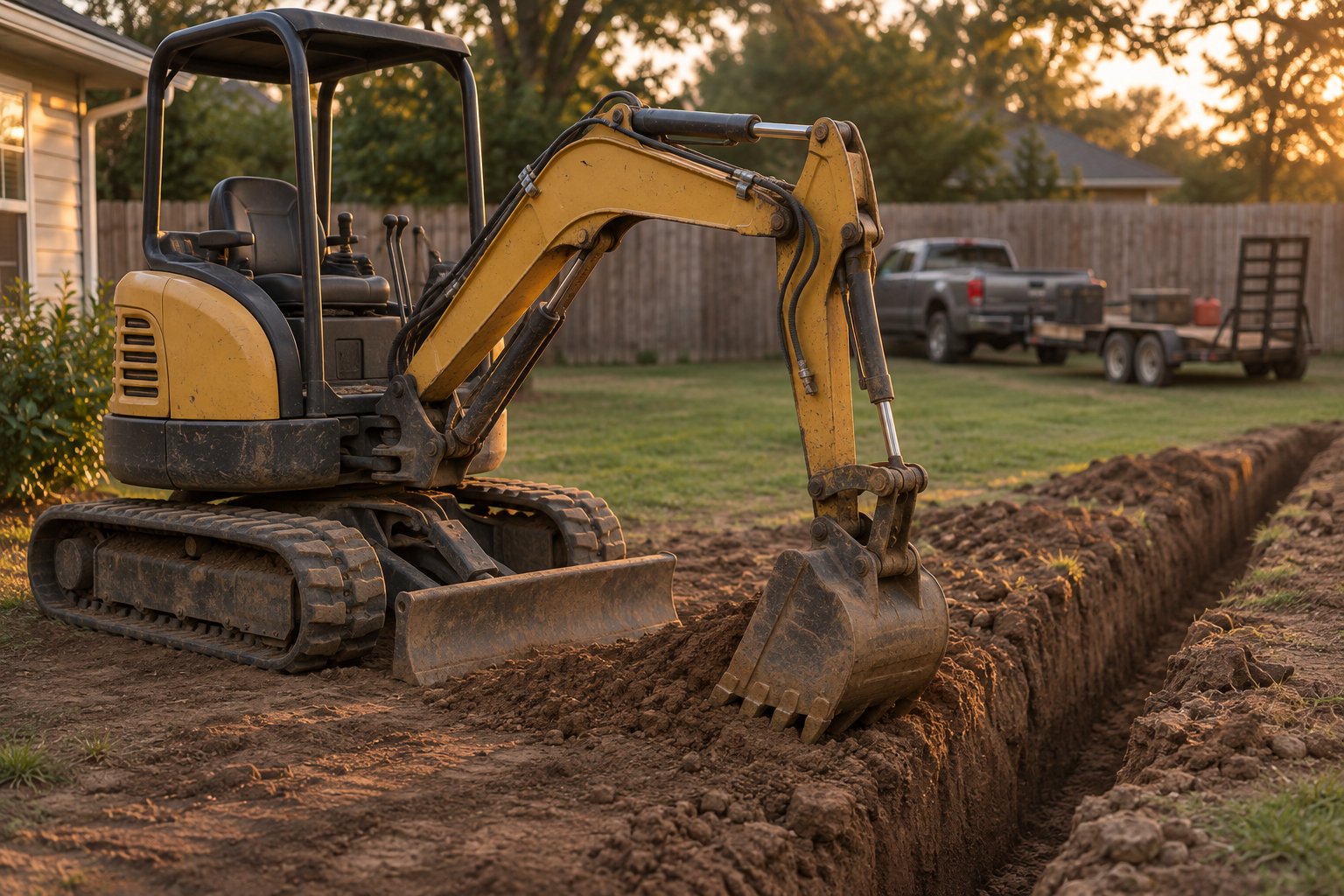
The 0.6t to 1.3t machines are access tools first. Imagine you need to trench for an irrigation line, set fence posts or prep garden beds behind a house where a side gate is the only way in. That is where these little diggers shine. The narrowest micro units can pass through standard 36-inch gates, which makes them practical for tight-access yards. The tradeoff? Small buckets, short reach and modest stability. They move less material per cycle, so bigger jobs simply take longer. If your access route allows it, a 1.5t machine often adds useful capability without much extra width.
2 Ton to 4 Ton Machines for Landscapers and Small Crews
Step up to the 2t and 3.5t classes and you enter real working territory for landscapers and small contractors. These machines handle drainage runs, stump removal, utility trenching and grading with noticeably better reach and stability. Rental fleets reportedly stock more 3-4 ton excavators than any other size, a good sign of how often this range fits everyday jobs. You will give up some tight-access ability, so measure gates and swing room before you commit.
When a 5 Ton Excavator Becomes the Right Size
The 4-6t class makes sense for heavier site prep, larger excavation and bigger attachments. It also changes your transport setup. FieldFix's transport chart pairs 5-6 ton machines with an 18,000 lb trailer and a 1-ton truck, compared with a half-ton truck for the micro class. And the math covers more than the machine. Attachments, fuel and the trailer itself all count, and the lowest rating among truck, trailer and hitch governs, as one excavation contractor explains.
| Tonnage Class | Typical Users | Suitable Jobs | Transport Considerations |
|---|---|---|---|
| 0.6t-0.8t | DIY homeowners | Garden beds, shallow trenches, planting | Light enough for small trailers; confirm trailer and hitch ratings |
| 1t-1.3t | Homeowners, property managers | Fence posts, irrigation lines, tight-access yards | Typically towable with a half-ton truck and a properly rated trailer |
| 1.5t-2t | Serious DIYers, landscapers | Drainage, small utility trenches, light grading | Check combined machine, attachment and trailer weight |
| 3.5t | Landscapers, small crews | Utility trenching, stump removal, site grading | Usually needs a heavier trailer and a 3/4-ton class truck |
| 4-6t | Small contractors | Heavier site prep, larger excavation, bigger attachments | Dedicated equipment trailer, 1-ton class truck, or paid delivery |
Still, a tonnage number only gets you into the right neighborhood. Two 2t machines can behave very differently once you look at dig depth, breakout force and tail swing, and those details hide in the spec sheet, not the headline.
Reading the Spec Sheet Like an Experienced Operator
Ever noticed how two listings can show almost identical numbers, yet one machine struggles on a job the other handles easily? Spec sheets are written to impress, not to explain. One equipment documentation specialist at Tide Power describes buyers who shortlisted machines on engine output alone, then found the hydraulic flow or transport width could not handle the work. Here is how to read the lines that actually matter.
Operating Weight and Mini Excavator Weight Ratings
Operating weight describes the machine ready to work, usually with fluids and a standard bucket. Shipping weight is often a lighter, dry figure. Manufacturers define these differently, so check what each number includes. Operating weight decides your trailer size, your ground pressure and your lifting stability. It also interacts with track shoe width. Two machines with similar weight can press on the ground differently, which changes how soon you can drive onto a wet site or across a finished lawn.
Dig Depth, Breakout Force and Horsepower Explained
Dig depth tells you whether the bucket can finish a trench without repositioning. Breakout force tells you whether it can actually bite into the material. Many buyers assume a heavier or more powerful machine digs harder, but breakout force comes from the hydraulic system and bucket geometry. Horsepower is the weakest comparison metric of the three. A breaker or auger does not care about engine output unless the pump delivers the flow and pressure the attachment needs. If a chinese excavator listing leads with horsepower but omits auxiliary hydraulic flow, ask for it before going further.
Tail Swing, Swing Boom, Track Width and Controls
A zero tail swing design keeps the counterweight within the track width as the upper body rotates, so you can work tight against a fence or building. Conventional tail swing extends past the tracks, trading clearance for more leverage when lifting or working on slopes. A swing boom lets you offset the arm and dig alongside walls and foundations without moving the whole machine. Retractable undercarriages narrow for gates and widen for stability, while fixed tracks are simpler with fewer moving parts.
Controls matter more than most listings admit. With manual (mechanical) controls, your hand moves the valve spool directly, so effort rises with cold oil and heavy loads. Pilot controls send a low-pressure signal, typically 25 to 40 bar, so fine grading takes far less effort. The tradeoff? Pilot systems need clean fluid and regular pilot filter changes. Finally, a cab adds weather protection but also cost, weight and height. A canopy is lighter and simpler, but leaves you exposed.
- Operating weight: Confirm what is included and compare it with your trailer and hitch ratings.
- Dig depth: Match it to your deepest planned cut, not the deepest you can imagine.
- Breakout force: Check that the figure is stated for the bucket, not just the arm.
- Horsepower: Ask for auxiliary flow and pressure alongside it.
- Tail swing: Measure your tightest work area against the stated swing radius.
- Swing boom: Verify it is standard, not an optional add-on.
- Track width: Check both retracted and extended widths against your narrowest gate.
- Controls: Confirm pilot or manual, and ask for the pilot filter part number.
- Cab or canopy: Check whether the height still clears your trailer route and storage.
Marketplace summaries often round, omit or mix these figures. Wherever possible, request the manufacturer's operator manual and spec sheet for the exact model, and compare those documents instead. A chinese excavator with a clear, complete manual is easier to judge, and easier to own. One line deserves far more scrutiny than it usually gets, though: the engine model printed in small type near the bottom.
Engine Choices and Why They Shape Ownership
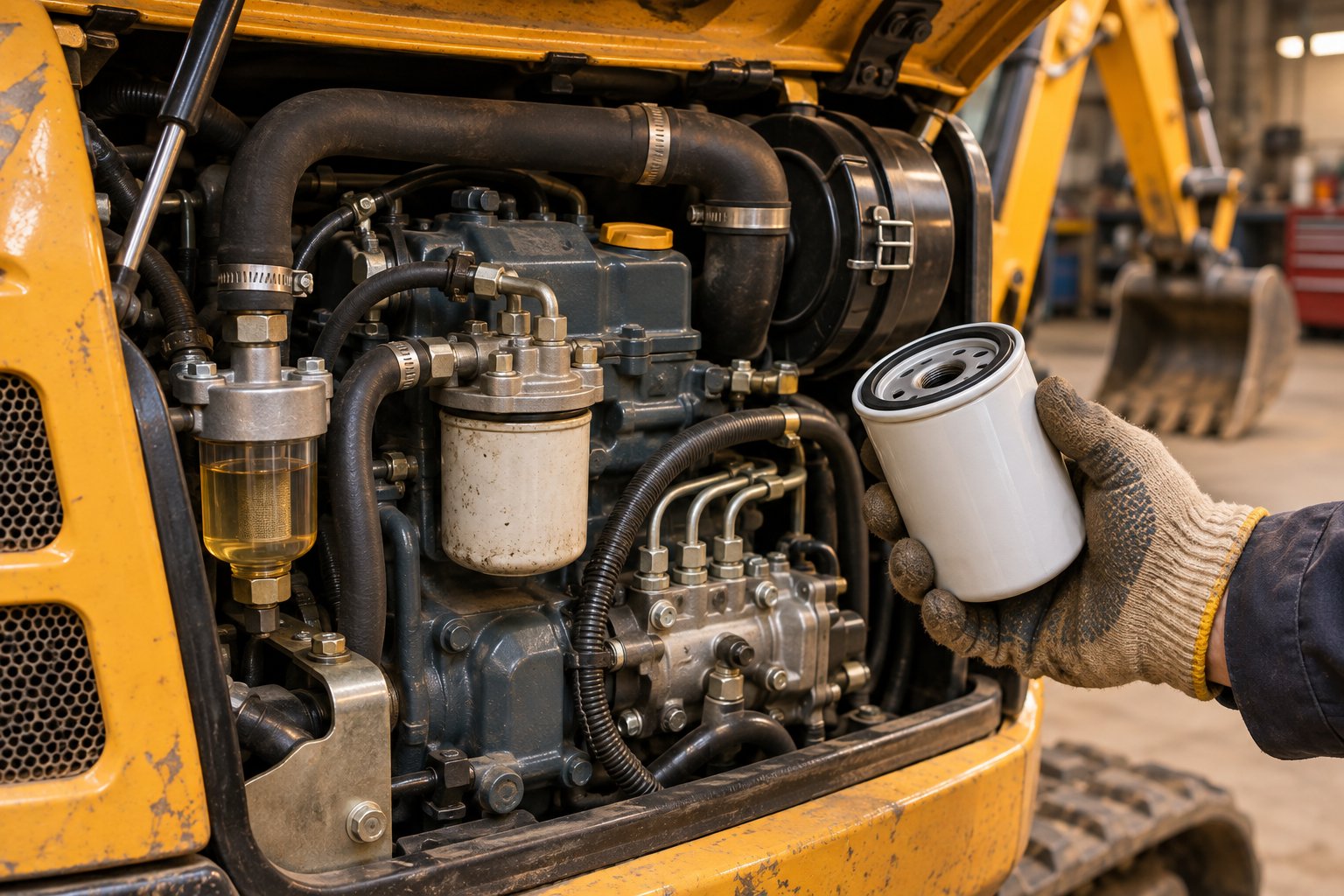
Imagine two 1-ton machines that look identical in photos. One runs a Kubota D722 diesel, the other a small gasoline engine. Which one costs you less over a few seasons? The answer has less to do with the badge and more to do with fuel, paperwork and parts. Across marketplace listings, you'll see a familiar roster: Kubota D722, Briggs & Stratton, Honda GX390, RATO, Koop, Yanmar and Perkins. AGT's CFG series, for example, lists Kubota and Yanmar diesels, including a Kubota D1703 on the CFG-40UF.
Diesel Mini Excavator Engines vs Gasoline Options
A diesel mini excavator engine generally delivers more torque at lower RPM, which helps when the bucket hits compacted clay or roots. Diesels also tend to burn less fuel per unit of work, as Kanoo Machinery points out. The Kubota D722 produces about 12.5 kW (16.7 hp) and is a common fit for the 1-ton class, based on one engine brand guide.
Gasoline engines such as the Honda GX390 or Briggs & Stratton Vanguard singles show up mostly on the smallest machines. They usually lower the purchase price, run quieter and warm up faster. Diesels can be slower to start in cold weather, while gasoline is available at nearly any station. Emissions are the wild card. Certification status for small gasoline engines varies by specific model, so never assume a listing is compliant just because the engine brand is well known.
How Engine Brand Affects Parts Sourcing and Service
Picture a clogged fuel filter on a Saturday morning. With Kubota, parts flow through independent dealers in virtually every U.S. state. Perkins, a Caterpillar subsidiary, is supported through the Cat network. Yanmar is well covered in most metro areas. Lesser-known Chinese engines, such as RATO and Koop, may run perfectly well, but filters, gaskets and injectors often come only through the seller. That same Hongli guide notes that domestic Chinese engines like Laidong and Changchai are built to Chinese national emission standards rather than EPA Tier 4 Final.
Engine Questions to Ask Before You Buy
- What is the exact engine model? "Kubota" or "brand-name diesel" is not enough. Ask for the full model number.
- Can you send a photo of the emissions certification label? A legitimate EPA-certified engine carries an engine family number you can verify.
- Is local service available? Call the nearest dealer for that engine brand and ask about lead times on common service parts.
- What are the filter part numbers? Get oil, fuel and air filter numbers, then check whether local stores stock them.
Notice how quickly these answers change the math. A Kubota-powered unit and a lesser-known gasoline unit can share a chassis yet sit far apart in price, and that gap is only one of several forces behind the numbers you'll see in listings.
Prices, Cost Drivers and Total Cost of Ownership
So what will one of these machines actually cost you? The honest answer is a range, and a moving one. The figures below are marketplace snapshots, not quotes or guarantees. Prices shift with inventory, promotions, freight rates and tariffs, so treat them as a rough map rather than a price tag.
How Much Does a Mini Excavator Cost From Chinese Sellers
- AGT listings: roughly $4,993-$7,930
- eBay whole machines: roughly $1,875-$7,500
- eBay parts: roughly $28-$380
Factory-direct pricing tells a similar story. Hongli's 2026 price guide puts typical FOB prices for 1-2 ton machines at $4,500-$9,000, and those figures exclude ocean freight, import duties and compliance costs. That last detail matters. A low number may simply leave more of the bill for later.
Looking up a specific model helps you see what the money buys. The popular H12R mini excavator, for instance, shows up in Purple Wave auction records with a 420 cc single-cylinder gasoline engine rated at 15 HP. Whether you search for an AGT mini excavator AGT-H12 or browse listings tied to names like CFG Industries, check the configuration behind every price before comparing it with anything else.
What Drives Mini Excavator Price Differences
Two machines in the same tonnage class can sit thousands of dollars apart. Here's why:
- Tonnage: Bigger machines need more steel, larger pumps and stronger undercarriages.
- Engine brand: An imported engine option can add several thousand dollars to a 2-ton machine, Hongli notes.
- Hydraulics: Gear pumps cost less than piston pumps, load-sensing valves or pilot controls.
- Attachments: Thumbs, extra buckets and augers raise the price, but may save buying them separately.
- Cab vs canopy: An enclosed cab, especially with AC, adds cost over an open canopy.
- Emissions compliance: Documented certification adds cost that undocumented units quietly skip.
- Warranty: Written, enforceable coverage has real value built into the price.
- New vs used: Hours, condition and service history move prices in both directions.
The same guide observes that one chassis can vary by 30-50% in price depending on engine and hydraulic setup alone.
Total Cost of Ownership Beyond the Sticker Price
Total cost of ownership, as dealer Gregory Poole frames it, adds fuel, maintenance, insurance and operating costs to the purchase price, then subtracts resale value. For an imported machine, a few extra line items join that list.
| Cost Category | Why It Matters | What to Ask the Seller |
|---|---|---|
| Shipping and freight-to-door | Often quoted separately from the machine | Is delivery to my address included, or only to a terminal? |
| Liftgate delivery and unloading | Residential drop-offs may need special equipment | Is liftgate service included, and who unloads the machine? |
| Fluids and hydraulic oil | Units may ship drained or with minimal fluid | Which oil grades are specified, and are fluids filled at delivery? |
| Filters | Recurring cost with every service interval | What are the filter part numbers and service intervals? |
| Replacement parts | Hoses, seals and track parts wear over time | Can you provide a parts price list and typical lead times? |
| Labor | Local shops may be unfamiliar with the machine | Are service manuals and wiring diagrams available? |
| Import duties | Tariffs on Chinese equipment have changed in recent years | Are duties included, and who acts as importer of record? |
Hongli also advises verifying tariffs with a licensed customs broker before you commit, since the manufacturer cannot absorb or eliminate that cost.
The cheapest listing is rarely the cheapest machine to own, because freight, parts and downtime keep billing you long after checkout.
Of all those line items, parts and repair labor are the hardest to predict. They depend on something no price tag reveals: how well the machine actually holds up once the hours start adding up.
Reliability, Parts Support and Import Compliance
Will it still run in five years? That's the question most buyers really want answered, and it's the one listings rarely address. The honest answer depends less on the country of origin than on which machine you buy and how you treat it.
Are Chinese Mini Excavators Reliable and How Long Do They Last
Results vary widely. Tier, build quality, maintenance habits and usage hours all shape lifespan. A 1 ton mini excavator that digs a few garden trenches each spring lives a very different life from a 5 ton excavator running full days on a contractor's site. There is no reliable public data tracking lifespans across these brands, so be wary of any seller who quotes a firm number of hours.
Owner experience is more useful. Across forums and reviews, the same trouble spots come up again and again:
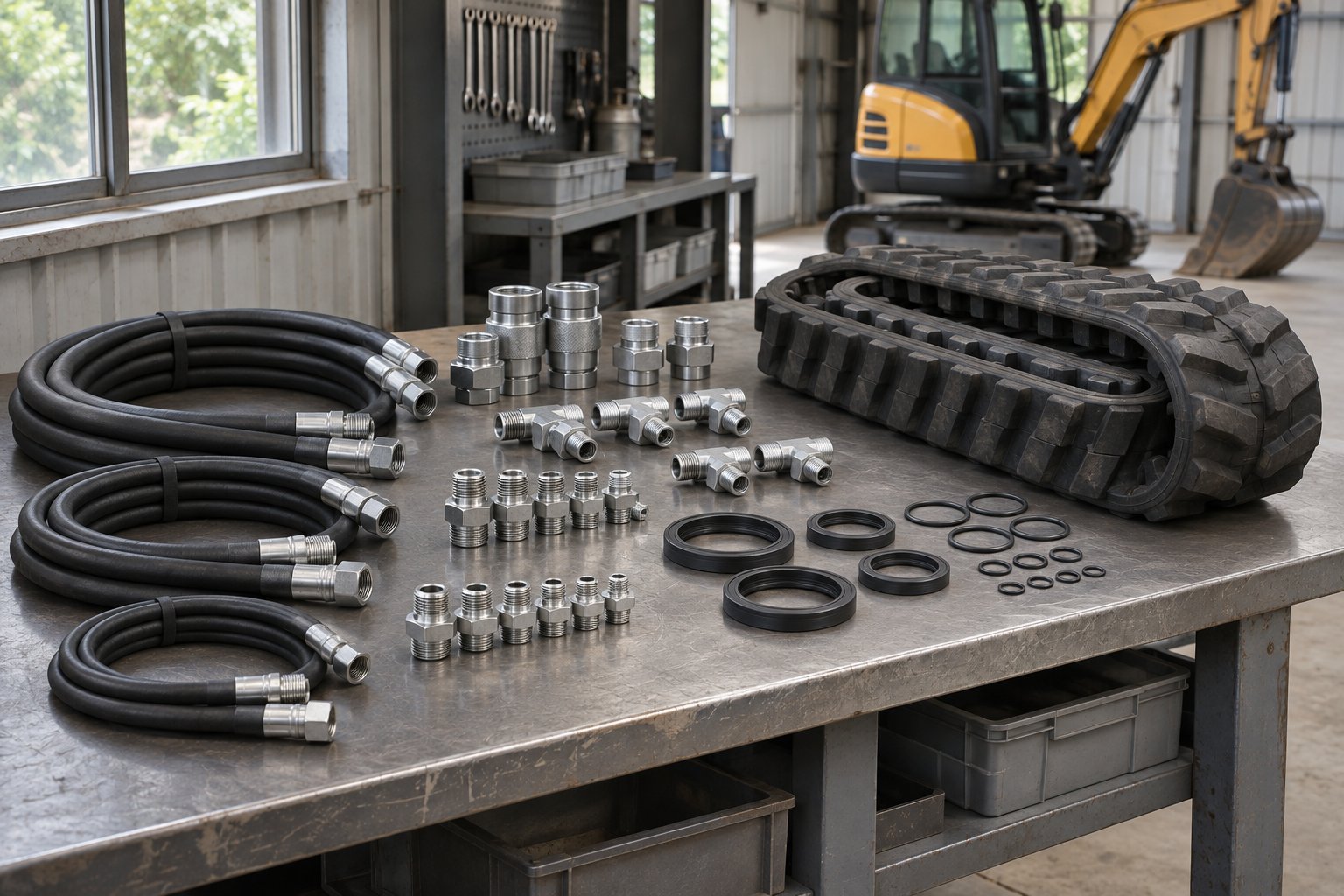
- Hoses and fittings: weeping connections, chafed lines and fittings loosened during shipping.
- Seals: cylinder and swivel seals that begin leaking with regular use.
- Electrical: exposed connectors, thin wiring and switches prone to corrosion.
- Track tension: tracks that loosen or come off when tension isn't checked.
- Engine: starting and fuel-system complaints, especially with lesser-known engines.
Researching an AGT Industrial mini excavator, such as the AGT mini excavator H15R? Look for feedback tied to that exact model and configuration rather than brand-wide generalizations.
Parts Availability for Machines From China
Parts support is where the tiers separate most clearly. With direct-import brands, the seller is usually your main parts source. Ask whether parts ship from a domestic warehouse or from overseas, and request a price list with typical lead times. The engine matters too. A globally distributed engine brand often means filters and service parts are available locally. Hydraulics can be a bright spot, since a local hydraulic shop can often make up replacement hoses. Just ask the seller which thread standard the machine uses, such as metric, BSP or JIC, before a hose bursts on a Saturday.
EPA, CARB and Import Rules for an Excavator From China
Compliance is the piece most buyers skip. Every class of nonroad engines introduced into U.S. commerce must have an EPA Certificate of Conformity, and each certificate covers only one model year of production. To check a machine, find the 11-character engine family number on its emission label. EPA's certification database covers model years 1998 to the present, and its Imports Hotline can help if you can't find a match. California adds another layer: CARB's off-road certification records, now listed as Executive Order spreadsheets, with separate resources for diesel and small spark-ignited engines.
Tariffs are a separate question. Duties on Chinese equipment have shifted, so rely on current official guidance or a licensed customs broker rather than a seller's summary. This isn't legal advice, just a map of where the authoritative answers live.
- EPA nonroad engine certification data: search by engine type, model year and engine family number.
- EPA Imports Hotline: Imports@epa.gov or 734-214-4100 for certificates you can't locate.
- CARB Off-Road Certification Database: confirm Executive Orders for engines used in California.
- U.S. Customs and Border Protection: tariff classification, duties and importer-of-record rules.
- Manufacturer manuals: confirm the engine model, label location and service specifications.
Checking a label is simple on a brand-new unit with paperwork in the box. It gets much trickier with used machines, especially ones that crossed borders before reaching you, and that difference reshapes which buying path makes sense.
New Chinese, Used Gray Market or Used Name Brand
Say your budget covers a compact excavator, but not a new one from a premium dealer. You'll likely land on one of four paths: a new budget Chinese unit, a used machine from an established Chinese OEM, a used gray market import, or a used name-brand non-Chinese machine. Each path trades price against paperwork, parts and peace of mind in a different way.
New Chinese Units vs Used Gray Market Machines
A new budget Chinese mini excavator usually arrives with no wear, a seller warranty and documents in the crate. How much that warranty is worth depends entirely on the seller, so get the terms in writing.
Gray market machines are a different animal. The term describes equipment imported into the U.S. without the manufacturer's authorization, often used units built for Japan or Europe. As Monster Tires explains, these machines typically aren't covered by U.S. warranties, may lack the EPA stickers regulators expect, and can come with manuals not written in English. Parts are the bigger headache. Serial numbers may not match domestic parts, and overseas orders can take up to two weeks to arrive.
Used Established Chinese OEM Machines as a Middle Path
Between those extremes sits a used machine from a larger Chinese manufacturer. Sunward is one documented example, not a ranking. JIUHONG's used Sunward excavator listings include models such as the SWE40E and SWE60E across several machine sizes, giving small contractors and importers concrete units to examine. You can review individual listings and request current prices, condition details and shipping quotes.
Keep two cautions in mind. Listing descriptions are seller information, not independent testing. And the "E" in a model name is not proof of electric propulsion, so confirm the power source, specs, hours, engine model and emissions documentation on each listing. Used condition varies unit by unit. A Chinese-brand buying guide suggests used units are worth considering when service records are verifiable and spare parts are accessible, and recommends requesting a pre-purchase inspection report.
| Purchase Path | Typical Strengths | Key Risks | What to Verify |
|---|---|---|---|
| Used established Chinese OEM (e.g., JIUHONG's used Sunward listings) | Recognized manufacturer, documented model lines, lower cost than premium brands | Condition varies by unit; parts support depends on seller and region | Hours, service records, engine model, emissions label, shipping quote |
| New budget Chinese | Lowest entry price, no prior wear, seller warranty | Thin parts network, uncertain engine certification | Engine model, EPA label, parts price list, written warranty |
| Used gray market | Discounted price on well-known brands | No U.S. warranty, missing EPA stickers, hard-to-match parts, non-English manuals | Emission label, serial-number parts lookup, manual language |
| Used name-brand non-Chinese | Wide dealer network, strong parts availability | Higher purchase price | Hours, maintenance history, remaining warranty |
Matching the Purchase Path to Your Risk Tolerance
- Occasional homeowners: Need a 2 ton digger for a few weekend projects? A new budget unit can fit if you're comfortable with self-maintenance.
- Landscapers: If a diesel mini excavator runs most weeks, downtime costs real money. A used established-OEM or name-brand machine often makes more sense.
- Contractors on regulated sites: Documentation comes first. Gray market units are hard to justify here.
- Equipment importers: Established-OEM model lines are easier to research, but each unit still needs its own checks.
Notice what every path shares. Sooner or later, you're relying on what a seller tells you about a machine you haven't touched, and that trust is something you can test before any money changes hands.
Vetting Sellers and Inspecting Before and After Delivery
When you're about to send thousands of dollars to someone you've never met, a five-star rating feels reassuring. But what does that rating actually measure? Usually it measures how the transaction went, not how the machine will hold up after a few hundred hours of digging.
Where to Buy a Chinese Mini Excavator and How to Vet Sellers
Most buyers find these machines on B2B platforms like Made-in-China.com, on eBay, or through direct-ship storefronts. Each one displays trust signals, and each signal proves something narrower than it looks.
- Star ratings and supplier badges: Made-in-China.com says its Audited Supplier label applies to suppliers that are authentic and have been on-site verified. That's useful for first screening, but sourcing firm Alex Trading Group stresses that an audited label is not the same as product approval. It confirms the company, not the machine.
- eBay feedback percentages: These mostly reflect shipping, communication and whether the item matched the listing. Feedback is often left soon after delivery, before hoses and seals have faced real work.
- Units-sold counts: High volume shows a listing is popular. It says nothing about failure rates or parts support.
Stronger vetting asks for things that are hard to fake. Whether you're pricing an AGT mini excavator or comparing an XZ20R mini excavator listing, request:
- The operator and service manuals for the exact model
- The engine model number and a photo of its emissions certification label
- A parts price list with typical lead times
- Warranty terms in writing, including who pays freight on claims
- Video of the actual unit, showing its serial plate, starting and running through every function
Made-in-China.com's own trade safety guidance warns buyers to be careful with unusually low prices. If a mini excavator price sits far below comparable listings and the seller dodges these requests, you have your answer.
Pre-Purchase Inspection Checklist
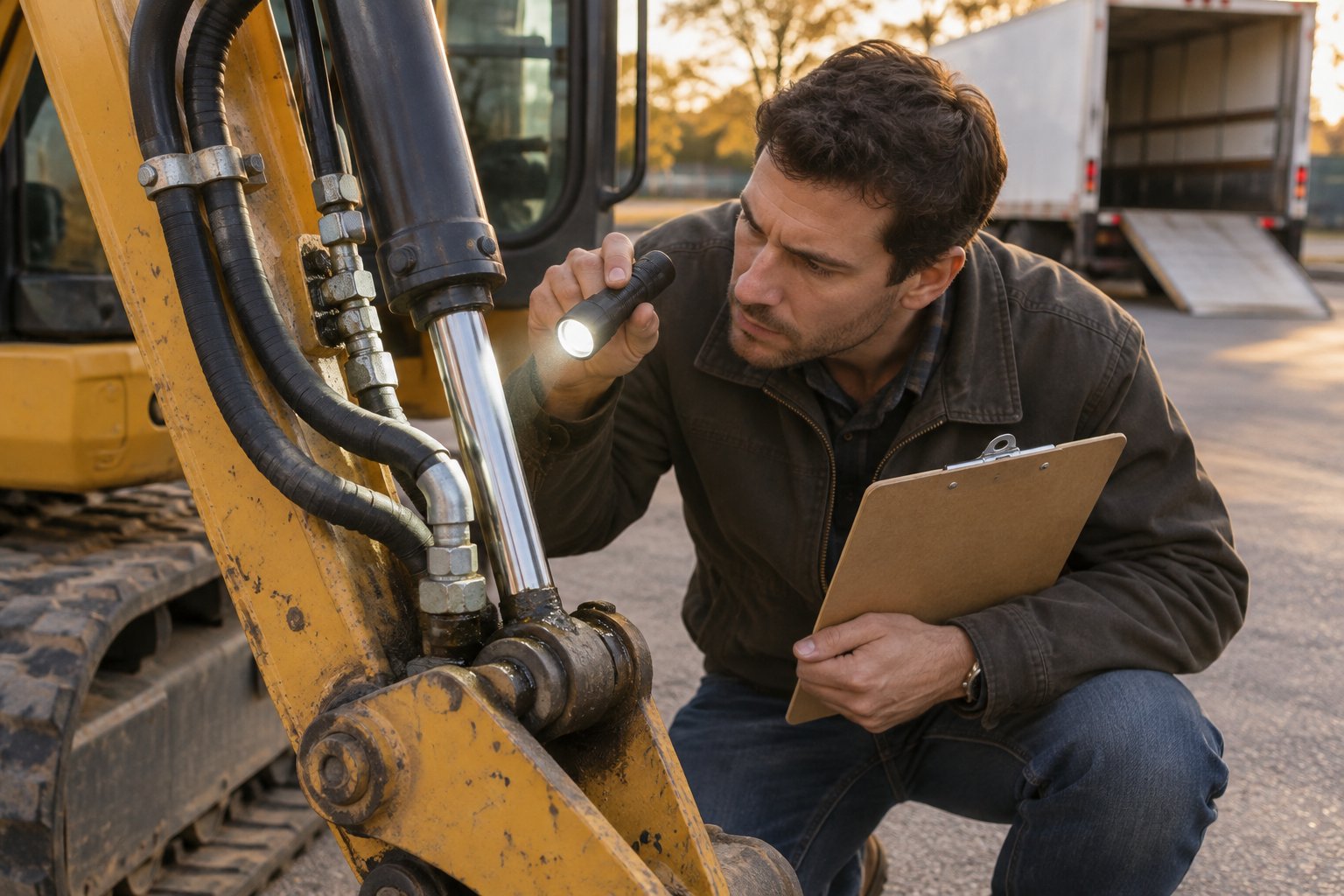
Looking at a used unit in person, or a 4 ton excavator on a regional lot? MachineryList's 45-minute field test recommends arriving before the machine is started, bringing a flashlight and camera, and running it long enough to warm the hydraulic oil. Work through these points:
- Hoses: Look for chafing, cracks, bulges and wet spots where hoses flex near the boom.
- Fittings: Check for weeping, oil-caked dirt and mismatched replacement parts.
- Seals: Inspect cylinder rods for oil film and scoring.
- Electrical harness: Trace wiring for exposed connectors, corrosion and amateur splices.
- Track tension: Note sag and uneven wear. A freshly tightened worn track is a red flag.
- Engine start and idle: Start it cold. Listen for hard starting or an unsteady idle, and watch for heavy smoke.
- Hydraulic cylinder drift: Raise the boom, hold it, and watch whether it creeps down. Repeat once the oil is warm.
- Swing bearing: Rotate under control and listen for knocking. Excess movement deserves a technician's measurement.
- Fluid condition: Check engine oil, hydraulic oil and coolant for milkiness, metal flecks or a burnt smell.
One safety rule overrides everything: never crawl under unsupported equipment. Leave pressure tests and raised-component checks to a qualified technician.
On-Delivery Inspection and What Delivery Involves
Freight-to-door usually means a truck at your curb, with either a liftgate or a driver unloading the machine. Confirm beforehand who unloads it and how. When it arrives, slow down. Signing the proof of delivery transfers responsibility to you, and the carrier can use that signature to dispute a later damage claim, as freight forwarder DTS World Cargo explains.
- Photograph the crate and machine from every angle before the driver leaves.
- Note any damage, even minor, on the delivery receipt with the driver present, and ask the driver to sign your notes.
- Check engine oil, hydraulic oil, coolant and fuel levels before the first start.
- Torque-check hydraulic fittings and visible fasteners to the manual's specs, since transit vibration can loosen them.
Pass every one of these checks and you'll know the machine in front of you is sound. What no checklist can tell you is whether this kind of machine fits the way you'll actually use it, and that depends far more on you than on the excavator.
Who Should Buy a Chinese Mini Excavator and How to Take the Next Step
So, bargain or money pit? Honestly, it can be either. The same machine that saves one buyer thousands can drain another, depending on how many hours it runs, how close the nearest service help is and how much wrenching you're willing to do yourself.
Who a Chinese Mini Excavator Suits Best
These machines make the most sense when downtime is an inconvenience, not a crisis.
- Occasional-use homeowners: A few weekend projects a year, like drainage, fence posts or garden beds, rarely justify a premium price. Dealer Cascade Trader makes a similar point about lighter, less frequent use: spending less can stretch your budget without sacrificing capability.
- Budget-conscious landscapers: A lower-cost unit can work well as a second machine for small, tight-access jobs.
- Contractors comfortable with self-maintenance: If you can replace a hose, adjust track tension and source your own filters, the parts gap shrinks considerably.
Who Should Consider Other Options
- High-hour commercial users: When a mini x runs every day, warranty response and parts speed matter more than sticker price. Cascade Trader notes that commercial operators who need warranty reliability are often better served by new equipment.
- Regulated jobsites: If a project demands documented emissions compliance, any paperwork gap can sideline the machine.
- Buyers without local service access: As Construction Equipment puts it, the best machine will not last the long haul without the right dealer.
Next Steps for Comparing Real Listings
Still wondering how much is a mini excavator really going to cost you? The only reliable answer comes from real listings, with current prices, condition details and shipping quotes in hand. Whether you're weighing a CFG Industrial unit or a used established-OEM machine, these steps keep the comparison honest:
- Review real units: JIUHONG's used Sunward excavator collection is one documented Chinese-brand example, with models such as the SWE40E and SWE60E across multiple sizes. Request current prices, condition details and shipping quotes, then confirm specs, hours, engine and emissions documents on each unit. Treat descriptions as seller information, and don't read the "E" as proof of electric power.
- Check certification: Look up the engine family number in EPA's nonroad certification data, and in CARB's off-road database if you work in California.
- Compare total cost of ownership: Add freight, duties, filters, fluids and parts lead times to every quote.
- Inspect the actual unit: In person or by detailed video, before any money moves.
No country label decides the outcome: suitability always depends on the specific unit and the work you need it to do.
Chinese Mini Excavator FAQs
1. Are Chinese mini excavators reliable enough for regular work?
They can be, but reliability depends far more on the specific machine than on the country of origin. Budget direct-import units sold through marketplaces often use lesser-known engines and domestic hydraulic pumps, while established Chinese OEMs such as SANY, XCMG, LiuGong and Sunward build broader product lines with dealer support. Owners most often report trouble with hoses, fittings, seals, electrical connectors, track tension and engine starting. Regular maintenance, checking fittings after delivery and choosing a machine with a recognized engine brand all improve your odds. Be cautious of any seller who promises a fixed lifespan in hours, because no reliable public data tracks this across brands.
2. How much does a Chinese mini excavator cost?
Marketplace snapshots show AGT listings at roughly $4,993-$7,930, whole machines on eBay at roughly $1,875-$7,500, and individual parts at roughly $28-$380. These numbers change with inventory, freight rates and tariffs, so treat them as a rough guide. The sticker price is also only part of the bill. Freight-to-door, liftgate delivery, fluids, filters, replacement parts, repair labor and possible import duties can add up quickly. Engine brand, hydraulic setup, cab or canopy, attachments and emissions documentation explain why two machines of the same size can be priced far apart.
3. Can I legally use a Chinese mini excavator in the United States?
Usually yes, as long as its engine is properly certified. Nonroad engines sold in the U.S. need an EPA Certificate of Conformity, and you can verify one by locating the engine family number on the emissions label and searching EPA's nonroad certification data. In California, also check CARB's off-road certification records. Ask the seller for a clear photo of the label before you pay, since some domestic Chinese engines are built to Chinese national standards rather than EPA requirements. For tariffs and importer-of-record questions, rely on U.S. Customs and Border Protection guidance or a licensed customs broker.
4. Should I choose a diesel or gasoline engine on a small Chinese excavator?
Diesel engines such as the Kubota D722, Yanmar and Perkins options generally offer stronger low-speed torque and better fuel efficiency for frequent digging, which suits landscapers and contractors. Gasoline engines like the Honda GX390 or Briggs & Stratton singles appear mainly on the smallest machines, cost less up front, start easily and use fuel sold everywhere, which can suit occasional homeowner use. Beyond fuel type, the engine brand affects ownership most. Globally distributed brands make filters and service parts easier to find locally, while lesser-known engines may rely on the seller for parts. Always confirm the exact engine model and filter part numbers.
5. Is a used Chinese excavator from an established brand a better choice than a new budget unit?
For many small contractors and importers, it can be a sensible middle path. Used machines from recognized manufacturers come from documented model lines, which makes specs and parts easier to research, while new budget units offer zero wear and a seller warranty but often thinner parts support. For example, JIUHONG's used Sunward excavator collection includes models such as the SWE40E and SWE60E across several sizes, and buyers can request current prices, condition details and shipping quotes. Sunward is one example, not a ranking. Listing descriptions are seller information rather than independent testing, the E suffix does not prove electric power, and each unit's hours, engine and emissions documents should be verified individually.