

What Actually Counts as a Mini Backhoe
Quick definition: A 'mini backhoe' is an informal label, not an official machine class. Sellers use it for compact tractor loader backhoes, small purpose-built backhoe loaders, mini excavators, and even bolt-on backhoe attachments. That is why results for a mini backhoe for sale often look so inconsistent.
Have you ever scrolled through small backhoes for sale and wondered why a tracked excavator sits right next to a farm tractor? You are not imagining it. Each category is a different machine, and each one fits a different buyer.
Sub-Compact and Compact Tractor Loader Backhoes
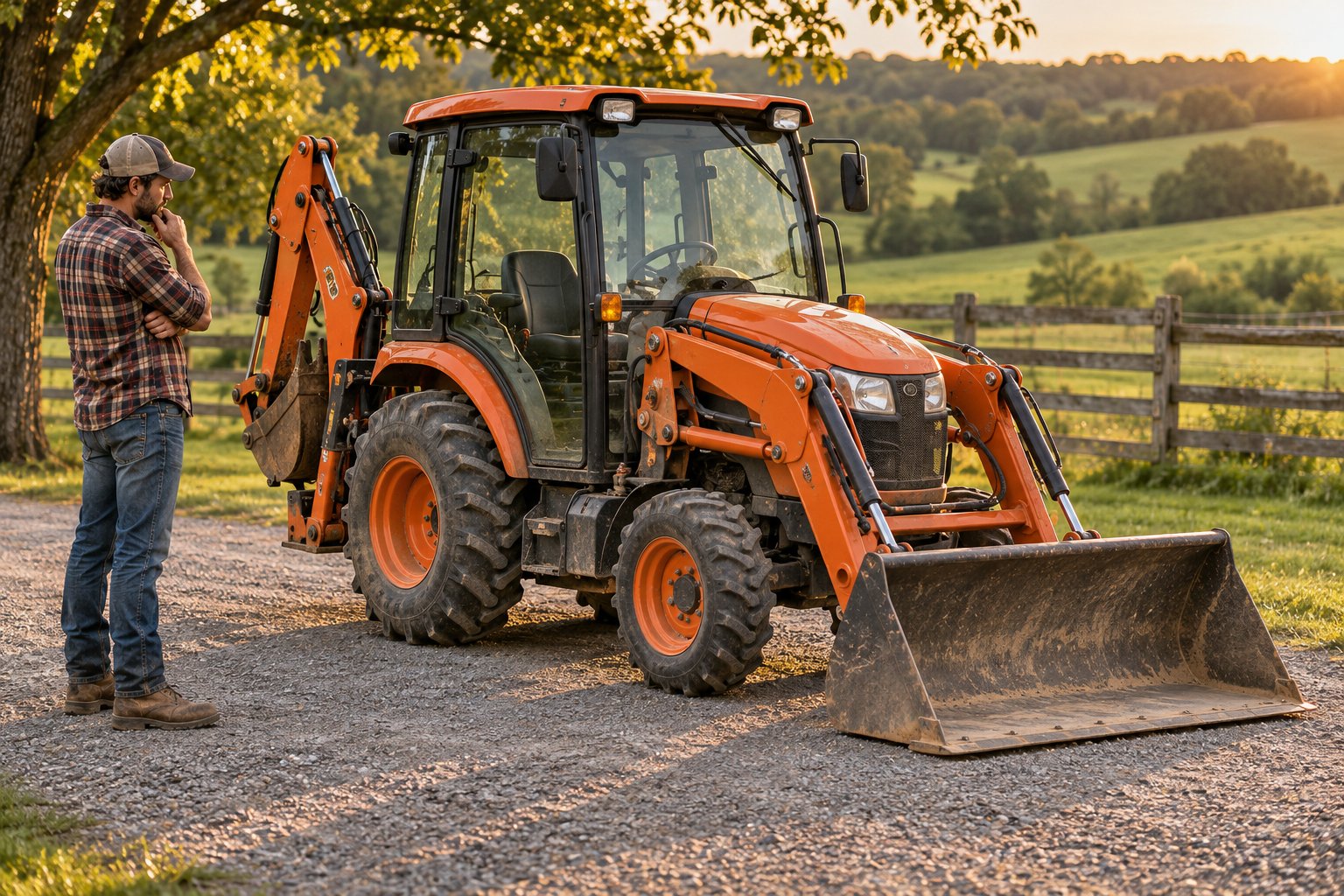
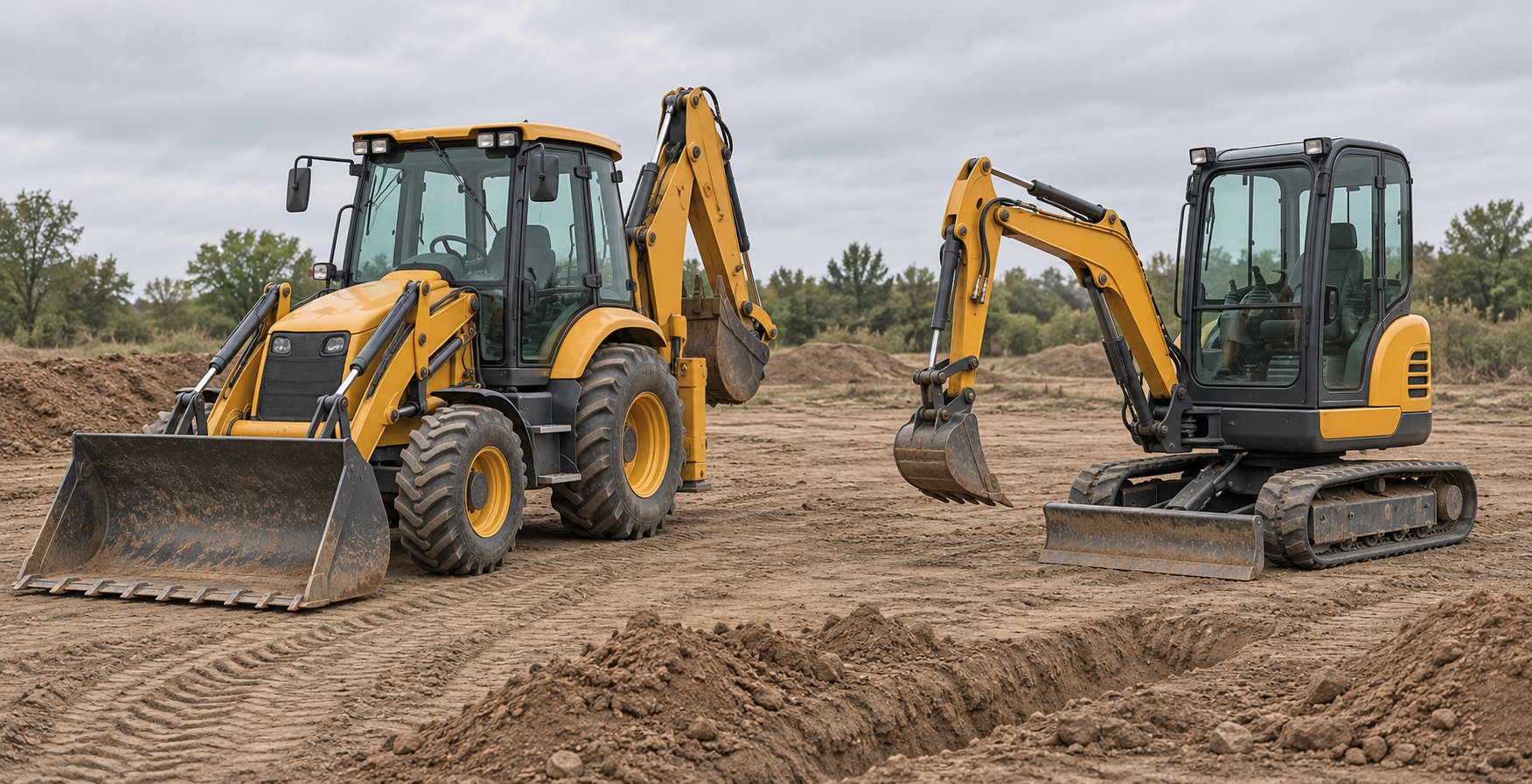
A tractor loader backhoe (TLB) is a tractor with bucket on the front and a digging arm on the rear. The base machine is still a tractor, so you usually keep the PTO and three-point hitch for mowing, tilling, or grading. Most homeowner-sized 'backhoe mini' listings fall into this group.
Compact Backhoe Loaders Versus Full-Size Backhoe Loaders
A backhoe loader uses the same loader-plus-digger layout, but it is built for that job from the ground up. SANY describes it as a tractor-like chassis with a front loading bucket and a rear excavating arm. The JCB Midi CX is an example from the compact end. The John Deere 310L and Case 570 are the full-size back hoes you see on road and utility crews. You will also spot keyword-heavy titles like 'loader backhoe loader' that describe these same machines.
Mini Excavators That Get Miscategorized as Backhoes
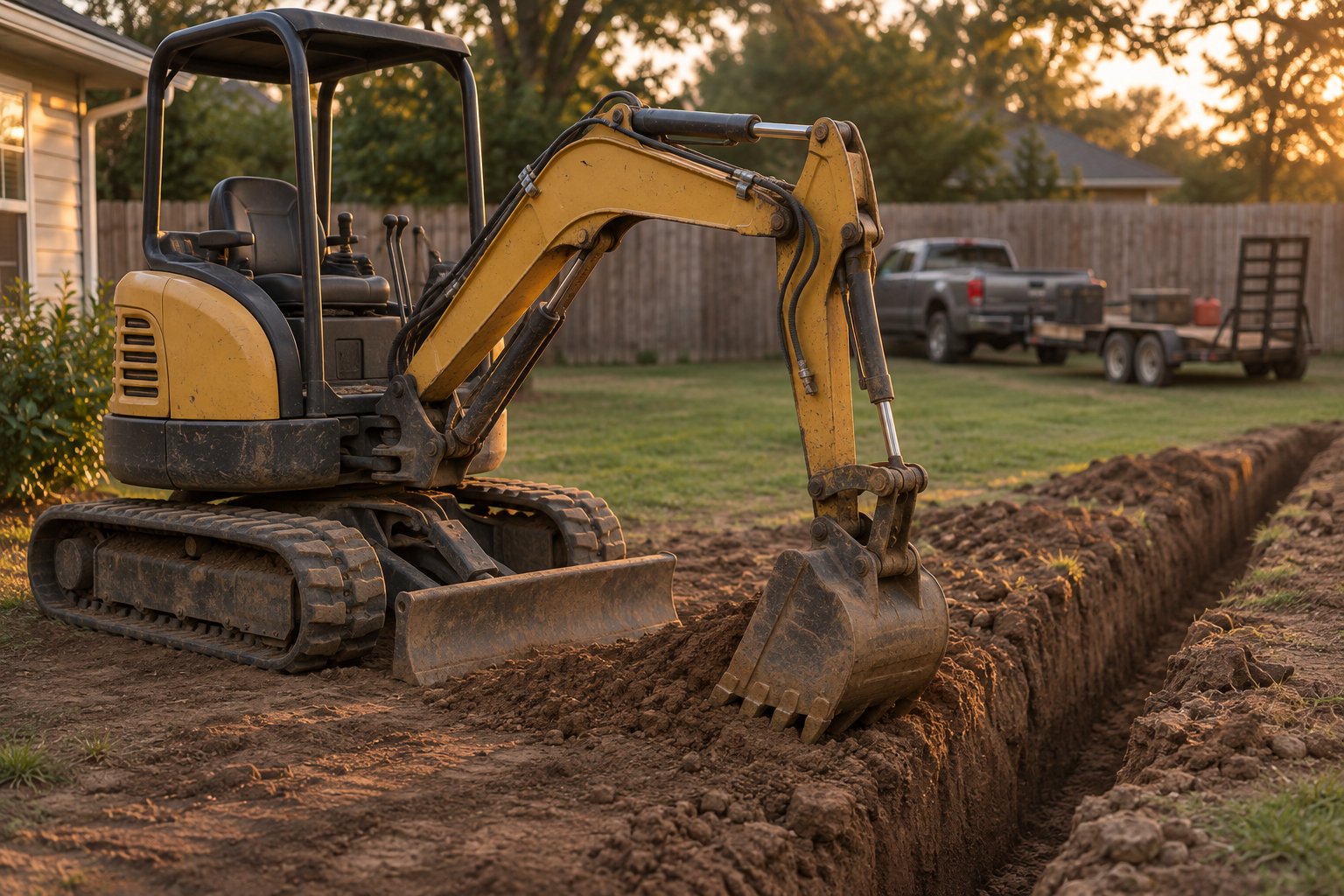
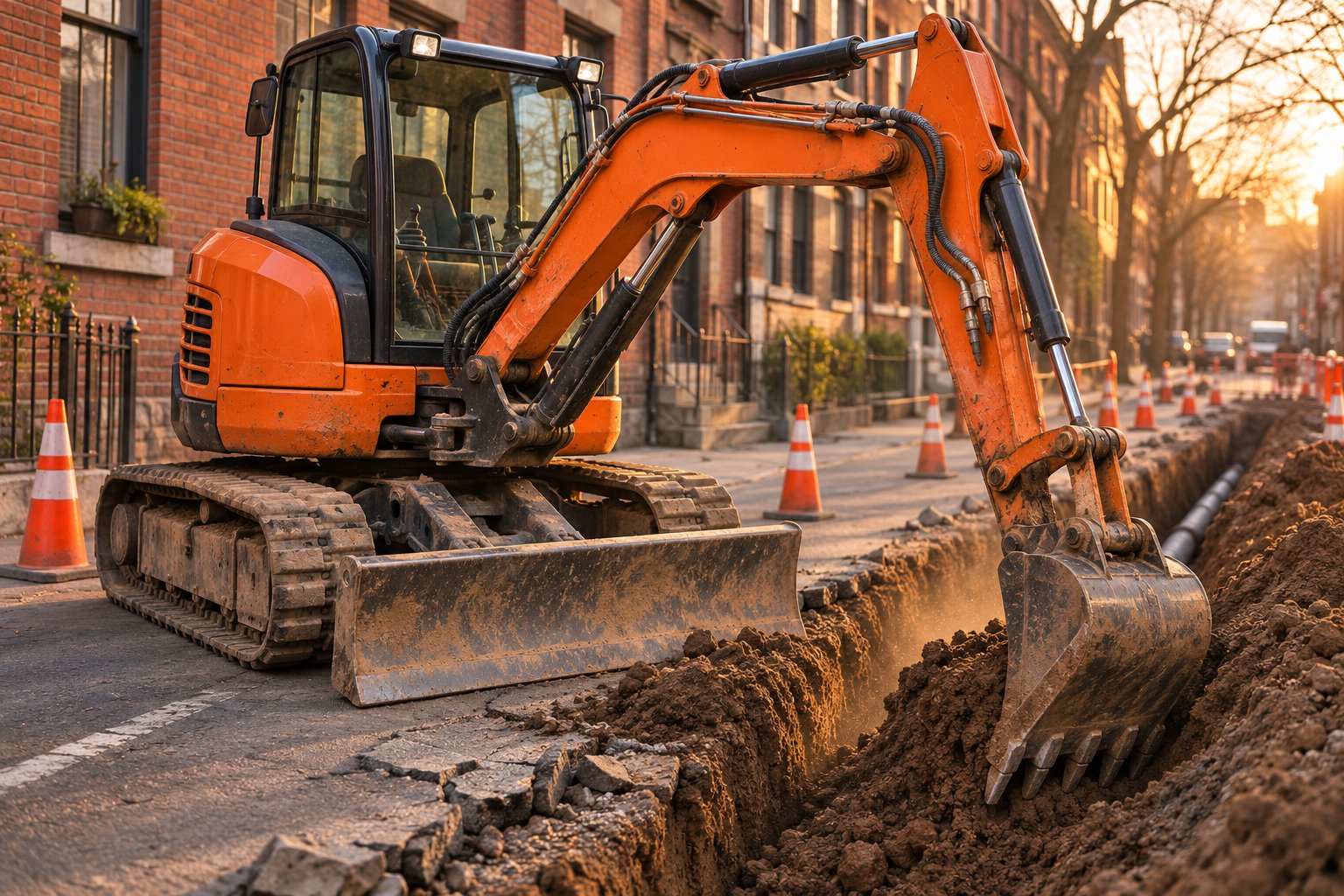
Mini excavators such as the Yanmar VIO57 often end up in backhoe categories. The reason is the digging motion. Both machines pull the bucket back toward the operator, and that pulling motion is where the word 'backhoe' comes from. The structure is different, though. An excavator rotates a full 360 degrees, while a backhoe loader's boom swings only about 200 degrees. Most minis also carry a small dozer blade, not a loader.
Tow-Behind and Three-Point Backhoe Attachments
Finally, there are attachments. A tractor backhoe can mount on a subframe bolted to the tractor or hang from the three-point hitch. One owner's subframe vs. 3-point breakdown notes that subframe units are designed for specific tractor models. Three-point units sit farther back and can put heavy side stress on the hitch. Tow-behind backhoes are a separate, lighter-duty option that hitches to a vehicle instead of mounting on a tractor.
| Machine Type | Front Loader | Rear Digging Arm | 360-Degree Swing | Base | Typical Buyer |
|---|---|---|---|---|---|
| Sub-compact / compact TLB | Yes | Yes | No | Tractor-based | Acreage owners, hobby farmers, landscapers |
| Compact backhoe loader | Yes | Yes | No | Purpose-built | Small contractors, crews working on tight sites |
| Full-size backhoe loader | Yes | Yes | No | Purpose-built | Contractors, utility and road crews |
| Mini excavator | No (dozer blade is common) | No (arm is on a rotating house) | Yes | Purpose-built | Contractors, landscapers, rental fleets |
| Backhoe attachment | Only if the tractor already has one | Yes | No | Mounts on a tractor or tows behind a vehicle | Owners of compatible tractors |
A mini excavator is not automatically a backhoe loader, and a backhoe-style bucket does not mean the machine has loader capability.
Picking the right category only narrows the field. Two machines with the same label can still differ a lot in reach, weight, and lifting muscle. Those numbers decide whether a backhoe for sale can actually handle your trench, stump, or footing.
Which Size and Specs Fit Your Projects
When you open a spec sheet, the numbers can feel like a wall. Sounds complex? Each figure answers one of two simple questions: can this machine do your job, and can you get it to the site?
Dig Depth and Reach for Trenching and Footings
Dig depth is the lowest point the bucket teeth can reach below ground. Reach is how far the bucket extends horizontally from the machine. Gregory Poole notes that most standard backhoe loaders dig to around 14 feet, while compact backhoes typically max out at shallower depths. An extendable dipper stick adds depth. Keep in mind that published depth assumes ideal conditions. Dense clay, rock, wet soil, and slopes all cut into what you actually achieve. If you are shopping for a small backhoe loader to set footings or bury utility lines, check the rated depth against your local frost line or code requirement, then leave some margin.
Horsepower, Operating Weight, and Stability
As Thompson Machinery explains, more horsepower generally means more digging force, lifting capability, and travel speed. Weight matters just as much. A heavier machine stays planted when the bucket hooks a root or a buried rock. A light backhoe tractor leans more on its stabilizers, so you will notice it shifting sooner on hard pulls.
Loader Lift Capacity and Bucket Width
On the front end, look at lift capacity, hinge pin height, and breakout force. These decide how much material you move per cycle and whether you can load a high-sided truck. On the rear, a narrower bucket can cut deeper trenches by focusing force on a smaller area, while wider buckets move more material per pass.
Transport Size and Trailer Requirements
Here is the tradeoff most buyers miss: more depth usually means more weight, and more weight means a bigger trailer and tow vehicle. Caterpillar notes that heavier machines need larger trailers, and that drivers of larger rigs may need appropriate licenses. Whether you are browsing backhoes for sale used or pricing a new backhoe loader for sale, confirm what your trailer and truck can legally haul first.
Match the spec to the job:
- Utility trenches: dig depth and reach
- Drainage: reach, so you dig long runs with fewer repositions
- Stump and rock removal: digging force and operating weight
- Landscaping: compact size and transport weight
- Material handling: loader lift capacity and hinge pin height
A caution on 'tons': A '1-ton' or '5-ton' label can mean metric tonnes or US short tons, which are not the same weight. Some listings quote operating weight, while others borrow a number from the model name. On ads for kubota backhoes and other compact machines, a number in the model name is not a weight rating. Confirm which meaning applies before you compare two machines side by side.
Here is the twist, though. A finished spec list does not automatically point to a dedicated machine. The same depth and lift might come from an attachment on a tractor you already own, or from a rental you only need for one weekend.
TLB, Mini Excavator, Attachment, or Rental
Imagine you need a long drainage trench this spring and a few stumps pulled next fall. Do you really need to own a dedicated mini backhoe for that? Before you start searching listings, compare the four realistic paths. The right choice depends on how often you dig and what else the machine needs to do.
Buying a Complete Tractor Loader Backhoe
A TLB is the all-rounder. You get a loader, a digger, and a working tractor in one package. A manufacturer comparison notes that a TLB fits best when digging is just one of many jobs. The loader can also run pallet forks, and the higher travel speed helps when you move material across a large property. Wheels also handle asphalt and concrete better than tracks do.
Adding a Backhoe Attachment to a Tractor You Already Own
If you already have a bucket tractor, an attachment can turn it into a tractor with backhoe capability. The catch is compatibility. Not every tractor is built to absorb digging forces.
Pros
- You use a tractor you already own and maintain.
- Three-point models attach and detach quickly and need no permanent tractor changes.
- Three-point units generally cost less up front than subframe kits.
Cons
- The tractor must be rated for the attachment. Check the owner's manual and warranty policy first.
- One attachment maker strongly recommends a subframe on compact tractors up to around 85 HP. Skipping one when the tractor maker requires it can void the warranty.
- Subframes are designed for specific makes and models, so they rarely move between tractors.
- Three-point mounts concentrate stress on the rear axle housing and hitch.
- The tractor's hydraulic capacity must match what the backhoe needs.
Be cautious with any lawn tractor backhoe pitch. Most lawn tractors lack a three-point hitch, rear hydraulics, and a frame built for digging. Some buyers also consider a skid steer backhoe attachment. The same rule applies there: the host machine's hydraulics and rated capacity must match.
Choosing a Mini Excavator Instead
When digging is the main job, a mini excavator often wins. It rotates a full 360 degrees and, depending on the model, may dig deeper than a comparable TLB. Smaller units also fit through gates and narrow spaces, and tracks grip better in mud, sand, clay, and on slopes. The tradeoff is clear: no front loader.
When Renting Makes More Sense Than Buying
Contractor guidance from Cleveland Brothers suggests renting when a machine works less than 60 to 70% of the year, or roughly 150 to 180 days. Most homeowners fall far below that. Renting first also teaches you more than any spec sheet before you browse used backhoes for sale.
| Option | Versatility | Digging Performance | Loader Capability | Transport Ease | Learning Curve | Best For |
|---|---|---|---|---|---|---|
| Complete TLB | High (loader, backhoe, tractor implements) | Good, with limited swing | Built in | Moderate, needs a suitable trailer | Moderate, two control stations | Frequent, varied work |
| Backhoe attachment | High if the tractor already has a loader | Fair to good, depends on mount and tractor | Only if the tractor has one | Depends on the tractor | Moderate | Owners of a compatible, rated tractor |
| Mini excavator | Moderate, digging-focused | Often the strongest, 360-degree swing | None (dozer blade is common) | Often easier with smaller models | Moderate, different control layout | Frequent digging, tight or soft sites |
| Rental | Varies by unit | Varies by unit | Varies by unit | Delivery is often available | Repeats with each new machine | Occasional or one-off projects |
For many readers, the TLB column still looks like the best balance. That is where shopping gets tricky, because every major brand offers several model families, and the size jump from one series to the next is bigger than the names suggest.
Common Compact TLB Models Across Major Brands
Search for a tractor backhoe for sale and one brand may fill the first few pages of results. That makes the market look smaller than it really is. Most major makers offer a tractor with loader and backhoe in several sizes, and the model names hint at where each one sits.
Kubota BX, B, L, and M Series Backhoe Tractors
Kubota's lineup scales in clear steps. The BX23S and BX25D sit at the sub-compact end. They are the smallest machines in the lineup that still carry a front end loader and backhoe. The B26 steps up to the compact class. The L47 and M62 move into larger, utility-size territory for heavier digging and material handling. Kubota's TLB Series page lists MSRP starting as low as $54,109. It also highlights a liquid-cooled Tier 4 engine and a 3-point hitch for running other implements.
John Deere 1025R TLB and the Older 110 TLB
The 1025R is a sub-compact tractor that dealers often package as a TLB. One dealer's 1025R TLB walkaround calls it 'The Ultimate Weekend Warrior.' That title tells you who it targets: homeowners and acreage owners. You will also see the 110 TLB on used marketplaces. It is an earlier, dedicated tractor loader backhoe, so don't assume it shares parts or attachments with the 1025R.
Case, Mahindra, LS, Branson, and Massey Ferguson Options
Case 570 listings sometimes carry a 'compact' tag. In practice, it is a larger, purpose-built machine than any sub-compact tractor. Mahindra, LS, Branson, and Massey Ferguson build compact tractor lines that can be sold as a tractor loader with a backhoe package. Some owners add a tractor backhoe attachment later instead. Packages and model names vary by region and dealer, so check each brand's current lineup.
| Brand | Model or Series Named in Listings | General Size Class | Where Buyers Commonly See It |
|---|---|---|---|
| Kubota | BX23S, BX25D | Sub-compact | Dealer stock, used marketplaces |
| Kubota | B26 | Compact | Dealer stock, used marketplaces |
| Kubota | L47 | Compact to utility | Dealer stock, used marketplaces |
| Kubota | M62 | Utility | Dealer stock, used marketplaces |
| John Deere | 1025R TLB | Sub-compact | Dealer stock, used marketplaces |
| John Deere | 110 TLB | Compact (older, dedicated TLB) | Mostly used marketplaces |
| Case | 570 | Larger, purpose-built (sometimes labeled compact) | Used marketplaces, contractor and fleet resale |
| Mahindra, LS, Branson, Massey Ferguson | Compact tractor lines with loader and backhoe options | Sub-compact to compact | Dealer stock, used marketplaces |
Treat every spec in a listing as a claim, and verify current figures on the manufacturer's website, because model years and configurations vary.
A model family tells you roughly what a machine should be. It can't tell you what one particular unit has been through. For that, you have to read the listing card closely, where the year, hours, category, and location reveal far more than the model name ever will.

How to Decode a Mini Backhoe Listing
When you scroll through a page of backhoes, every card looks about the same: a photo, a price, and a few short fields. Those fields say more than you might think. If you read them in order, you can rule out many bad deals before you ever call a seller.
Year, Hours, and Category Fields Explained
- Year: The model year hints at the emissions tier, how easy parts will be to find, and how long the machine has been exposed to weather. Always read it next to the hours.
- Engine hours: Hours measure engine running time, not distance. For compact tractors under 40 horsepower, LocalAg puts low hours at 0 to 500 and high hours at 2,000 to 3,000. Watch for older five-digit meters that roll over at 9,999. On those machines, a reading of 500 could really mean 10,500. A well-serviced high-hour unit can still be a better buy than a neglected low-hour one.
- Category label: Sellers pick their own category. A small backhoe for sale might be a TLB, a mini excavator, or just an implement. For example, a listing titled 'bh77 backhoe for sale' usually refers to a Kubota backhoe attachment, not a complete tractor.
- Location: Distance drives transport cost. It also decides whether you can inspect the machine in person.
- Price: Treat it as a starting point. Check whether it includes the loader, extra buckets, or a backhoe attachment for tractor use. Also ask whether tax and delivery are extra.
Location, Currency, and Cross-Border Listings
On international classifieds such as MachineryZone, you'll notice machines located in Europe but priced in USD. Sellers often quote in dollars to reach overseas buyers, and some platforms convert prices for display. Either way, the number on screen is not what the machine will cost once it reaches your yard.
Buying across borders adds shipping, import duties, customs paperwork, and compliance checks. Emissions rules matter most. The U.S. EPA states that the Clean Air Act bans importing nonroad engines and equipment that don't meet EPA emission standards, whether new or used. Customs and Border Protection can seize nonconforming machines that arrive without approved arrangements. Safety standards and ownership documents also need to match your country's rules. Imagine finding a bargain overseas, only to learn it can't legally clear the port.
Red Flags on Backhoe Listings
- Missing or blank engine hours
- 'Price on request' with few other details
- Category labels that don't match the photos, such as a mini excavator filed under backhoes
- Stale listings or 'ad no longer exists' pages that still appear in search results
- Odd listing dates, such as a future date or a repost that keeps resetting
Before you go further, ask for the serial number and recent, dated photos. A dealer can use the serial number to confirm the model, year, and configuration. Fresh photos show the machine as it is today, not as it looked years ago.
A listing card is a claim, not proof. The serial number and current photos are what turn it into evidence.
Even a clean, honest listing leaves one big question open: is the asking price fair? The answer depends on much more than the number printed on the card.
What Drives Backhoe Cost and Ownership Expenses
So, how much is a backhoe? The honest answer is a range, not a single number. Two listings in the same category can be tens of thousands of dollars apart, and both can be fair.
Why Asking Prices Vary So Widely
Full-size machines offer the clearest benchmark. EquipmentWatch data puts the average used backhoe at $70,523 in the second quarter of 2026, with an average age of roughly 9 to 10 years. A review of dealer listings found asking prices from $22,500 for a well-worn Case to $198,262 for a near-new Cat. A small backhoe or compact TLB usually sits below those full-size figures, but the same forces move the price:
- Machine type confusion: One search can mix a backhoe for small tractor attachment, a Kubota loader and backhoe package, and a full-size used loader backhoe for sale.
- New versus used, and hours: Hours often matter more than age. Machines several years apart can land close in price when their hour meters are similar.
- Model year and size class: Size sets the floor and ceiling. Comparing a sub-compact TLB to a full-size loader tells you nothing useful.
- Included attachments: One seller warned that pictured attachments might not ship at the listed price. Read the fine print.
- Region and seller type: Private sellers have no lot overhead. A dealer's price usually includes reconditioning and a warranty window.
The Total Cost of Ownership Beyond the Sticker Price
Imagine you find a compact backhoe for sale at a great price. The purchase is only the first bill. Budget for:
- Maintenance and wear parts, such as filters, hoses, pins, bushings, and bucket teeth
- A transport trailer and a tow vehicle rated to haul it
- Extra buckets, a thumb, or a quick coupler
- Insurance
- Financing costs, including interest and fees
- Covered storage to protect hydraulics, seals, and electrical parts
These costs add up fast. One Wisconsin landscaping company audited its compact backhoe and found $31,400 in depreciation, insurance, and repairs in one year. With only 137 hours logged, that came to about $229 per operating hour before fuel.
Compare total cost of ownership, not just list price, because the cheapest machine on the page can be the most expensive one to keep running.
Repair costs are the hardest line to predict, and they depend almost entirely on how the machine was treated before it reached you. A low asking price means little until you have checked the cylinders, pins, and frame with your own eyes.
Inspecting a Used Mini Backhoe Before You Buy
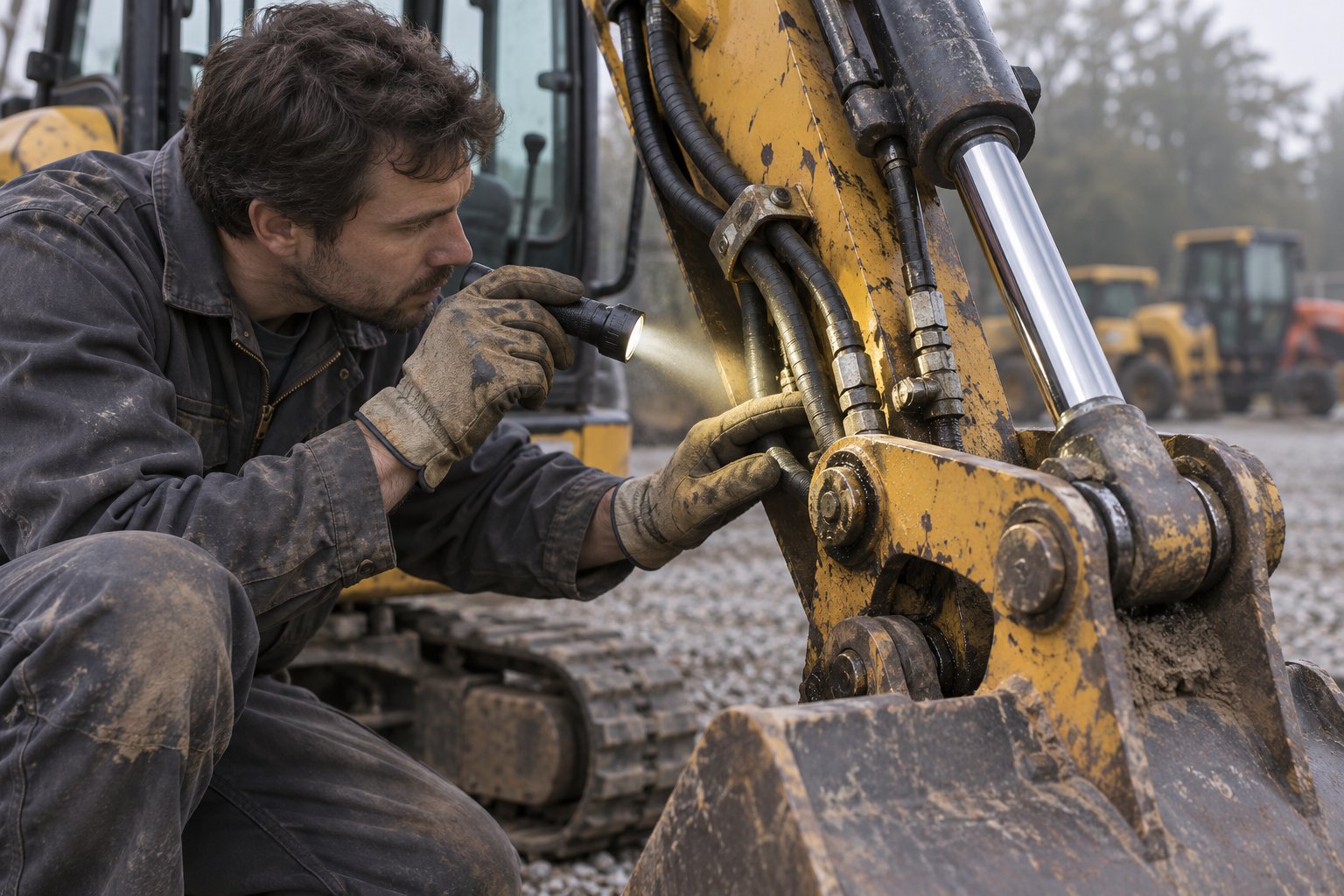
Photos hide a lot. Fresh paint can cover a repaired boom, and a pressure-washed engine can hide a recent leak. When you finally stand next to the machine, a step-by-step walk-around tells you whether that attractive price is a bargain or a lemon.
Start by writing down the serial number. Used-equipment pricing analyst Paul Hendrix explains in an Equipment World inspection guide that most manufacturers now use a 17-character serial number, with the 10th character marking the model year. That quick check confirms whether the '2015 back hoe tractor' in the ad really is a 2015.
Hydraulic System and Cylinder Checks
Look along every hose for cracks, chafing, and wet spots. Check each cylinder for leaks. If you find one, inspect the rod surface for pitting. Then run every function. Movements should be smooth, and Heavy Equipment Colleges of America notes that jerky or slow motion can point to a hydraulic problem. Try one more test: raise the loader arms, shut off the engine, and wait a few minutes. If the boom drifts down, the cylinders may have internal bypass.
Pins, Bushings, Swing Frame, Boom, and Dipper Wear
Extend the backhoe to full reach and swing it side to side. If you feel slack, the pins and bushings may be loose. Pay extra attention to the swing tower pins. Heavy wear there can call for line boring, a repair Hendrix puts at $1,500 to $6,000 depending on machine size. Scan the swing frame, boom, and dipper for cracks, plus welds or plates that signal a past repair. On the loader end, park on flat concrete. If the bucket sits at an odd angle, the loader arms may be twisted. Check front tire pressure first, though, because uneven pressure can create the same look.
Engine Hours, Tires, and Service Records
If possible, start the engine cold. A diesel that is hard to start cold often has internal wear. A small puff of smoke on a chilly morning can be normal, but heavy smoke is a warning sign. Inspect all four tires one by one. Hours only mean something next to records, so ask whether the machine was serviced at the manufacturer's recommended intervals, as TriGreen Equipment advises.
Use this walk-around checklist on any compact backhoe:
- Hydraulics: hose condition, cylinder leaks, rod pitting, boom drift
- Pins and bushings: play at full reach and during swing
- Swing frame, boom, and dipper: cracks, non-factory welds, or plates
- Loader arms: bucket sits level, no cracks where arms meet the bucket
- Tires or tracks: tread, sidewall cuts, mismatched sizes, cracked rims
- Engine start-up: cold-start behavior, unusual noises, exhaust smoke
- PTO and three-point hitch: on a backhoe mini tractor, engage the PTO and cycle the hitch through its range
- Service history: receipts, filter types, and any oil sample reports
Then ask the seller a few direct questions:
- What jobs did it do? Ditch work in water, for example, can wear pins and bushings faster.
- Was it stored indoors? Was it used around salt, cement, or coal dust that causes corrosion?
- How many owners has it had, and how long have you owned it?
- Has it had any recent repairs or rebuilds?
- Did it ever run a hydraulic hammer? Hendrix notes this can add a lot of structural stress.
For a higher-value compact loader backhoe or a full tractor with backhoe and loader, pay an independent mechanic to inspect it. That is one reason a 'backhoes for sale near me' search makes sense: a nearby machine is easier to inspect in person.
Most problems are fixable, so deduct the estimated repair costs from your offer and walk away if the total no longer fits your budget.
How much of this checking falls on you depends on who is selling. A private seller hands you the machine as it sits. Other channels may recondition, verify, or warranty a unit before it ever reaches a listing.
Where to Buy and How the Channels Compare
The same machine can come with a warranty, financing, and a walk-through. It can also come with nothing but a bill of sale marked 'as is.' The difference is usually the channel you buy through, not the machine. It helps to know what each channel actually adds before you contact a seller.
| Channel | Selection | Machine-Type Verification | Warranty | Financing | Operator Training | Attachments | Buyer Effort |
|---|---|---|---|---|---|---|---|
| JIUHONG equipment inquiry | Depends on the requirements you submit. Stock and exact configurations are not guaranteed | You confirm type, weight, and loader capability in writing | Ask in the sales response | Ask in the sales response | Ask in the sales response | Request specific items | Moderate. You need a clear spec list |
| Authorized dealers (e.g., Krebs Kubota) | Brand-specific new and used units | Dealer can check by serial number | Factory warranty on new units, plus optional extensions | Manufacturer finance partner | Dealer service teams trained by the brand | Brand-matched | Low |
| Online marketplaces (Equipment Trader, Machinery Pete) | Wide | Seller-assigned categories | Often none. Many units are sold 'as is' | Varies by seller | Rarely | Varies by listing | High |
| International classifieds (MachineryZone) | Very wide | Seller-assigned categories | Rarely | Usually arranged yourself | Rarely | Varies by listing | Highest, due to shipping, duties, and compliance |
| Rental-fleet resale (United Rentals) | Fleet categories, such as mini excavators | Fleet-maintained units | United Guard on eligible units | Offered | Training courses available | Varies | Low to moderate |
Authorized Dealers and Manufacturer Support
A warranty is a promise to fix defects in material or workmanship for a set period. At Krebs Kubota, new tractors carry the Kubota Limited Warranty for one or two years, depending on model and application. Buyers can extend that coverage by one or two more years. The extension can be financed through Kubota Credit Corporation USA, the brand's own lender, but only if you buy it together with the tractor. It also transfers to the next owner if you sell. The fine print matters, though. Bucket teeth, cutting edges, tracks, and tires are excluded. If you want a for sale kubota backhoe with matched parts and local service, a dealer is the simplest route.
Online Marketplaces and International Classifieds
Marketplaces win on selection. They also carry the risks that Michigan State University Extension warns about: fraud, transport you arrange yourself, and no chance to inspect before you pay. Be wary of requests for upfront payment, pressure to decide fast, and prices that seem too good to be true. Categories are messy, too. A mini skid steer backhoe attachment can show up in the same search as a compact tractor with backhoe. International classifieds widen the pool further, but they add the cross-border hurdles covered earlier.
Rental Fleet Resale and Warranty Programs
Fleet resellers maintain their machines between rentals. United Guard covers components on eligible used equipment that are not designed to be replaced during the product's life. There are limits. Units over $2,500 must be nine years old or newer and in rental-ready condition. Coverage must be added within 72 hours of purchase, and it can't be renewed. Keep in mind that a fleet mini excavator is not a front end loader backhoe, however well it was maintained.
Direct Inquiries to Equipment Manufacturers
Contractors and importers with specific requirements can send them through JIUHONG's equipment inquiry page. List the model, operating weight, digging reach, power source, and delivery needs, and you will get a sales response about whether a matching machine is available. Treat that reply carefully:
- A nearby weight class is not an exact match.
- A mini excavator is not automatically a backhoe loader.
- A backhoe-style bucket does not mean the machine has loader capability.
- A model suffix does not prove the machine is electric.
Whichever channel you use, a vague request gets a vague answer, so describe the machine you need instead of the label you searched for.
Asking 'do you have a mini loader backhoe?' invites guesswork. A compact tractor with loader and backhoe described by its jobs, weight, depth, and delivery point gets a real answer.
Turning Your Research Into a Confident Purchase
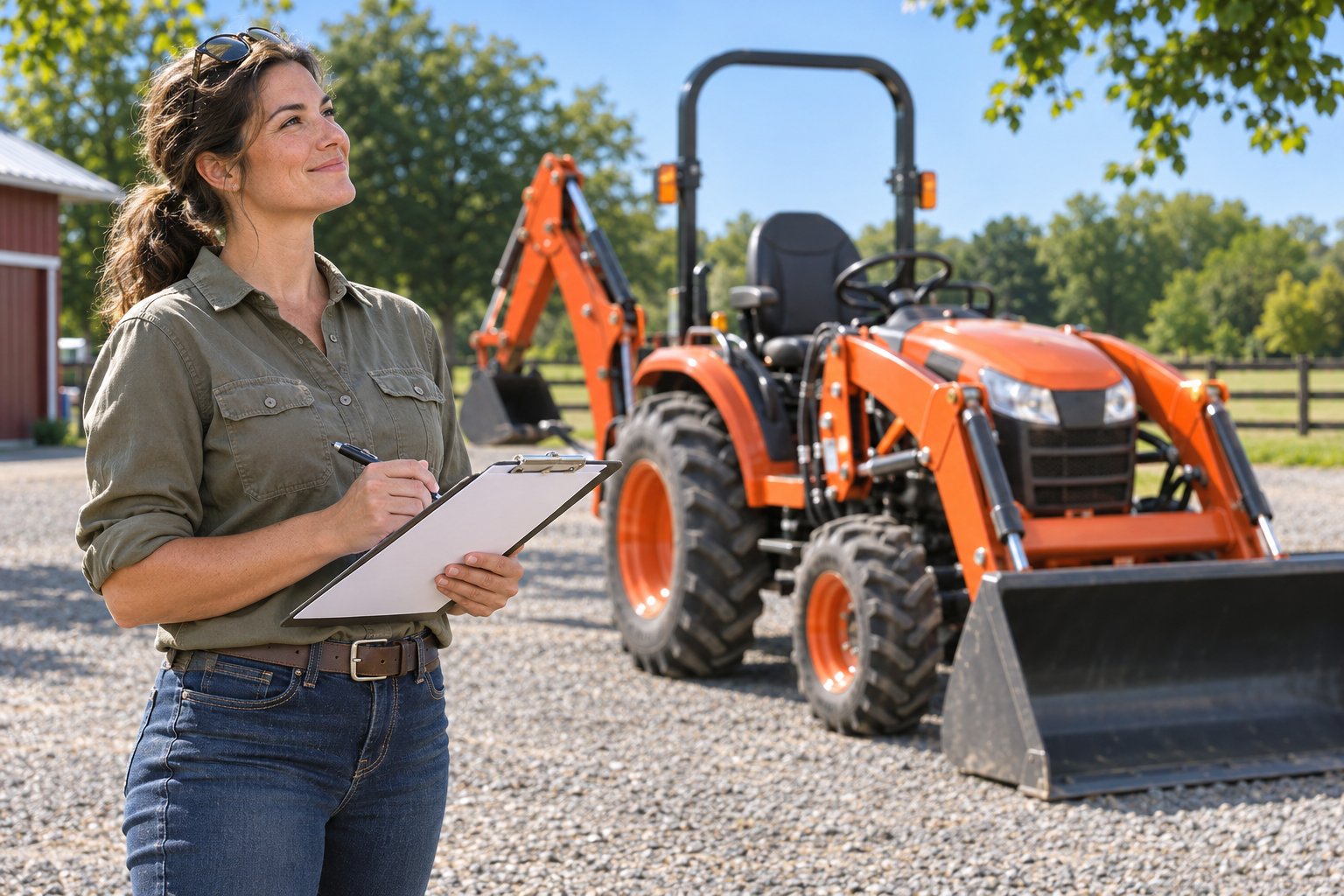
Research only pays off when it ends up on paper. A written requirements list makes every seller answer the same questions, whether you are looking at a kubota backhoe for sale at a dealer or a backhoe compact tractor on a marketplace. It also keeps you from drifting toward whichever listing has the best photos.
Build Your Machine Requirements Checklist
- Intended jobs: trenching, drainage, stumps, landscaping, or material handling. A fleet manager writing for Caterpillar Supply also suggests listing every attachment you will need in the first six months.
- Machine type: TLB, compact backhoe loader, or mini excavator.
- Operating weight: write the number and state whether 'ton' means metric tonnes or US short tons.
- Dig depth and reach: your real requirement, plus a safety margin.
- Loader needs: whether you need a backhoe front loader at all, and the lift height and bucket width it requires.
- Power source: diesel or electric.
- Transport limits: trailer rating, tow vehicle capacity, and any license requirements.
- Delivery location and timeline: where the machine must arrive and by when.
- Budget: purchase price plus total cost of ownership, including maintenance, attachments, insurance, financing, and storage.
Confirm Specs Before You Commit
Send the same list to every seller and compare the answers line by line. If someone offers a tractor loader and backhoe package, ask whether the backhoe is a factory-matched unit or a separate kubota backhoe attachment added later. Feeling rushed? The same fleet manager's rule is that a decision with less than seven days on the clock deserves a second look at renting first.
If you have specific requirements, submit them through JIUHONG's inquiry page to find out whether a matching machine can be offered. Read any reply against your checklist. A close weight class, a backhoe-style bucket, or a model suffix does not confirm a match. Loader capability and electric propulsion must be verified separately.
Every specialized requirement, from the ton definition to loader capability and power source, should be confirmed in writing before you sign or pay.
With your checklist in hand, you can sort good machines from lemons quickly and compare offers on the same terms.
Mini Backhoe Buying FAQs
1. What is the difference between a mini backhoe and a mini excavator?
A mini backhoe usually means a machine with two work ends: a loader bucket on the front and a digging arm on the rear. That describes a compact tractor loader backhoe (TLB) or a small purpose-built backhoe loader. A mini excavator has no front loader. It digs from a cab and upper structure that rotate a full 360 degrees, and it usually carries a small dozer blade instead. Sellers often file both under the same category because both pull the bucket toward the operator. Before you contact a seller, decide which one your jobs need. If you need to carry gravel, load a truck, or run pallet forks, you need loader capability. A backhoe-style bucket alone does not provide that.
2. How much does a mini backhoe cost?
There is no single price, because the 'mini backhoe' label covers attachments, sub-compact tractors, compact backhoe loaders, and even mini excavators. As a reference point, Kubota lists MSRP for its TLB Series starting around $54,109, and EquipmentWatch data puts the average used full-size backhoe at roughly $70,523 in Q2 2026. Compact and used machines often sell below full-size figures, but hours, model year, size class, included attachments, region, and seller type all shift the price. Also budget for a trailer, a tow vehicle, insurance, financing, storage, and wear parts, since running costs can match or exceed the gap between two asking prices.
3. How many engine hours is too many on a used compact backhoe?
Hours matter less than how those hours were spent. For compact tractors under 40 horsepower, one industry guide treats 0 to 500 hours as low and 2,000 to 3,000 hours as high. A high-hour unit with steady service records can still outlast a neglected low-hour machine. Check whether an older meter has only four digits, because it may have rolled over past 9,999. Then confirm the reading with the serial number, service receipts, and a hands-on check of pin play, hydraulic leaks, boom drift, and cold-start behavior. On expensive machines, an independent mechanic inspection is worth the fee.
4. Is a backhoe attachment for my tractor cheaper than buying a full TLB?
It can be, but only if your tractor is rated for it. Three-point backhoes usually cost less and come off quickly, but they put heavy stress on the hitch and rear axle housing. Subframe backhoes spread digging forces across the tractor frame, yet they are built for specific makes and models, and some manufacturers require them to keep the warranty valid. Your tractor's hydraulic flow must also match the backhoe. Lawn tractors generally lack the frame, hitch, and hydraulics for digging. If you dig only a few weekends a year, renting may cost less than any purchase. Equipment used fewer than roughly 150 to 180 days a year is often a better rental candidate.
5. What should I include when I ask a seller or manufacturer about a mini backhoe?
Send a written spec list instead of a label. Include the jobs you plan to do, the machine type (TLB, compact backhoe loader, or mini excavator), operating weight and whether 'ton' means metric tonnes or US short tons, required dig depth and reach, loader needs, power source, transport limits, delivery location, timeline, and total budget. Contractors and importers with specific requirements can also send this list through JIUHONG's equipment inquiry page to check whether a matching machine is available. Mini backhoe loaders were not confirmed in the reviewed catalog, so treat any reply as a starting point. A nearby weight class, a backhoe-style bucket, or a model suffix does not confirm a match, so verify loader capability and electric propulsion in writing.