

What Is a Bulldozer and What Does It Do
Ever driven past a construction site and watched a big machine shove a wall of dirt across the lot? You were probably looking at a bulldozer. Here is the short answer to what it does.
What Is a Bulldozer in Plain Terms
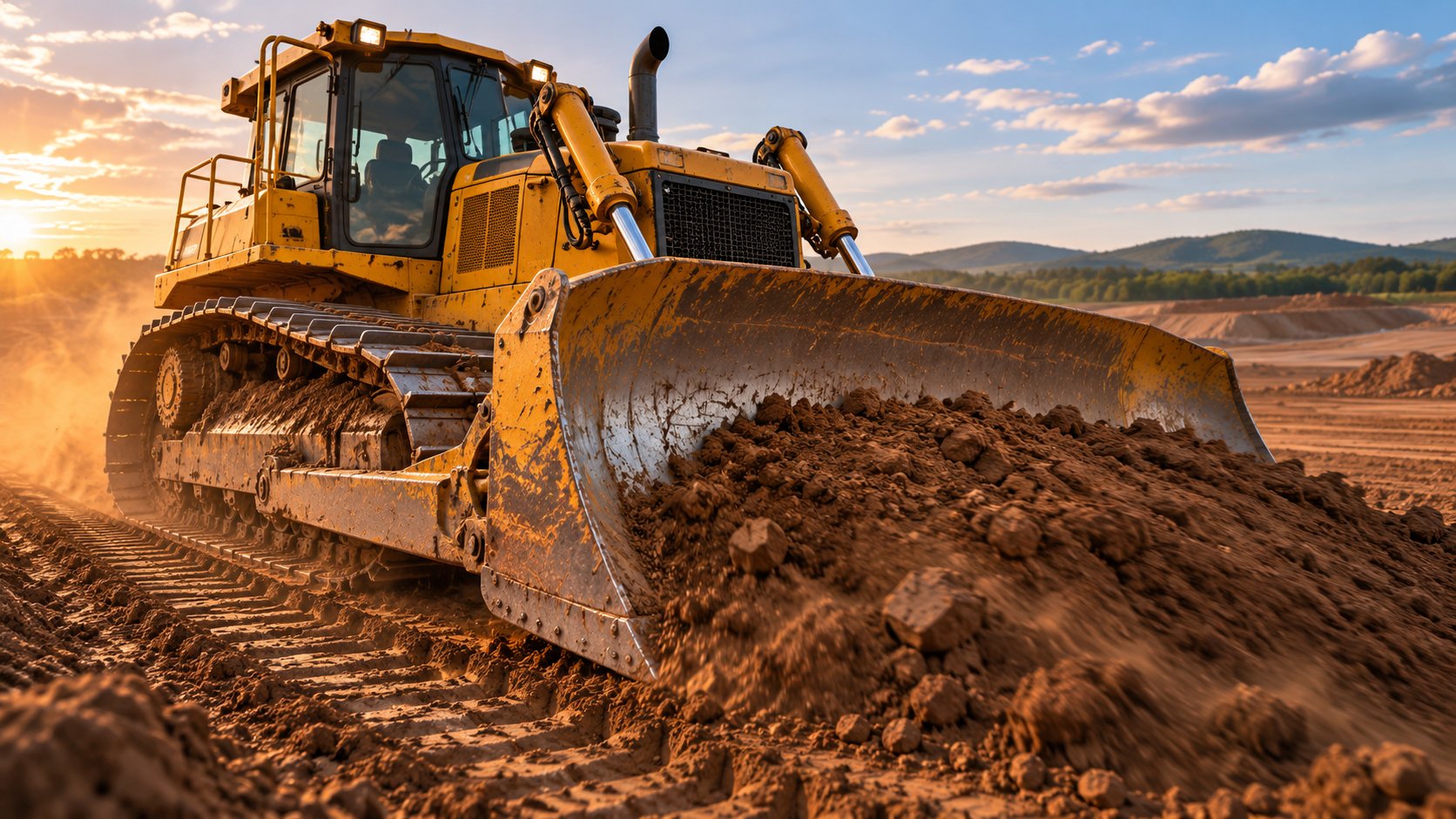
A bulldozer is a tracked or wheeled tractor fitted with a heavy front blade. It is used to push, cut, spread, and level soil, rock, sand, and debris across a site, and it often carries a rear ripper that breaks up hard or compacted ground so the blade can move it.
Think of it as the heavy-duty mover of the earthmoving world. Other machines dig or lift. A bulldozer mostly pushes material along the ground. That one simple action covers a lot of work. Equipment dealer Mustang Cat lists site preparation, road maintenance, land reclamation, erosion control, and debris clearing among its common jobs. Those jobs span construction, agriculture, mining, and landscaping.
Dozer Meaning and Key Parts of the Machine
You'll often hear crews call it a 'dozer.' The word is simply shorthand for bulldozer, so both terms point to the same family of machines. The verb 'bulldoze' comes from the same name. On a job site, it describes clearing or flattening ground by brute pushing force.
Under the paint, most dozers share the same core parts:
- Tractor base: The engine, drivetrain, and operator cab. Dozers typically run high-torque diesel engines built for heavy loads at low speeds.
- Blade: The heavy steel plate at the front that cuts and pushes material. Its shape affects how much it carries and how cleanly it grades.
- Push arms: The frame members that connect the blade to the tractor and carry the pushing force.
- Hydraulic cylinders: They raise and lower the blade. On many models, they also tilt or angle it for more precise control.
- Tracks or wheels: Tracks give strong traction and spread weight on soft, muddy, or sloped ground. Wheels trade some stability for speed on firm surfaces.
- Ripper (optional): One or more rear shanks that tear into compacted soil, frozen ground, or soft rock.
Each of these parts can be configured differently. That's why two dozers on neighboring sites may look alike but handle very different work. A bulldozer and its setup function as a package, and the wrong combination can turn an easy job into a slow, costly one. The sections ahead map every major use to the dozer type, blade, and attachment it needs, starting with how the machine actually gets its everyday tasks done.
Core Bulldozer Uses and How Each Job Gets Done
Most guides stop at a list: grading, clearing, pushing. How does one machine handle so many different jobs? Three things work together: where the blade sits, how much traction the tracks provide, and how the operator controls both. Here's what actually happens during each task.
Pushing, Ripping and Grading Explained
- Pushing material: The operator lowers the blade, and the tracks grip the ground. As the machine moves forward, the bottom of the blade scoops up the earth it runs over and collects it. The load then rolls ahead in a curling wave, which shows up in almost any set of dozer pictures from a busy site. Shorter pushes work better than long ones, because an overloaded blade spills material out the sides. A crawler with a semi-U or universal blade handles most bulk pushing.
- Ripping: Some ground is too hard for the blade alone. A rear ripper shank sinks into compacted soil, frozen ground, or soft rock and breaks it up as the dozer travels. The blade then pushes the loosened material away. Crawler dozers usually get this job because ripping takes a lot of traction.
- Rough grading and leveling: The operator 'feathers' the blade. That means making small height adjustments while driving to shave high spots and fill low ones. SITECH Southwest notes that blade angle matters too. Around 30 degrees suits light finishing passes, 45 degrees fits general rough grading, and 60 degrees helps when cutting into harder soils. A straight or six-way blade gives the most control, and GPS grade control can tighten the results further.
Backfilling, Land Clearing and Slot Dozing
- Backfilling: After a trench or foundation is dug, the dozer pushes the spoil pile back into the hole. An angled blade rolls material off to one side as the machine drives along the trench, so it can fill the trench without making many separate pushes.
- Land clearing: Dozers flatten brush, push over small trees, and pry out stumps with the blade edge. A crawler fitted with a rake or brush guard protects the machine and keeps more topsoil on the ground.
- Stockpiling: Loose material gets pushed into tall piles that are later loaded onto trucks. The curved wings of a universal blade hold big loads without much spillage.
- Slot dozing: The operator makes repeated passes along the same path, so spilled material builds walls on each side. Those walls keep the load in front of the blade. Caterpillar's dozer experts say slotting can raise blade capacity by up to 20 percent. They add that it's done mostly with medium-sized dozers moving clay, sand, soil, and some decomposed rock.
Common Bulldozer Uses on Construction Sites
Planning a job and not sure which setup fits? This quick reference pairs each task with the configuration that usually suits it.
| Task | How the Dozer Does It | Typical Blade | Helpful Attachment |
|---|---|---|---|
| Pushing | Blade lowered, tracks drive the load forward | Semi-U or universal | None required |
| Ripping | Rear shank breaks hard ground for the blade | Straight or semi-U | Single- or multi-shank ripper |
| Rough grading | Operator feathers blade height while moving | Straight or six-way | GPS grade control |
| Backfilling | Spoil pushed back into excavations | Angle or straight | None required |
| Land clearing | Stumps uprooted, brush pushed into piles | Straight or semi-U | Rake, root plow, brush guard |
| Stockpiling | Loose material pushed into tall piles | Universal | None required |
| Slot dozing | Repeated passes form side walls that hold the load | Semi-U or universal | Grade control for setting cut length |
On a typical building lot, bulldozers rotate through these tasks almost daily. Pushing, ripping, and spreading are useful far beyond the job site, though. In some industries, dozers handle jobs most people never see.
Lesser Known Jobs Where Dozers Prove Essential
The textbook definition of bulldozer work sounds simple: push material across the ground. Yet that one skill puts dozers in places you might never picture one. Each of these settings also changes how the machine is built and equipped.
Bulldozers in Landfills, Mining and Forestry
- Landfills: Dozers spread incoming waste in thin layers and track over it to compact it. Trash is rough on machines, so landfill units carry heavy protection. One landfill configuration pairs a semi-U blade and trash rack that raise capacity to 14.5 cubic yards with wide or low-ground-pressure tracks, debris deflectors, striker bars, and steel screens over the cab windows.
- Mining and quarries: Dozers manage stockpiles, push material toward loading areas, and keep haul roads smooth for trucks. Large crawlers with universal or semi-U blades and rear rippers are the usual choice.
- Agriculture and forestry: Farmers use dozers to dig ponds, cut terraces into slopes, and clear land for planting. In the woods, crawlers with brush guards and rakes open trails and clear undergrowth.
Firebreaks, Disaster Cleanup and Snow Removal
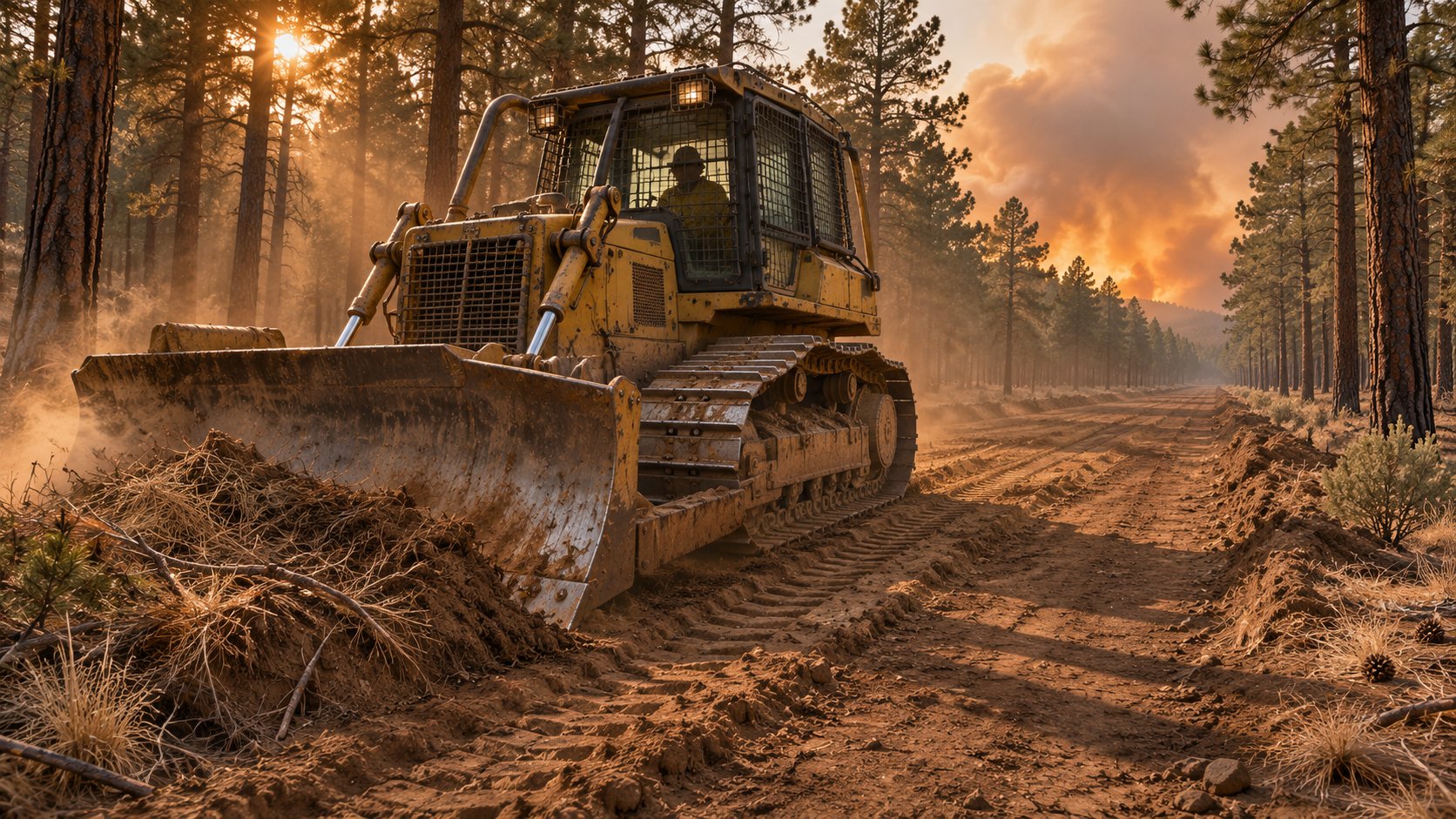
- Wildland firebreaks: On a wildfire, a dozer means fire line gets built fast. The blade scrapes vegetation down to bare mineral soil, removing fuel ahead of the flames. A Forest Service operator describes doing the same job as a hand crew, "just faster and on a larger scale." Enclosed, ventilated cabs let dozers work near heat and falling dead trees that would endanger crews on foot. Dozers also open roads so engines can reach the fire, then help repair the land afterward.
- Disaster debris: After storms, floods, or building collapses, dozers push wreckage off roads so emergency vehicles can get through. In the front loader vs bulldozer split, the dozer clears and piles debris, while loaders lift it into trucks.
- Snow removal: On mine sites, industrial yards, and other large areas, dozers push deep or packed snow into piles where ordinary plows struggle.
The Role of the Military Bulldozer
Imagine needing to open a road while under threat. That's where military engineers turn to armored dozers for clearing obstacles, building fortifications, and cutting routes through rough terrain. Israel's military describes its armored D9 as a reinforced bulldozer with extra armor against projectiles and explosive devices. Its rear ripper breaks concrete obstacles, and a remote-controlled version handles the most hazardous tasks. The same machines clear rubble after strikes so emergency services can reach people and damaged roads can reopen.
Whether you search for a bulldozer or the common misspelling 'pulldozer,' you'll notice a pattern across these jobs. A landfill dozer rides on wide or low-ground-pressure tracks, a fire dozer needs a sealed cab, and a military dozer needs armor. The ground under the tracks shapes the machine as much as the work in front of the blade.
Types of Dozers Matched to Ground and Job Size
Picture two jobs. One is a muddy pipeline route, and the other is a sprawling, hard-packed mine yard. Would the same dozer machine suit both? Probably not. The basic dozer meaning stays the same across every type: a tractor that pushes material with a blade. What changes is how the machine meets the ground, and how much ground it has to cover.
Crawler Bulldozer vs Wheel Dozer
A crawler rides on tracks, which are usually steel but sometimes rubber. Tracks spread the machine's weight over a wide area, so it stays on top of mud, clay, sand, and rock instead of sinking. Rubble can't puncture them the way it can puncture tires. Their grip also keeps the dozer steady on steep grades and slippery slopes.
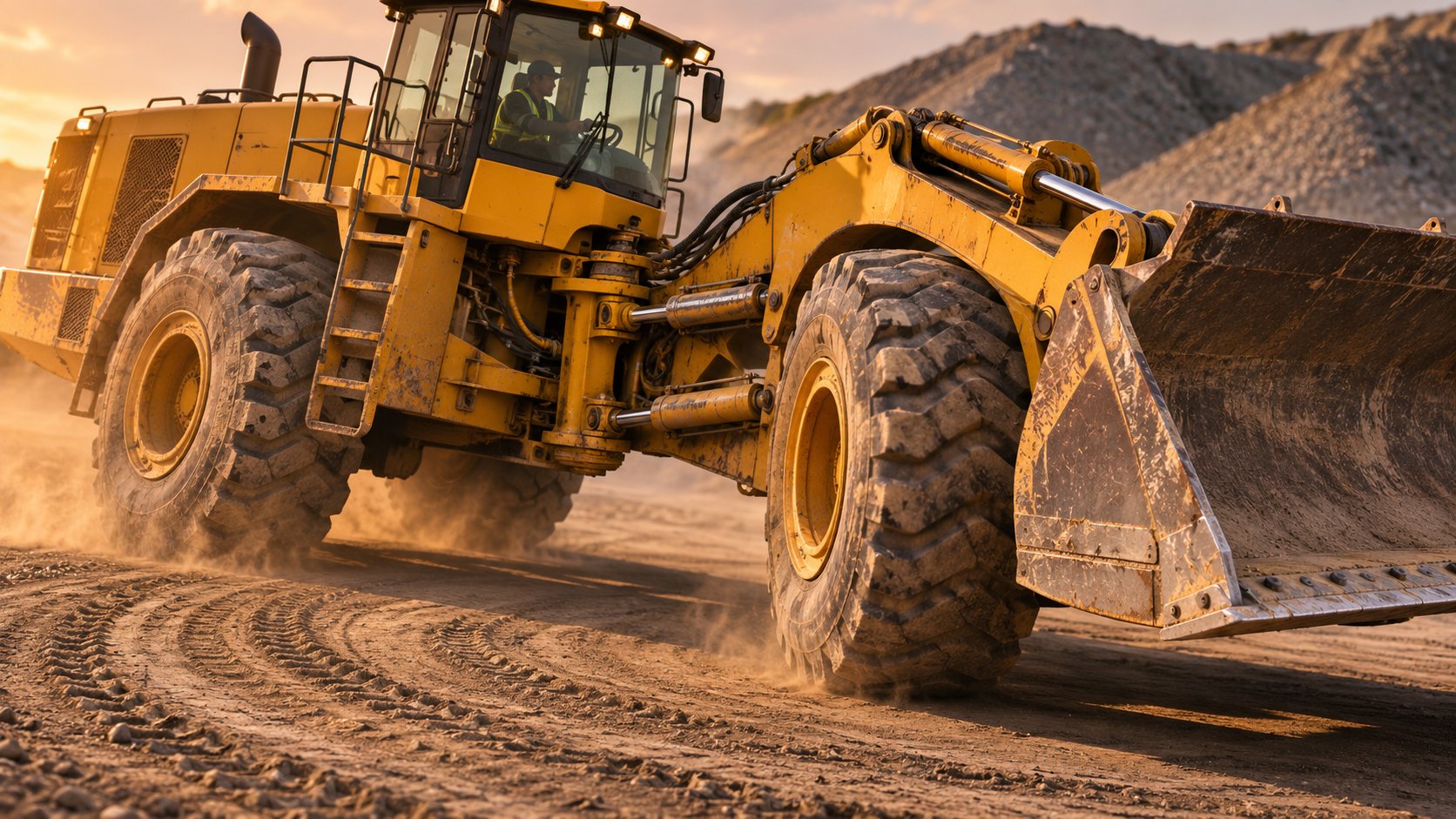
A wheel dozer gives up some of that grip in exchange for speed. Caterpillar dealer Cleveland Brothers notes that wheel machines travel faster and turn more sharply. They can also drive on roads, while track dozers need a trailer to move between sites. Wheels work best on flat, firm surfaces like compacted dirt or asphalt. They also do less damage to sensitive ground such as parks and yards. You'll see them clearing and leveling land, working in mines, and maintaining roads.
Mini, Medium and Large Dozer Size Classes
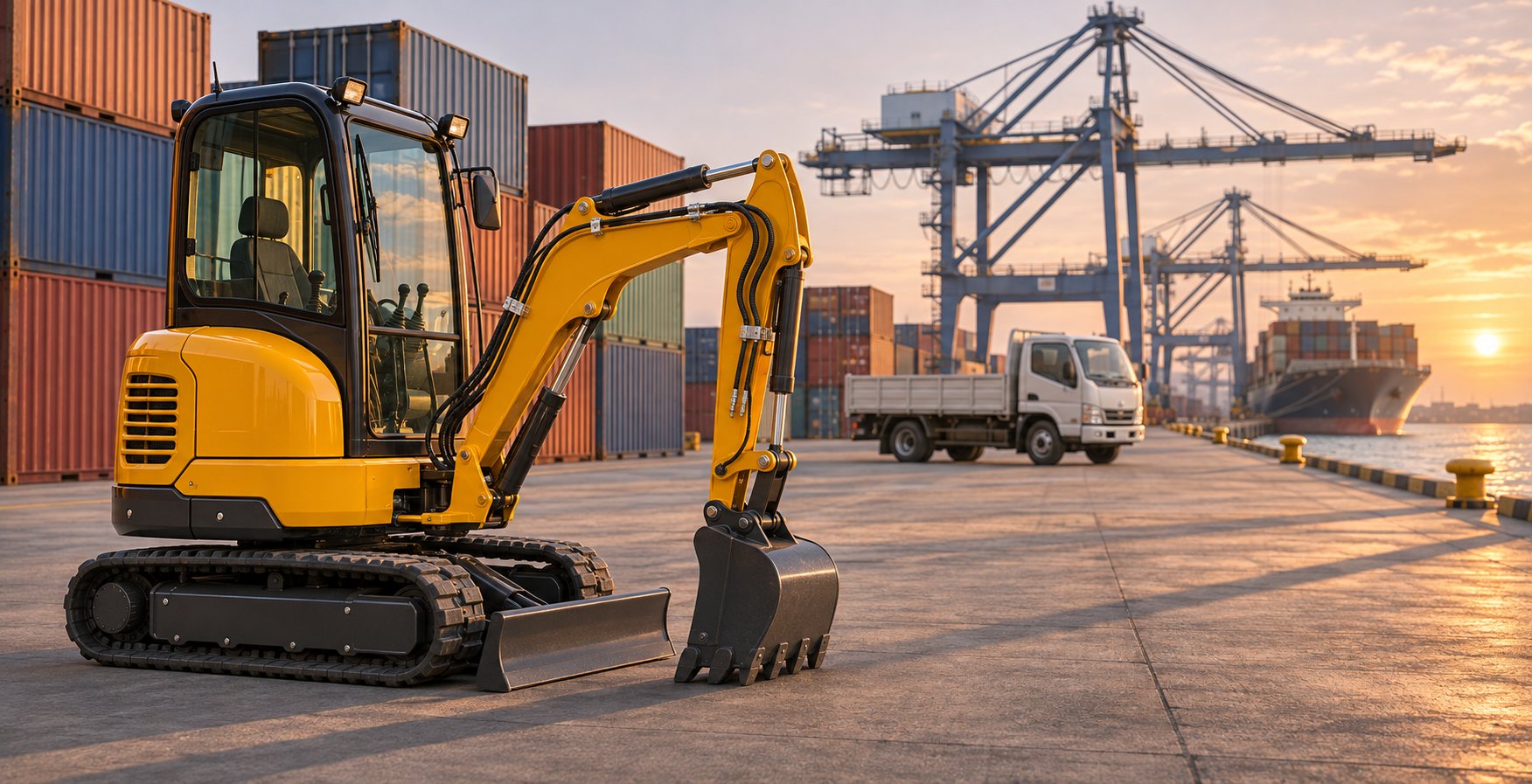
- Mini/compact: These suit residential lots, landscaping, driveways, and sites with tight access. Small dozers stand out for maneuverability, easy transport, and grading.
- Medium: This is the workhorse class for commercial site prep, road building, and land clearing. These machines move more material in less time than small units.
- Large: These are built for mining, quarries, and major earthmoving, where conditions are toughest and loads are heaviest.
Bigger isn't automatically better. A dozer size guide from DOZR points out that heavier machines may not suit soft or unstable ground and can need larger trailers or transport permits. Lighter machines, on the other hand, can struggle in tough, rocky terrain.
Swamp and LGP Dozers for Soft Ground
What if your site is basically a marsh? Low ground pressure (LGP) dozers, also called wide-track or swamp dozers, use broader tracks to spread their weight even further. That flotation keeps them working on wet, muddy ground where standard dozers bog down. For that reason, they're a common sight on pipeline and marshy-ground projects. Lower ground pressure also disturbs finished landscapes, such as golf courses, less. The tradeoff is that standard tracks maneuver better around obstacles on firmer ground. Many small and medium crawlers are offered in LGP versions, but the option is less common on the largest machines.
| Dozer Type | Best Ground Conditions | Typical Jobs | Limitations |
|---|---|---|---|
| Crawler (standard track) | Rough, rocky, sloped, or loose ground | Site prep, ripping, land clearing, heavy pushing | Slower, needs a trailer between sites, can mark paved surfaces |
| Wheel dozer | Flat, firm surfaces like compacted dirt or asphalt | Large sites with long travel distances, mines, road maintenance | Weaker traction on soft, steep, or slippery terrain, and tires can puncture |
| Mini/compact | Firm to moderately soft ground on small sites | Residential lots, landscaping, finish grading | Limited pushing power for large volumes |
| LGP/swamp | Wet, muddy, marshy, or sensitive ground | Pipelines, wetlands, finished landscapes | Less maneuverable around obstacles on firm ground |
Choosing the right undercarriage and size answers only half the question, though. Two machines with identical tracks can leave very different results behind them once the ground has been bulldozed. Much of that difference comes from the steel plate bolted to the front.
Bulldozer Blade Types and the Jobs Each One Suits
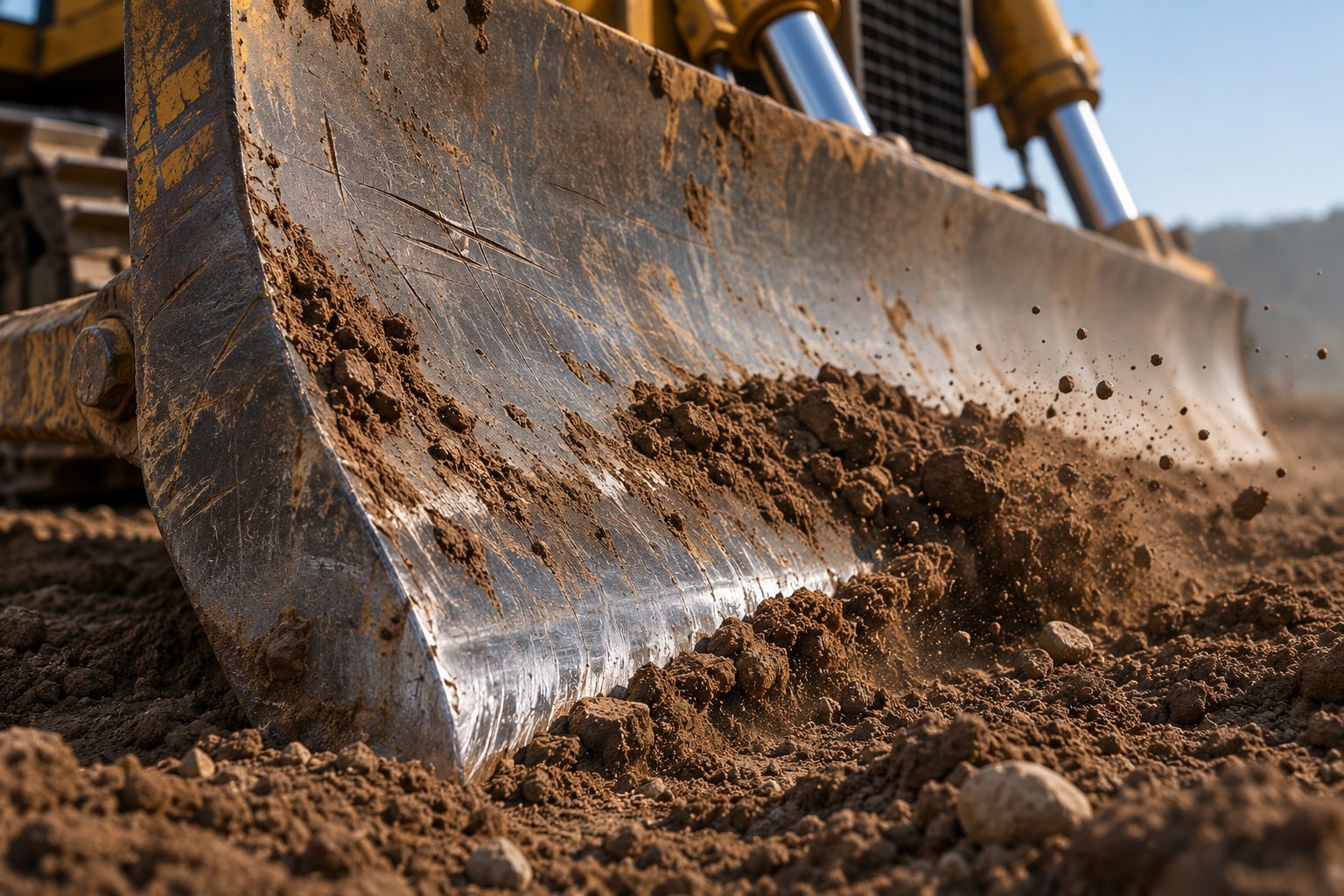
Ask an experienced operator what a bulldozer does best, and you'll probably get a question back: which blade is on it? Two dozers of the same size can do very different work if one wears a straight blade and the other a U-blade. The wrong choice costs you. One dozer blade guide warns that a mismatched blade can slow the job, raise fuel consumption, and wear the machine faster.
Straight, Universal and Semi-U Blades Compared
These three blades handle most production earthmoving. The main difference is in the wings and the curve. Bigger wings hold a bigger load. Fewer wings concentrate the machine's push force on a shorter edge, which helps the blade bite into hard ground.
| Blade Type | Shape and Design | Best Uses | Less Suited For |
|---|---|---|---|
| Straight (S-blade) | Flat and short, with no side wings | Fine leveling, filling holes, backfilling, cutting dense or rocky ground, short pushes | Long pushes, because loose material spills off the ends |
| Universal (U-blade) | Tall and curved, with large side wings | Moving large volumes of loose material over long distances, stockpiling, downhill dozing, clearing large areas | Short pushes and hard ground, where it is more blade than the job needs |
| Semi-U (SU-blade) | Slight curve with short wings | General earthmoving that mixes pushing, cutting, compacted soil, clay, and some rock | Maximum-volume pushes of light material over long runs, where a full U-blade carries more |
Unsure which one to pick? Heavy Equipment Guide calls the semi-U the most popular choice for general and rock work. That makes it a safe default for a construction bulldozer that faces mixed conditions from week to week.
Angle, Six-Way and Cushion Blades and Their Jobs
These blades give up some raw capacity in exchange for control, or they serve one specialty task.
| Blade Type | Shape and Design | Best Uses | Less Suited For |
|---|---|---|---|
| Angle blade | Swings left or right, up to about 30 degrees, and is often mounted on a C-frame | Side-casting, trench backfill, shaping road edges, hillside benching, drainage channels | Heavy rock and moving large volumes over distance |
| Power-angle-tilt (PAT/6-way) | Hydraulically lifts, tilts, and angles in six directions, and is most common on small and mid-size dozers | Finish grading, contouring slopes, crowning roads, spreading gravel, backfill, and work with grade control | Pushing big stockpiles, and it has more pins, bushings, and cylinders to wear |
| Cushion blade | Reinforced, shock-absorbing design | Push-loading scrapers on large earthmoving projects | Fine grading and everyday dozing, which most owner-operators rarely need it for |
Blade choice shapes both speed and finish quality. A U-blade on a tight finish-grade job wastes passes and leaves a rougher surface. A six-way machine pushing large stockpiles will wear itself out. Changing your mind later isn't always easy either. PayDirt HQ notes that PAT and SU blades mount differently, so a swap is rarely a simple bolt-on, and buying a dozer that already carries the right blade is usually cheaper. The practical rule is to match the blade to the work you do most, not the work you do once a year.
Reduced to basics, the bulldozer meaning is a tractor that pushes. The blade decides how much it pushes, how far, and how cleanly. Even the best-matched blade has limits, though, on ground it can't cut, such as frozen soil or soft rock. The tools for that kind of ground mount on the other end of the machine.
Attachments That Expand What a Dozer Can Do
The everyday bulldoze meaning is simple: push something out of the way. But what if the ground won't break, the machine gets stuck, or the job calls for pulling instead of pushing? Attachments handle those situations. Most of them mount at the rear, and they can turn a crawler bulldozer into a ground breaker, a recovery vehicle, or a land-clearing tool.
Rippers, Winches and Tow Hitches
Rear attachments add breaking and pulling power. A ripper is driven into the ground by hydraulics to crack hard material before the blade pushes it. A ripper selection guide notes that this reduces undercarriage wear and improves overall earthmoving efficiency.
Rear Attachments
- Single-shank ripper: Puts all of the dozer's pulling force on one point for deep ripping in hard rock, deep frost, and dense hardpan.
- Multi-shank ripper: Spreads that force across two or three shanks for wider passes in topsoil, shale, coal, and old asphalt.
- Rear winch: Pulls the dozer or other equipment out of mud, drags logs, and handles controlled pulls such as threading pipe or cable.
- Tow hitch or drawbar: Lets the dozer pull scrapers, compaction rollers, or disc harrows.
Matching matters here. A multi-shank ripper used in solid rock tends to spin the tracks, and that slip wears out the undercarriage quickly. Winch setups vary as well. One dozer winch engineering article explains that the machine's auxiliary hydraulic pump is usually enough for occasional self-rescue. Production work like logging calls for a higher-flow pump.
Rakes, Root Plows and Brush Guards for Land Clearing
You can clear land with a bare blade, but it scrapes away topsoil along with the brush. These tools clear more cleanly and protect the machine while they do it.
Front and Protective Attachments
- Rake: Long steel tines comb out brush, roots, and rocks while most of the soil sifts through and stays in place.
- Root plow: A wide horizontal blade drawn through the soil below the surface cuts roots so stumps and brush are less likely to regrow.
- Brush guards and sweeps: Steel frames around the cab, engine, and rear protect the operator and machine from branches and falling limbs.
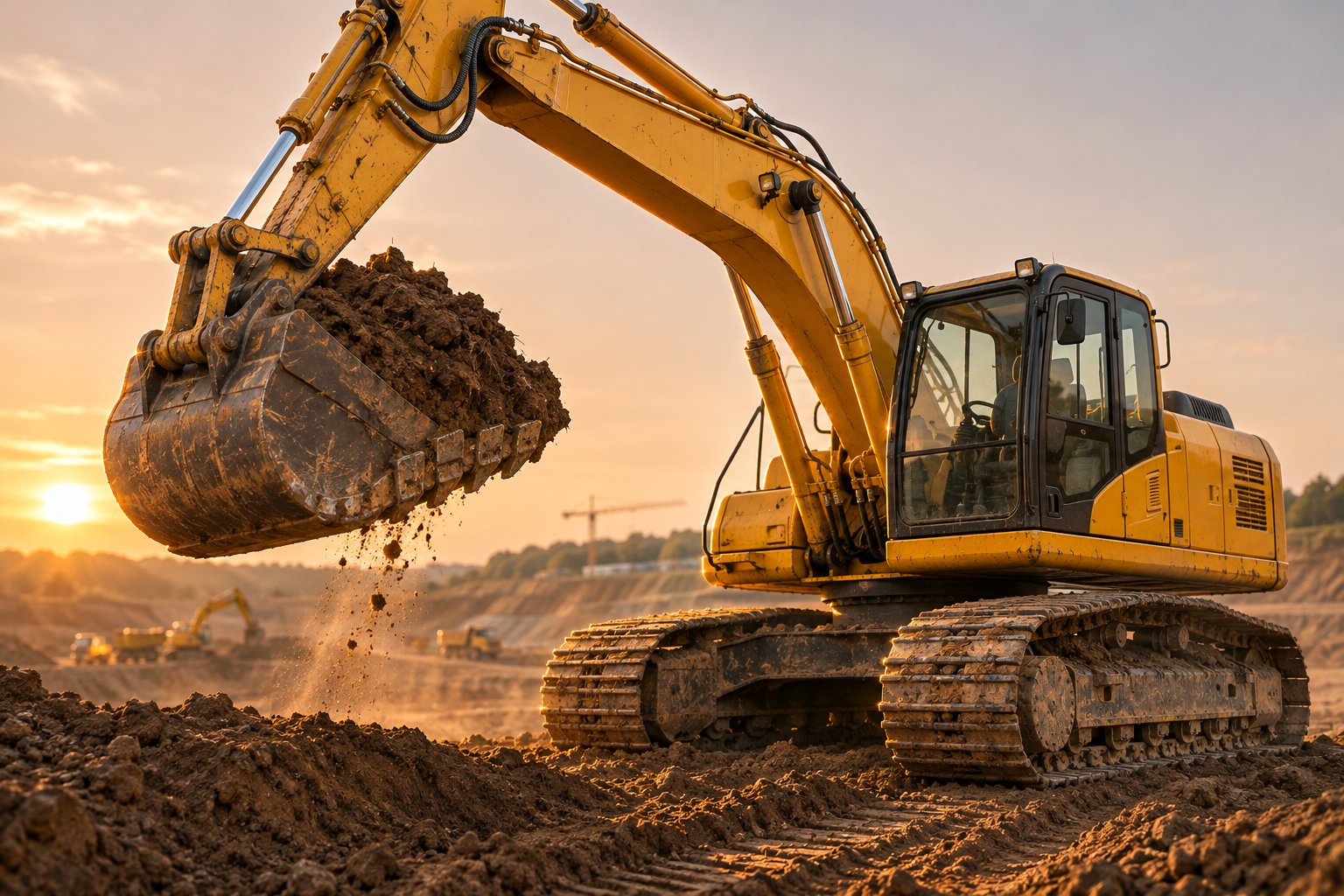
Imagine turning a wooded lot into pasture. The rake piles the brush, the root plow handles what's left underground, and the guards keep the machine intact through it all. Even so, no attachment lets a dozer dig a deep trench or lift material into a truck. That's why an excavator and bulldozer so often share the same site, with each machine handling work the other can't.
Bulldozer vs Excavator, Loader and Other Machines
Walk onto a busy job site and you might count five or six machines that all seem to move dirt. So what is the bulldozer's real specialty compared with the rest? It pushes material across the ground. The other machines mostly dig, lift, carry, or finish. Comparing them side by side makes those differences easy to see.
Front Loader vs Bulldozer and Other Comparisons
People often lump these machines together, especially loaders and dozers. Equipment rental platform DOZR points out that 'front loader' is a broad family that includes wheel loaders, skid steers, compact track loaders, and backhoes. A dozer's blade has very little lifting ability, so it can't raise material into a dump truck the way a loader can. The table below lines up each machine against the bulldozer as a baseline.
| Machine | Primary Strength | Best For | When a Dozer Is Better |
|---|---|---|---|
| Bulldozer (dozer) | Pushing, cutting, and spreading with a heavy blade and strong track traction | Land clearing, rough grading, bulk pushing, ripping hard ground | Baseline for comparison |
| Excavator | Digging with a hydraulic arm and bucket | Trenches, foundations, lifting, demolition | Spreading fill, rough grading wide areas, pushing large volumes horizontally |
| Motor grader | Precise, adjustable blade control | Finish grading, road crowning, consistent cross slope | Clearing land, pushing heavy or rocky material, first-pass rough grading |
| Wheel loader / front loader | Scooping, lifting, and carrying with a front bucket | Loading trucks, handling stockpiles, moving material around a site | Ripping, heavy pushing, and clearing on rough or uneven ground |
| Skid steer | Small size with a wide range of attachments | Small sites, landscaping, cleanup, tight spaces | Large volumes, hard ground, big clearing jobs |
| Compact track loader | Tracked traction combined with loader versatility | Light grading and material handling on soft ground | Heavy pushing, ripping, large-scale grading |
| Backhoe | Rear digging arm plus a front loader bucket | Smaller jobs that need both digging and loading, utility work | Sustained pushing and grading over large areas |
Bulldozer and Excavator Roles on the Same Site
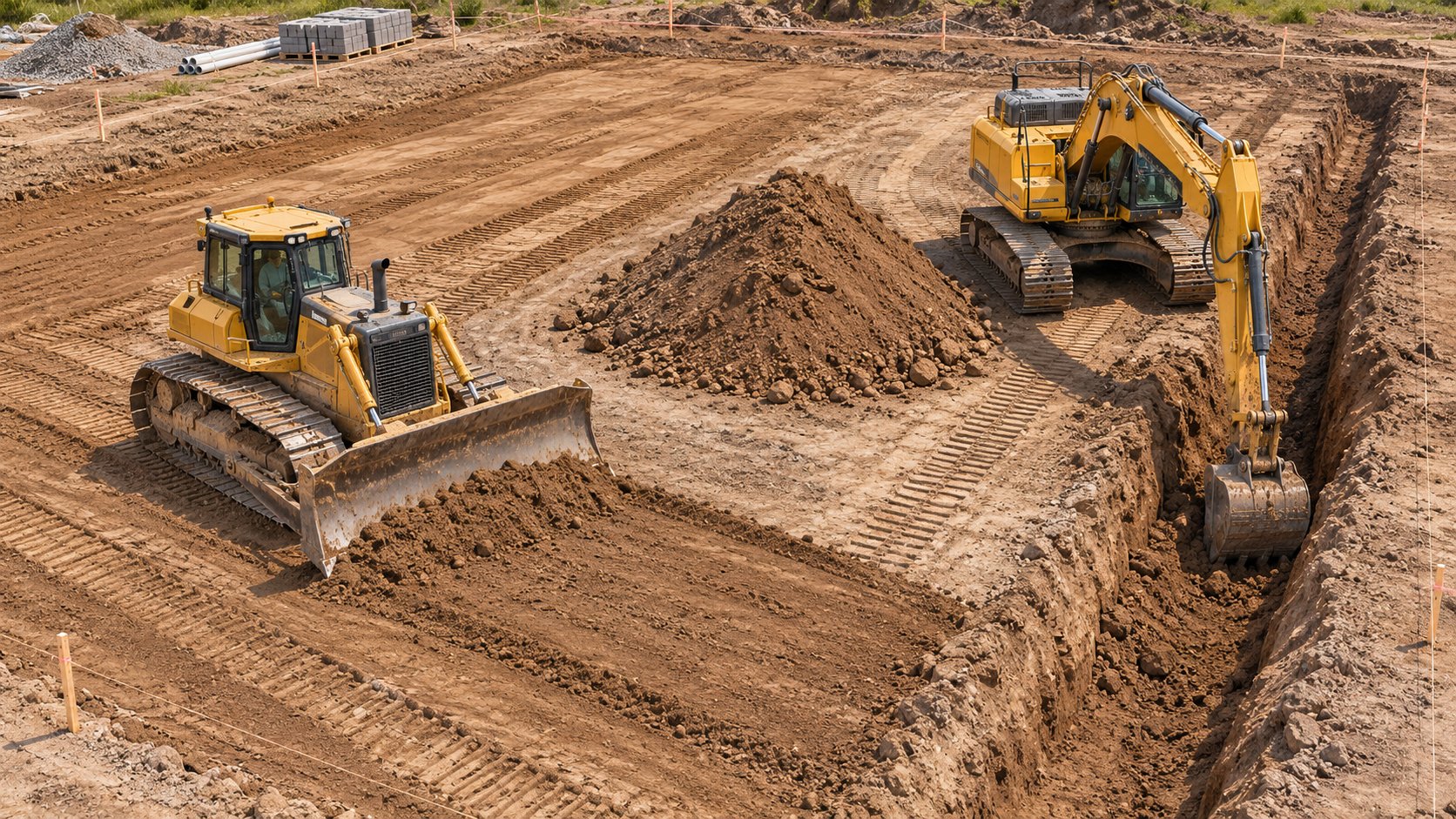
Why does the bulldozer-excavator pairing show up so often? The two machines do opposite halves of the same job. Picture a new foundation. The dozer clears the lot and strips the topsoil. The excavator digs the footings and utility trenches and piles the spoil beside them. The dozer then returns to backfill and spread the leftover material across the site. Neither machine could do the whole job efficiently alone.
A third machine often finishes the sequence. Equipment maker AILISHENG describes bulldozers clearing and rough grading an area before a motor grader refines the surface to its final grade. Each machine sticks to what it does best.
How to Tell Which Machine Fits the Task
When you're not sure, ask which way the material needs to go:
- Down into the ground: An excavator or backhoe digs it.
- Up into a truck: A loader lifts and carries it.
- Across the ground in bulk: A dozer pushes it.
- Smooth to a precise grade: A motor grader finishes it.
- Around a small or tight site: A skid steer or compact track loader handles it.
This direction test also reveals something less obvious. On some jobs a dozer looks like the natural pick but quietly costs you time, money, or a damaged surface.
When a Bulldozer Is the Wrong Machine for the Job
A dozer can handle a lot, but it isn't the answer to every dirt problem. If you pick one out of habit, the warning signs show up fast. You'll see extra passes, rework, or a scarred driveway. Knowing where the machine falls short saves time, money, and frustration.
Jobs Better Handled by Other Equipment
- Precision finish grading: A dozer is built for rough grading, and tight final tolerances are harder for it to hit. LTMG warns that using a bulldozer for final surface finishing can leave uneven surfaces and poor drainage profiles. Better choice: a motor grader, or laser- or GPS-guided grading equipment.
- Trenching and deep digging: The blade cuts across the ground, not down into it. Better choice: an excavator or a trencher.
- Loading trucks: A blade can't lift material into a dump bed. Better choice: a wheel loader, which scoops, lifts, and dumps in one cycle.
- Finished paved surfaces: Steel tracks can cause surface damage on concrete, asphalt, and compacted gravel. Better choice: a rubber-tracked compact loader or a wheeled machine.
- Tight urban or interior spaces: Even small dozers need room to push and turn. Better choice: a skid steer or mini excavator.
- Short, light jobs: A crawler has to be hauled in on a trailer. For a small task, that move-in effort can outweigh the work itself. Better choice: a compact track loader, a skid steer, or even hand tools.
Practical Limits of Bulldozer Construction Work
Most of these limits come from the same root. Ask what a dozer is at its core, and the answer is a tractor built to push. Switching between bulldozer types such as crawler, wheel, or LGP changes where the machine can work. It doesn't change what the machine does. A bigger machine won't fix a task mismatch either, because a mismatched dozer is just as wrong in a larger size.
Timing matters too. LTMG recommends a clear sequence: the bulldozer handles initial earthmoving and roadbed formation, then a motor grader takes over for fine grading. When each machine stays in its lane, you avoid rework.
Key takeaway: a dozer excels at moving material horizontally across the ground, not at lifting, digging deep, or carrying.
That narrow focus is no accident. It traces back to the machine's origins, when engineers first bolted a blade to a crawler tractor and set out to solve one problem: pushing earth.
A Brief History of the Bulldozer
Here's a surprise: the blade came before the tractor. The earliest dozer blades were pulled by mules. The animals pushed a steel blade into dirt dumped from carts and spread it into holes and gullies. Getting the mules to back up for the next push was the hard part.
The First Bulldozer and Early Crawler Tractors
- Late 1800s: To 'bulldoze' someone meant to coerce or intimidate them by force. By the end of the century, the word also meant using brawny force to push over any obstacle.
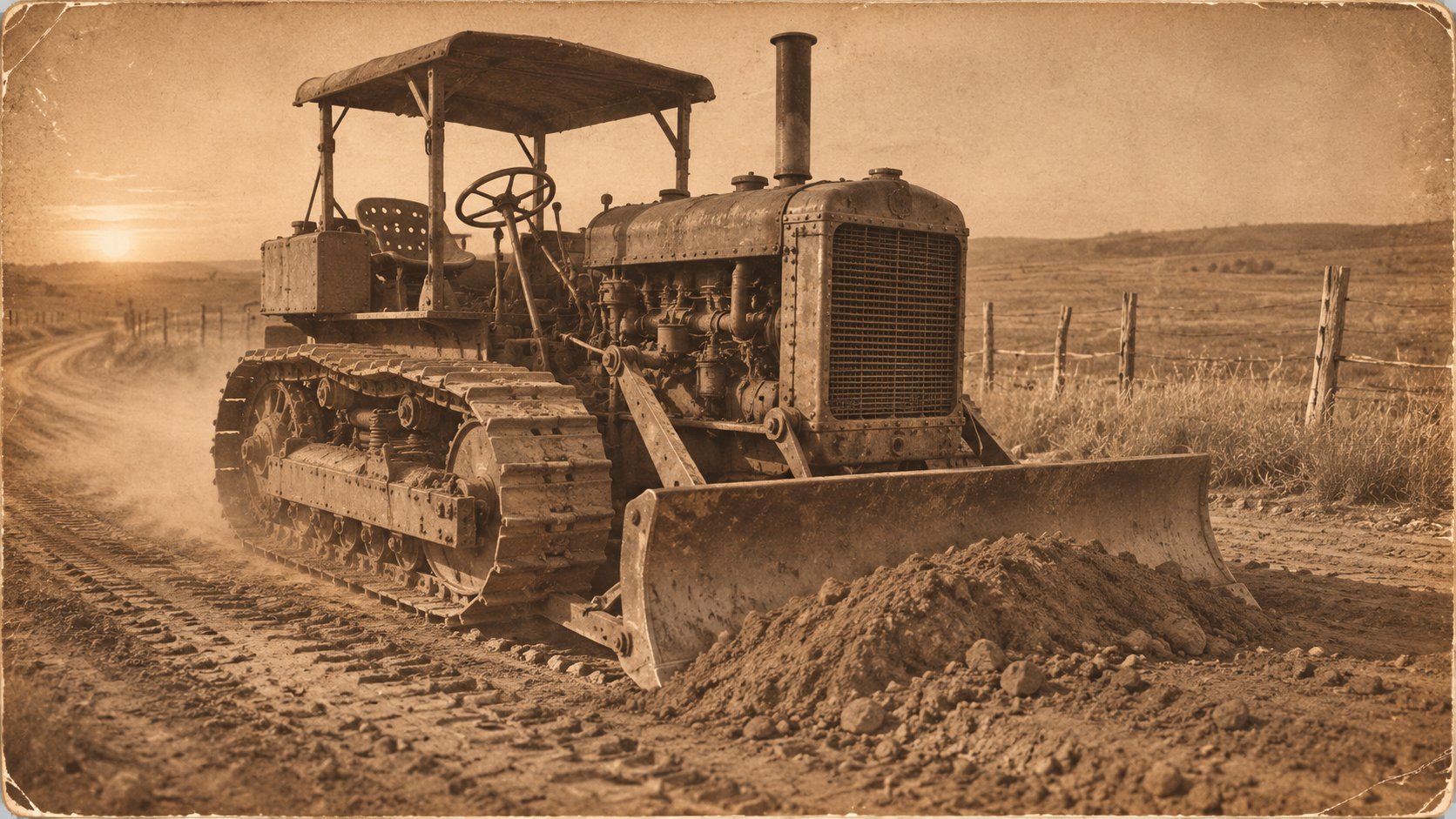
- Around 1904: Benjamin Holt fitted an endless chain tread to his steam traction engine. At about the same time, England's Hornsby company converted a wheeled engine to tracks. Neither machine was a bulldozer yet. Hornsby's design was closer to today's machines, though, because it steered by controlling power to each track.
- Around 1913-14: Hornsby sold its track patents to Holt.
- 1917: A grader maker's catalog advertised a bulldozer. It was a mule-drawn blade that cut into and flattened land.
- 1925: Holt merged with the C. L. Best Gas Tractor Co. to form the Caterpillar Tractor Company.
Historians still debate who first mounted a blade on a crawler tractor. Over time, the name 'bulldozer' grew from describing the blade alone to describing the whole machine.
How Hydraulics Shaped the Modern Dozer
The first tractor-mounted blades were raised with hand-operated winches. Cable power control units then dominated through the cable control era, which ran from the 1930s into the early 1960s. R. G. LeTourneau is probably the leading claimant for first powered blade control, and his units led the market until 1945. After the war, Caterpillar brought its controls in-house.
Reliable high-pressure hydraulics took hold in the early 1960s and gave operators far finer control of the blade. By the mid-1970s, even Caterpillar had discontinued its cable controls. The precise, hydraulically tilted blade on today's construction dozer comes directly from that shift.
A century of change has produced a huge range of bulldozer equipment. That range is useful, but it also means choosing the right machine takes a clear plan.
Choosing the Right Bulldozer for Your Work
Strip away the history and the bulldozing meaning comes down to one thing: moving material across the ground with the right tracks, blade, and tools behind the push. Turning that idea into a smart equipment choice takes a few honest questions about your own site. Picking for the work you actually do, not the work you imagine, saves you from paying for power you'll never use.
A Quick Checklist for Matching a Dozer to Your Job
- Define the primary task: Will the machine mostly push, rip, clear, backfill, or rough grade? Build the choice around the job you do most often.
- Assess ground and soil conditions: Hard or frozen ground calls for a ripper. Soft or wet ground calls for flotation. Dealer Cascade Trader notes that wider tracks generally float better on soft soil, while narrower setups are easier to haul between sites.
- Choose the configuration: Go crawler for rough or sloped ground, wheel for firm surfaces and long travel, compact for tight lots, and LGP for marshy sites. Size matters too. Boom & Bucket warns that oversized equipment can raise fuel, maintenance, and transport costs.
- Match the blade and attachments: Use a straight blade for fine work, semi-U for mixed conditions, and U for high volume. Add a ripper, rake, or winch only if the job needs one.
- Confirm site access and transport: Check trailer size, permits, gate widths, and room to turn. If a bulldozer and excavator will share the site, plan how the two machines will hand work off to each other.
Exploring Used Bulldozer Options for Your Fleet
For many contractors, a used machine is a practical way to add pushing capacity. When you compare listings, look past the bulldozer pics. Dozer images show the blade and cab, but they rarely reveal worn rollers, tired hydraulics, or gaps in the service history. Ask for those details in writing.
One place to start is JIUHONG's used bulldozer collection. It features Caterpillar and Shantui models suited to pushing, clearing, and grading work. You can compare the listed machines and request condition details, configuration information such as blade type, ripper, and undercarriage, and current quotes. Be aware that the reviewed inventory does not confirm a CAT D5 or true mini or compact dozers. If your checklist points to a small machine or a specific model, send an inquiry to confirm availability rather than settling for a larger unit. A bigger dozer is not a substitute for a compact one on a tight lot.
Choose a dozer the same way you would plan the job itself. Define the task, then read the ground, and only after that pick the machine that pushes it best.
Frequently Asked Questions About Bulldozer Uses
1. What is a bulldozer mainly used for?
A bulldozer is used to move material horizontally across the ground. Its front blade pushes, cuts, spreads, and levels soil, sand, rock, and debris, while an optional rear ripper loosens hard, compacted, or frozen ground so the blade can move it. Typical jobs include site preparation, rough grading, backfilling trenches and foundations, land clearing, stockpiling, and road building. Beyond construction, dozers work in landfills, mines and quarries, farms, forests, wildfire lines, disaster cleanup, and military engineering. In each setting, the tracks, blade, and protective equipment are set up for the ground and the hazards involved.
2. What is the difference between a bulldozer and an excavator?
The two machines handle opposite halves of earthmoving. An excavator uses a hydraulic arm and bucket to dig down, lift, and place material, so it suits trenches, footings, demolition, and loading. A bulldozer pushes material across the surface, so it suits clearing, spreading fill, rough grading, and backfilling. On many sites they work in sequence: the dozer clears and strips the lot, the excavator digs, and then the dozer returns to push the spoil back and spread it out. A simple rule helps: if material must go down or up, use an excavator; if it must move across the ground in bulk, use a dozer.
3. Which bulldozer blade type should I choose?
Match the blade to the work you do most often, not the job you do once a year. A straight blade gives the most control for fine leveling, backfilling, and cutting into dense ground with short pushes. A universal blade, with tall curved wings, carries the largest loads of loose material over longer runs and suits stockpiling. A semi-U blade sits between the two and is a popular default for mixed earthmoving and rock work. Angle and six-way (PAT) blades trade capacity for control on side-casting, slope shaping, and finish grading, while cushion blades mainly serve push-loading scrapers. Because blade styles often mount differently, buying a dozer already fitted with the right blade usually beats swapping later.
4. When is a bulldozer the wrong machine for a job?
Skip the dozer when the job calls for lifting, deep digging, or tight precision. A motor grader or GPS-guided equipment produces smoother final grades, an excavator or trencher handles trenches, and a wheel loader fills trucks far more efficiently. Steel tracks can scar finished asphalt, concrete, or compacted gravel, so rubber-tracked or wheeled machines are safer on those surfaces. In cramped urban or interior spaces, a skid steer or mini excavator fits better. For small, short tasks, the effort of trailering a crawler to the site can outweigh the work itself, and a bigger dozer never fixes a task mismatch.
5. What should I check when buying a used bulldozer?
Start with your job checklist: the main task, ground conditions, the right configuration (crawler, wheel, compact, or LGP), the blade and attachments you need, and transport or site access limits. Then look beyond listing photos, which rarely reveal worn rollers, weak hydraulics, or gaps in service records, and ask for those details in writing. JIUHONG's used bulldozer collection features Caterpillar and Shantui models for pushing, clearing, and grading work, and buyers can compare listed machines and request condition details, configuration information such as blade type, ripper, and undercarriage, and current quotes. The reviewed inventory does not confirm a CAT D5 or true mini or compact dozers, so if you need one of those, send an inquiry to check availability rather than treating a larger unit as a substitute.